Scientists Discover Mice Perform Instinctive First Aid On Unconscious Companions
When a cage mate falls unconscious, mice follow a surprising, instinctual sequence of behaviors that appears to help their companion wake up sooner.
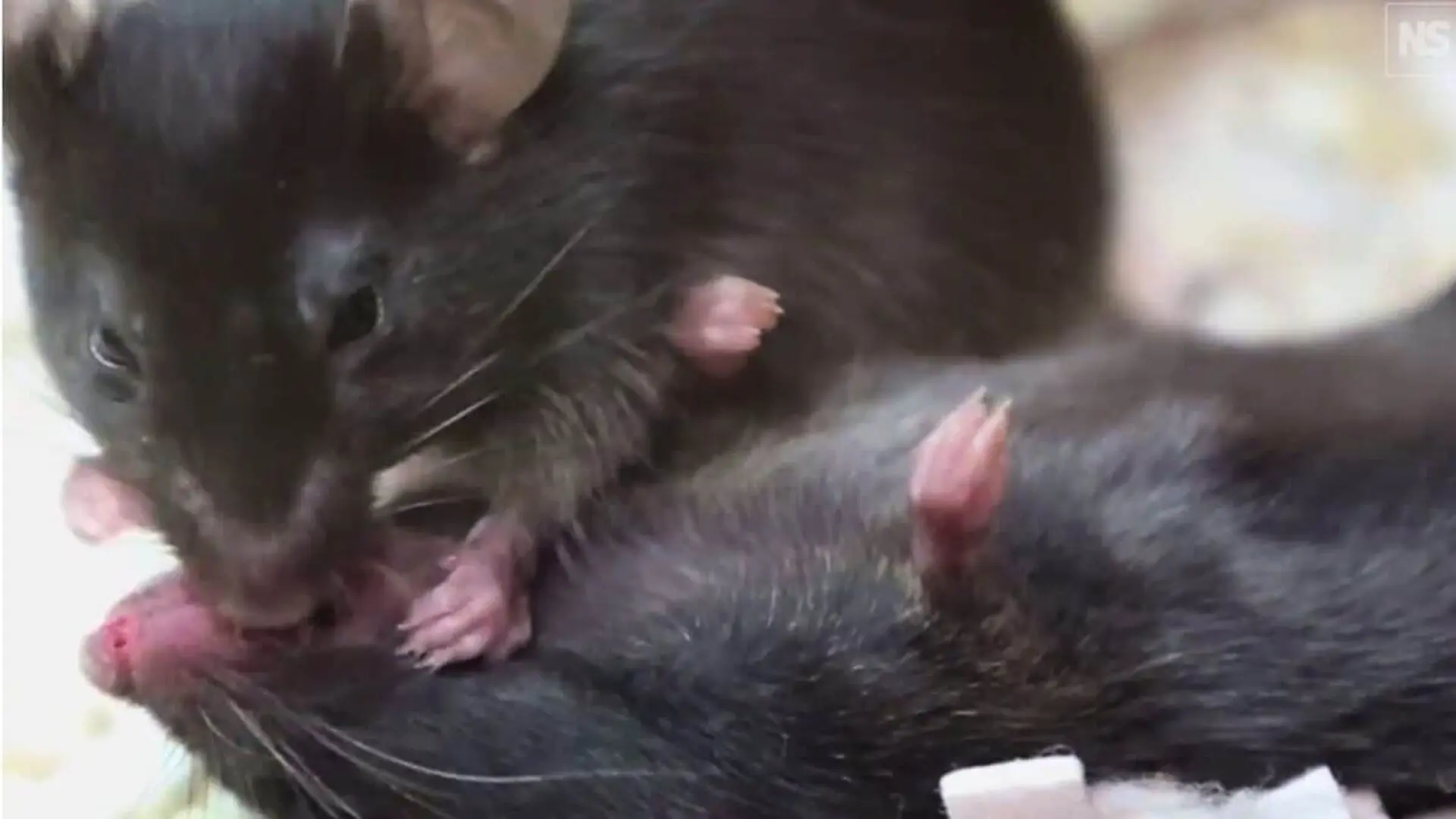
While conducting routine anesthesia procedures in the laboratory, neuroscientist Li Zhang of the University of Southern California noticed an unexpected interaction between his research subjects. When a mouse was returned to its enclosure while still sedated, its cage mate would often approach, sniffing and biting at the unconscious animal’s face. To the researchers, the behavior looked remarkably like a deliberate attempt to revive a partner—a form of rudimentary first aid.
This curiosity has culminated in a formal study, now published in the journal Science, documenting a structured series of actions that mice perform on incapacitated companions. These interventions appear to physically clear the airway, facilitating a faster recovery from anesthesia.
During the study, researchers monitored how mice interacted with both an anesthetized peer and an active, conscious one. The subjects consistently prioritized the unconscious animal. The interaction typically progressed through a sequence: sniffing and grooming, followed by focused biting around the mouth area. In over 50 percent of the observations, the active mouse successfully pulled the tongue of its sedated companion.
Mechanical Airway Clearance
The significance of the tongue-pulling maneuver became clear through experimental data. The researchers discovered that the action effectively opened the airways of the unconscious mice. Furthermore, when the team introduced small physical obstructions into the mouths of the sedated mice, the companion’s intervention dislodged these objects in roughly 80 percent of instances.
“This was the most surprising part of the study,” said USC neuroscientist and co-author Huizhong Whit Tao. “Obviously the effects are beneficial.”
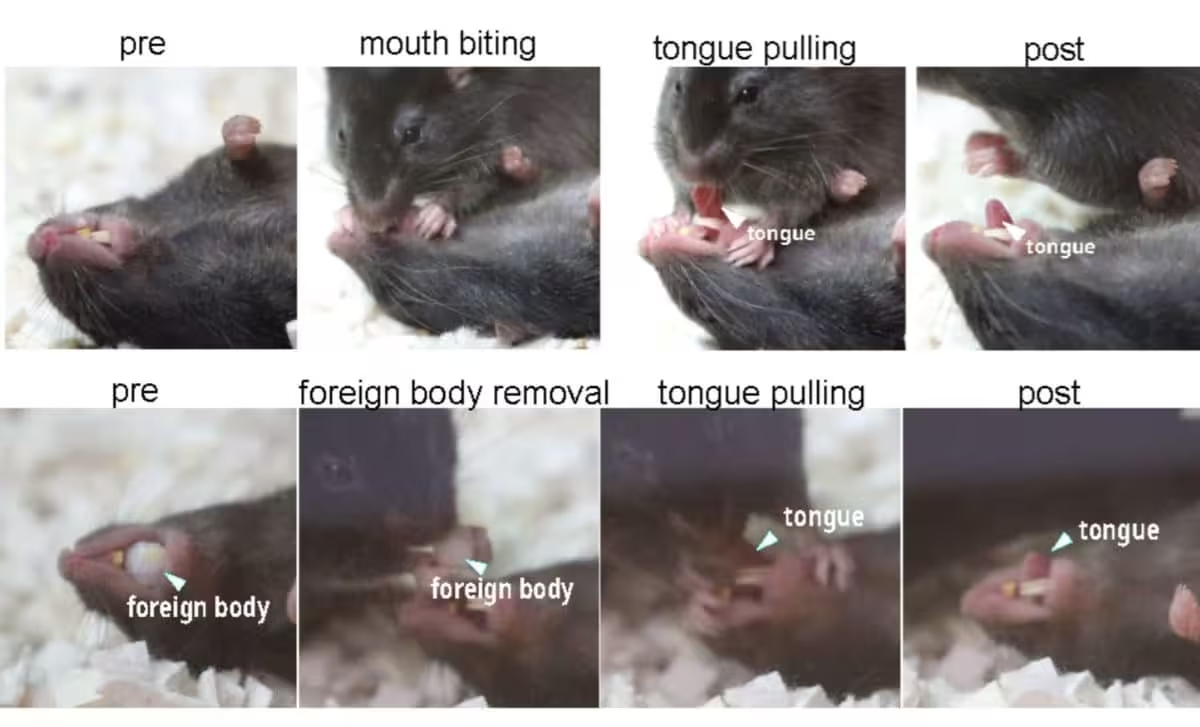
Whit Tao suggests the behavior is innate, as the subjects had no prior exposure to unconscious mice and therefore could not have learned the technique. This marks the first time such an emergency-response sequence has been documented in this species. The behavior was not applied randomly; mice demonstrated a clear preference for helping familiar cage mates over strangers. Crucially, the intervention ceased as soon as the unconscious mouse regained consciousness, and the behavior was rarely directed toward sleeping or active animals.
Neural Mechanisms and Competing Interpretations
At the neurological level, the researchers identified that oxytocin circuits—which are known to facilitate social and cooperative behaviors in many species—are essential for triggering these revival-like actions. James Burkett, a neuroscientist at the University of Toledo who was not involved in the work, noted that the familiarity bias observed in the study implies a more complex cognitive process than simple reflex. He noted that the mice seem to account for the context and identity of their companion when forming a response, though he cautioned that scientists cannot definitively infer an “intention to help” based on these observations alone.
One alternative hypothesis is that the behavior is driven by curiosity. However, when researchers repeated the experiment over five days, they found that interest did not wane. Instead, the frequency of the behavior slightly increased, challenging the idea that the mice were merely investigating a novel stimulus.
Scientific Debate on Intent
Not all researchers are convinced that the behavior qualifies as “helping.” Peggy Mason of the University of Chicago draws a distinction between actions that provide an accidental benefit and those performed with altruistic intent. She suggested that while the behavior itself is noteworthy, the interpretation of the animals’ motives remains open to debate, noting that the five-day observation window might not be sufficient to rule out habituation to the stimulus.
Conversely, Cristina Márquez of the Center for Neuroscience and Cell Biology in Portugal highlighted the importance of the study’s replicability. While she had not witnessed these specific behaviors in her own lab, she noted that consistent reports from multiple independent laboratories suggest this is a robust and meaningful finding.
Given that the underlying oxytocin networks are conserved across the animal kingdom, the research team believes these emergency-response behaviors might be more widespread than previously thought, though their prevalence in natural, non-lab environments remains an open question for future research.
This article has been fact checked for accuracy, with information verified against reputable sources. Learn more about us and our editorial process.
Last reviewed on .
Article history
- Latest version
Reference(s)
- Sun, Wenjian., et al. “Reviving-like prosocial behavior in response to unconscious or dead conspecifics in rodents.” Science, vol. 387, no. 6736, February 21, 2025 American Association for the Advancement of Science (AAAS), doi: 10.1126/science.adq2677. <https://www.science.org/doi/10.1126/science.adq2677>.
- “James Burkett.” <https://www.utoledo.edu/med/depts/neurosciences/Burkett.html>.
- “CNC.” <https://cnc.uc.pt/en/people/c-marquez>.
Cite this page:
- Posted by Zubair Ali