New Study Reveals How Brains Sync Up When Strangers Become Friends
New research reveals surprising differences in brain activity between younger and older adults during social interaction, shedding light on human connection.
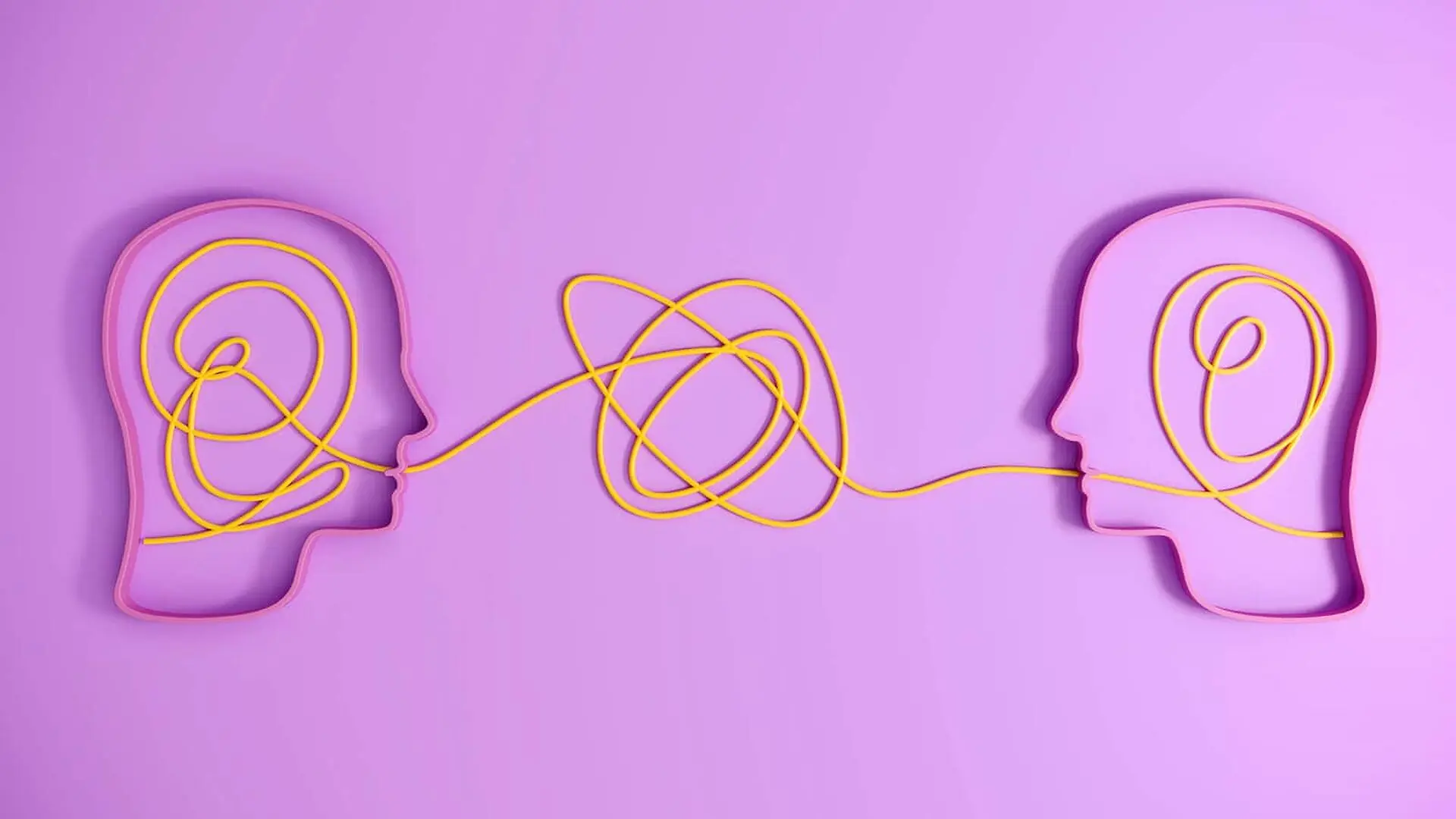
A new study from ETH Zurich challenges long-held assumptions about how our brains synchronize when we form new social connections. While researchers previously believed that building a relationship inevitably leads to more similar brain activity between two people, the findings suggest that the path to friendship is far more nuanced, particularly when it spans different generations.
The research, led by cognitive scientist Ryssa Moffat at the Social Brain Sciences Lab, followed 61 pairs of strangers over a six-week period. Participants, divided into same-age groups (18–35 or 70–85) and cross-generational pairs, met weekly to engage in a shared creative task: drawing together on a single sheet of paper. Throughout these sessions, participants wore mobile brain sensors, allowing researchers to track “inter-brain synchrony”—a phenomenon where the neural patterns of two people align during collaborative interaction.
Challenging the Synchronization Hypothesis
The study, published in the journal PLOS Biology, yielded unexpected results. Conventional wisdom in neuroscience suggests that as individuals become more familiar and feel a deeper sense of closeness, their brain activity should mirror one another more closely. However, the data revealed a distinct divergence based on age.
In same-age pairs, neural synchrony began at a lower level and increased steadily over the six weeks as the participants grew closer. In contrast, cross-generational pairs showed the opposite trajectory: high levels of synchrony at the start that steadily declined as the weeks progressed.
Moffat suggests that these differences may be rooted in how we predict the behavior of others. While “Common Cognitive Processing” theories assume brains sync because they react to the same stimuli, the “Mutual Prediction” model offers a more active explanation. In this framework, individuals are constantly working to anticipate their partner’s next move or comment.
“Greater brain synchrony can also mean that two people are making a particularly strong effort to understand one another,” Moffat explains. For intergenerational pairs, this high initial synchrony may reflect the extra cognitive effort required to navigate differences in life experience and communication styles early on. Once they established a rapport, that intense, effortful synchronization was no longer necessary.
The Dynamics of Leadership and Adaptation
A secondary analysis published in Acta Psychologica dove deeper into the roles played by participants during these sessions. By mapping stable “two-brain states,” the research team identified a specific pattern more common in intergenerational pairs: a state characterized by lower overall brain-to-brain synchrony but higher internal synchronization within the frontal lobes of individual participants.
This internal neural activity appears to signal a division of labor. In many cross-generational pairs, the younger participant was more likely to adapt their behavior to the older partner, who frequently assumed a leadership role. This was also reflected in the collaborative process; same-age pairs tended to draw simultaneously, while cross-generational pairs were more likely to take turns.
This research marks a significant departure in the field of social neuroscience, which has historically focused on parent-child or romantic dynamics while largely neglecting the aging brain. By observing these interactions over several weeks, Moffat’s team has provided a rare glimpse into the neurological mechanics of how strangers forge new bonds.
Ultimately, the study indicates that “ticking alike” is not a prerequisite for friendship. Instead, brain activity fluctuates in response to the changing demands of a relationship, highlighting that social connection is a dynamic process of anticipation, adaptation, and mutual understanding.
This article has been fact checked for accuracy, with information verified against reputable sources. Learn more about us and our editorial process.
Last reviewed on .
Article history
- Latest version
Reference(s)
- Moffat, Ryssa., et al. “Social interactions between people of same and different generations shape longitudinal changes in interpersonal neural synchrony, loneliness, and social connection.” PLOS Biology, vol. 24, no. 8, August 20, 2026, pp. e3003899 Public Library of Science (PLoS), doi: 10.1371/journal.pbio.3003899. <https://doi.org/10.1371/journal.pbio.3003899>.
- Naudszus, Luca A.., et al. “Two-brain states characterize within- and between-brain connectivity during intergenerational collaborative drawing.” Acta Psychologica, vol. 269, September 1, 2026, pp. 107252 Elsevier BV, doi: 10.1016/j.actpsy.2026.107252. <https://doi.org/10.1016/j.actpsy.2026.107252>.
Cite this page:
- Posted by Zubair Ali