Why Smiling At Your Baby Does More Than Just Make Them Happy
New research reveals that smiling and positive interactions with caregivers are essential for shaping an infant’s long-term emotional development.
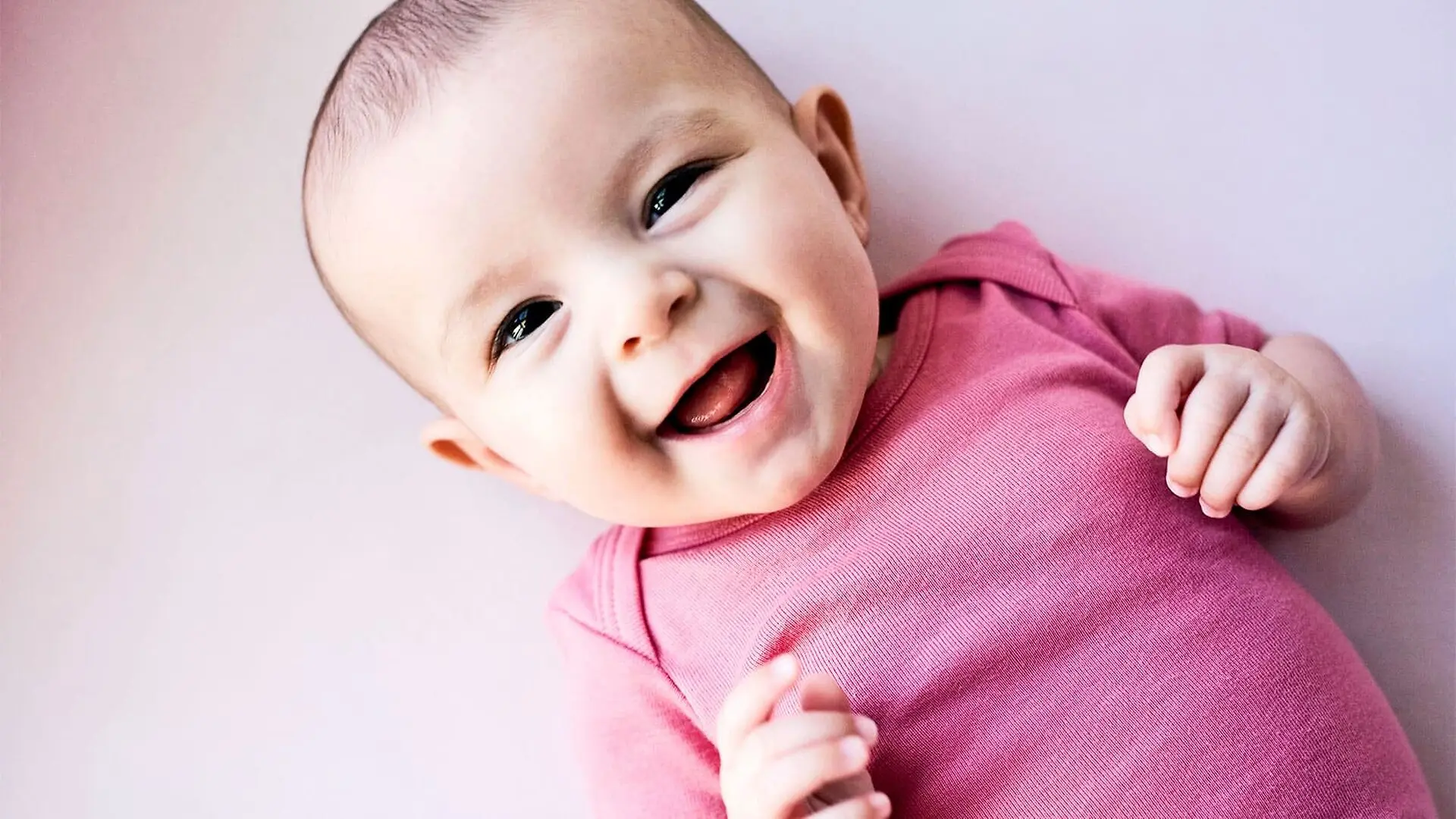
Shared Smiles Shape Biological Foundations for Emotional Regulation in Infants
The seemingly simple act of a mother and infant sharing a smile is a powerful driver of neurological and physiological development. According to new research, these moments of mutual joy do more than foster a bond; they actively help babies build the internal hardware necessary for emotional regulation and resilience.
A study recently published in Philosophical Transactions of the Royal Society B reveals that when a parent and child engage in reciprocal positive interactions, such as laughter or eye contact, it triggers measurable physiological shifts in the infant. Researchers found that these synchronized positive states are essential for developing the biological systems that allow children to adapt to their environments and manage their emotions as they grow.
To investigate this link, the research team monitored nearly 1,000 four-month-old infants, using electrodes to track heart rate variability while the babies interacted with their mothers. By observing the pair in real-time, scientists were able to categorize moments of positive, neutral, or negative engagement. The key metric was respiratory sinus arrhythmia, a form of heart-rate variability tied to breathing that serves as a recognized biomarker for emotional adaptability.
The data revealed that the infants’ heart-rate variability rose significantly only when both mother and child were actively engaged in positive interaction simultaneously. When only the baby or only the mother expressed positive emotion, the same physiological boost was not observed. As Daniel Messinger, a professor of psychology and pediatrics at the University of Miami and senior author of the study, notes, these interactions demonstrate that play is a physiological event rather than mere entertainment.
“There’s something about positive sociality that’s associated with this internal baby state. The baby’s physiology is linked to what’s going on in the interaction,” says Messinger. The study, which accounted for variables such as social adversity and prenatal drug exposure, highlights that the “dyadic” nature of these moments is the critical factor in their development.
This work complements a separate investigation published in Philosophical Transactions of the Royal Society B, which explored the mechanics of smiling between 58 infants and their social partners—mothers, fathers, and strangers—at four and eight months of age. That study found that while adults initiate and sustain smiling interactions more frequently than babies, the relationship between the infant and the caregiver remains paramount.
Researchers observed that infants were consistently more likely to return a smile from their mother than from a father or a stranger, underscoring the depth of the maternal-infant connection. Furthermore, as infants reached eight months of age, they became significantly more proactive in initiating these exchanges, suggesting that the responsiveness of the social dyad grows more dynamic as the child matures. Interestingly, babies were often the ones to end these shared smiling bouts, a behavior the researchers believe may be an early attempt at self-regulation and managing excitement levels.
By comparing these interactions across different social partners, the findings clarify that while strangers may work harder to elicit a smile, the specific intimacy of the mother-infant relationship provides a unique developmental context. Together, these studies provide a clearer picture of how the earliest social exchanges lay the groundwork for long-term emotional well-being.
This article has been fact checked for accuracy, with information verified against reputable sources. Learn more about us and our editorial process.
Last reviewed on .
Article history
- Latest version
Reference(s)
- Abney, Drew H.., et al. “Mutual positive engagement with mother is uniquely associated with increases in human infant heart rate variability.” Philosophical Transactions of the Royal Society B: Biological Sciences, vol. 381, no. 1959, September 24, 2026 The Royal Society, doi: 10.1098/rstb.2026.0004. <https://doi.org/10.1098/rstb.2026.0004>.
- Salvadori, Eliala Alice., et al. “Smiling in time: the interactive development of infant smiling with mothers, fathers and strangers.” Philosophical Transactions of the Royal Society B: Biological Sciences, vol. 381, no. 1959, September 24, 2026 The Royal Society, doi: 10.1098/rstb.2025.0142. <https://doi.org/10.1098/rstb.2025.0142>.
Cite this page:
- Posted by Zubair Ali