Two Ancient Dwarf Stars Discovered With Anomalously High Lithium Levels
High-resolution observations of Messier 4 reveal rare stellar anomalies that defy standard chemical evolution models.

Astronomers have uncovered two unusual, lithium-rich dwarf stars residing inside the ancient globular cluster Messier 4, a crowded celestial stellar system located roughly 7,200 light-years from Earth. These newly analyzed main-sequence stars harbor lithium abundance levels up to six times higher than typical stars in the same evolutionary stage, challenging standard models of how light elements survive or form in early stellar environments.
Globular clusters are massive, tightly bound spheres containing hundreds of thousands of old, metal-poor stars. Within these dense stellar homes, finding stars enriched in lithium is exceptionally rare, with only 18 such objects identified across all known globular clusters to date. The research team, led by F. Lucertini and colleagues, detailed their findings in a study published on the arXiv preprint server, providing high-resolution spectroscopic measurements that illuminate the complex chemistry of these stellar anomalies.
Unraveling the Chemical Mystery of Messier 4
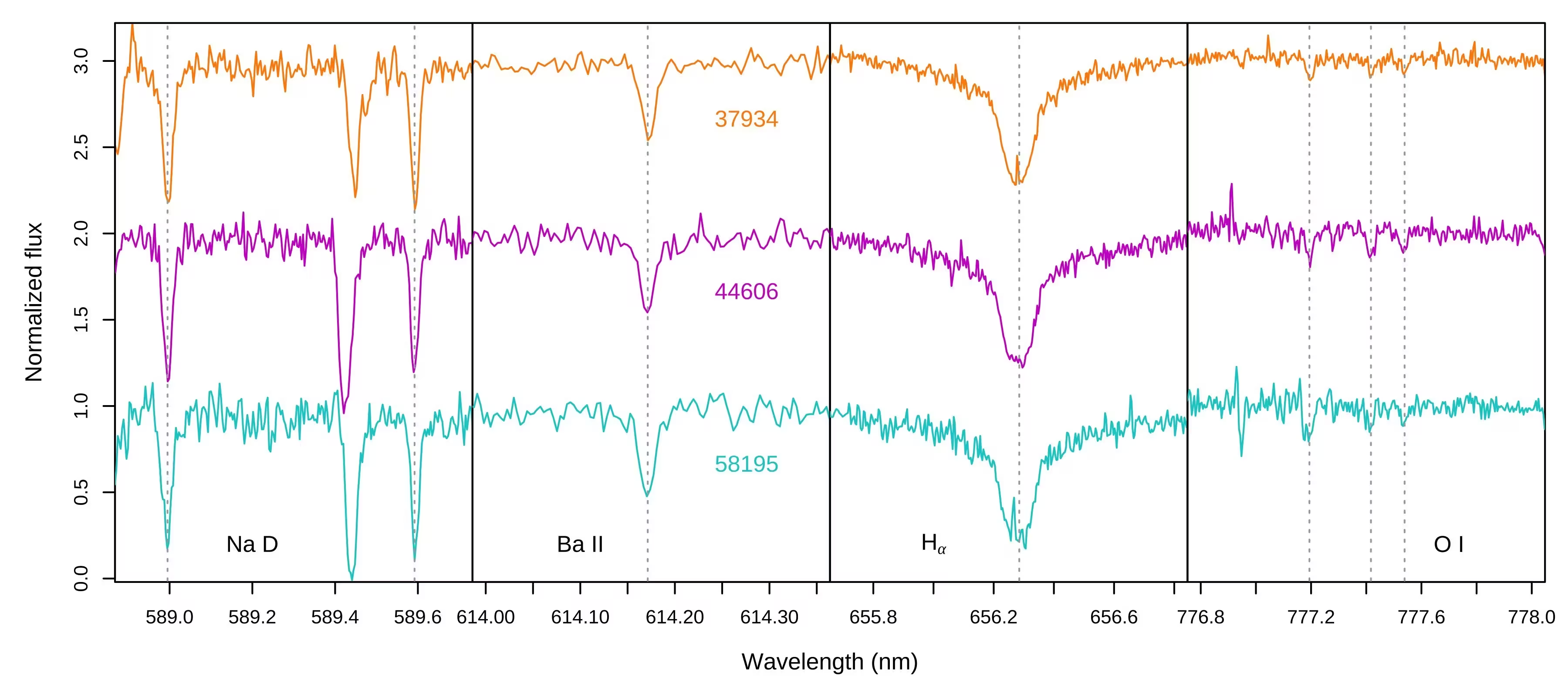
To investigate the origin of the lithium anomaly, the researchers utilized high-resolution spectra gathered by the Ultraviolet and Visual Echelle Spectrograph attached to the Very Large Telescope in Chile. They focused on two newly identified dwarf stars, cataloged as numbers 44606 and 58195, while also re-analyzing a third previously known lithium-rich star in the same cluster, designated 37934. The team measured the detailed chemical abundances of 24 different chemical species, including carbon, nitrogen, oxygen, sodium, iron-peak elements, and various neutron-capture elements.
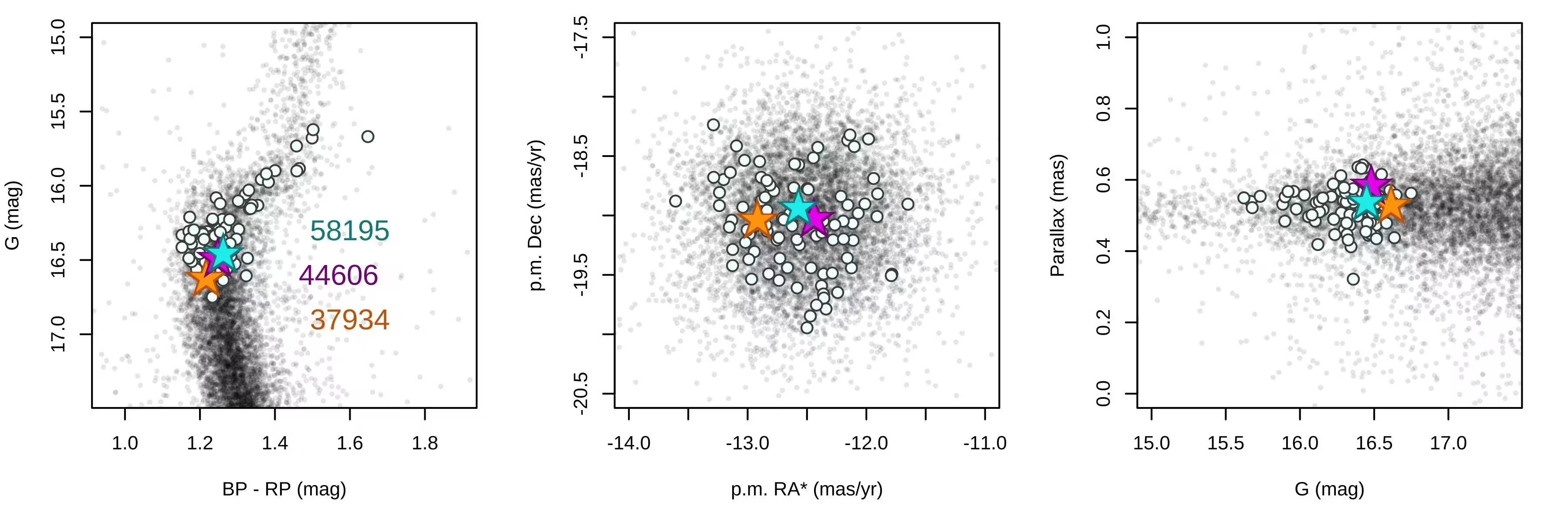
The analysis revealed that stars 44606 and 58195 possess logarithmic lithium abundances of 2.58 and 2.51 dex, respectively. Meanwhile, the previously known star 37934 displayed an even higher lithium abundance of 3.01 dex. These values tower well above the standard lithium plateau, known as the Spite plateau, which sits at approximately 2.2 dex for typical metal-poor halo and cluster dwarfs. The two new discoveries stand out from normal cluster dwarfs by 6.3 and 5.3 standard deviations, confirming they belong to a distinct chemical subgroup.
Evaluating Possible Origins for Excess Lithium
Because lithium is fragile and easily destroyed inside stellar interiors at temperatures exceeding two and a half million degrees, unevolved main-sequence stars cannot manufacture the element on their own. In older giant stars, internal mixing processes can occasionally dredge up freshly synthesized lithium to the surface, but dwarf stars lack the required internal structure for this mechanism to operate. This restriction forces astronomers to look outward for external enrichment channels.
The researchers systematically tested several proposed formation scenarios to account for the surplus lithium. Planet engulfment, often suggested for field stars, was deemed very unlikely because planetary systems are exceedingly rare around metal-poor stars in dense globular clusters. Furthermore, swallowing a brown dwarf would still fall short of depositing enough material to reach the observed abundances. Rotation-driven surface activity and magnetic flares were also ruled out, as the targets showed no detectable rotational broadening or enhanced chromospheric activity in their spectra.
Clues Pointing Toward Binary Interactions and Stellar Mergers
By a process of elimination, the authors suggest that the most plausible explanations involve some form of past interaction with a stellar companion. One viable channel is mass transfer from a more massive asymptotic giant branch star, which could have polluted the dwarf star’s surface with lithium-rich material before fading away. This idea gains support from the elevated levels of neutron-capture elements, such as barium and yttrium, measured in the targets.
Another possibility involves pollution by nova ejecta from a white dwarf binary system, or alternatively, a primordial stellar merger within the dense cluster environment. Although the Gaia space observatory astrometry and current literature show no visible binary companions today, hidden white dwarfs, tight orbits, or disrupted binary systems remain entirely plausible. The researchers emphasize that thorough radial-velocity monitoring and targeted searches for faint companions will be required to finally solve the riddle of these lithium-rich stellar survivors.
The study was posted to the arXiv preprint server on November 16, 2026.
This article has been fact checked for accuracy, with information verified against reputable sources. Learn more about us and our editorial process.
Last reviewed on .
Article history
- Latest version
Reference(s)
- Lucertini, F.. “Two new Li-rich dwarf stars in M 4: abundance patterns and possible origins.” arXiv.org <http://arxiv.org/abs/2611.21534v1>.
Cite this page:
- Posted by Aisha Ahmed