Astronomers Are Hunting for a Rare Third Way That Stars Can Explode
Astronomers have discovered a rare supernova that solves a 1,000-year-old mystery, revealing a third, distinct way that stars can explode.
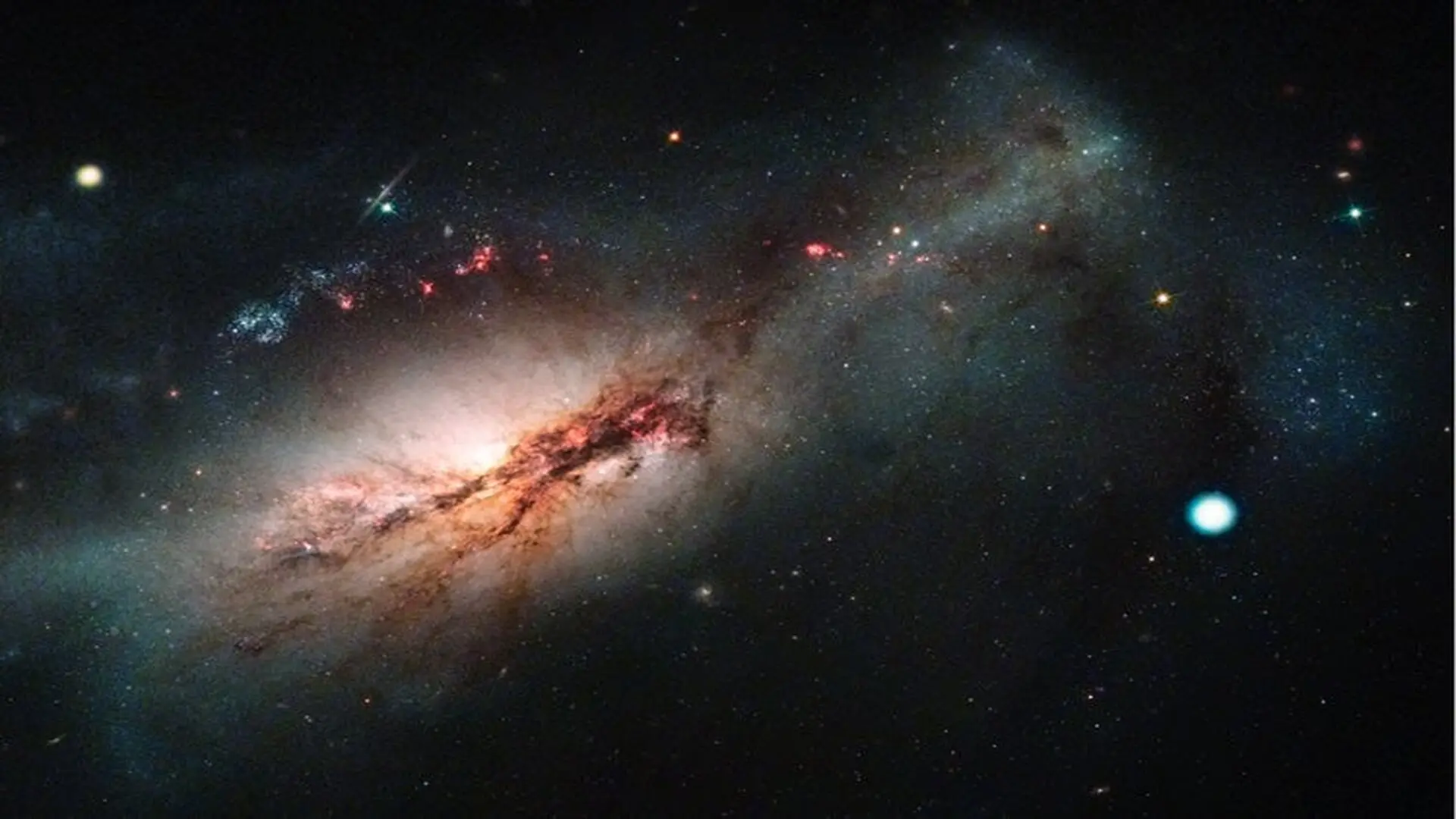
Astronomers have long sought to definitively observe an electron-capture supernova, a rare and specific death pathway for stars caught between mass categories. While the 2018 discovery of SN 2018zd provided a compelling case, ongoing research highlights the complexities of classifying these cataclysmic events, leaving both the mechanics of this explosion and the origins of the famous Crab Nebula subject to active scientific debate.
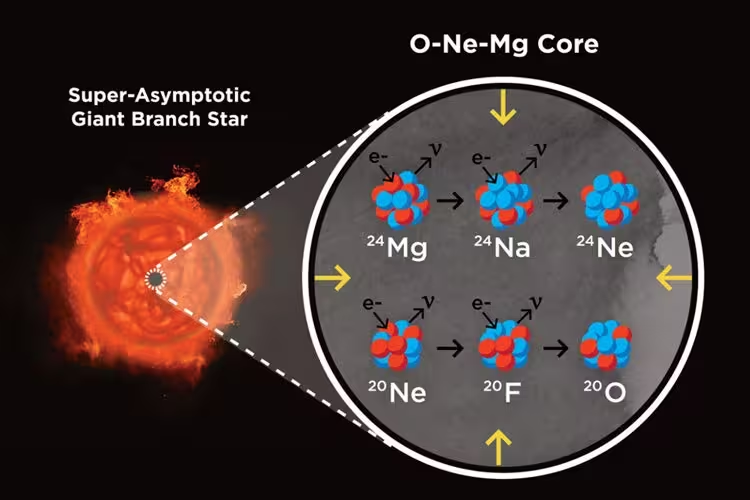
The concept of an electron-capture supernova was theoretically proposed in 1980. It describes the fate of stars with masses between approximately eight and 10 times that of the Sun. In these specific cases, gravity overcomes the pressure supporting the stellar core not through iron accumulation, but through the capture of electrons by nuclei within an oxygen-neon-magnesium core. This sudden loss of pressure triggers a core collapse, theoretically resulting in a neutron star.
Searching for Evidence in the Aftermath
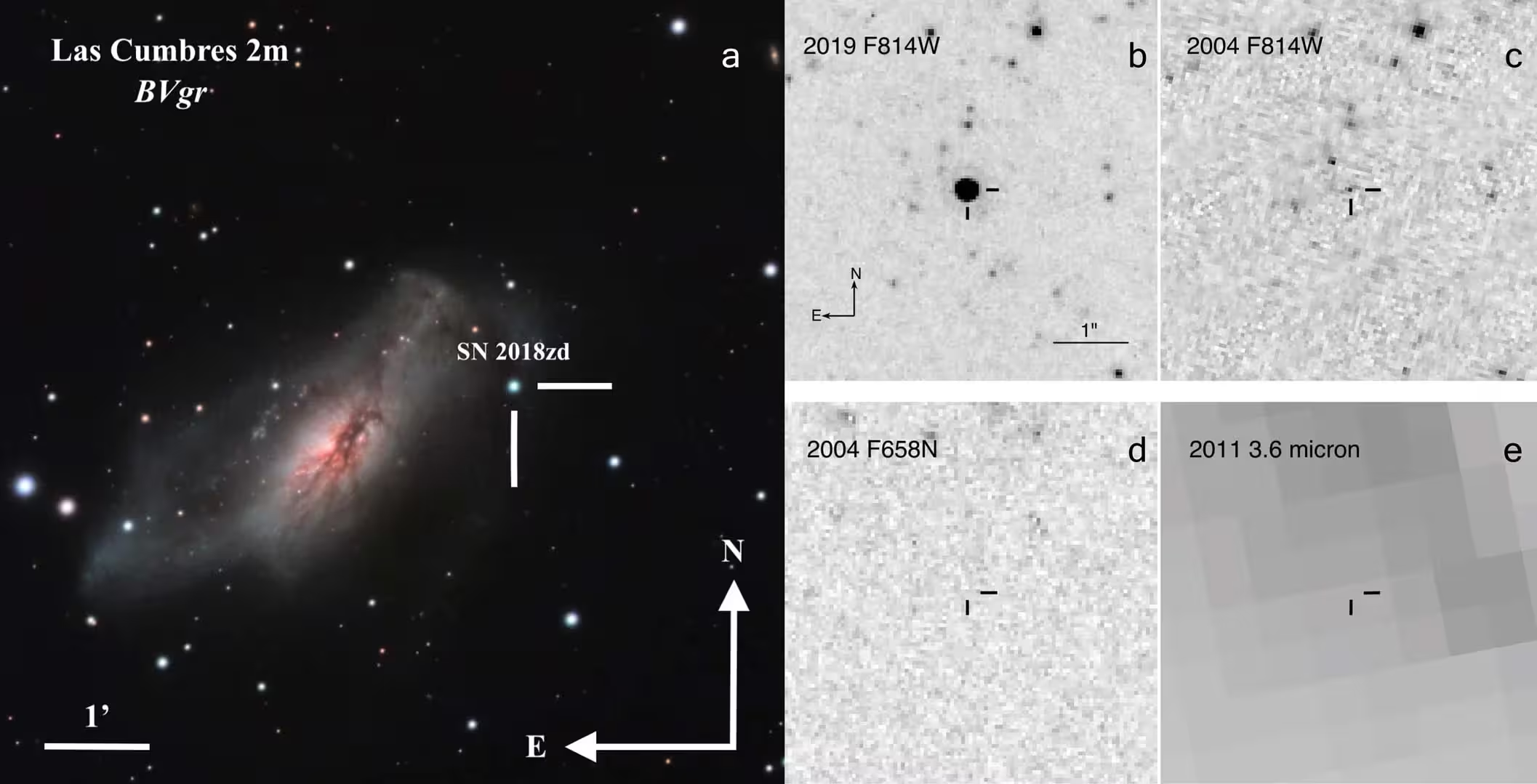
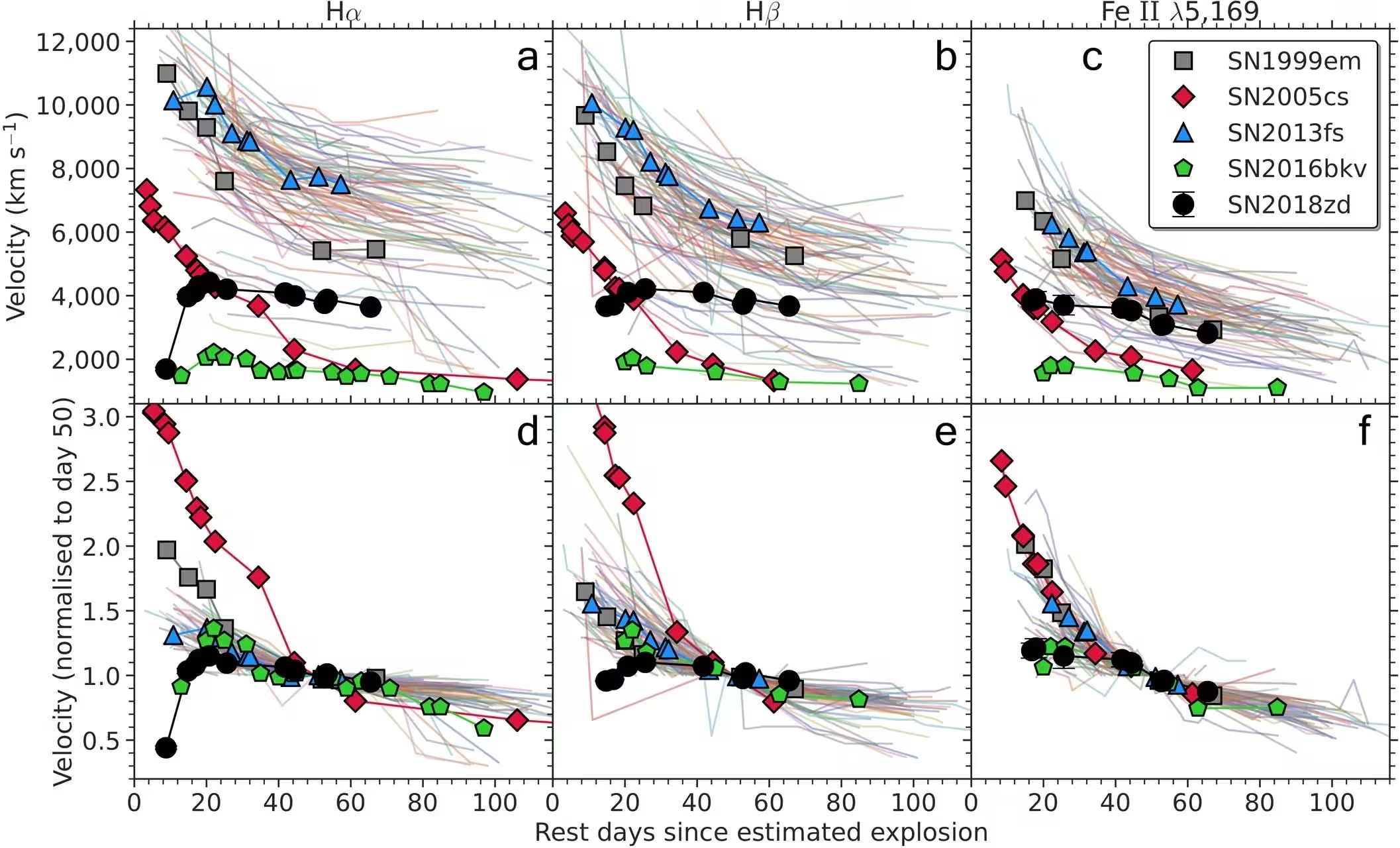
SN 2018zd, located in the galaxy NGC 2146, was first spotted by amateur astronomer Koichi Itagaki. Following its detection, an international research team, including scientists from the University of California, Santa Barbara, the Las Cumbres Observatory, UC Berkeley, and Tel Aviv University, conducted a rigorous multi-wavelength analysis. Their findings, published in Nature Astronomy, noted that the event aligned with six specific observational signatures expected of an electron-capture event, including a particular progenitor star signature and a distinct chemical footprint in the ejected debris.
However, the scientific community remains cautious. A competing study published in 2021 argued that the observational data for SN 2018zd could also be reconciled with a standard, low-mass iron-core collapse model, depending on the assumed distance to the galaxy and the interpretation of radioactive nickel-56 yields.
The Ongoing Mystery of the Crab Nebula
The discussion surrounding SN 2018zd is intrinsically tied to the 1054 supernova that birthed the Crab Nebula. For years, researchers have hypothesized that the Crab Nebula originated from an electron-capture explosion. Yet, recent high-resolution observations using the James Webb Space Telescope (JWST), led by Tea Temim, have complicated this narrative. The study, published in The Astrophysical Journal Letters, measured abundance ratios of nickel to iron that align more closely with a standard iron-core collapse than the signature predicted by electron-capture models.
The pursuit of these elusive stellar events continues. A 2026 study in The Astrophysical Journal, led by Masato Sato, identified 10 additional candidates that exhibit characteristics of electron-capture supernovae. While the team flagged three as particularly promising, they emphasized that identifying these events requires a comprehensive approach, including precise distance measurements and follow-up spectroscopy.

Ultimately, while SN 2018zd serves as a vital laboratory for testing models of stellar evolution, it underscores the difficulty of definitively pinning down the final moments of stars. As astronomers refine their models and obtain better data on future supernovae, they hope to distinguish between the subtle variations in core-collapse physics that determine the final state of the universe’s most massive objects.
Further exploration of this topic can be found in the following research literature:
- How low can you go? SN 2018zd as a low-mass Fe core-collapse supernova(arXiv preprint, 2021)
- The disappearances of six supernova progenitors(Monthly Notices of the Royal Astronomical Society, 2023)
- Dissecting the Crab Nebula with JWST: Pulsar Wind, Dusty Filaments, and Ni/Fe Abundance Constraints on the Explosion Mechanism(The Astrophysical Journal Letters, 2024)
- Electron-capture Supernova Candidates from Light Curves: Implications for Their Progenitors and Explosion Properties(The Astrophysical Journal, 2026)
- The Formation of Electron-capture Supernovae: A Review(Research in Astronomy and Astrophysics, 2026)
This article has been fact checked for accuracy, with information verified against reputable sources. Learn more about us and our editorial process.
Last reviewed on .
Article history
- Latest version
Reference(s)
- “Home.” UC Santa Barbara <https://www.ucsb.edu/>.
- “Las Cumbres Observatory.”, May 29, 2026 <https://lco.global/>.
- “University of California, Berkeley: Home.”, June 30, 2025 University of California, Berkeley <https://berkeley.edu/>.
- “main site frontpage - english.” Tel Aviv University <https://english.tau.ac.il/>.
- Hiramatsu, Daichi. “The electron-capture origin of supernova 2018zd - Nature Astronomy.”, vol. 5, no. 9, pp. 903-910. Nature, doi: 10.1038/s41550-021-01384-2. <https://www.nature.com/articles/s41550-021-01384-2>.
- Temim, Tea., et al. “Dissecting the Crab Nebula with JWST: Pulsar Wind, Dusty Filaments, and Ni/Fe Abundance Constraints on the Explosion Mechanism.” The Astrophysical Journal Letters, vol. 968, no. 2, June 13, 2024, pp. L18 American Astronomical Society, doi: 10.3847/2041-8213/ad50d1. <https://doi.org/10.3847/2041-8213/ad50d1>.
- Sato, Masato., et al. “Electron-capture Supernova Candidates from Light Curves: Implications for Their Progenitors and Explosion Properties.” The Astrophysical Journal, vol. 1004, no. 2, June 11, 2026, pp. 156 American Astronomical Society, doi: 10.3847/1538-4357/ae6808. <https://doi.org/10.3847/1538-4357/ae6808>.
- Callis, E.. “How low can you go? SN 2018zd as a low-mass Fe core-collapse supernova.” arXiv.org <https://arxiv.org/abs/2109.12943>.
- Van Dyk, Schuyler D., et al. “The disappearances of six supernova progenitors.” Monthly Notices of the Royal Astronomical Society, vol. 519, no. 1, December 5, 2022, pp. 471-482. Oxford University Press (OUP), doi: 10.1093/mnras/stac3549. <https://doi.org/10.1093/mnras/stac3549>.
- Wang, Bo., et al. “The Formation of Electron-capture Supernovae: A Review.” Research in Astronomy and Astrophysics, vol. 26, no. 3, January 15, 2026, pp. 032001 IOP Publishing, doi: 10.1088/1674-4527/ae2d0e. <https://doi.org/10.1088/1674-4527/ae2d0e>.
Cite this page:
- Posted by Aisha Ahmed