JWST Spots a Fully Formed Dusty Galaxy Just 400 Million Years After the Big Bang
Astronomers have discovered an unexpectedly evolved galaxy in a region where only primitive galaxies were thought to exist, challenging existing theories of galactic formation.
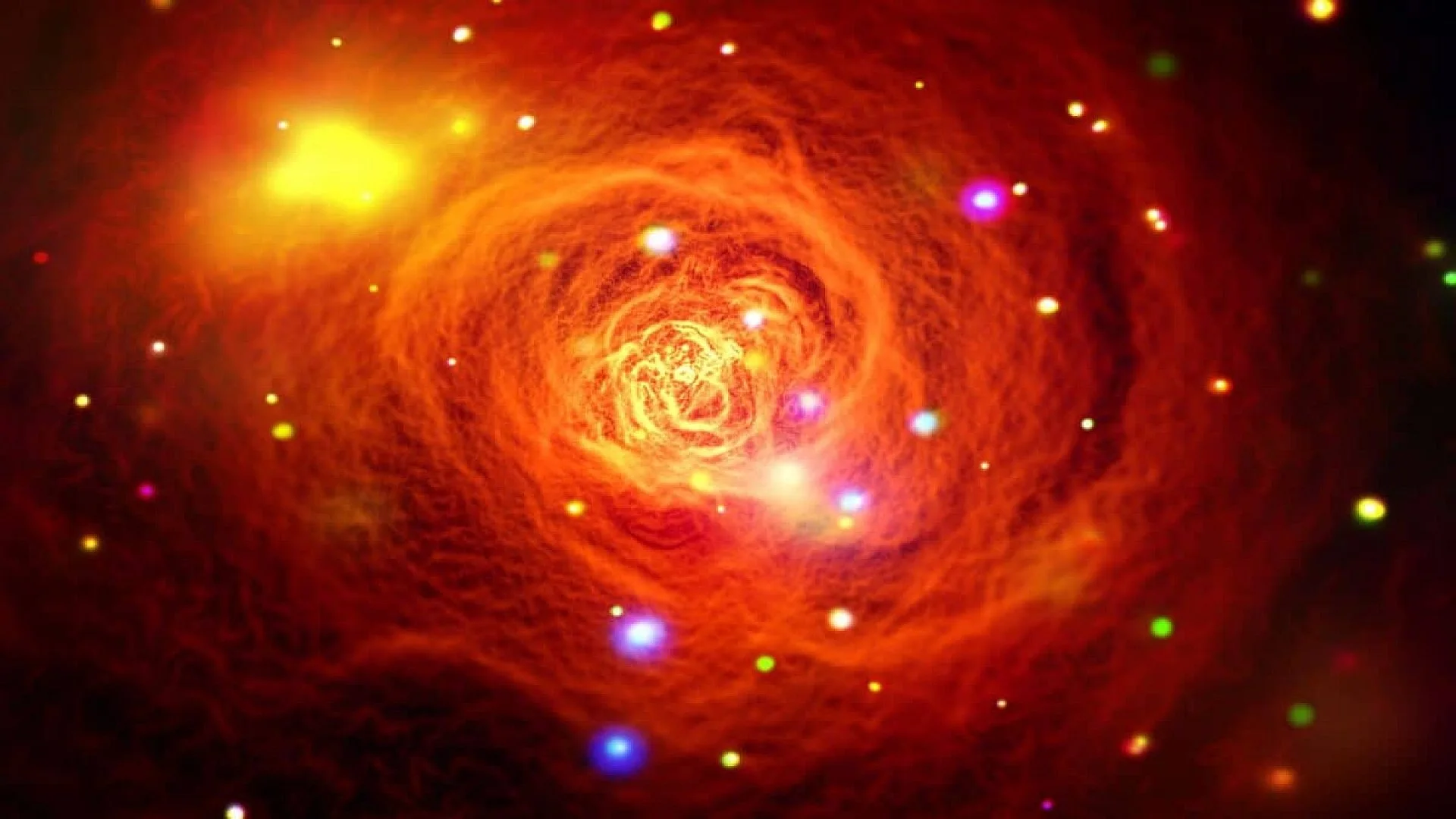
A mysterious galaxy, shrouded in a thick veil of dust, has left astronomers stunned, with its existence defying the conventional timeline of cosmic evolution. Dubbed EGS-z11-R0, this enigmatic object has been spotted by the NASA’s James Webb Space Telescope (JWST), sending shockwaves throughout the scientific community. The galaxy’s massive size and complex composition have raised eyebrows, as it appears to be far more evolved than expected, given its age of just 400 million years after the Big Bang.
The discovery was made possible through a meticulous sweep of public JWST data, where researchers searched for hidden, dust-obscured systems among previously identified galaxies. Led by Giulia Rodighiero, the team stumbled upon a single, clear match – this unusually red and massive object. The finding has sparked intense debate, with some speculating that such galaxies are either extremely rare or difficult to detect with current methods.
A Galaxy Mired in Dust, Defying Expectations
The EGS-z11-R0 galaxy owes its deep red hue to an abundance of dust that absorbs blue light from young stars, creating a striking ultraviolet light profile. This phenomenon is a hallmark of a mature system, where dust has had ample time to accumulate through multiple generations of star formation.
Astrophysicist Pieter van Dokkum of Yale University has described the short timeline as “astonishing,” drawing parallels with the evolution of long-lived species like sharks and turtles. The presence of carbon in the galaxy’s spectrum, another indicator of advanced evolution, has further piqued interest.
Unveiling the Secrets of a Mature System
The team’s detection of carbon in the galaxy’s spectrum has significant implications, as it suggests that EGS-z11-R0 has already undergone multiple stellar cycles, complete with intense periods of star formation and destruction. This is a far cry from the expected timeline, where galaxies at such an early stage would be in their infancy.
The EGS-z11-R0 galaxy is part of a growing group of “monster galaxies” spotted by the JWST, characterized by their extreme properties, such as mass, brightness, and level of evolution at early cosmic times. While some of these galaxies appear heavily reddened, with their light filtered and dimmed by thick layers of dust, others shine brightly with little dust and are dominated by young, hot stars.
“We think that they are connected by the same evolutionary story,” said Giulia Rodighiero, highlighting the connection between these galaxies and their varying stages of evolution. She also notes that blue galaxies are simply easier to detect, which could skew our understanding of the universe.
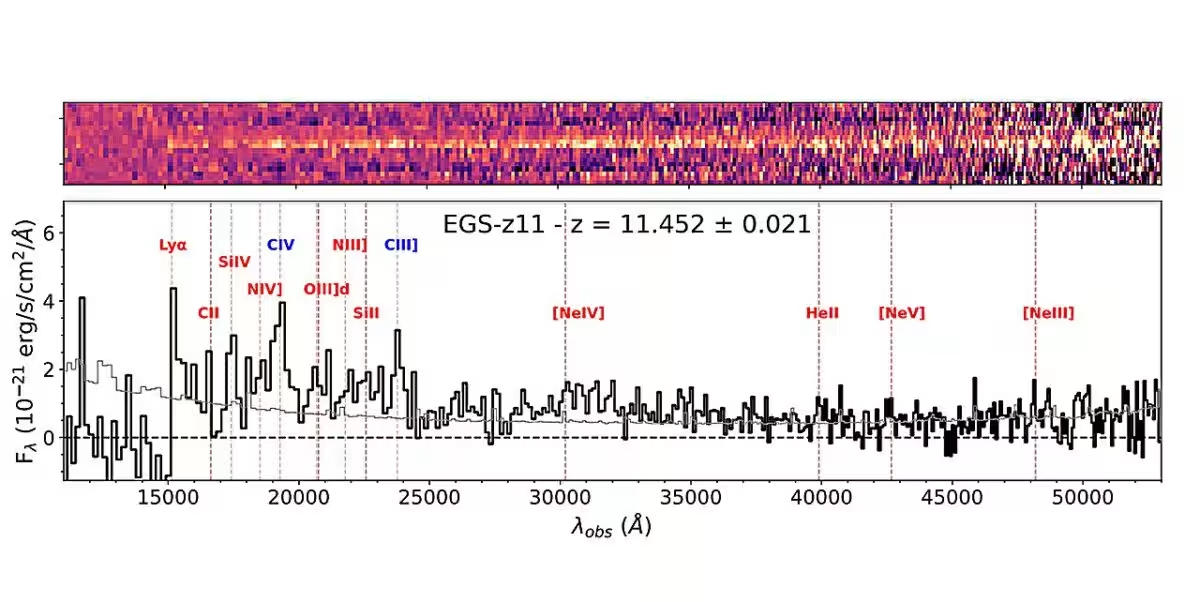
As the scientific community continues to unravel the mysteries of EGS-z11-R0, its unique combination of mass, dust content, and early appearance has left it standing apart from other galaxies, making it a prime target for further study. Future observations with the JWST and other telescopes will be crucial in establishing the prevalence of these early dust-rich galaxies and clarifying their role in the earliest phases of galaxy and black-hole growth.
“Future JWST spectroscopy and deeper mid-infrared, submillimeter and radio observations will be crucial to establish the prevalence of these early dust-rich galaxies and to clarify their role in the earliest phases of galaxy and black-hole growth,” said the researchers.
This article has been fact checked for accuracy, with information verified against reputable sources. Learn more about us and our editorial process.
Last reviewed on .
Article history
- Latest version
Reference(s)
- “Pieter van Dokkum | Department of Physics.” <https://physics.yale.edu/people/pieter-van-dokkum>.
- <https://www.researchgate.net/profile/Giulia-Rodighiero>.
Cite this page:
- Posted by Aisha Ahmed