Webb Telescope Uncovers Extreme Weather Patterns on a Distant Swollen Gas Giant
JWST has uncovered complex temperature variations in the atmosphere of exoplanet WASP-17b, revealing new structural details 1,300 light-years from Earth.

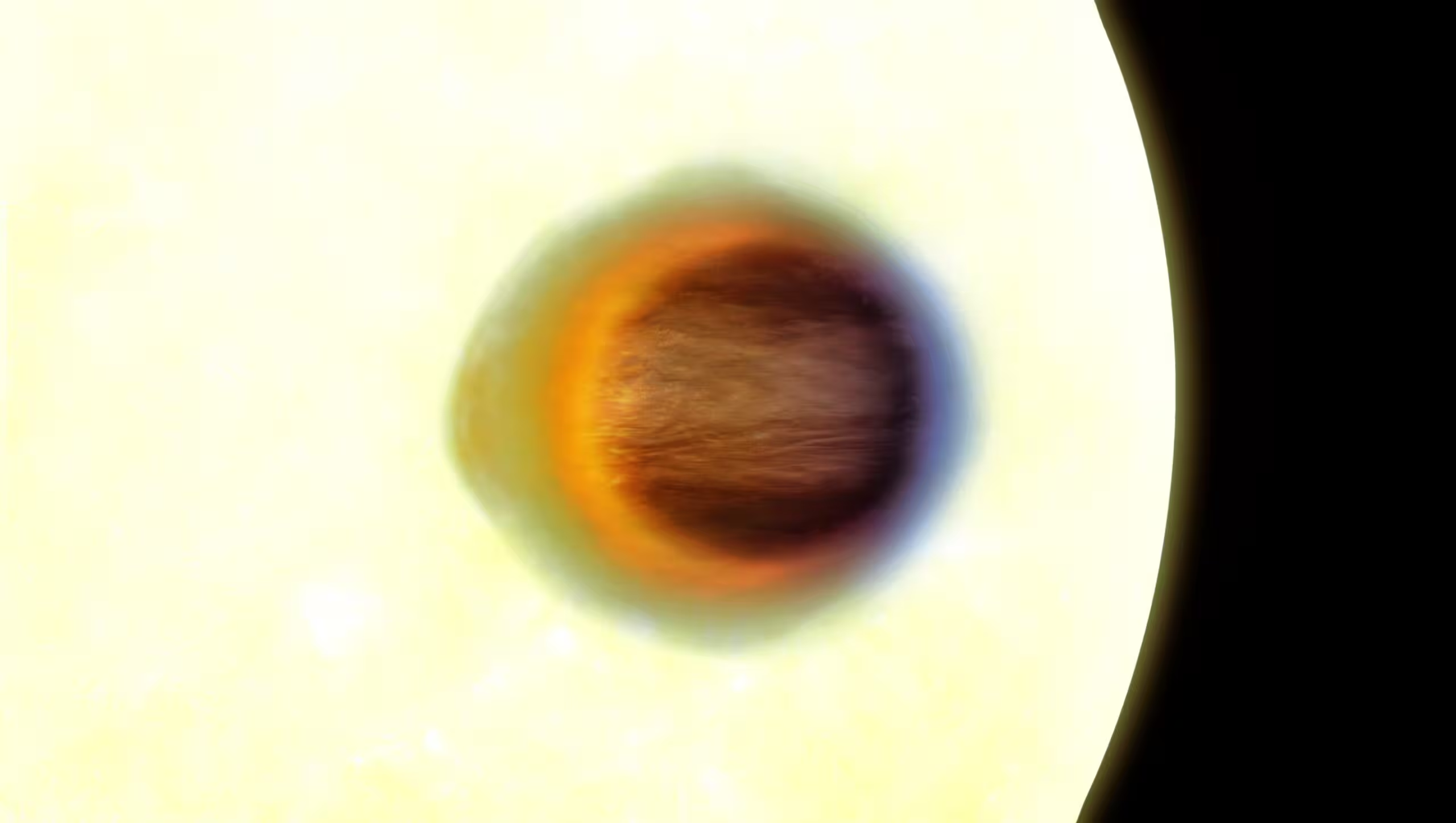
Astronomers utilizing the James Webb Space Telescope (JWST) have unveiled a striking atmospheric asymmetry on the hot Jupiter exoplanet WASP-17b, located roughly 1,300 light-years from Earth. By applying a sophisticated analysis technique known as transmission strings, researchers have mapped the planet’s outer edge, revealing that one side of its atmosphere extends significantly further into space than the other due to intense thermal variations.
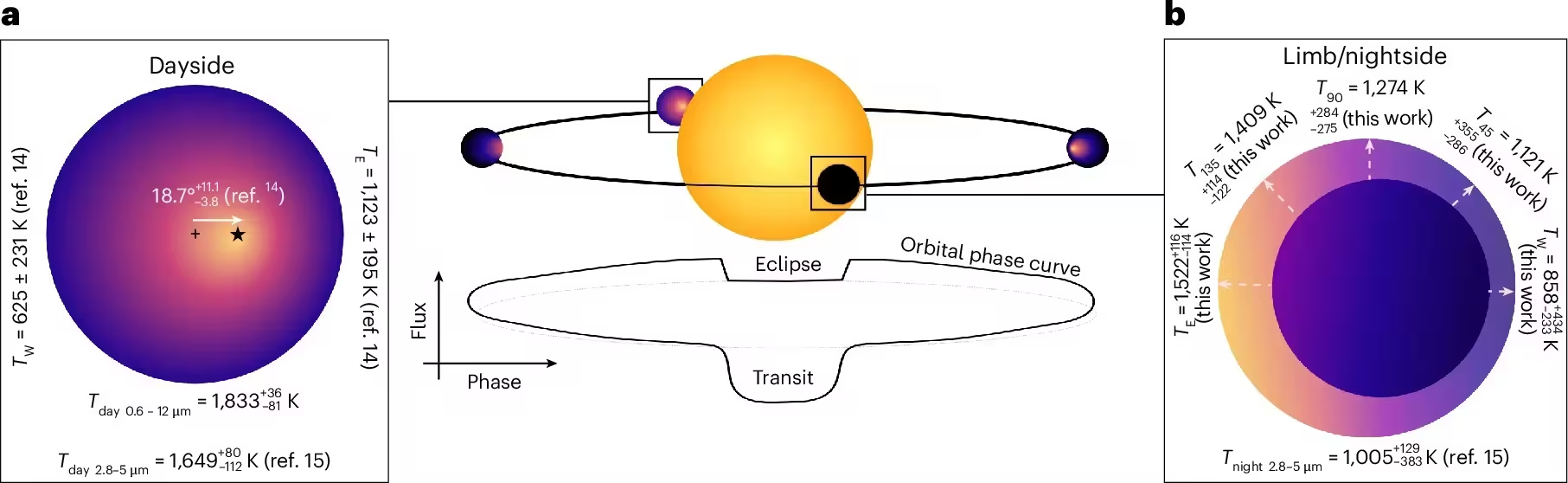
The findings, detailed in Nature Astronomy, demonstrate a clear temperature divide between the planet’s morning and evening limbs. While traditional exoplanet models often treat atmospheric properties as a uniform ring, this new approach suggests that extreme heat-carrying winds create a bloated, hotter evening edge and a more compact, cooler morning boundary. The estimated temperature difference between these two regions is approximately 650 Kelvin.
Deconstructing the Silhouette of a Distant World
WASP-17b is an ideal subject for such high-resolution atmospheric study. With a mass roughly half that of Jupiter but nearly double its radius, the planet possesses an exceptionally puffy, low-density atmosphere that amplifies the signals captured by JWST’s sensitive instruments. Because the planet is tidally locked—presenting the same face to its host star—it features a permanent dayside and nightside, fueling a robust eastward equatorial jet that redistributes energy across the globe.
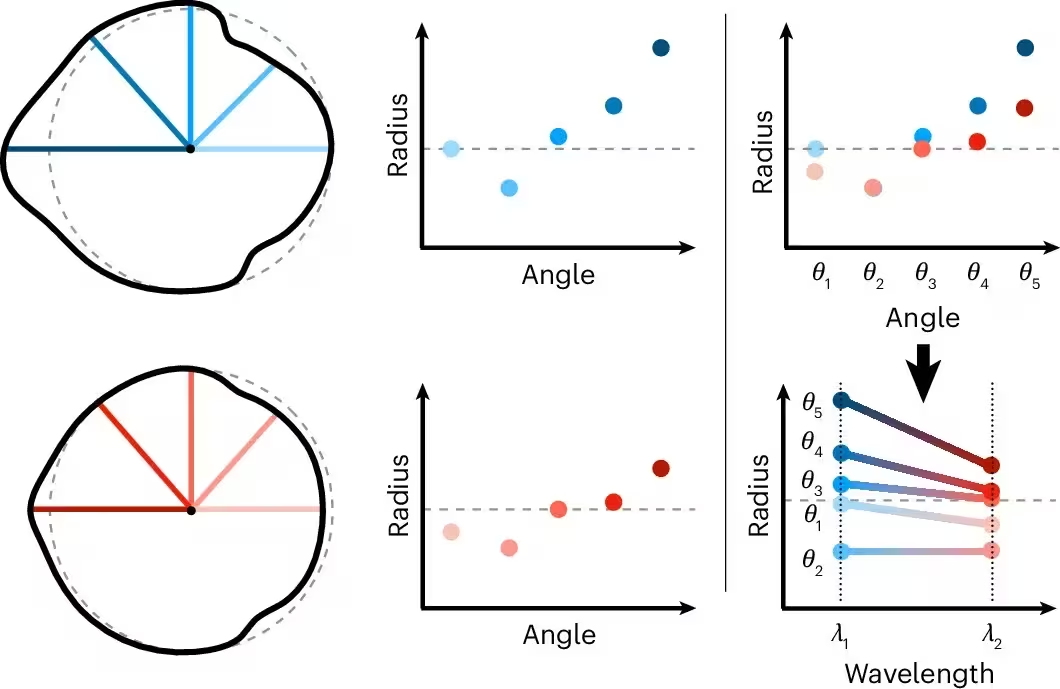
The transmission strings method, developed by astrophysicists at the University of Bristol and employed by a team including researchers from Cornell University, allows scientists to move beyond one-dimensional averages. By analyzing how the planet’s apparent radius changes as it traverses the stellar disk, the team could reconstruct the atmosphere’s physical geometry at different points around its limb.
“Rather than assuming your atmosphere is a circle with the same radius all the way around, our technique allows you to pull out different distances from the centre to the edge of the planet,” explained lead author Lili Alderson, a Klarman Postdoctoral Fellow at Cornell.
Thermal Dynamics Over Chemical Composition
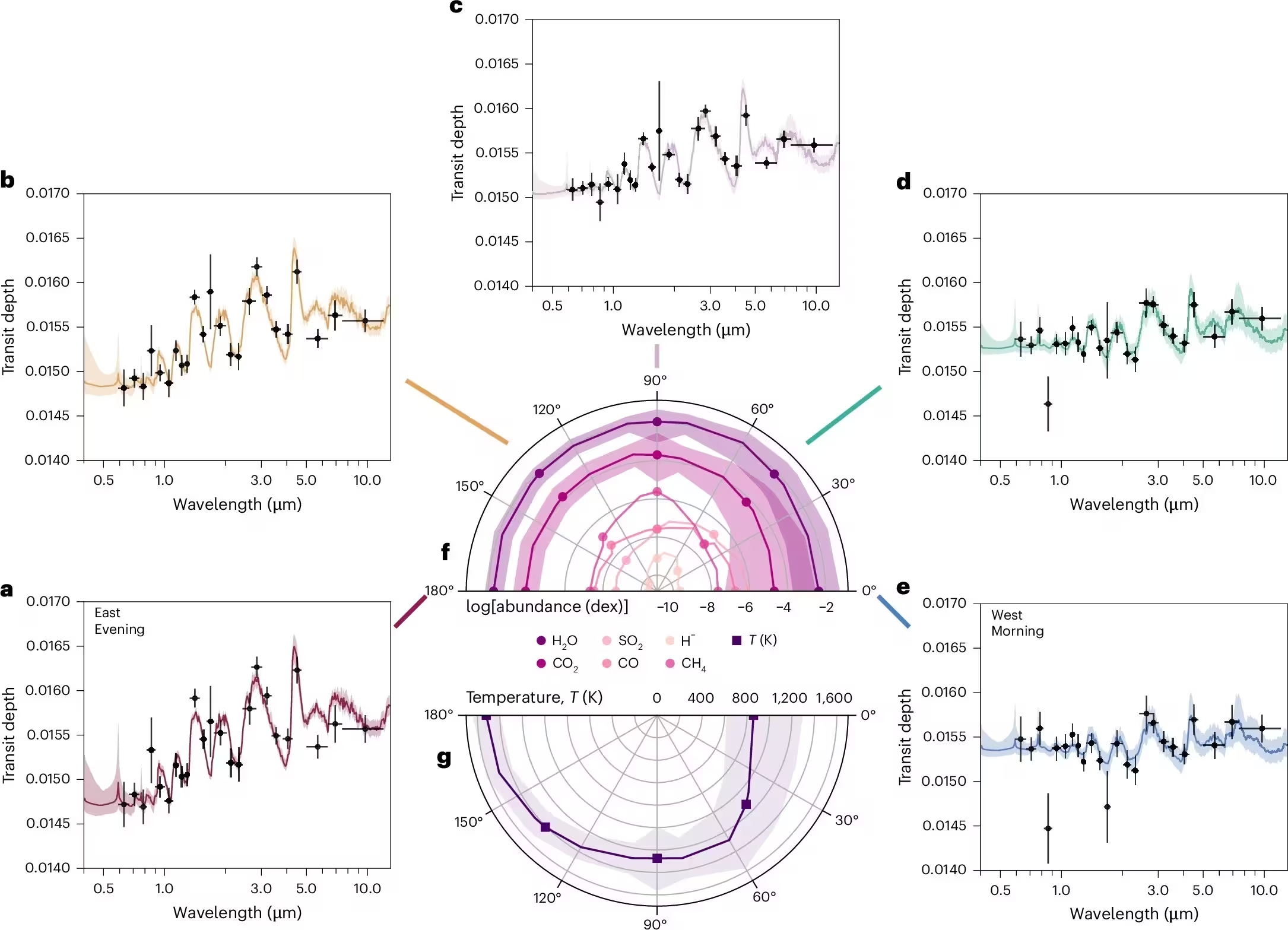
Data gathered via the TST DREAMS program, using the telescope’s NIRISS, NIRSpec, and MIRI instruments, provided a spectral range spanning 0.6 to 12 micrometers. When the team segmented the observations into 24 distinct intervals, they found that temperatures near the morning equator hover around 850 Kelvin, while the evening side surges to roughly 1,500 Kelvin.
Crucially, the study suggests that this structural asymmetry is primarily a product of temperature and pressure rather than a significant chemical difference. Although the team identified water vapor and carbon dioxide in the atmosphere, their abundances appeared consistent across the limb. The variations in the observed spectra are better explained by the physical expansion of the hotter gas, which increases the “scale height” on the evening side, rather than a fundamental shift in the planet’s atmospheric chemistry.
While the analysis provides a transformative view of exoplanetary climate, researchers note that it remains an emerging field. The current model assumes northern and southern hemisphere symmetry, and certain elements—such as regional cloud properties—remain difficult to constrain. Nevertheless, this work establishes a new benchmark for understanding how heat circulates on worlds trillions of miles away, moving planetary science toward a more dynamic, multi-dimensional view of alien skies.
Further exploration into these phenomena, alongside studies regarding distinct dawn and dusk conditions on other gas giants, promises to clarify how stellar radiation and internal energy dictate the complex weather systems found throughout our galaxy.
This article has been fact checked for accuracy, with information verified against reputable sources. Learn more about us and our editorial process.
Last reviewed on .
Article history
- Latest version
Reference(s)
- “Homepage | University of Bristol.”, October 16, 2026 <https://www.bristol.ac.uk/>.
- “Cornell University.”, November 11, 2026 <https://www.cornell.edu/>.
Cite this page:
- Posted by Aisha Ahmed