Europe Will See a Rare Eclipse‑Sunset: Crescent Sun Sets on August 12, 2026
A rare solar eclipse coinciding with sunset promises a stunning skywatching spectacle across Europe and North Africa this decade.
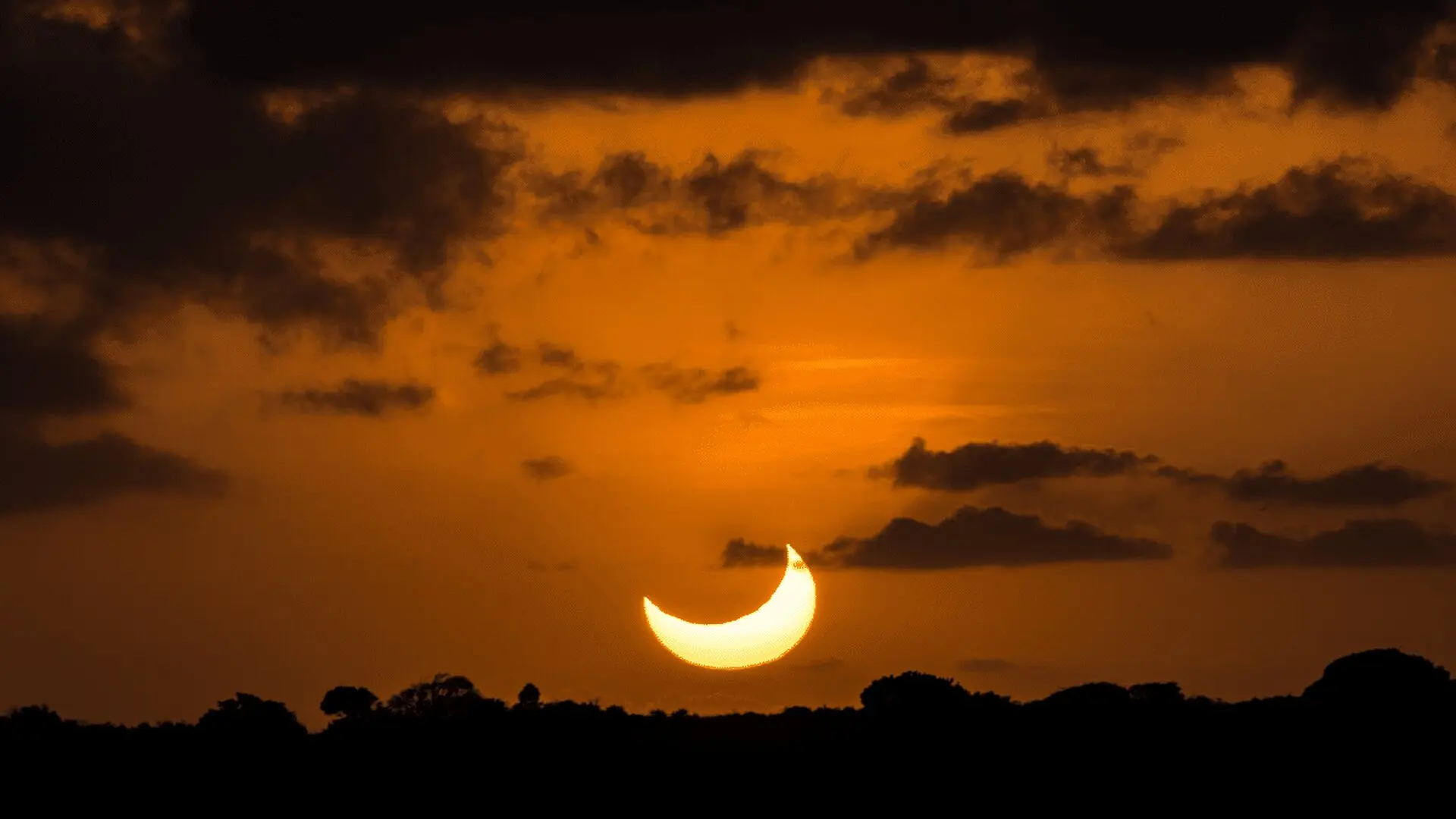
Later this summer, a celestial alignment will let millions across Europe and parts of North Africa watch a solar eclipse merge with the day’s final light. The moon will skim the Sun just as it slips toward the horizon, creating a rare twilight‑eclipse that will be visible far beyond the narrow corridor of totality.
Beyond the Totality Belt: A Widespread Partial Eclipse at Dusk
While the total phase of the August 12, 2026 eclipse is confined to a thin strip crossing eastern Greenland, western Iceland and northern Spain, a broad swath of the continent will experience a deep partial eclipse that coincides with sunset. In many locations the Moon will still cover a significant portion of the solar disk when the Sun disappears, turning the usual orange‑red glow into a thin, crescent‑shaped disc. This phenomenon will be observable without the need for a long journey into the totality path.
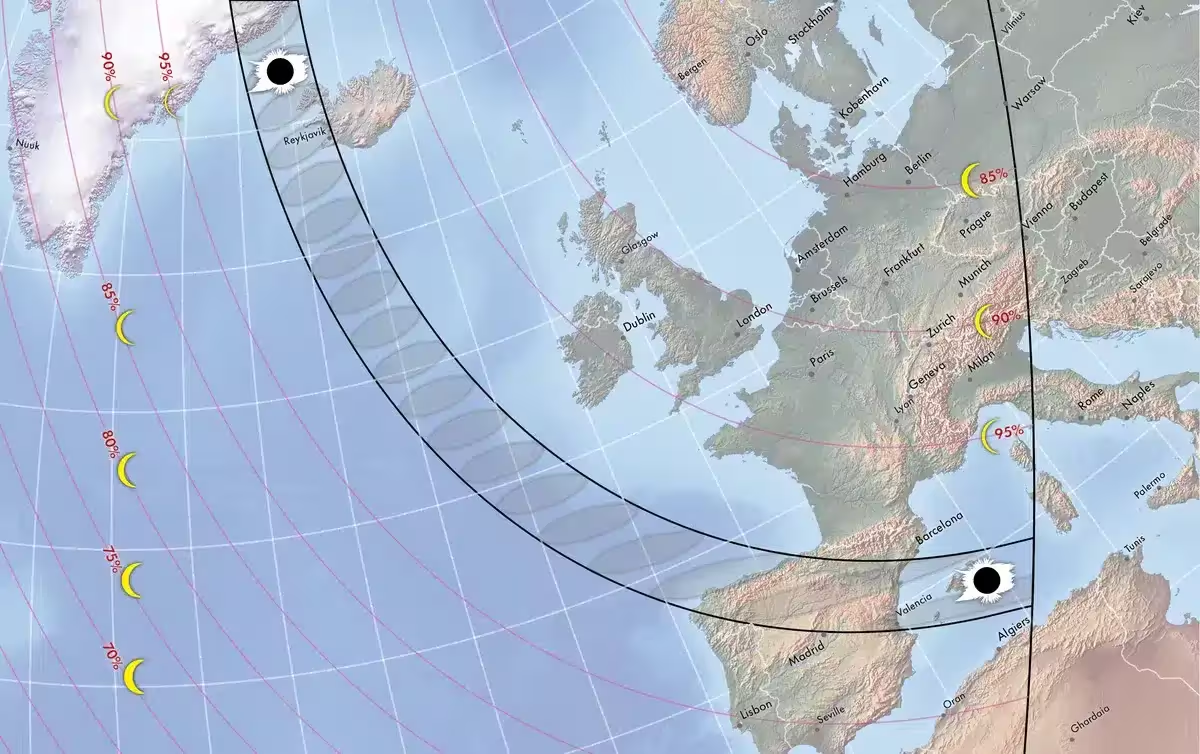
Image credit: Michael Zeiler/EclipseAtlas.com
Why Scientists Are Watching This Sunset Eclipse
According to Space.com, a deep‑partial eclipse occurring at sunset is a rarity, especially over densely populated regions. The geometry of the 2026 event places the maximum coverage just minutes before twilight in many European nations, including France, Germany, Poland, Italy, Austria, Lithuania, and Latvia. Observers will see the Sun’s lower limb masked, producing a “sad‑face” silhouette in most of Europe, while in parts of North Africa the curve will resemble a capital “C”. The interplay of waning daylight, atmospheric hues, and the Moon’s edge promises striking images for both casual sky‑watchers and professional photographers.
Prime Spots for an Eclipsed Sunset
Coastal locations are especially valuable because an unobstructed western horizon maximizes the view of the final moments. In Europe, promising sites include the French island of Corsica, Italy’s Ligurian coastline, the historic city of Venice, high‑altitude spots in the Austrian Alps, and urban outlooks such as Munich, Prague, Wrocław and Warsaw. In North Africa, Algeria’s Cape Matifou and Morocco’s Essaouira offer clear vistas toward the setting Sun. Spain occupies a unique niche: some observers will enjoy totality first and then continue watching the partially eclipsed Sun dip below the horizon, delivering a back‑to‑back sequence rarely seen anywhere on the planet.
Spain’s Dual Eclipse Spectacle
The August eclipse marks Spain’s first mainland total solar eclipse since 1905, a milestone that will attract crowds to regions such as Soria, Sigüenza, Zaragoza and Teruel. In these areas the Moon will completely cover the Sun before the evening light fades, after which a substantial portion of the solar disk will remain hidden as the Sun sets. This combination of totality followed by an eclipsed sunset in a single evening is exceptionally uncommon, promising a memorable experience for astronomers, tourists and photographers alike.
Weather, Horizon and Planning Considerations
Successful viewing hinges on local weather and a clear line of sight toward the west or northwest. Even distant cloud formations can obscure the Sun during its last minutes above the horizon. Experts advise scouting multiple locations ahead of time and staying flexible, as reliable forecasts usually emerge only a few days before the event. Atmospheric refraction may also shift the apparent position of the Sun, allowing some observers just outside the predicted eclipse‑sunset zone to catch a glimpse of the phenomenon. Careful preparation can mean the difference between a routine sunset photo and a once‑in‑a‑lifetime capture.
This article has been fact checked for accuracy, with information verified against reputable sources. Learn more about us and our editorial process.
Last reviewed on .
Article history
- Latest version
Reference(s)
- Carter, Jamie. “Millions could see a rare sunset during the total solar eclipse on Aug. 12, 2026. Here's where to look.”, June 13, 2026 Space <https://www.space.com/stargazing/solar-eclipses/millions-could-see-a-rare-sunset-during-the-total-solar-eclipse-on-aug-12-2026-heres-where-to-look>.
Cite this page:
- Posted by Zara Tariq