Archaeologists Dug Into an 800-Year-Old Toilet Pit and Found a Remarkably Well-Preserved Lost Notebook
German excavation uncovers a 700-year-old medieval notebook perfectly preserved underground
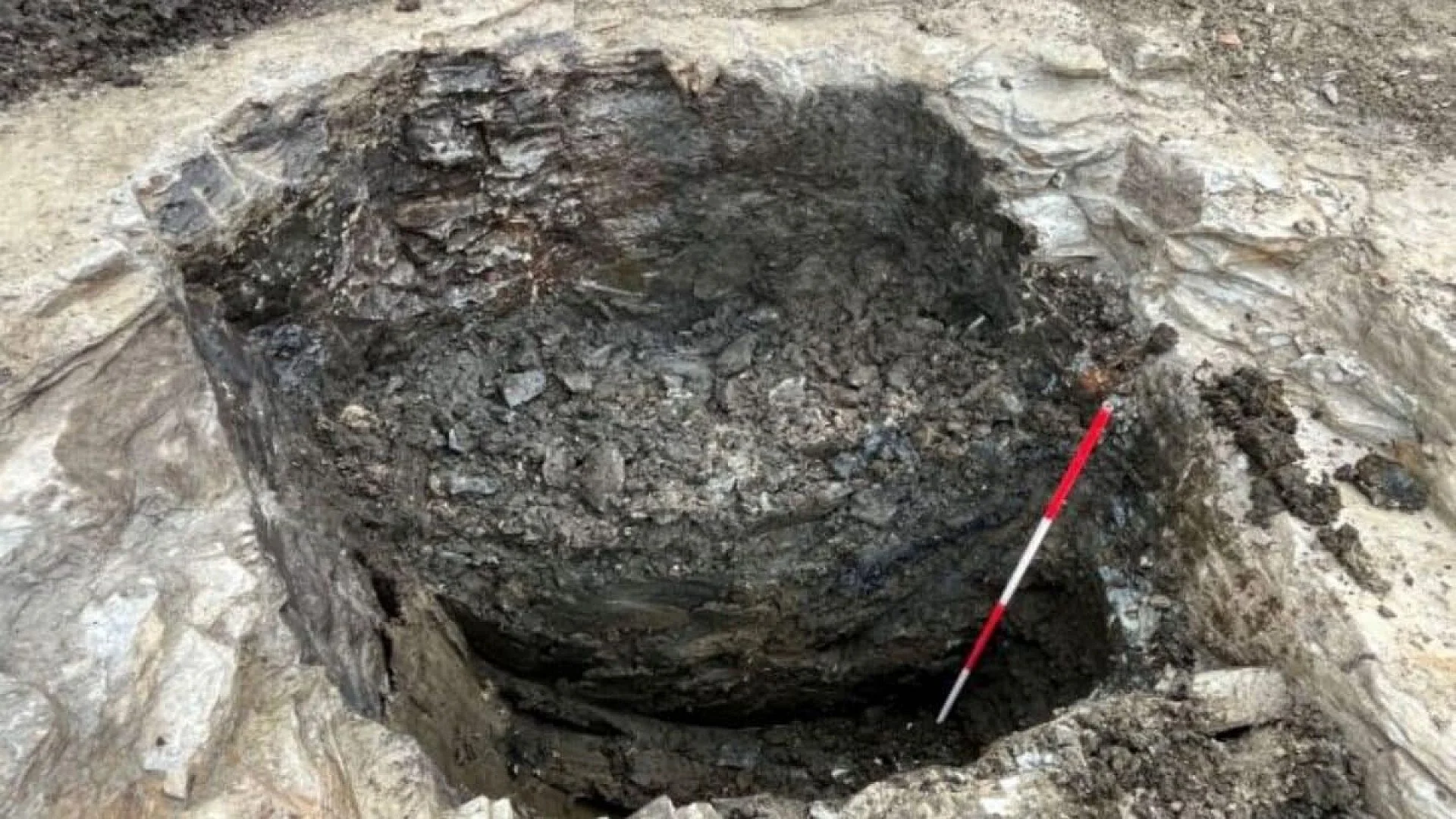
Excavations beneath Paderborn’s historic district have yielded an extraordinary find: a leather‑bound notebook from the 13th‑ or 14th‑century, recovered from the sediment of an eight‑century‑old latrine.
The team from the Regional Association of Westphalia‑Lippe (LWL) was digging ahead of a new city‑administration building near the Abdinghof monastery when they uncovered five medieval cesspits filled with discarded artefacts.
While ancient waste pits rarely sound appealing, their low‑oxygen, damp environment can preserve organic material that would otherwise decay. In this case, the conditions protected a notebook, textiles, baskets and other objects that together paint a vivid picture of everyday life in the Middle Ages.
A Forgotten Manuscript Resurfaces After Eight Centuries
The most striking artefact is a compact notebook comprising ten leaves, eight of which are written on both sides, encased in a leather pouch that has survived remarkably well.
According to an LWL press release, the notebook emerged from a “wet lump of earth.” Restorer Susanne Bretzel noted that, despite centuries underground, the object retained an “unpleasant smell,” yet the interior of the leather case was completely clean of dirt.
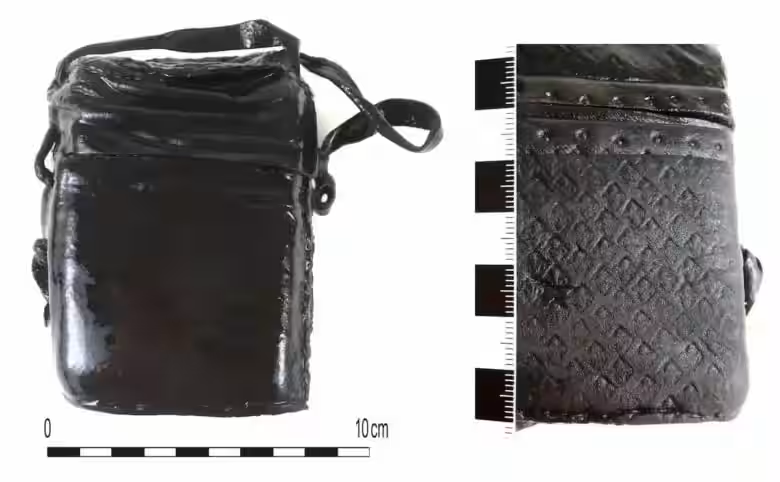
The pages were coated in wax, allowing the author to write with a metal, ivory or bone stylus. The script is cursive Latin, but the text is difficult to read; the writer switched directions and even overwrote earlier lines. Barbara Ruschoff‑Parzinger of the LWL Culture Department explained:
“The text is not easy to decipher, even for experts in the field. Individual words are recognizable, but the transcription will take some time, as some words may have been corrupted by incorrect spellings.”
She added that advanced imaging methods may eventually render the entire manuscript legible. Though isolated notes have turned up in latrine sites before, a complete notebook of this age is unprecedented.
Who Might Have Owned the Book?
“Who wrote the book and what purpose did it serve? Initial assumptions suggest that a Paderborn merchant may have been the author, jotting down business transactions and recording his thoughts in note form,” she noted. “Merchants were educated people: unlike most people, they could both read and write.”
The use of Latin points to a writer with a solid education, as the language was typically reserved for privileged circles in that era. Historical records indicate that affluent residents once inhabited the very area now being excavated.
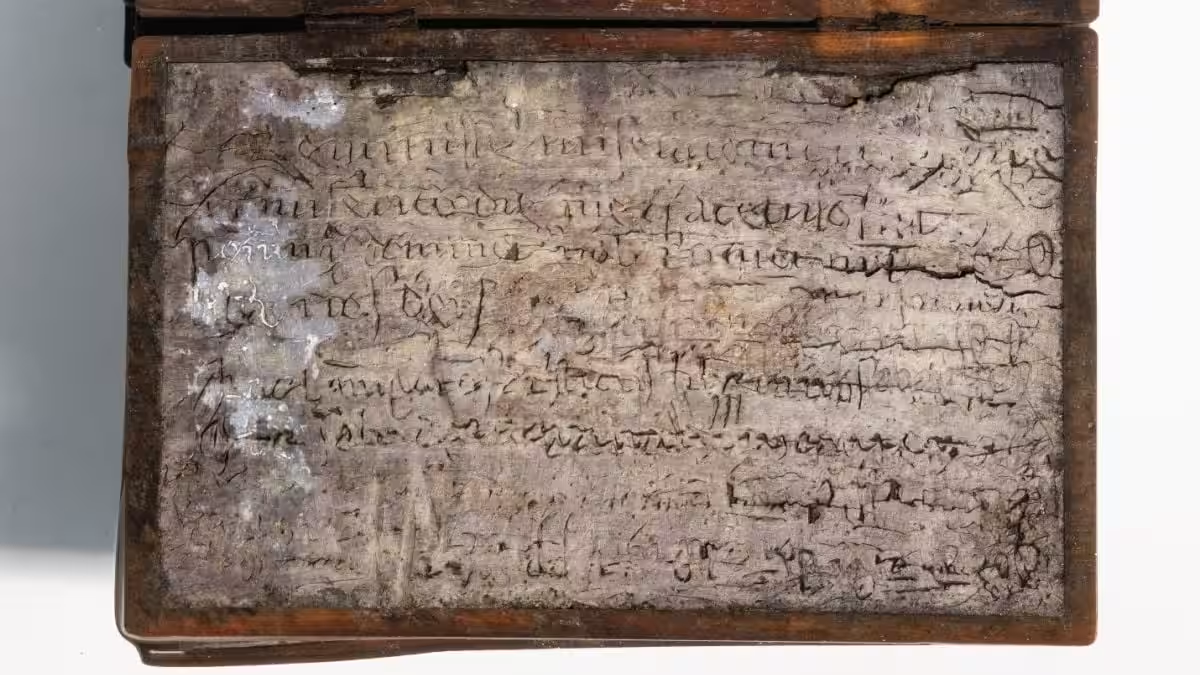
The leather case itself bears rows of embossed fleur‑de‑lis motifs, indicating a high‑quality item rather than a utilitarian pouch. The lily symbol was associated with purity, royal authority and divine favor throughout the Middle Ages.
Silk, Pottery and Everyday Objects
In addition to the manuscript, the excavation yielded barrels, pottery, wicker baskets and a knife. Among the most unexpected finds were fragments of silk fabric.
Bretzel explained that some strips were torn into rectangular pieces while others remained finely woven. She speculated the silk may have been repurposed as early toilet paper before being discarded.
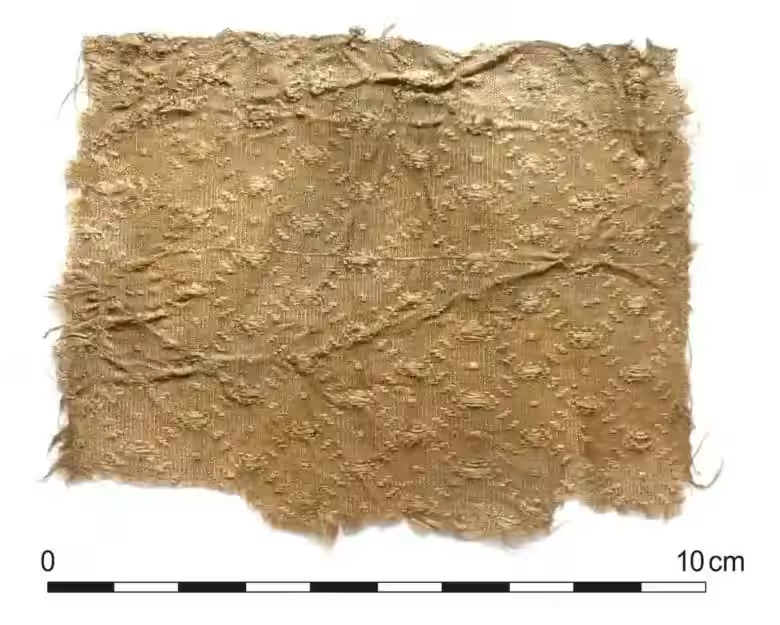
Together with the notebook and its ornate case, the silk pieces suggest that at least some residents of medieval Paderborn had access to luxury commodities.
Researchers hope that, once fully decoded, the manuscript will shed light on its author and provide a richer understanding of daily life in medieval Westphalia.
This article has been fact checked for accuracy, with information verified against reputable sources. Learn more about us and our editorial process.
Last reviewed on .
Article history
- Latest version
Reference(s)
- “Seltener Fund in Paderborn - Mitteilung 12.05.26.” <https://www.lwl.org/pressemitteilungen/mitteilung.php?urlID=63721>.
- <https://independent.academia.edu/SusanneBretzel>.
- Tomasoni, Anja. “Funding projects – LWL Kulturstiftung.”, October 28, 2025 LWL Kulturstiftung <https://lwl-kulturstiftung.de/en/funding-projects/>.
Cite this page:
- Posted by Zara Tariq