Astronomers Spot Record-Breaking Cosmic Laser 8 Billion Light-Years Away
Gigantic South African telescope detects record-breaking early universe galaxy signal
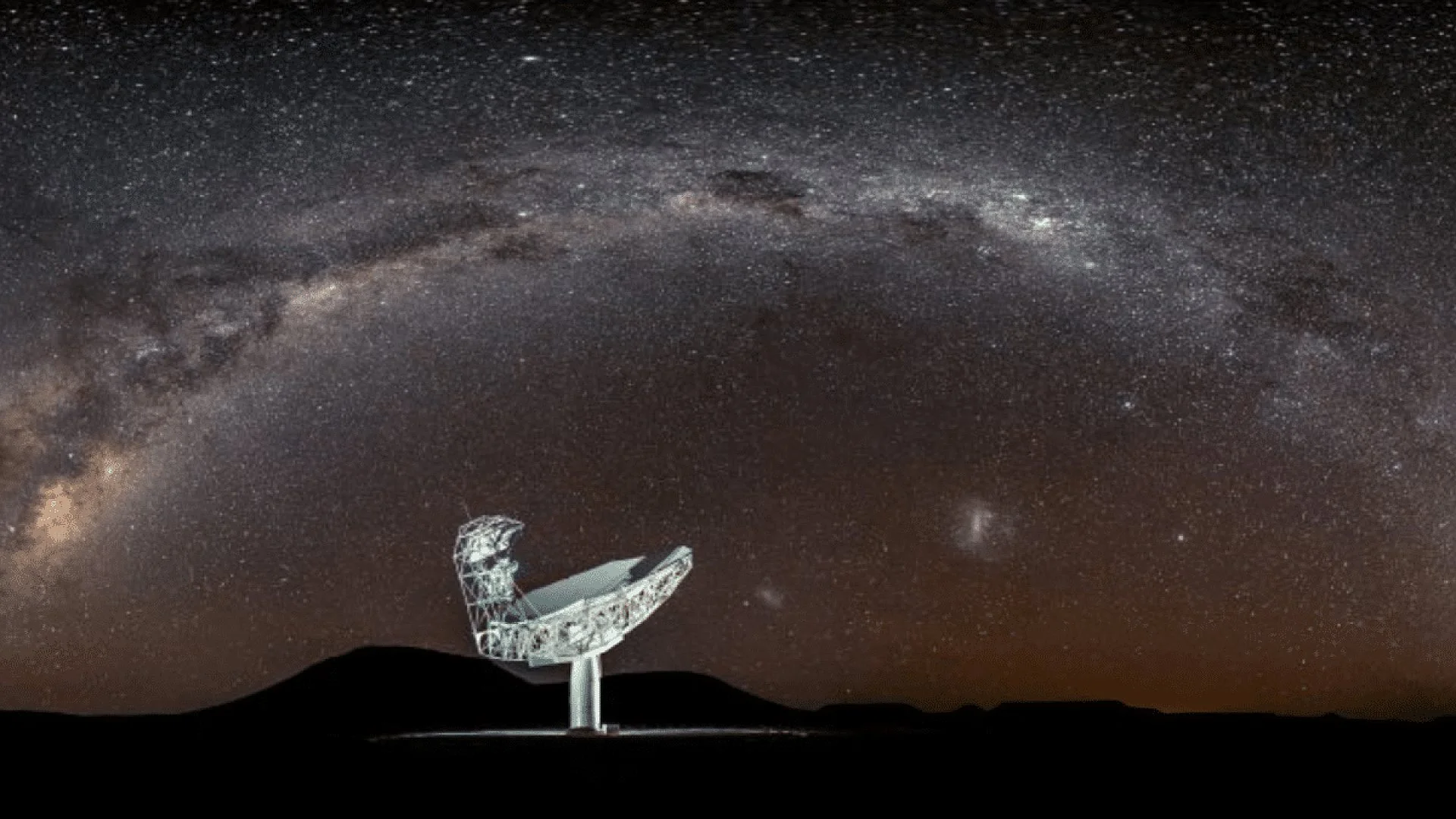
Astronomers in South Africa have identified a hydroxyl megamaser at a distance beyond any previously recorded, opening a new window onto the universe’s formative years. By harnessing the power of the MeerKAT radio telescope, researchers captured a natural space laser emanating from a galaxy over 8 billion light‑years away, shedding light on the turbulent and energetic conditions of galaxies in the early cosmos.
Peering into the Early Cosmos
The newly detected megamaser lets scientists view a galaxy as it existed 8 billion years ago, roughly half the current age of the universe. During that epoch, galaxies were highly dynamic, often colliding and generating stars at extraordinary rates.
According to The Conversation, the hydroxyl megamaser functions like a cosmic lighthouse, its powerful radio output amplified by gravitational lensing from massive foreground objects. This natural magnification made the signal detectable in just five hours of observation, a feat that would otherwise demand hundreds of hours.
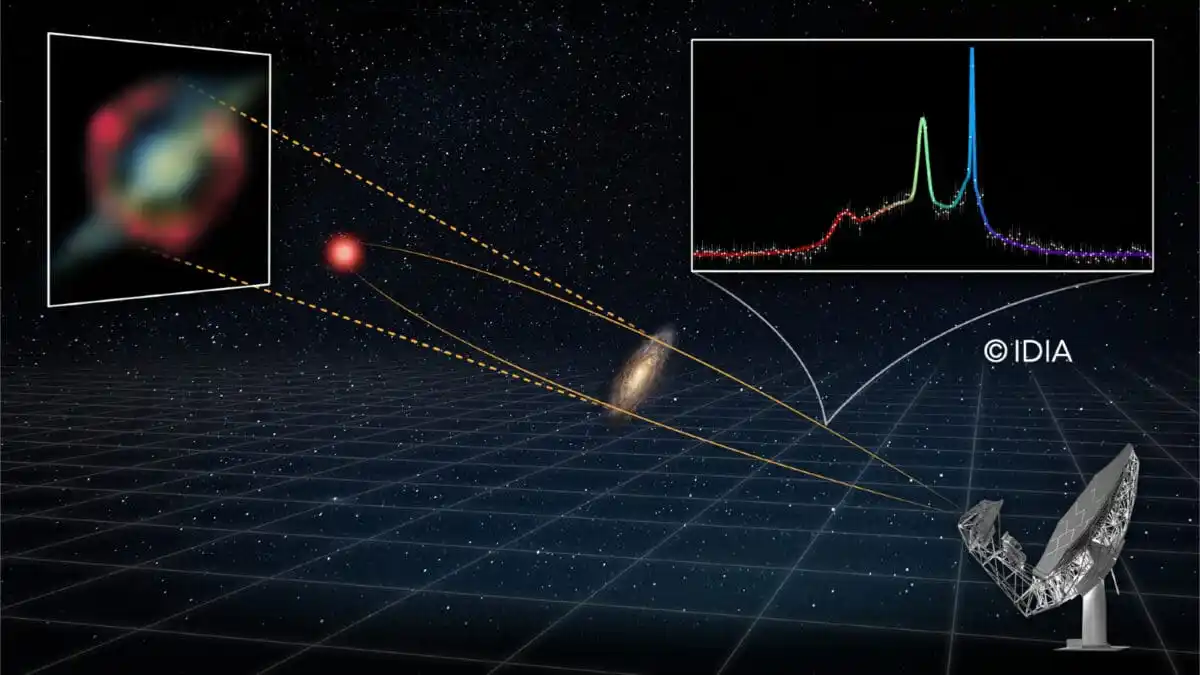
Studying these “toddler” galaxies provides clues about how galaxies form, interact, and evolve, and it hints at the environments where the first supermassive black hole pairs emerged.
How Advanced Instruments Reveal Faint Signals
MeerKAT’s exceptional sensitivity and broad frequency coverage enabled the detection of the megamaser together with neutral hydrogen absorption in a single observing run.
Extracting such weak signals demands sophisticated data‑processing pipelines at facilities like the Inter‑University Institute for Data Intensive Astronomy (IDIA). The telescope streams gigabytes of data each second, requiring trillions of calculations to isolate the faint signatures from the distant universe.
By merging state‑of‑the‑art computing with telescope design and the boost from gravitational lensing, scientists can now spot objects millions of times fainter than typical radio sources, heralding a new chapter in exploring cosmic history.
What This Means for Understanding Galaxy Growth
Hydroxyl megamasers are commonly associated with galaxy mergers, environments that can host supermassive black hole pairs spiraling toward coalescence. Detecting these systems offers a rare glimpse into the final stages of galaxy assembly and the extreme conditions that generate gravitational waves.
The find suggests that upcoming surveys with MeerKAT and the future Square Kilometre Array (SKA) will uncover many more distant and powerful megamasers, turning what were once exceptional occurrences into routine tools for probing star formation and galaxy evolution across the ages.
This article has been fact checked for accuracy, with information verified against reputable sources. Learn more about us and our editorial process.
Last reviewed on .
Article history
- Latest version
Reference(s)
- Manamela, Thato. “South African telescope detects record-breaking signal from the early universe.”, June 8, 2026 The Conversation, doi: 10.64628/AAJ.d4fcpg65p. <https://theconversation.com/south-african-telescope-detects-record-breaking-signal-from-the-early-universe-280060>.
Cite this page:
- Posted by Aisha Ahmed