August 12 Total Solar Eclipse Will Darken Spain for First Time in a Century Amid Planet Parade
Rare August eclipse will darken daytime skies across several nations, as scientists record data and millions await an unforgettable sight.
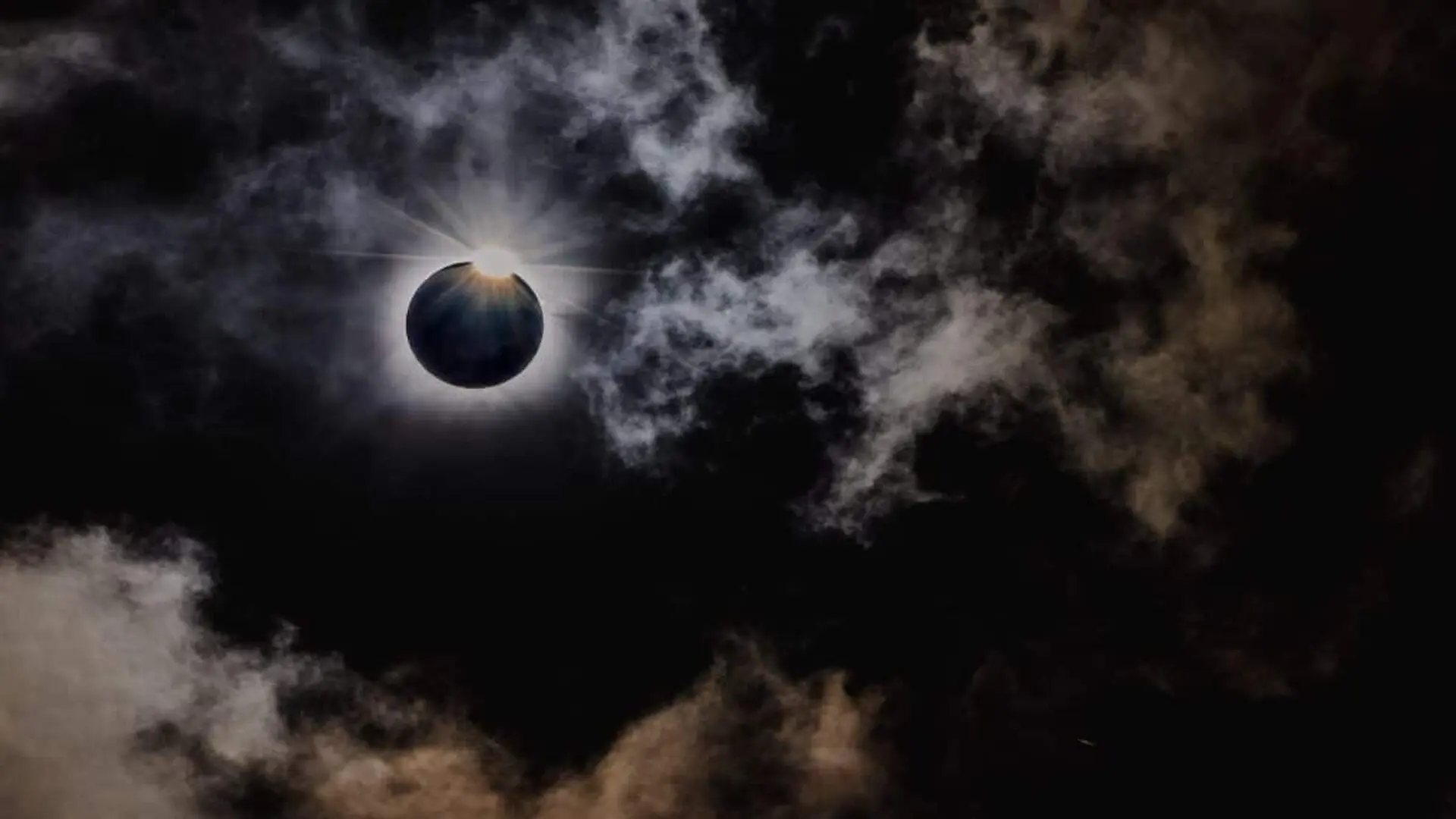
On 12 August, a total solar eclipse will travel across the Arctic, glide over the Atlantic, and briefly plunge parts of Spain, Iceland and Greenland into darkness as the Moon aligns perfectly between Earth and the Sun. The phenomenon coincides with a six‑planet alignment and the peak of the Perseid meteor shower.
Spain’s mainland will witness its first total eclipse in more than a hundred years, turning the event into a milestone for both casual skywatchers and dedicated eclipse chasers.
The Moon’s umbral shadow will sweep roughly 5,130 miles (8,260 km) from near the North Pole toward the south, delivering up to two minutes and 18 seconds of totality. The longest interval will occur off Iceland’s western coast, while the shadow’s contact with Spain will produce a shorter total phase of about one minute.
Although the path of total darkness is narrow, a much broader region will experience a partial eclipse, allowing millions to glimpse a Sun partially obscured. Researchers and space agencies plan to exploit the brief darkness to probe solar and atmospheric dynamics.
Darkness Traces a Route to the Iberian Peninsula
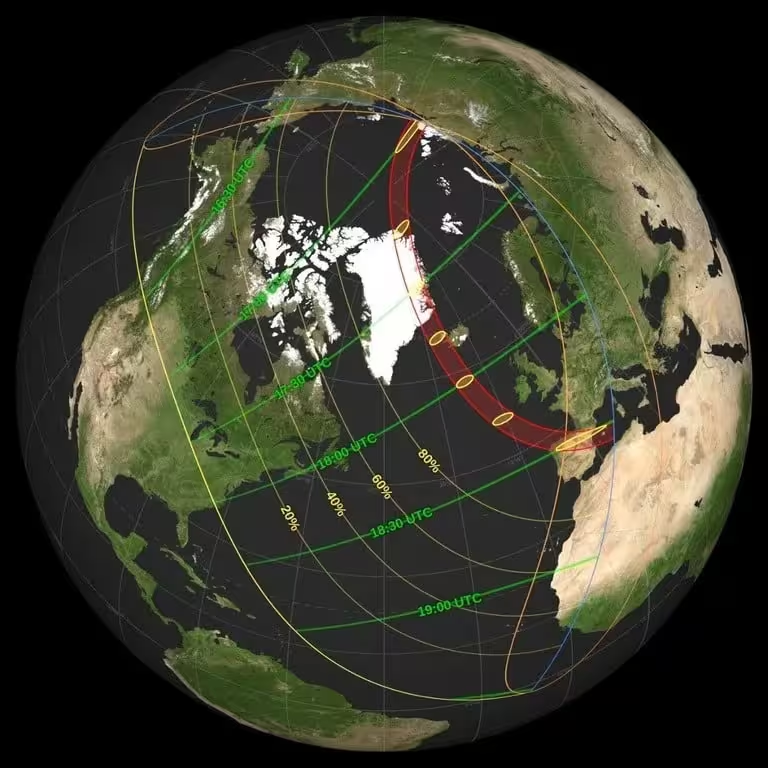
The eclipse will initiate over the Arctic, cross the Atlantic primarily over open water, and finally intersect Europe, touching Portugal and Spain. The optimal viewing window near Iceland will provide up to two minutes and 18 seconds of totality, whereas observers in mainland Spain will see a total phase lasting roughly one minute.
According to researchers’ calculations, the partial eclipse will be visible across a vast swath that includes Canada, the northern United States, much of Europe, West Africa, Alaska and Siberia.
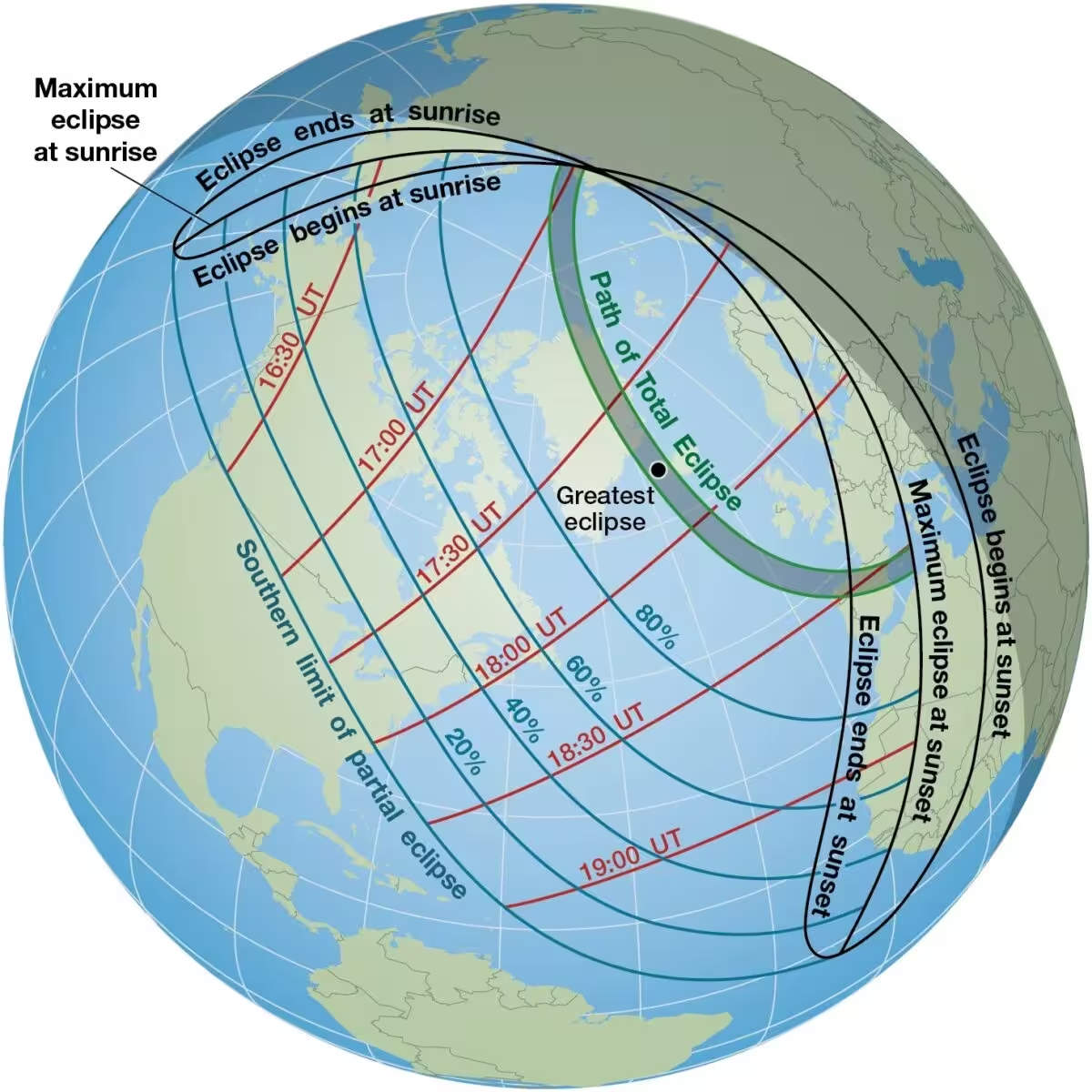
The fraction of the Sun concealed will vary by location: Dublin will lose about 94 % of its solar disk, Oslo roughly 83 %, while Montreal, New York and Norfolk will experience 18 %, 9 % and 2 % coverage respectively. Anyone watching the partial phases must wear certified solar eclipse glasses to avoid eye injury.
Researchers Gear Up to Study the Sun and Atmosphere
Beyond public fascination, scientists intend to harness the minutes of darkness to investigate the solar corona and monitor rapid atmospheric changes on Earth.
The European Space Agency will broadcast live from Spain’s Astrophysical Observatory of Javalambre and host a public event in León. ESA’s science director Carole Mundell emphasized the human dimension of such celestial alignments.
“For me, it’s not just a scientific moment. It’s not just an incredible alignment of heavenly bodies. It’s also a very human moment,” Mundell said. “It’s a real human connection between us with our feet planted on the Earth and the cosmos.”
ESA will also employ its Proba‑3 formation‑flying mission to gather data before and after the eclipse, even though the spacecraft will not be positioned to replicate Earth‑based totality.
University teams from the United States will launch more than 60 high‑altitude balloons from Spain and Iceland to record atmospheric temperature and pressure fluctuations triggered by the sudden loss of sunlight.
A separate group from the Southwest Research Institute, led by Amir Caspi, will operate a NASA high‑altitude aircraft equipped with four cameras observing the corona in nine wavelengths while cruising at roughly 460 mph (740 kph), extending the effective observation window to nearly three minutes.
A Sky Filled with Planets, Meteors and Aurorae
The eclipse occurs during a particularly active night‑sky window. Before sunrise, six planets will line up in a sweeping arc, and after sunset the Perseid meteor shower will peak under the darkness provided by a new Moon, offering a rare combination of celestial displays.
Eclipse cartographer Michael Zeiler plans to combine the eclipse with a view of the northern lights. He intends to position a cruise ship within a Greenland fjord to film the aurora borealis while totality unfolds, hoping to capture two extraordinary phenomena in a single night.
“What gets me excited is viewing rare phenomena,” he said.
Upcoming Eclipse Highlights for Spain
The August event is the first of several notable eclipses over the Iberian Peninsula. On 2 August 2027, a total eclipse will sweep across southern Spain, delivering up to six minutes and 23 seconds of totality before moving into North Africa and the Middle East. A subsequent annular, or “ring‑of‑fire,” eclipse is slated for 26 January 2028, adding another distinctive chapter to Spain’s celestial calendar.
This article has been fact checked for accuracy, with information verified against reputable sources. Learn more about us and our editorial process.
Last reviewed on .
Article history
- Latest version
Reference(s)
- <https://skyandtelescope.org/astronomy-press-releases/a-partial-eclipse-for-parts-of-north-america/>.
- <https://www.esa.int/Newsroom/Press_Releases/Media_Invitation_Watch_the_total_solar_eclipse_with_ESA_in_Leon_Spain>.
- “Carole Mundell, Director of Science.” <https://www.esa.int/About_Us/Corporate_news/Carole_Mundell_Director_of_Science>.
- “Proba-3 Mission.” <https://www.esa.int/Enabling_Support/Space_Engineering_Technology/Proba_Missions/Proba-3_Mission3>.
- “Amir Caspi.” <https://scholar.google.com/citations?user=6GkkNKEAAAAJ&hl=en>.
- “Michael Zeiler.”, February 27, 2025 Vereniging Voor Sterrenkunde <https://www.vvs.be/subsite/sec-2025/michael-zeiler>.
Cite this page:
- Posted by Divya Iyer