SpaceX Sets Date for First-Ever Starship V3 Launch, Unveiling Its Most Powerful Rocket Upgrade Yet
Marine Science
SpaceX Sets Date for First-Ever Starship V3 Launch, Unveiling Its Most Powerful Rocket Upgrade Yet
SpaceX is gearing up for the maiden voyage of the Starship V3, a newly engineered massive rocket designed to advance the firm’s ambitions for moon landings and eventual expeditions to the Red Planet.
By Divya Iyer
Published:
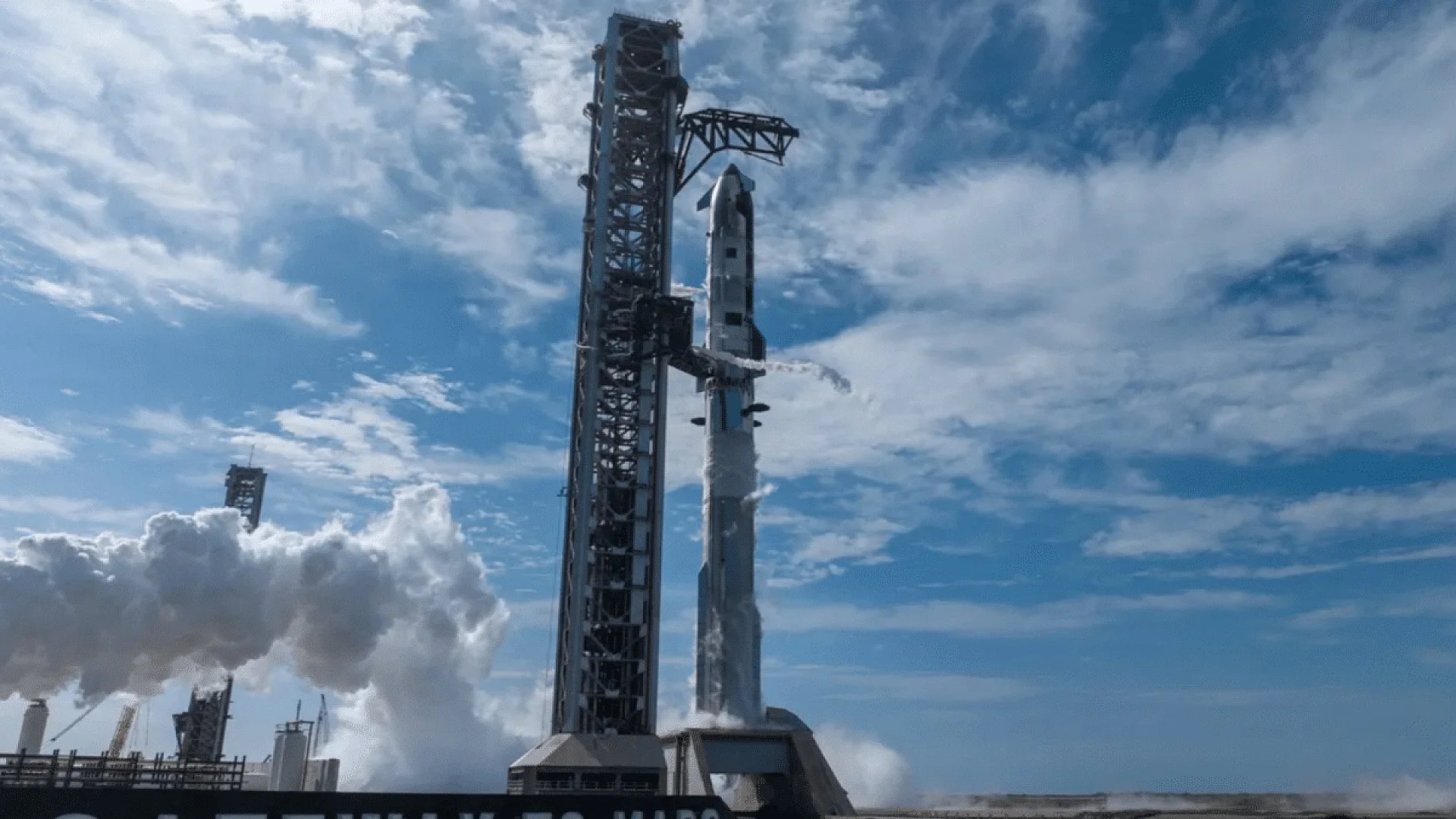
SpaceX has confirmed that the maiden flight of its revolutionary Starship V3 will take place on May 19, marking a significant milestone in the development of the world’s largest rocket system. This upgraded version of the Starship boasts a plethora of cutting-edge features, including a redesigned Super Heavy booster and a reimagined Ship upper stage.
A New Era in Space Exploration Dawns with Starship V3
The upcoming mission, dubbed Flight 12, will be the culmination of months of tireless work by SpaceX engineers, who have pushed the boundaries of innovation to create a vehicle capable of supporting operational missions in orbit, lunar exploration under NASA’s Artemis program, and future cargo transport to Mars. One of the most striking changes on the Super Heavy booster is the reduction in grid fins from four to three, each of which is significantly larger and structurally reinforced. According to SpaceX, this redesign enables improved lift and catch operations, as well as reduced heat exposure from the Raptor engines during hot-staging.A Redesigned Ship Upper Stage for Deep-Space Missions
The Ship upper stage has undergone a comprehensive overhaul, with critical propulsion systems rebuilt to prepare the vehicle for the demands of orbital operations and long-duration spaceflight. The upgrades, which include a new Raptor startup method, increased propellant tank volume, and improved reaction control systems, aim to enhance engine reliability, propellant management, and spacecraft maneuverability. The new vehicle is powered by upgraded Raptor V3 engines, which generate greater thrust than their predecessors while striving to improve reliability during repeated operations. Engine relight capability will also be tested during the mission, a crucial step towards future orbital insertion and landing operations. Beyond propulsion testing, the flight will deploy 22 simulated Starlink V2 satellites, which will help engineers analyze thermal protection performance under operational conditions. The mission will also debut Pad 2 at Starbase in South Texas, a newly constructed launch complex designed to accelerate fueling operations and improve recovery hardware for future missions.Flight 12: A Systems Validation Exercise
Despite the extensive upgrades, the overall flight profile remains similar to previous Starship missions. The rocket will launch from Starbase during a 90-minute window opening at 6:30 p.m. EDT on May 19. Following stage separation, the Ship upper stage will continue eastward on a suborbital trajectory before splashing down in the Indian Ocean roughly 65 minutes after launch. The Super Heavy booster will perform a controlled descent toward the Gulf of Mexico, but SpaceX will not attempt to return the booster to the launch tower for a mechanical catch using the giant “chopstick” arms. This decision reflects the experimental nature of Flight 12, which is fundamentally a systems validation exercise intended to gather engineering data on dozens of newly introduced components. The long pause since the previous Starship mission in October 2025 has intensified interest in the launch, especially after that earlier test reportedly achieved all of its primary objectives.Fact Checked
This article has been fact checked for accuracy, with information verified against reputable sources. Learn more about us and our editorial process.
Last reviewed on .
Article history
- Latest version
Cite this page:
- Posted by Divya Iyer
End of the article