Astronomers Are Finally Unveiling the Secrets of the Hidden Galaxy Masked by Our Own
Hidden behind the Milky Way, the galaxy IC 342 is revealing new secrets about star formation, magnetic fields, and the mysteries of spiral galaxies.
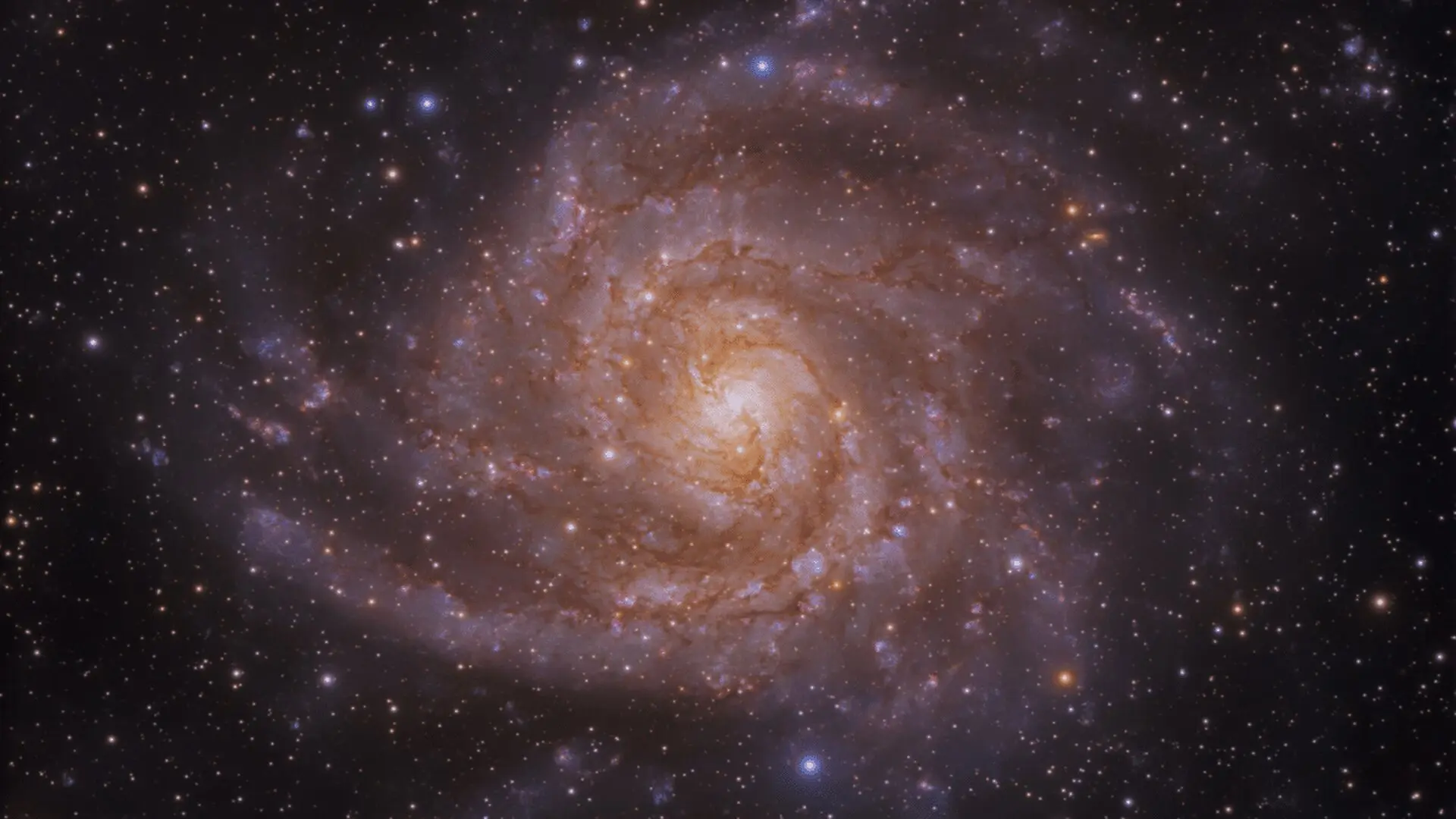
Cosmic Veil: Unmasking the Secrets of the Hidden Galaxy
Located roughly 10 million light-years from our own solar system, the spiral galaxy IC 342 stands as a compelling subject for researchers attempting to decipher the mechanics of galactic evolution. Often referred to as the “Hidden Galaxy,” this massive celestial neighbor occupies a unique spot in the northern constellation Camelopardalis. Despite its physical proximity, IC 342 remains notoriously difficult to observe in detail because it sits directly behind the cluttered, dusty plane of the Milky Way. The thick shroud of interstellar gas and stellar debris within our own galaxy scatters and absorbs incoming light, effectively obscuring the structure of its neighbor.
High-resolution astrophotography, such as the recent work by Artem Mironov, has begun to bypass these obstacles, offering a clearer look at the galaxy’s intricate anatomy. These images reveal a sprawling spiral system defined by dense concentrations of stars, sweeping dust lanes, and vast pockets of ionized gas that serve as nurseries for new stellar generations.
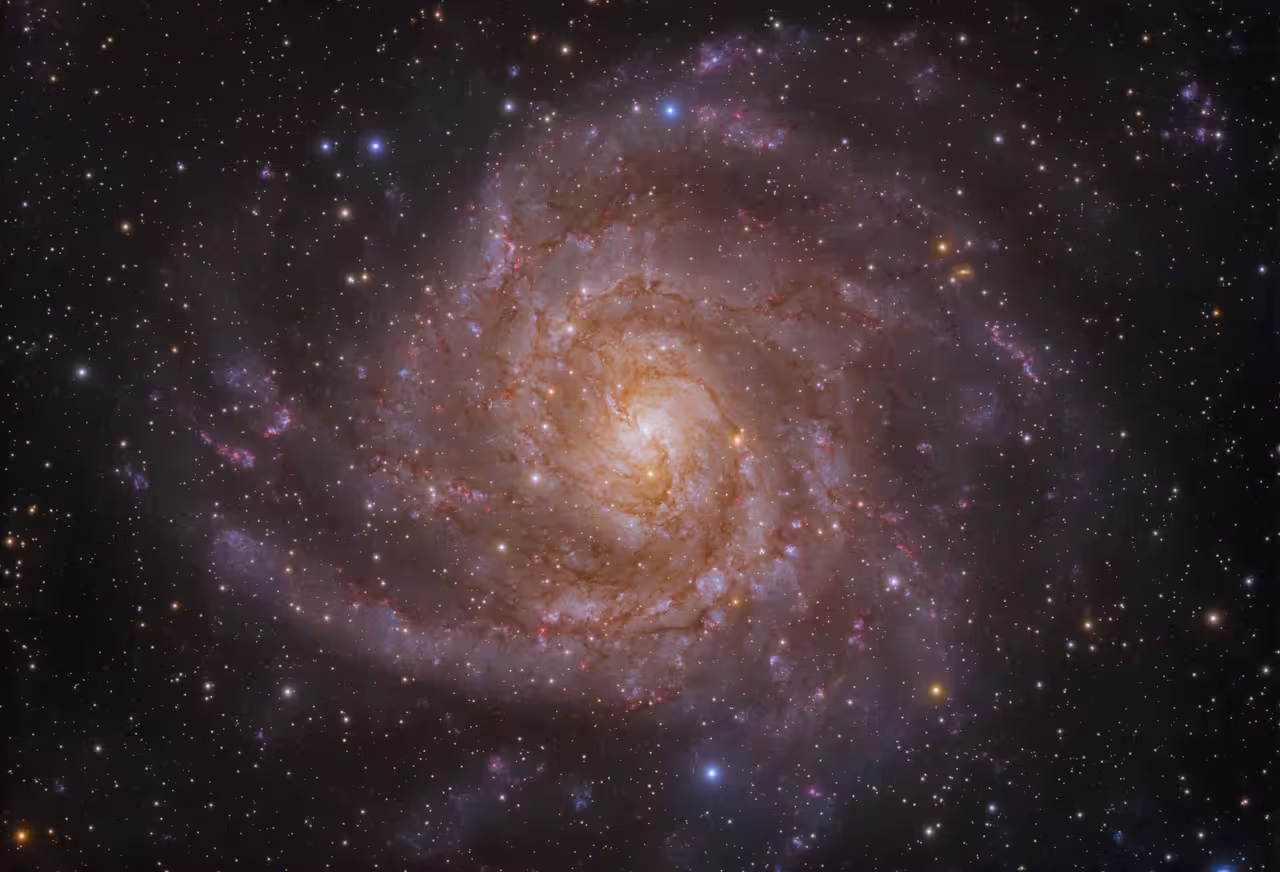
Understanding the IC 342/Maffei Group
The taxonomic history of IC 342—also cataloged as Caldwell 5—has been marked by significant debate. As one of the most prominent members of the IC 342/Maffei group, it exists as a nearby neighbor to our own Local Group, which contains the Milky Way and the Andromeda galaxy. Because of the heavy foreground interference, early calculations regarding the galaxy’s distance and velocity were fraught with uncertainty. At one point, some astronomers hypothesized that IC 342 might have been a former inhabitant of our Local Group that had been gravitationally ejected.
Current consensus, however, links the galaxy firmly to the Maffei group. The persistent challenges in measuring its properties—caused by the heavy extinction of light—have underscored why modern multi-wavelength studies are essential for mapping the architecture of our local cosmic neighborhood.
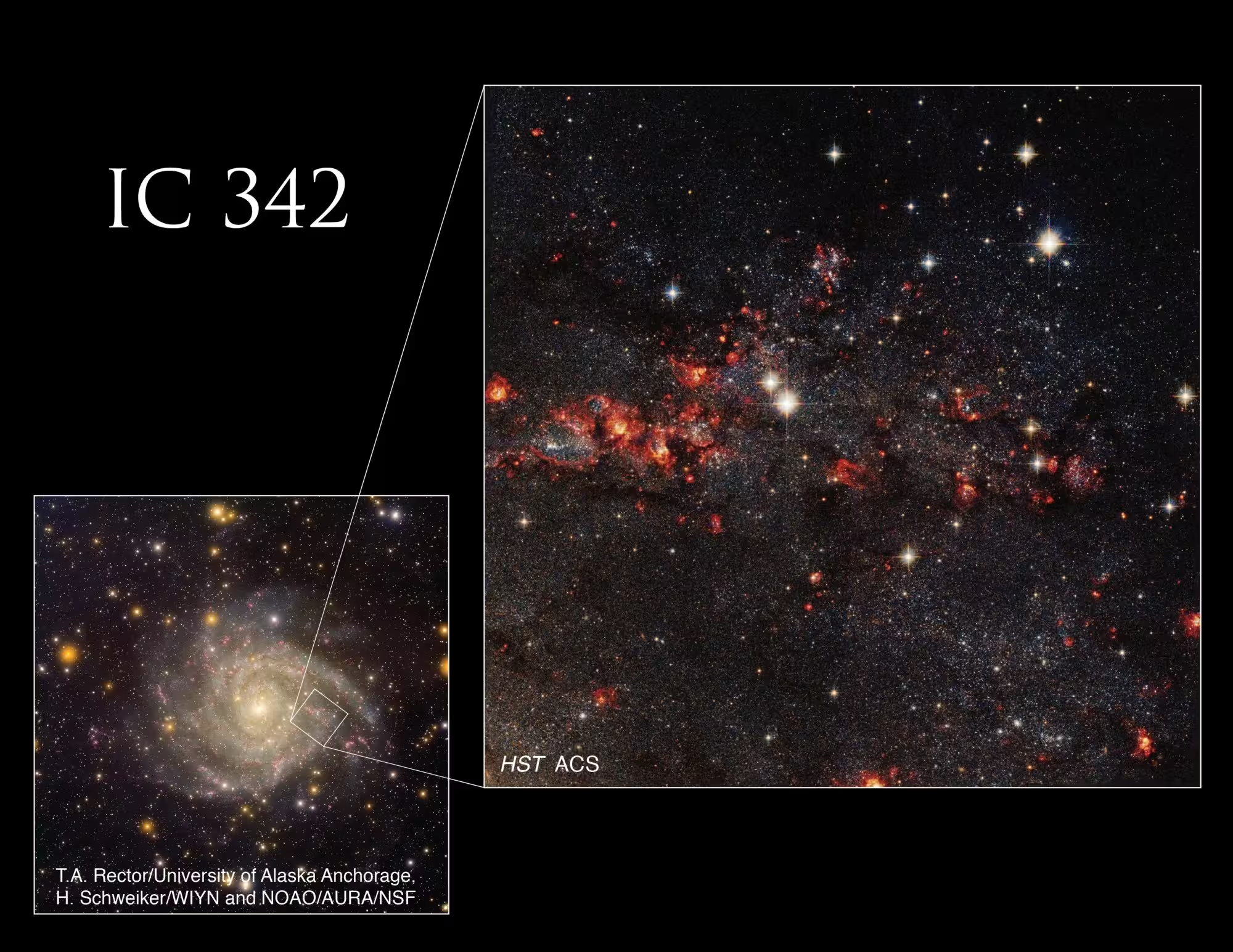
Active Star Formation Behind the Dust
Peering through the haze, scientists have identified intense regions of ongoing star formation throughout the spiral arms of IC 342. These areas are marked by a distinctive reddish glow, resulting from hydrogen gas being energized by the intense radiation emitted by clusters of hot, newborn stars. These stellar cradles are situated alongside dark, dense lanes of dust that are intrinsic to the galaxy itself, distinct from the interfering material belonging to the Milky Way.
By comparing the emission patterns of these internal structures against the obscuring foreground dust, astronomers are developing a more sophisticated understanding of how galaxies generate stars and maintain their spiral shapes over cosmic timescales. As technology improves, the “Hidden Galaxy” is steadily losing its veil, providing a vital case study in galactic dynamics.
This article has been fact checked for accuracy, with information verified against reputable sources. Learn more about us and our editorial process.
Last reviewed on .
Article history
- Latest version
Reference(s)
- Bonnell, Jerry. “APOD: 2026 November 4 - The Not-So-Hidden Galaxy, IC 342 - NASA Science.”, November 4, 2026 NASA <https://science.nasa.gov/image-article/apod-2026-november-4-the-not-so-hidden-galaxy-ic-342/>.
Cite this page:
- Posted by Karan Das