Scientists Found Hidden Channels Where Warm Water Gets Trapped Beneath Antarctic Ice Shelves
Beneath Antarctica’s icy expanse, an unusual phenomenon is unfolding, and scientists warn it may reshape how we discuss climate patterns.
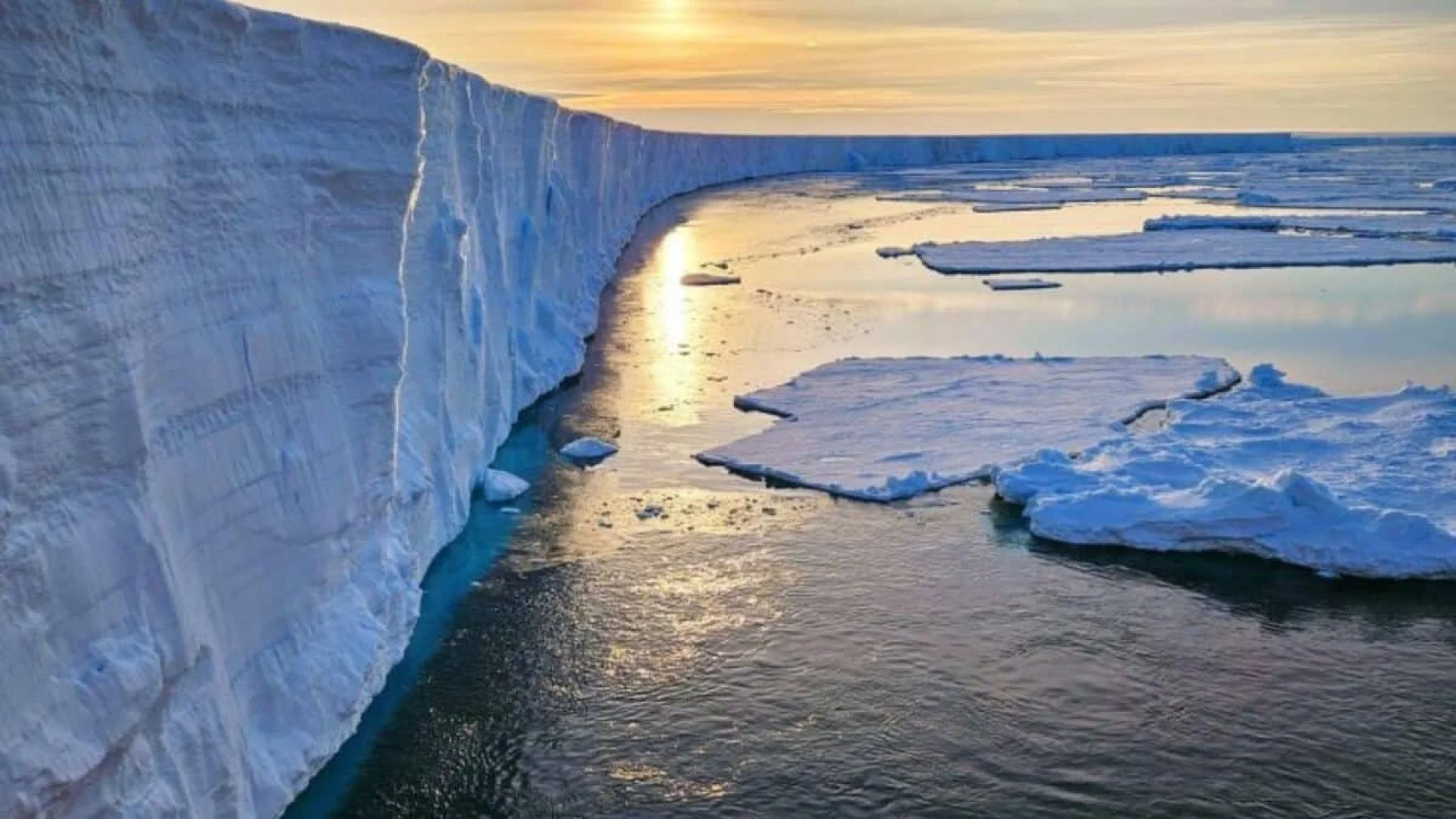
A groundbreaking study reveals that some Antarctic ice shelves may be melting at an alarming rate from below, defying scientists’ expectations. Research published in Nature Communications discovers that channels beneath the ice can trap warmer seawater, significantly increasing melting in areas critical to holding back massive glaciers.
The study focused on the Fimbulisen Ice Shelf in East Antarctica, an area previously considered colder and more stable than other parts of the continent. Researchers found that even relatively small amounts of warmer water can have a profound impact once they enter these underwater channels.
Ice shelves act as giant barriers, slowing the flow of ice from the continent into the ocean. If they weaken, glaciers behind them can move faster, contributing to rising sea levels worldwide.
Trapped Heat Accelerates Melting
To understand the phenomenon beneath the ice shelf, the team combined detailed mapping with high-resolution ocean modeling. Their findings were striking: long grooves carved into the underside of the ice shelf can trap warmer water instead of allowing it to circulate away.
This trapped heat intensifies melting locally, with some parts of the channels experiencing a significant increase in melt rates, up to an order of magnitude higher than smoother sections beneath the shelf. Lead author Tore Hattermann from the iC3 Polar Research Hub in Tromsø emphasized the active role the ice itself plays in the process.
“We found that the shape of the ice shelf underside is not just a passive feature. It can actively trap ocean heat in exactly the places where extra melting matters most,” Hattermann said.
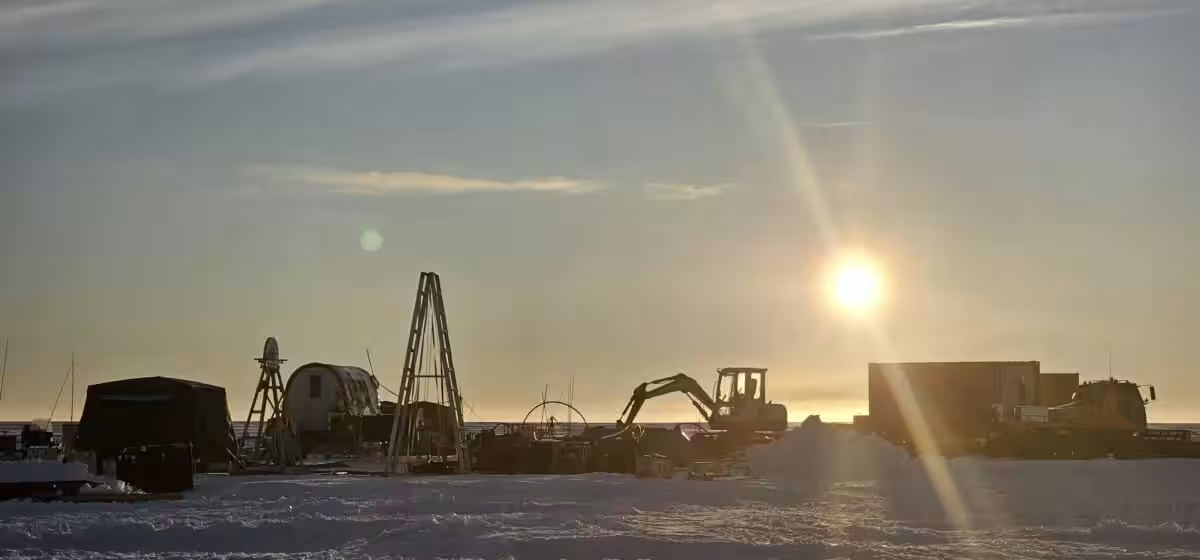
The researchers compared various scenarios, including smoother ice bases and more realistic channel-shaped ones, under cooler and slightly warmer ocean conditions. The difference was evident in the simulations.
A Vulnerable Region in East Antarctica
The findings are significant because they come from East Antarctica, a region often viewed as less vulnerable than the western side of the continent. The study found that even modest inflows of warmer deep water were enough to sharply increase melting inside the channels beneath the Fimbulisen Ice Shelf.
“We observed beneath the Fimbulisen Ice Shelf that even small amounts of warmer water can substantially increase melting within the channels,” Hattermann explained. “As a result, the channels can grow and, in the worst case, weaken the stability of the entire ice shelf.”
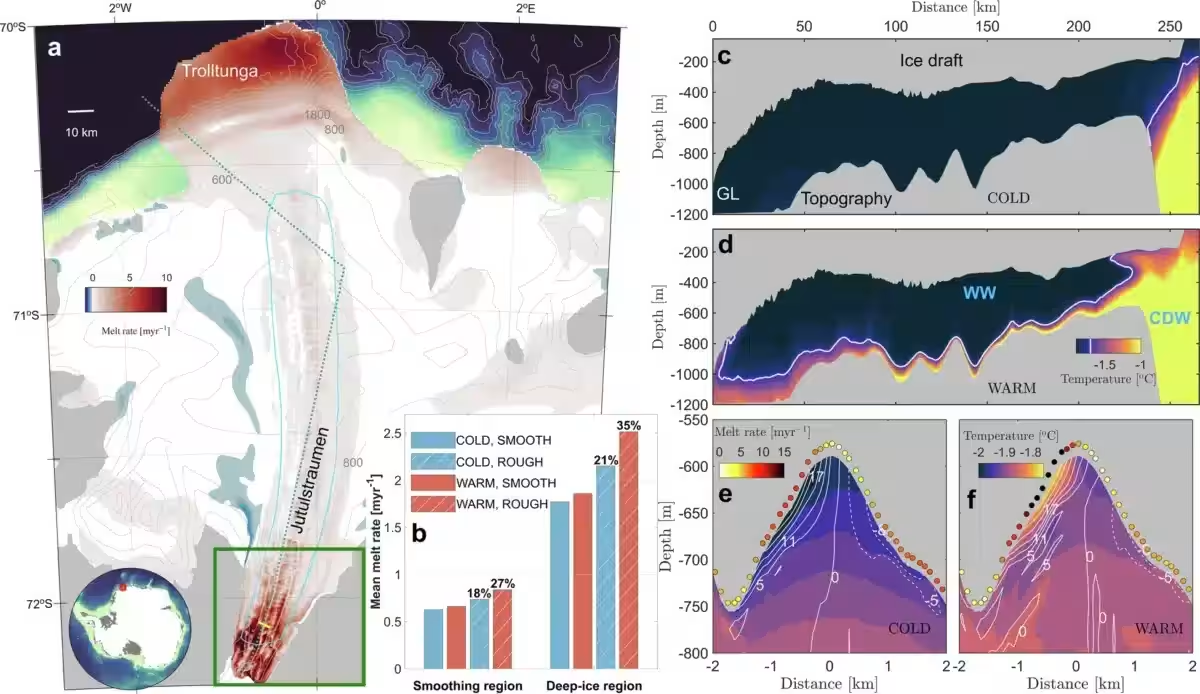
“What is striking is that even modest inflows of warmer deep water can have a large effect when the ice shelf base is channeled,” he said.
This finding stands out in the study. Scientists have known for years that warmer oceans threaten Antarctic ice, but this research suggests the underside geometry of the shelves may make some areas melt faster than expected.
Climate Models May Be Incomplete
The researchers note that many current climate and ice-sheet models do not properly account for these narrow channels beneath the ice shelves. The study, published in Nature Communications, points out that uneven melting can weaken the deeper parts of the ice shelves, reducing their ability to hold glaciers in place. Once weakened, more ice can flow into the ocean.

Hattermann cautioned that this limitation could lead scientists to underestimate how “cold” Antarctic ice shelves respond to warming coastal waters.
“Current climate models do not capture this effect,” he said, adding that “this means that they risk underestimating the sensitivity of the ‘cold’ ice shelves along East Antarctica’s coastline to small changes or warming in coastal waters. Such changes have already been observed, and are projected to increase in the future.”
This article has been fact checked for accuracy, with information verified against reputable sources. Learn more about us and our editorial process.
Last reviewed on .
Article history
- Latest version
Reference(s)
- <https://www.researchgate.net/profile/Tore-Hattermann>.
- Zhou, Qin. “Channelized topography amplifies melt-sensitivity of cold Antarctic ice shelves - Nature Communications.”, vol. 17, no. 1, May 7, 2026, pp. 3790 Nature, doi: 10.1038/s41467-026-71828-8. <https://www.nature.com/articles/s41467-026-71828-8>.
Cite this page:
- Posted by Divya Iyer