CERN Detects New Signs Of Primordial Quark-Gluon Plasma, Illuminating Big Bang Moments
CERN’s latest results reveal the early universe’s exotic matter state, giving scientists a rare glimpse into conditions right after the Big Bang.
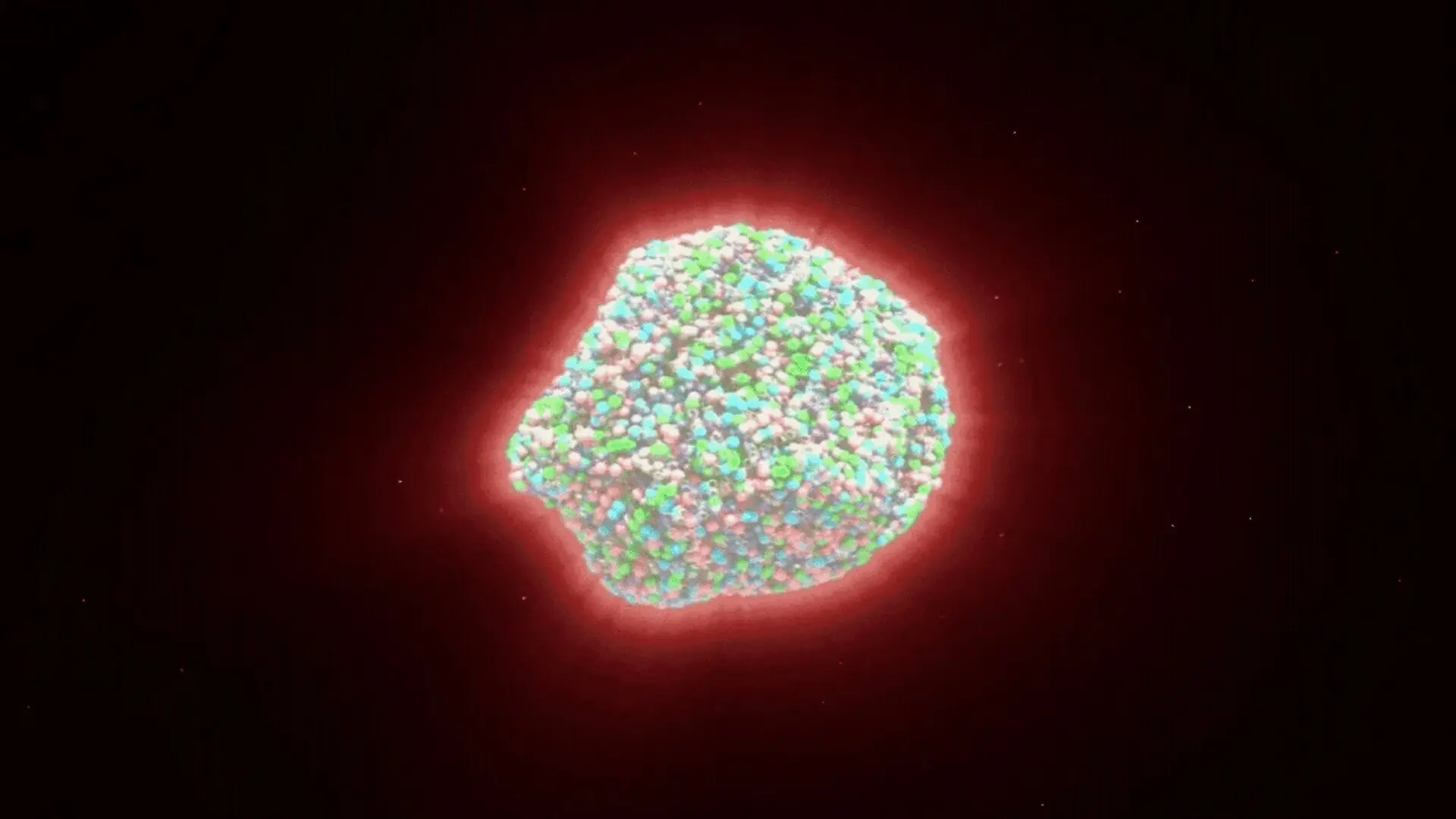
Scientists are closing in on the elusive conditions that prevailed a fraction of a second after the universe burst into existence. Recent measurements from CERN have uncovered fresh evidence of the extreme form of matter that filled the cosmos at that time, offering a clearer glimpse into how ordinary particles emerged from an ultra‑hot, dense primordial soup.
Recreating the First Instants of the Cosmos in the Lab
For many years researchers have sought to mimic the searing environment that existed immediately after the Big Bang. Temperatures then soared to trillions of degrees, preventing protons and neutrons from forming as they do today. In that era the universe was dominated by quark‑gluon plasma, a state where quarks and gluons roamed freely rather than being bound inside atomic nuclei. Only a handful of facilities on Earth can generate the colossal energies needed to reproduce such conditions.
At the Large Hadron Collider, heavy ions are propelled to velocities near light speed before colliding head‑on. These impacts create minuscule fireballs whose temperatures briefly eclipse those at the cores of massive stars. Although the fireball lives for only an instant, it provides a unique laboratory to observe matter behaving in a manner akin to the early universe. Each collision adds a new data point for probing the transition from a primordial plasma to the familiar matter that composes galaxies, planets and living beings.
New CERN Data Illuminate the Behavior of Early‑Universe Matter
According to CERN, teams across several experiments have identified fresh signatures that match the expected properties of quark‑gluon plasma produced in high‑energy ion collisions. Rather than depending on a single observable, researchers integrate results from multiple detectors to construct a comprehensive picture of the plasma’s dynamics. They track particle yields, monitor the energy loss of jets traversing the hot medium, and study how heavy quarks interact with their surroundings. The convergence of these independent measurements strengthens confidence that the recreated state mirrors the exotic matter that existed shortly after the Big Bang.

The latest analyses also sharpen the precision of earlier results, enabling physicists to challenge increasingly detailed theoretical frameworks. By juxtaposing experimental findings with predictions derived from quantum chromodynamics (QCD)—the theory governing the strong nuclear force—researchers refine their understanding of quark and gluon behavior under extreme conditions. Each incremental improvement narrows the divide between theory and observation, bringing us closer to answering fundamental questions about the universe’s infancy.
Implications for Tracing the Universe’s Evolution
Beyond the confines of particle‑physics laboratories, these discoveries shed light on one of the most pivotal transitions in cosmic history: the moment when the cooling universe allowed quarks to bind into protons and neutrons. That condensation set the stage for atoms, stars, galaxies and every structure we observe today. By reproducing the plasma in controlled experiments, scientists gain direct insight into the mechanisms that shaped the observable cosmos within microseconds of its birth.
The experiments also serve as a rare testing ground for the Standard Model under conditions unattainable elsewhere. Any subtle mismatch between predicted and measured outcomes could hint at new physics or expose nuanced aspects of the strong force that remain poorly understood. Even when the data affirm existing models, they enhance the accuracy of the tools used to describe matter’s evolution across billions of years, adding another piece to a puzzle that spans the full age of the universe.
Toward a Detailed Map of the Cosmos’s Birth
The quest to chart the universe’s primordial matter is far from complete. Upcoming LHC runs, bolstered by detector upgrades and advanced analysis methods, promise vastly larger datasets and finer‑grained observations. These enhancements will allow researchers to probe quark‑gluon plasma with a level of precision that was unimaginable just a few years ago.
Future studies aim to explore how the plasma responds to varying collision energies and experimental setups, potentially unveiling behaviors that have yet to be recorded. As theoretical models evolve in tandem with increasingly exact measurements, the scientific community moves ever nearer to reconstructing the earliest moments of the cosmos with remarkable fidelity. Every new result from CERN layers additional understanding onto the narrative of how the primordial universe transformed into the complex tapestry we observe today, bringing humanity closer to unraveling the deepest mysteries of matter’s origin.
This article has been fact checked for accuracy, with information verified against reputable sources. Learn more about us and our editorial process.
Last reviewed on .
Article history
- Latest version
Reference(s)
- “Oxygen collisions at the LHC show new indications of extreme state of matter – Home | CERN.”, July 24, 2026 <https://home.cern/oxygen-collisions-at-the-lhc-show-new-indications-of-extreme-state-of-matter/>.
Cite this page:
- Posted by Farah Siddiqui