A Sinking Tripod Leg Led To The Discovery Of A Hidden Egyptian Queen’s Tomb
A lone camera tripod led researchers to a royal tomb overflowing with gold, but the site’s most profound mystery remained hidden until the final excavation.
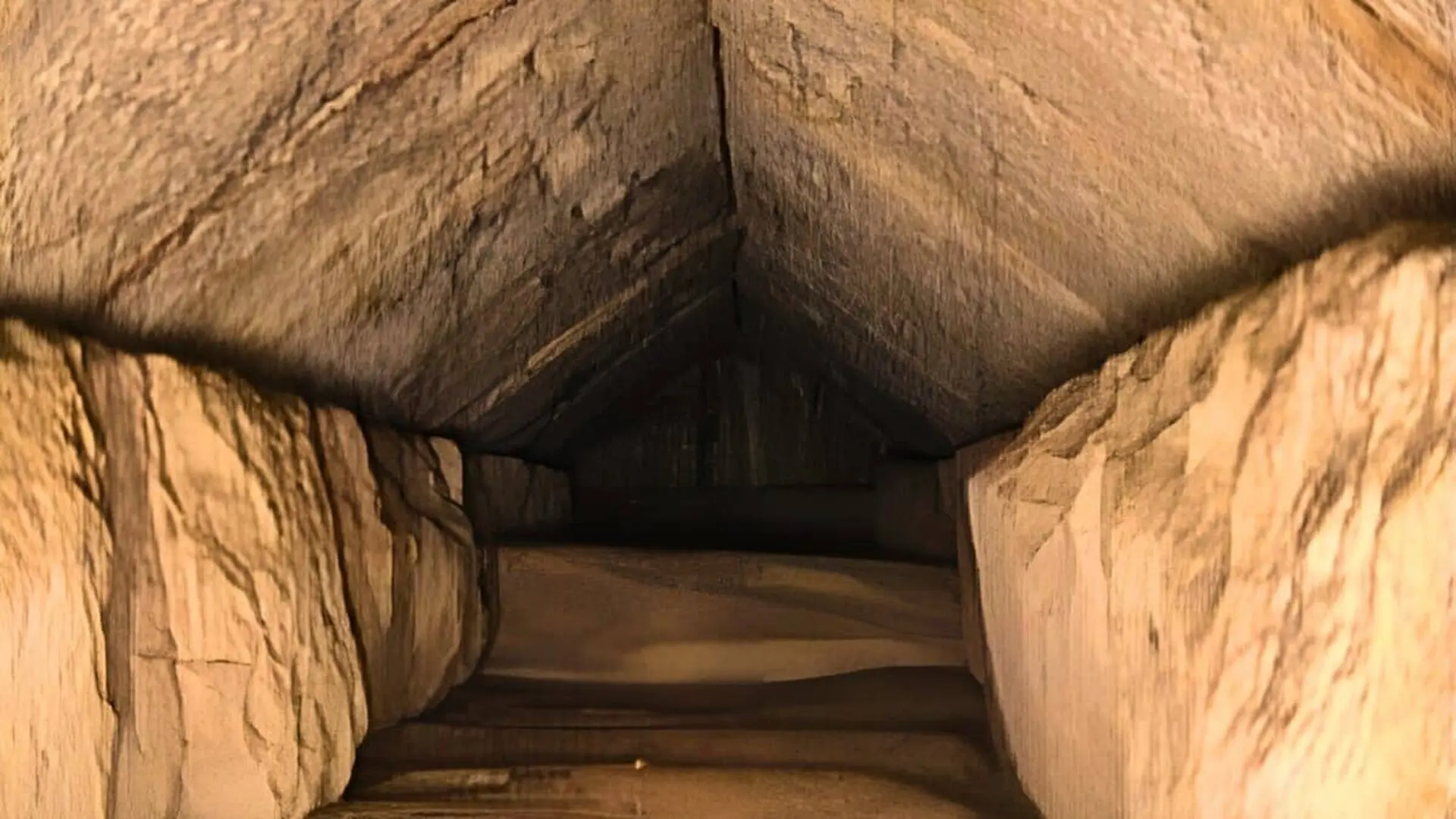
The discovery began with a simple mishap. While setting up a camera near the Great Pyramid in early 1925, staff photographer Mohammedani Ibrahim noticed his tripod leg sinking into what should have been solid bedrock. Instead, he found a patch of plaster concealing a vertical shaft that had remained undisturbed for 4,500 years. This accidental finding led to the burial chamber of Queen Hetepheres I, the mother of Pharaoh Khufu, revealing one of the most significant archaeological sites of the Old Kingdom.
The expedition, a joint project between Harvard University and the Boston Museum of Fine Arts, initially identified a 12-step staircase leading down to a shaft packed with heavy stone blocks. As excavators cleared the debris, they discovered a niche containing a bull’s head, several leg bones wrapped in reeds, and two wine jars, which researchers interpreted as funerary offerings left during the sealing of the tomb. By March 1925, the team reached a subterranean chamber at the base of the shaft.
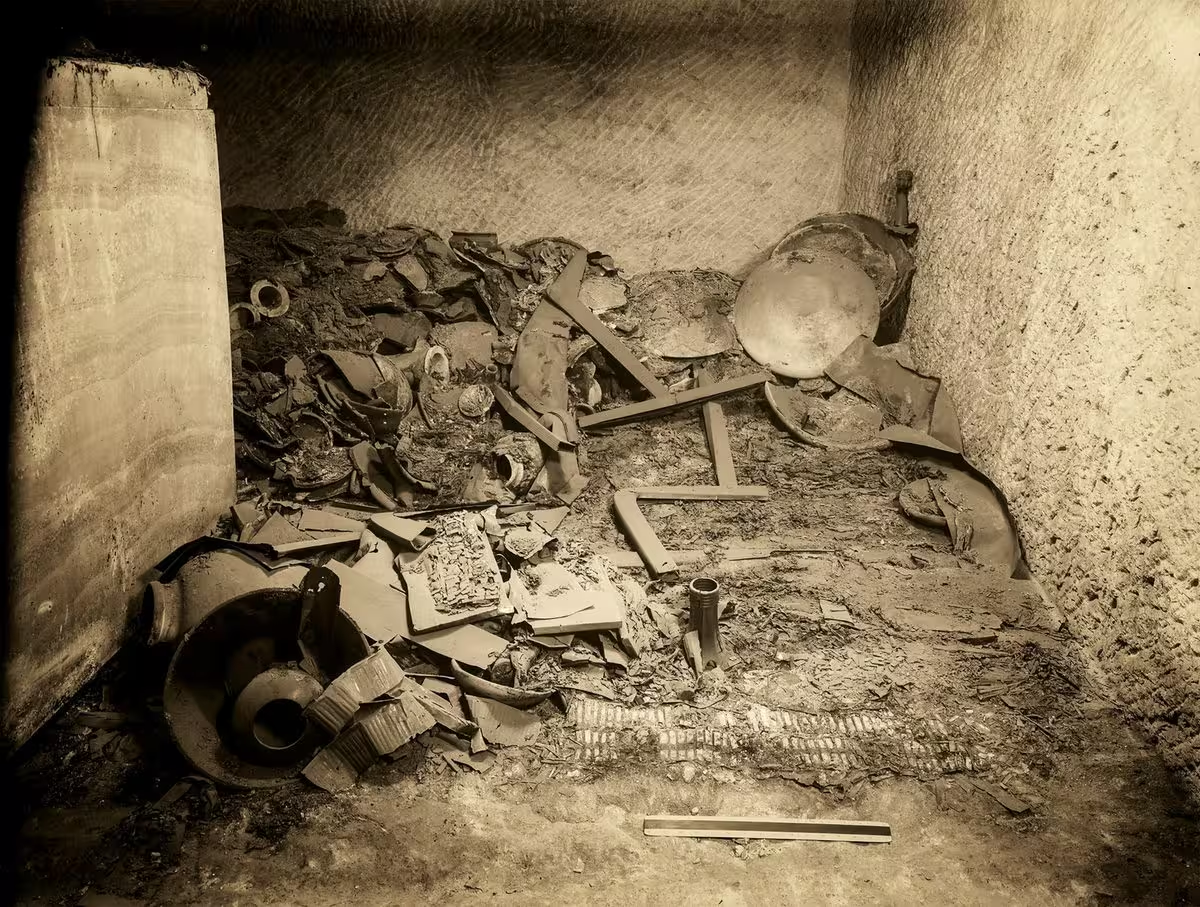
Inside, the room was a jumble of collapsed wooden furniture. Over the millennia, the wood had disintegrated, leaving behind only the thin, delicate sheets of gold leaf that had once encased the items. These gold fragments carpeted the floor, mixed with broken pottery and scattered linen. Recognizing the immense historical value, project director George Reisner ordered the chamber sealed until he could personally oversee the investigation. Work resumed in January 1926 and continued for 321 days, during which time Dows Dunham and his team meticulously documented the position of every artifact.
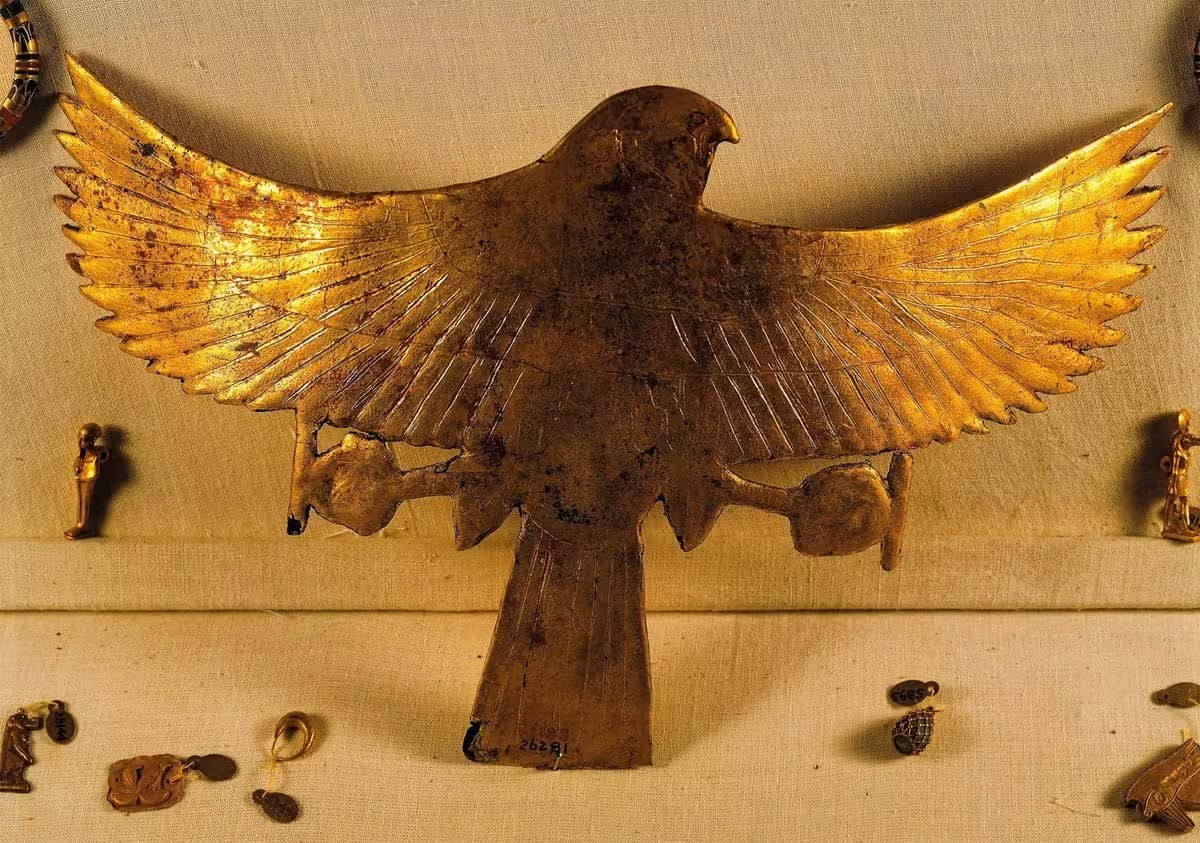
The resulting collection is a testament to the sophistication of royal burial practices. Conservators were able to reconstruct several pieces of furniture, including a gilded bed, two ornate armchairs, and a carrying chair adorned with gold hieroglyphs declaring Hetepheres the Mother of the King. Among the most exquisite finds was a small box housing 20 silver bracelets, intricately inlaid with turquoise, lapis lazuli, and carnelian to resemble butterflies.
The Mystery of the Missing Queen
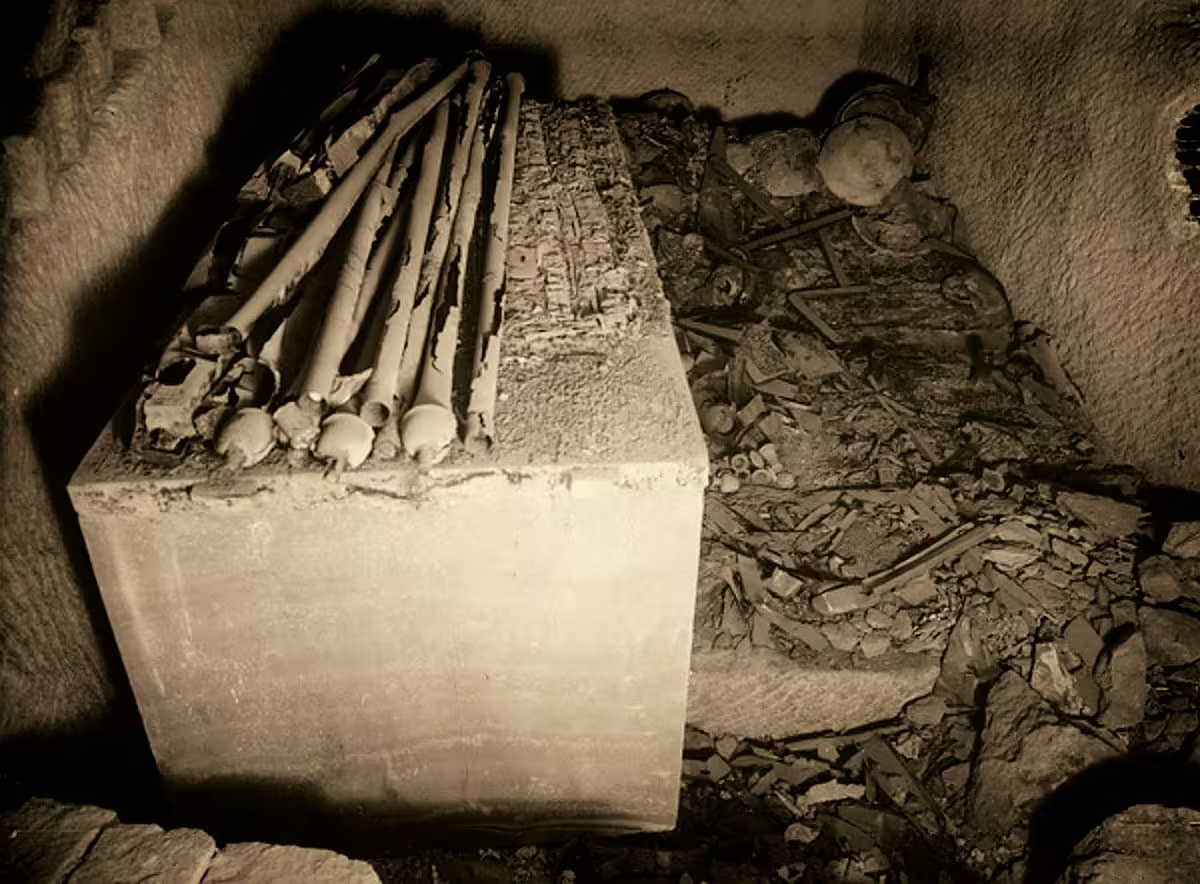
Despite the wealth of grave goods, the final reveal on March 3, 1927, proved anticlimactic. Upon opening the large alabaster sarcophagus, the team found it completely empty. Witnessing the moment, artist Joseph Lindon Smith reportedly exclaimed, “George, it’s a dud!” While the sarcophagus yielded nothing, the team later discovered a separate sealed recess containing a canopic chest. Inside were the queen’s organs, preserved in liquid, though pry marks on the sarcophagus lid provided clear evidence that the original burial had been breached in antiquity.
Reisner hypothesized that Hetepheres’ original tomb was robbed shortly after her death and that her son, Khufu, had the remains moved to Giza to protect them. Others, like Egyptologist Mark Lehner, have suggested the burial was simply a hurried affair that ended with the body being relocated elsewhere. Nearly a century later, the ultimate fate of the queen’s mummy remains a subject of intense scholarly debate. Today, the recovered treasures are housed at the Grand Egyptian Museum, where a small ink inscription on the bracelet box—a scribe’s shorthand for the items within—offers a rare, humanizing glimpse into the royal administration of the Old Kingdom.
This article has been fact checked for accuracy, with information verified against reputable sources. Learn more about us and our editorial process.
Last reviewed on .
Article history
- Latest version
Cite this page:
- Posted by Vikram Desai