Say Goodbye to Lithium: These Massive Concrete Spheres Are Underwater Batteries Built to Store Clean Energy Using Only Seawater Pressure
Germany is pioneering an innovative underwater sphere system for storing electricity, eliminating the need for batteries, rare earth metals, or valuable land space. The first complete-scale trial of this technology is already in progress off the shores of California.
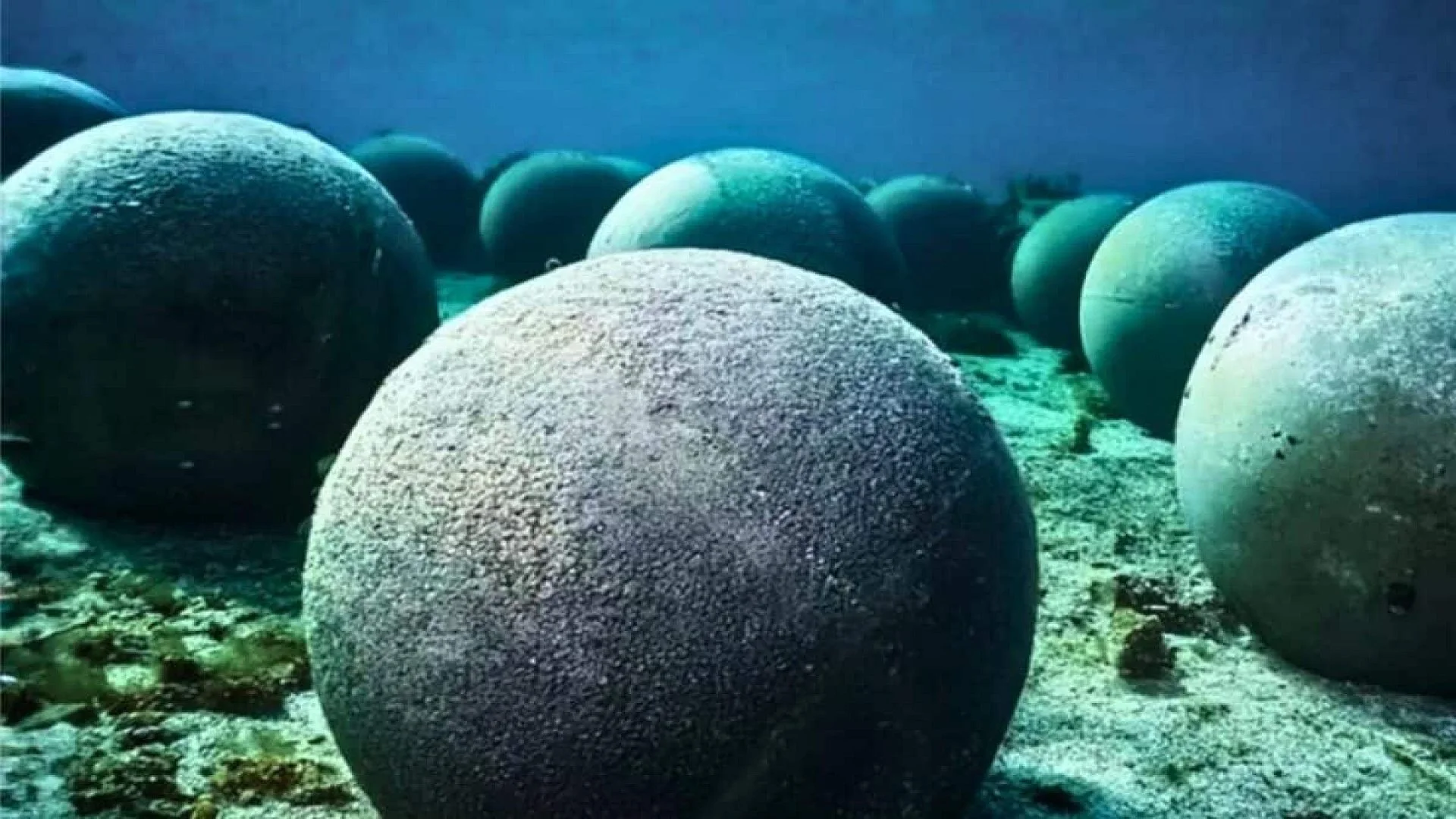
Revolutionary Energy Storage Technology Set to Transform the Grid
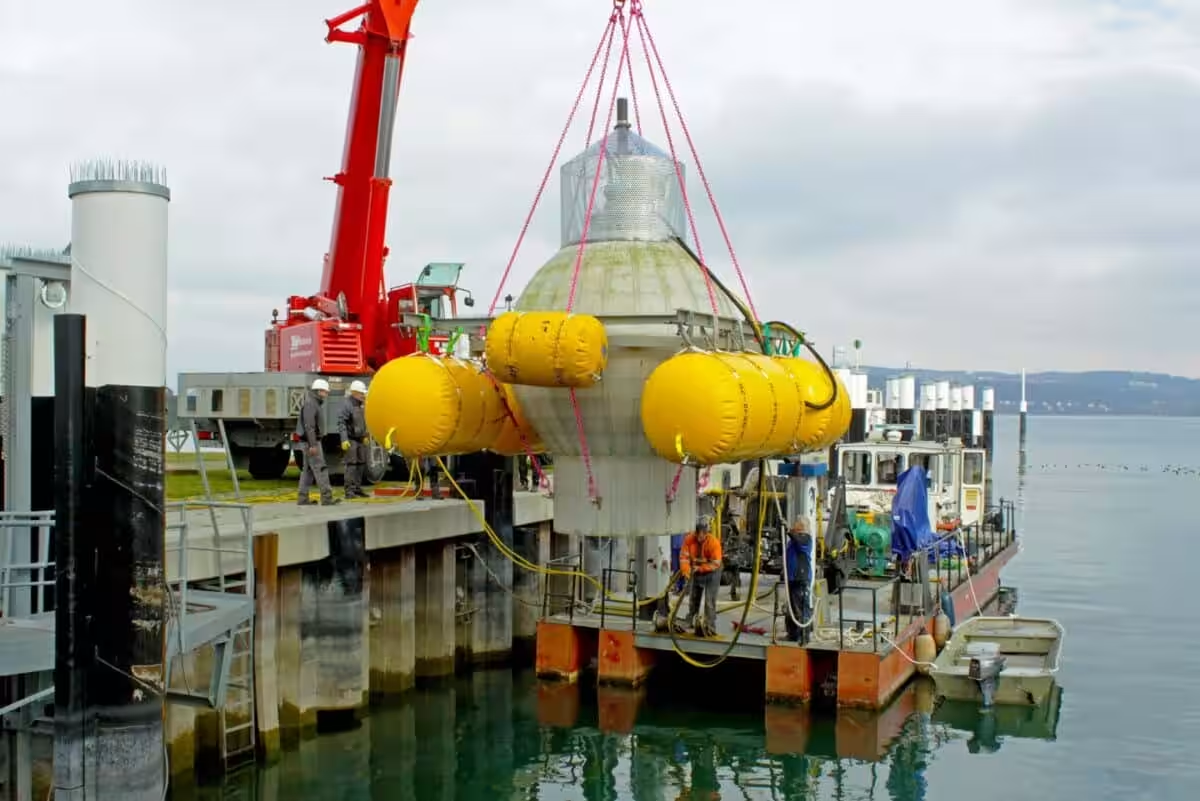
Beneath the Pacific Ocean, off the coast of Los Angeles, a groundbreaking concrete sphere is being prepared for its maiden voyage. This innovative StEnSea project, developed by Germany’s Fraunhofer Institute for Energy Economics and Energy System Technology, promises to change the face of energy storage. By harnessing the power of seawater and ocean pressure, StEnSea aims to provide a cost-effective solution for grid-scale energy storage.
The scale of this innovation is staggering. Fraunhofer estimates that deploying StEnSea technology at suitable coastal sites worldwide could unlock a global energy storage capacity of 817,000 gigawatt-hours. For context, Germany’s entire fleet of land-based pumped-hydro plants holds less than 40 gigawatt-hours combined.
How StEnSea Works
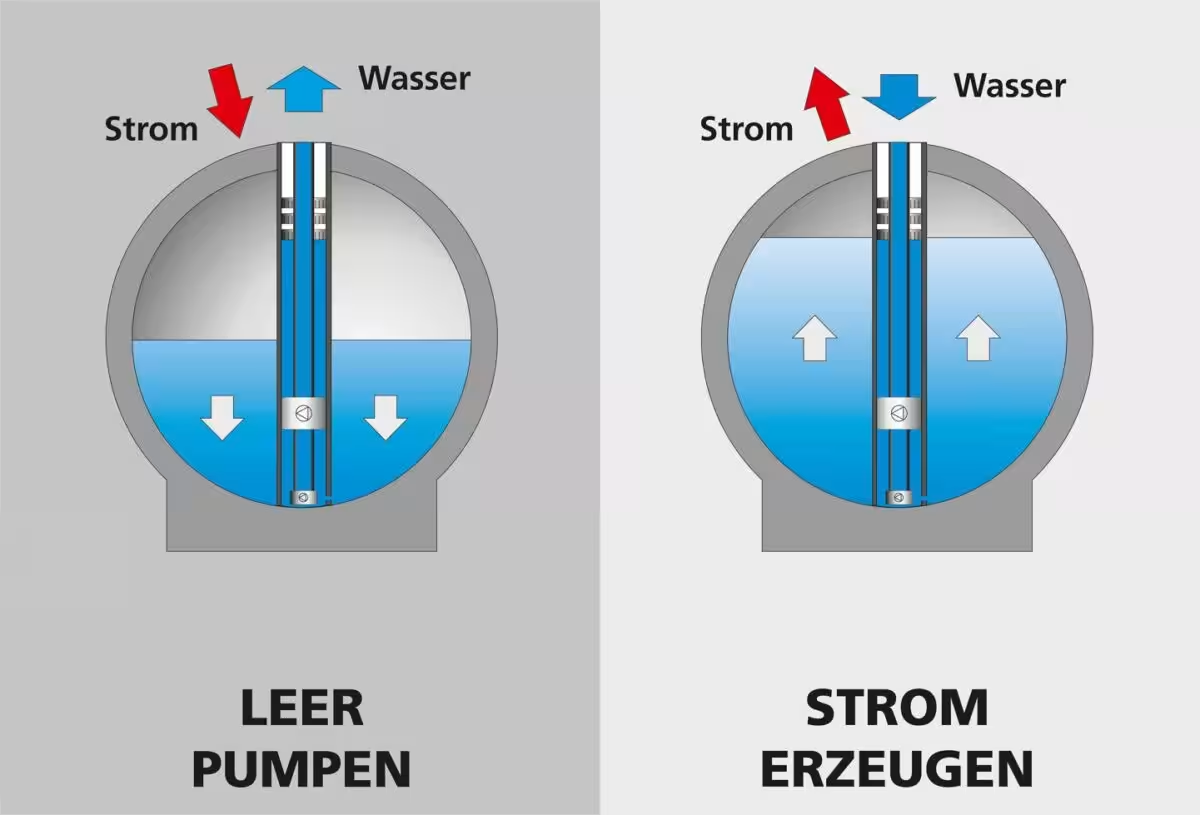
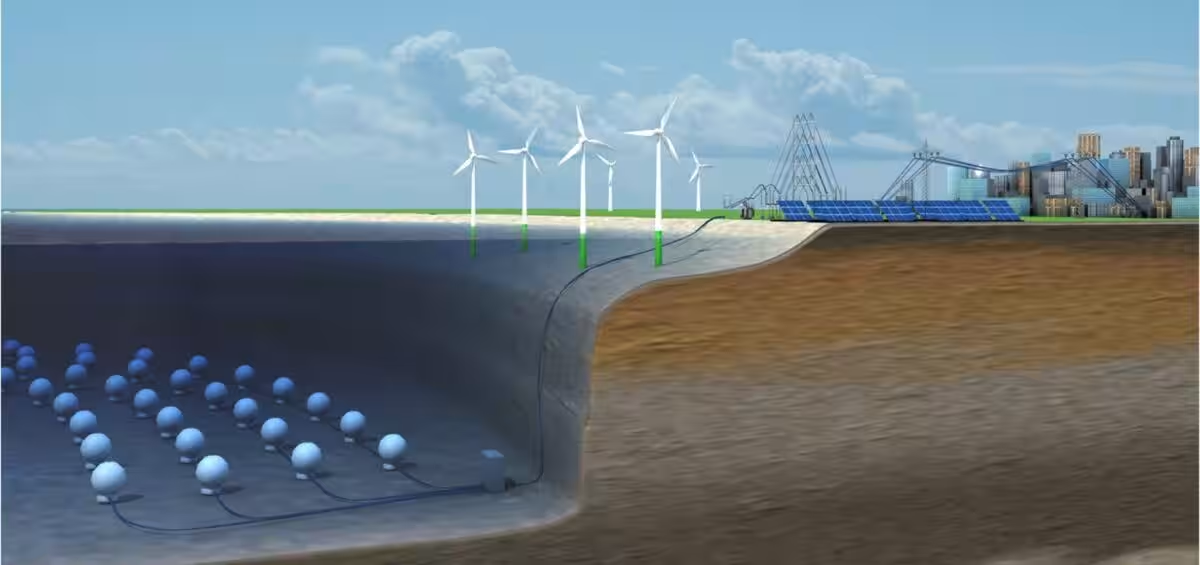
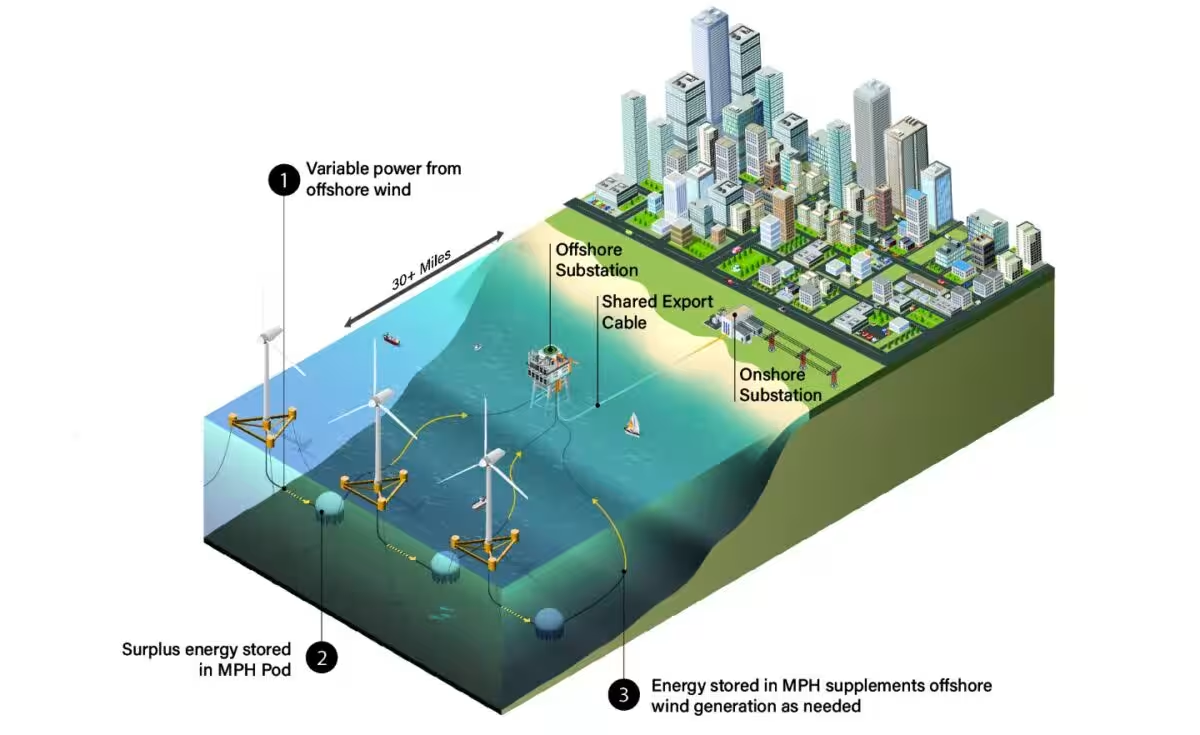
StEnSea applies the same principle as conventional pumped-hydro storage, but underwater. An empty sphere on the seabed is a charged unit. When the grid needs power, a valve opens, and seawater rushes in under 60 atmospheres of pressure, driving a pump-turbine in reverse. This generates electricity, which is transmitted to the shore grid or to a nearby offshore wind platform. To recharge, the pump-turbine switches direction and pushes the water back out against the same pressure.
Why the Ocean Floor Solves a Problem Land Cannot
Dr. Bernhard Ernst, Senior Project Manager at Fraunhofer IEE, explains that pumped-hydro plants are limited by their expansion potential worldwide. By transferring this operating principle to the ocean floor, Fraunhofer has overcome the natural and ecological restrictions that limit land-based storage. The target depth range of 600 to 800 meters offers strong pressure, reliable submersible pumps, and sufficient structural concrete for the sphere walls.
The Numbers Behind the Business Case
Fraunhofer’s cost estimates are modeled on a reference storage park: six spheres, 30 megawatts of combined output, 120 megawatt-hours of total capacity, running roughly 520 charge cycles per year. At that scale, the institute projects storage costs of around 4.6 euro cents per kilowatt-hour, with capital costs of 1,354 euros per kilowatt of power and 158 euros per kilowatt-hour of capacity.
What the California Deployment Has to Prove
The Long Beach project is a structured test of the full process, covering fabrication, installation, operation at depth, and maintenance. The question at its center is whether a nine-meter solution can be engineered up to 30 meters without losing what makes it work. A 30-meter sphere would store far more energy per unit, making it a serious grid-scale storage asset.
“With the StEnSea sphere storage system, we have developed a cost-effective technology that is particularly well-suited for short to medium-term storage,” Ernst said. “With the test run off the U.S. coast, we are taking a major step toward scaling and commercializing this storage concept.”
This article has been fact checked for accuracy, with information verified against reputable sources. Learn more about us and our editorial process.
Last reviewed on .
Article history
- Latest version
Reference(s)
- “Fraunhofer IEE und Partner testen Kugelspeicher auf dem Meeresgrund vor der kalifornischen Küste.”, November 1, 2024 Fraunhofer-Institut für Energiewirtschaft und
Energiesystemtechnik <https://www.iee.fraunhofer.de/de/presse-infothek/Presse-Medien/2024/test-kugelspeicher-auf-meeresgrund-in-kalifornien.html>.
Cite this page:
- Posted by Divya Iyer