Scientists Unveil Marine Darkwaves That Can Plunge Ocean Zones Into Weeks Long Darkness
Scientists discover a hidden ocean phenomenon that silently reshapes underwater habitats for weeks, revealing a previously unseen side of the sea.
Recent research shows that certain coastal zones can plunge into prolonged darkness, sometimes persisting for weeks. These episodes, now termed marine darkwaves, dramatically cut the light that underpins oceanic food webs.
A collaborative team from the University of Waikato and the University of Canterbury in New Zealand has devised a systematic approach to detect and characterize these abrupt light deficits, filling a gap that previously left such events unnamed and unquantified.
Light drives marine primary production, fueling organisms from microscopic phytoplankton to expansive kelp forests, seagrass meadows and coral habitats. Marine scientist François Thoral notes that while the significance of underwater illumination is well‑known, a consistent metric for extreme reductions has been lacking.
A Unified Method to Identify Sudden Ocean Darkness
Inspired by protocols used for tracking marine heatwaves, the researchers built a framework that evaluates three core parameters: the duration of darkness, the magnitude of light loss relative to seasonal norms, and the depth range affected.
To validate the system, the team analyzed long‑term light records from multiple coastal sites, including 16 years of data collected along the California shoreline and 10 years of observations from New Zealand’s Hauraki Gulf (Tikapa Moana).
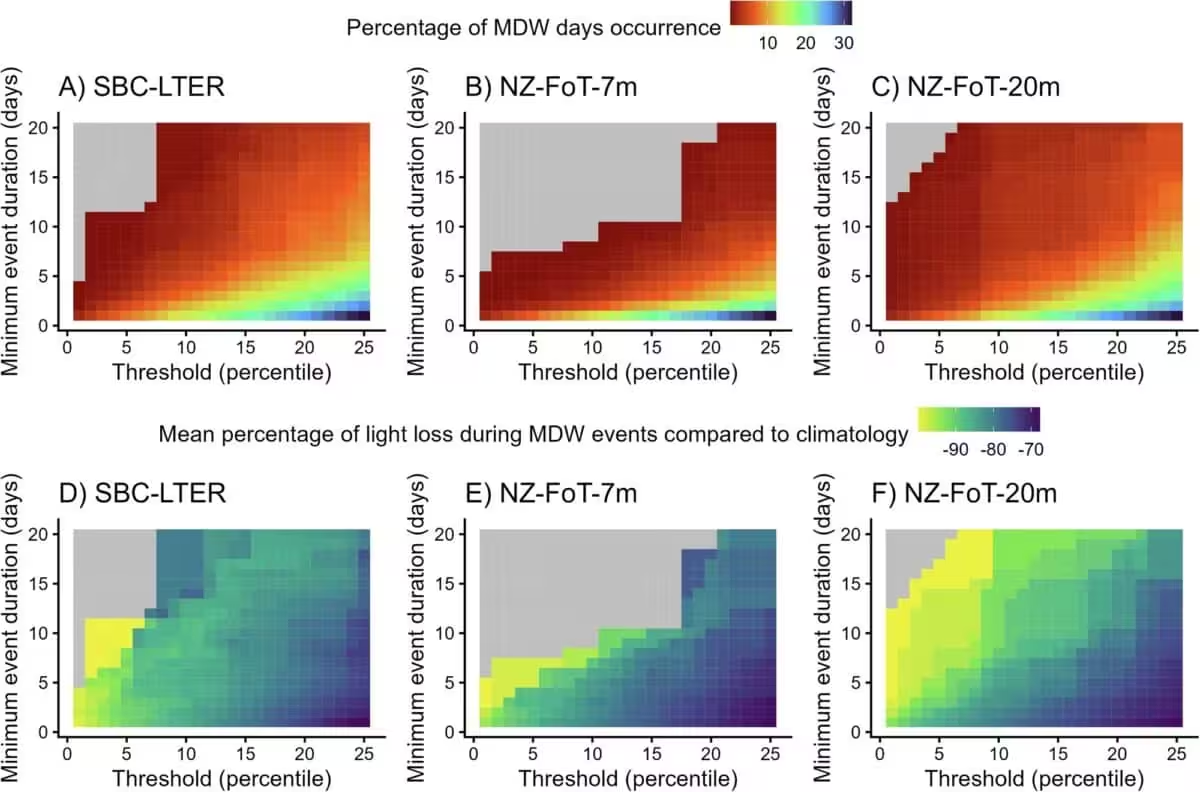
Satellite monitoring added another layer of insight, with 21 years of data examined for waters adjacent to New Zealand’s East Cape. Published in Communications Earth & Environment, the analysis identified between 25 and 80 marine darkwaves between 2002 and 2023.
Most events persisted for five to fifteen days, although one extreme case lasted 64 days. The authors argue that the new classification scheme will enable systematic comparisons across regions and improve understanding of how darkness episodes influence coastal ecosystems.
Storms and Other Forces Drive Light Loss
A substantial portion of the documented darkwaves coincided with storm activity that lofted sediments into nearshore waters. When large quantities of particulate matter remain suspended, they can effectively block sunlight from reaching deeper habitats. A notable instance followed Cyclone Gabrielle in 2023, triggering a darkwave near the East Cape, while monitoring stations in the Firth of Thames recorded comparable light drops.
Beyond storms, the study linked darkwaves to runoff from deforestation, ash and debris from wildfires, and massive phytoplankton blooms. Human activities such as dredging and coastal development may also contribute to occasional light deprivation events.
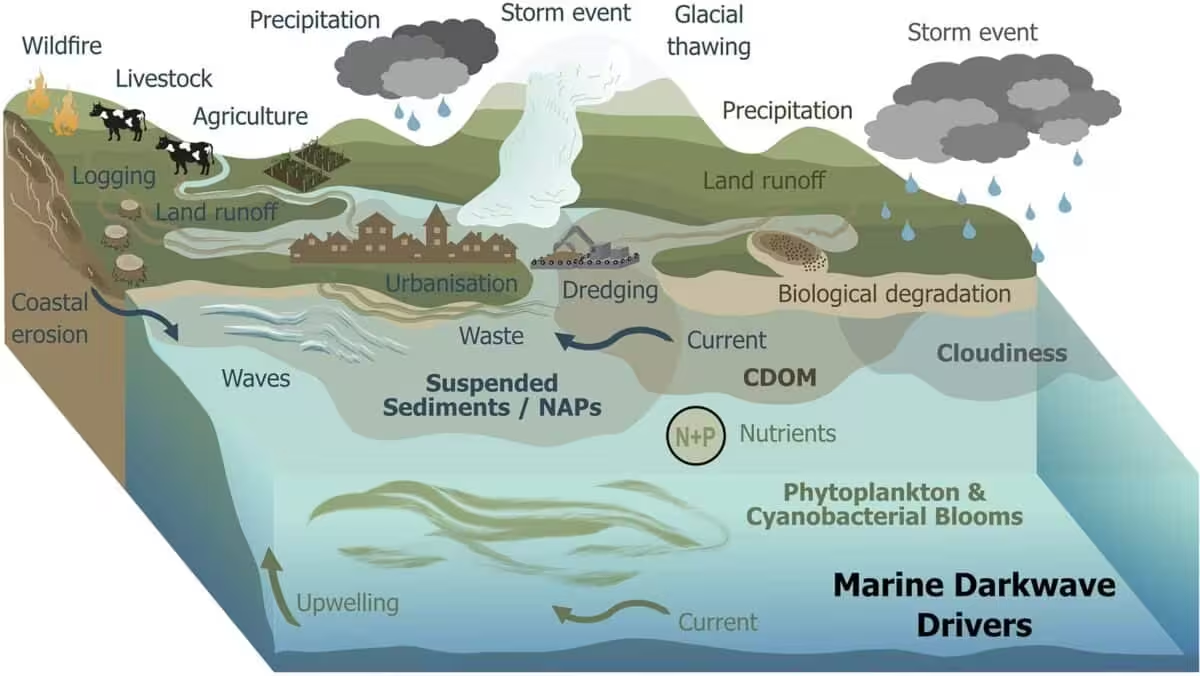
Coastal scientist Chris Battershill of the University of Waikato emphasizes that these darkwaves signal rapid stress on shoreline ecosystems, offering a potential early‑warning tool for researchers and conservation practitioners.
Implications for Marine Food Webs
Although the investigation did not directly measure ecological damage, the authors cite earlier work showing that diminished light can hinder photosynthetic organisms, with knock‑on effects for habitats such as kelp forests, seagrass beds and coral reefs.
“Even short periods of reduced light can impair photosynthesis in kelp forests, seagrass, and corals,” Thoral said. He added that: “These events can also influence the behaviour of fish, sharks, and marine mammals. When darkness persists, the ecological effects can be significant.”
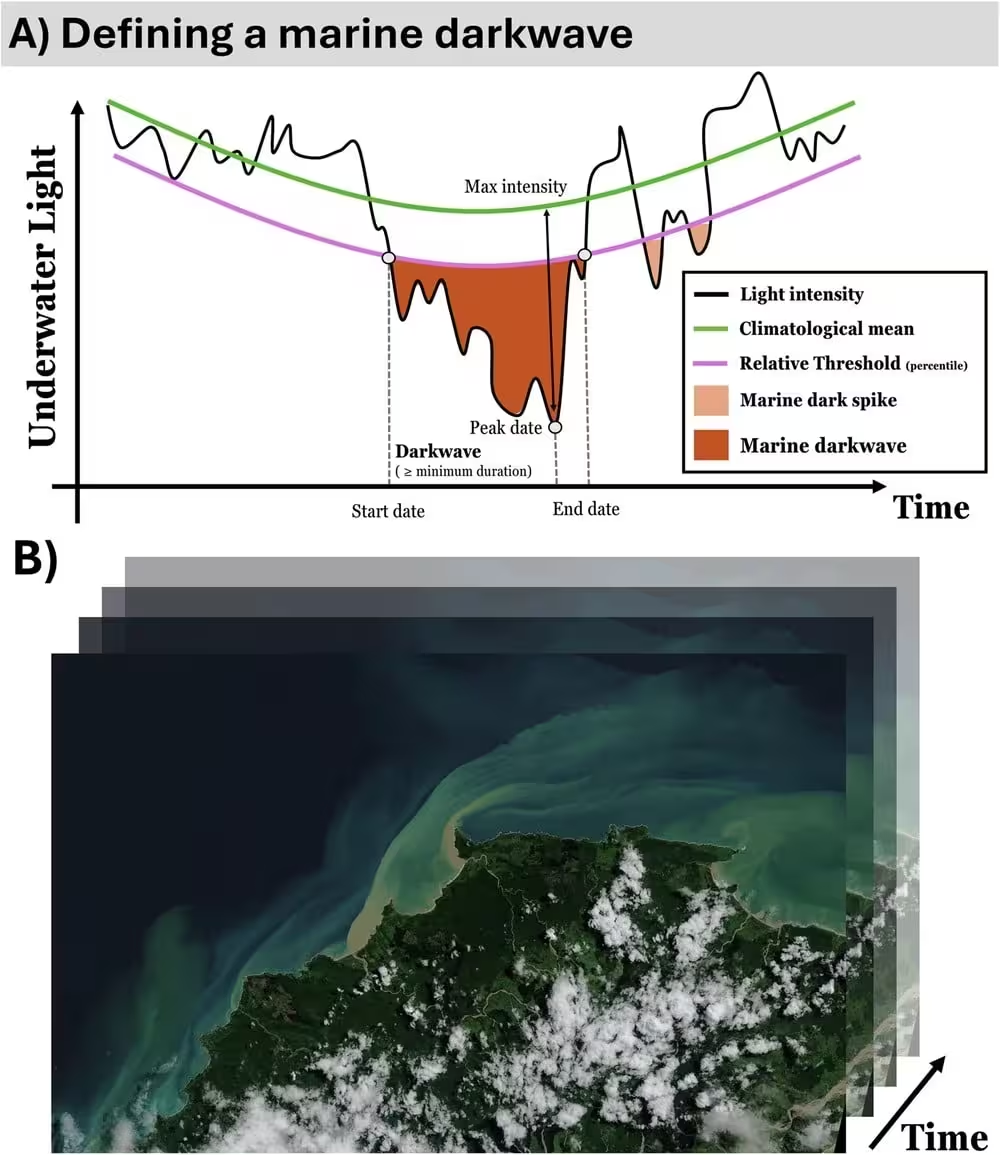
The impact of each darkwave can differ markedly; for example, a sediment influx and a phytoplankton bloom alter underwater conditions in distinct ways, leading to variable biological responses. By providing a clear classification, the new framework equips scientists to monitor these hidden darkness periods and assess how coastal ecosystems adapt when light abruptly disappears.
This article has been fact checked for accuracy, with information verified against reputable sources. Learn more about us and our editorial process.
Last reviewed on .
Article history
- Latest version
Reference(s)
- Thoral, François., et al. “Marine darkwave as an event-based framework to assess unusual periods of reduced underwater light availability.” Communications Earth & Environment, vol. 7, no. 1, January 12, 2026 Springer Science and Business Media LLC, doi: 10.1038/s43247-025-03023-4. <https://doi.org/10.1038/s43247-025-03023-4>.
- “Discovery.” <https://profiles.waikato.ac.nz/christopher.battershill>.
Cite this page:
- Posted by Divya Iyer