First Video Captures Arctic Bobtail Squid Carrying Egg Sac in Remote Greenland Waters
Scientists spot a tiny squid in a remote Arctic ecosystem, revealing unexpected behavior and expanding knowledge of this little‑studied region.
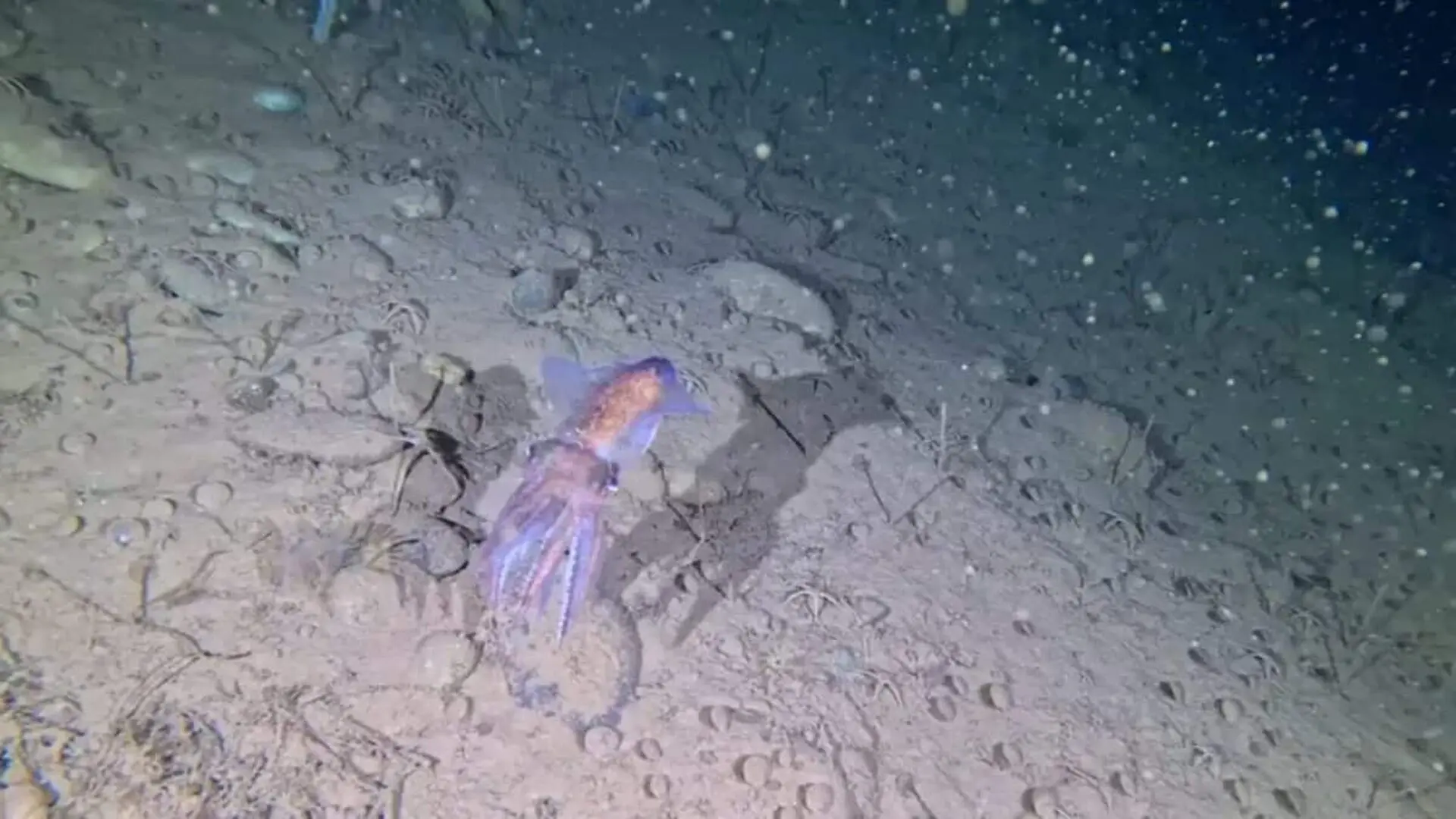
A remotely operated vehicle deployed during the Polar BLAST Expedition captured clear video of an Arctic bobtail squid (Rossia moelleri) swimming in the icy depths of Northeast Greenland National Park, marking the first confirmed sighting of the species in this remote region and showing the animal clutch an egg sac.
Uncharted Waters Yield Rare Cephalopod Footage
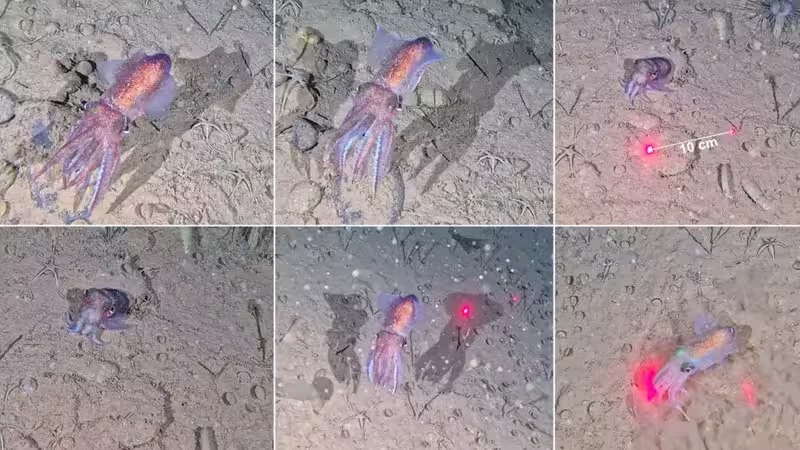
The ROV descended to roughly 50 meters below a water column measured at about −1.6 °C and recorded a squid about 10 centimeters in length navigating the sandy seabed. The mission, conducted from the Secret Atlas Micro Cruise Expedition vessel, provided access to a marine zone that has long evaded systematic study.
Egg Sac and Cluster Counts Documented
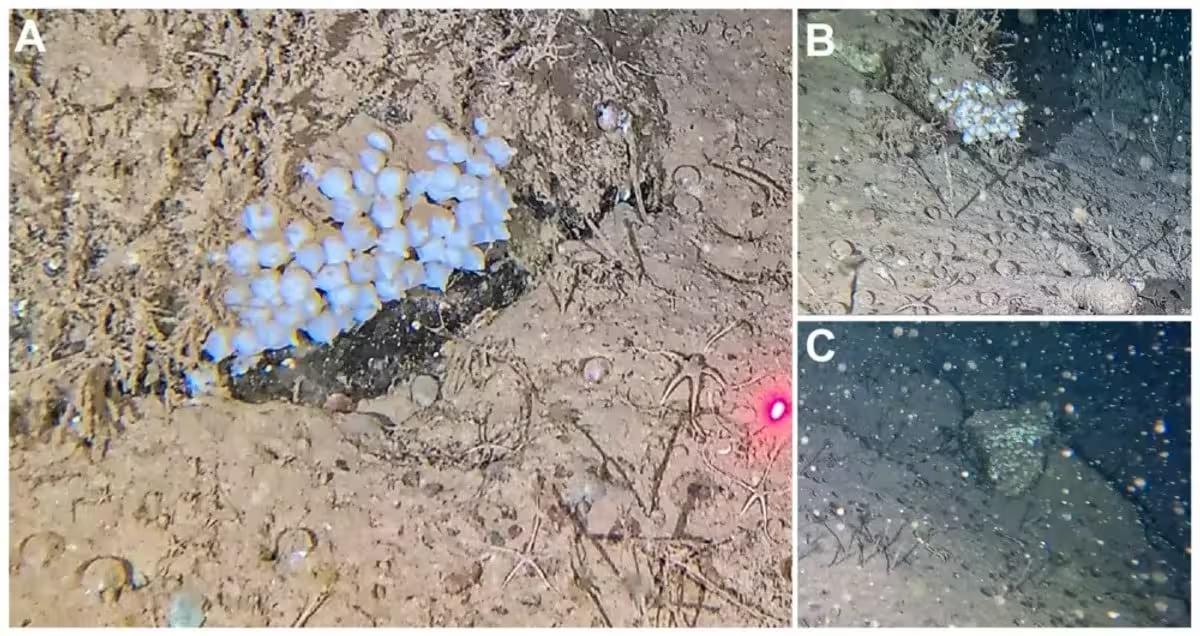
Close-up footage revealed the squid bearing an egg sac and three separate egg clusters settled on the seafloor. Analysis of the video, published in Polar Biology, indicated that the sacs contained roughly 50, 33 and 22 eggs respectively, each appearing as pale, pearly masses attached to the substrate.
Ecological Role and Vulnerability
The Arctic bobtail squid is the largest of the three known Arctic bobtail species and thrives in near‑freezing environments. Its compact body and large eyes facilitate a predatory niche that links pelagic organisms with benthic communities. Because the species has a brief lifespan and a rapid reproductive cycle, it is especially sensitive to shifts in temperature and habitat conditions.
Scientific Implications of a Single Observation
Dr. Paige Maroni, a postdoctoral fellow at the University of Western Australia, emphasized that “Northeast Greenland National Park is the largest national park on Earth but one of the least biologically documented marine regions in the Arctic.” She added that establishing baseline knowledge of biodiversity in such understudied areas is essential for assessing ecosystem function and resilience amid accelerating climate change.
“In poorly studied polar ecosystems, even one verified observation can provide important insight into species distributions, reproduction and resilience under climate change,” Dr. Maroni noted.
The footage thus contributes a rare data point for future monitoring efforts, helping to fill critical gaps in our understanding of Arctic marine biodiversity.
The full study can be accessed in Polar Biology, and additional context on the challenges of surveying remote Arctic waters is available in a related article here.
This article has been fact checked for accuracy, with information verified against reputable sources. Learn more about us and our editorial process.
Last reviewed on .
Article history
- Latest version
Reference(s)
- “Paige Maroni - Schmidt Ocean Institute.”, December 19, 2023 Schmidt Ocean Institute <https://schmidtocean.org/person/paige-maroni/>.
- Maroni, Paige J.., et al. “First in situ record of Rossia moelleri (bobtail squid) and egg masses in Northeast Greenland National Park.” Polar Biology, vol. 49, no. 3, July 8, 2026 Springer Science and Business Media LLC, doi: 10.1007/s00300-026-03518-6. <https://link.springer.com/article/10.1007/s00300-026-03518-6>.
Cite this page:
- Posted by Divya Iyer