Starship Scores Softest Ocean Splashdown Survives Intact After Deploying Next‑Gen Starlink
SpaceX’s Starship achieves milestone test flight, landing gently at sea while deploying advanced next‑gen Starlink satellites.
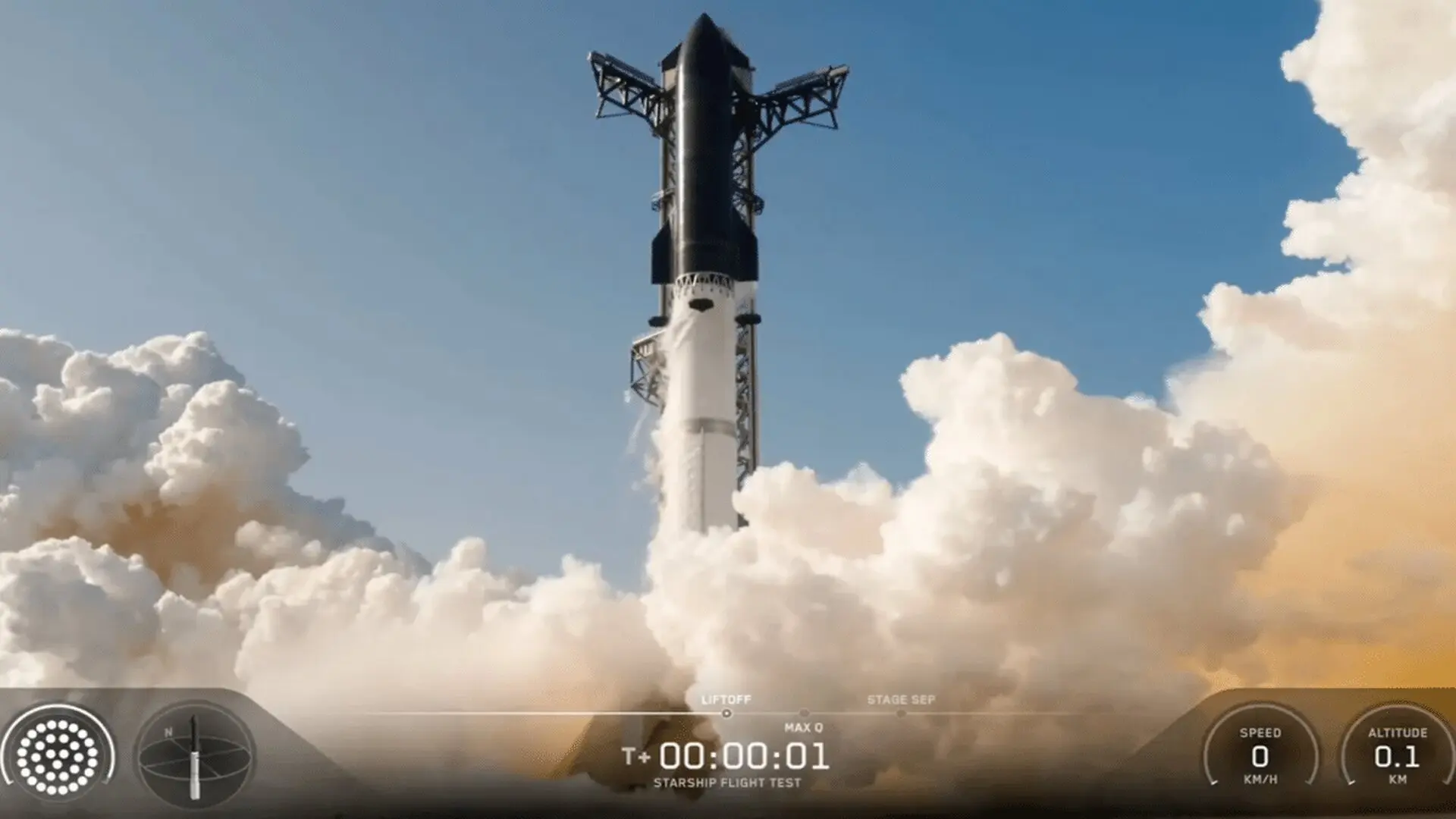
SpaceX’s Starship completed its 13th integrated flight test by executing a controlled splashdown in the Indian Ocean, marking the softest water impact recorded for the vehicle to date, according to Space.com. The event generated fresh telemetry that will feed the next generation of deep‑space and reusable‑craft designs.
Milestone Achieved in Flight 13
During the launch, the rocket lofted a batch of next‑generation Starlink satellites, demonstrating the system’s growing payload capacity as it readies for missions beyond low Earth orbit. After delivering the satellites, the upper stage turned Earthward for a pre‑planned ocean landing, aiming for a gentle touchdown in the Indian Ocean.
Telemetry Confirms Intact Vessel After Reentry
Sensors reported that the vehicle remained whole upon water contact, allowing engineers to download extensive data on heat‑shield performance, propulsion behavior, and structural stress. SpaceX CEO Elon Musk posted on X moments after splashdown, stating, “Starship is intact, floating in the ocean and transmitting telemetry!”
— Elon Musk (@elonmusk) July 25, 2026
First Water Recovery Offers Rare Visuals
Live video showed the spacecraft bobbing on the sea surface, a scene described by SpaceX spokesperson Dan Huot as the company’s “softest splashdown” to date. A drone captured the vehicle still tethered to its descent module and continuing to transmit data, giving engineers an unprecedented glimpse of the craft after reentry.
“This is just the first time we’ve put a Starship into the water,” SpaceX spokesperson Dan Huot said during live commentary.
He described the event as SpaceX’s “softest splashdown” ever and said the mission created an ideal situation for gathering heat shield information.
“This is a dream scenario for this team that’s trying to get this heat shield data,” Huot added.
Engine Burn Anomalies Prompt Further Review
Post‑splashdown analysis revealed that the final landing burn did not fire the full complement of 13 engines originally planned, prompting a deeper dive into engine sequencing and software timing. Huot noted that the vehicle entered the water with higher velocity than intended, highlighting the need for refined control algorithms.
“This is a first,” Dan Huot added in live commentary as a drone beamed stunning views of Starship bobbing in the waves.
“That is the softest splashdown we have ever had with Starship in the Indian Ocean.”
Huot explained that the final approach differed from the original expectations during the landing maneuver.
“It didn’t look like we lit all 13 engines that we were planning for that initial landing burn,” he said.
“We were targeting a softer splashdown and, as you saw, it came in with quite a bit of velocity.”
Implications for Lunar and Martian Endeavors
The data harvested from this test will feed refinements to thermal protection, flight‑control software, and recovery procedures—key elements for the vehicle’s role in NASA’s Artemis program and eventual crewed missions to Mars. Each successful ocean landing brings SpaceX closer to a fully reusable launch system capable of ferrying cargo, satellites, and astronauts on repeated interplanetary trips.
Unlike conventional launch tests that end once orbit is achieved, Starship’s flight profile is built around learning how to launch, reenter, and land a massive spacecraft many times over. The observations from Flight 13 will shape the next iteration of the vehicle, informing design choices that support long‑duration space operations.
This article has been fact checked for accuracy, with information verified against reputable sources. Learn more about us and our editorial process.
Last reviewed on .
Article history
- Latest version
Cite this page:
- Posted by Divya Iyer