Could Octopuses Rise As Earth’s Next Rulers If Humans Vanish
If humans disappear, evolution may skip primates—an unexpected marine predator with a clever brain and flexible skills could dominate.
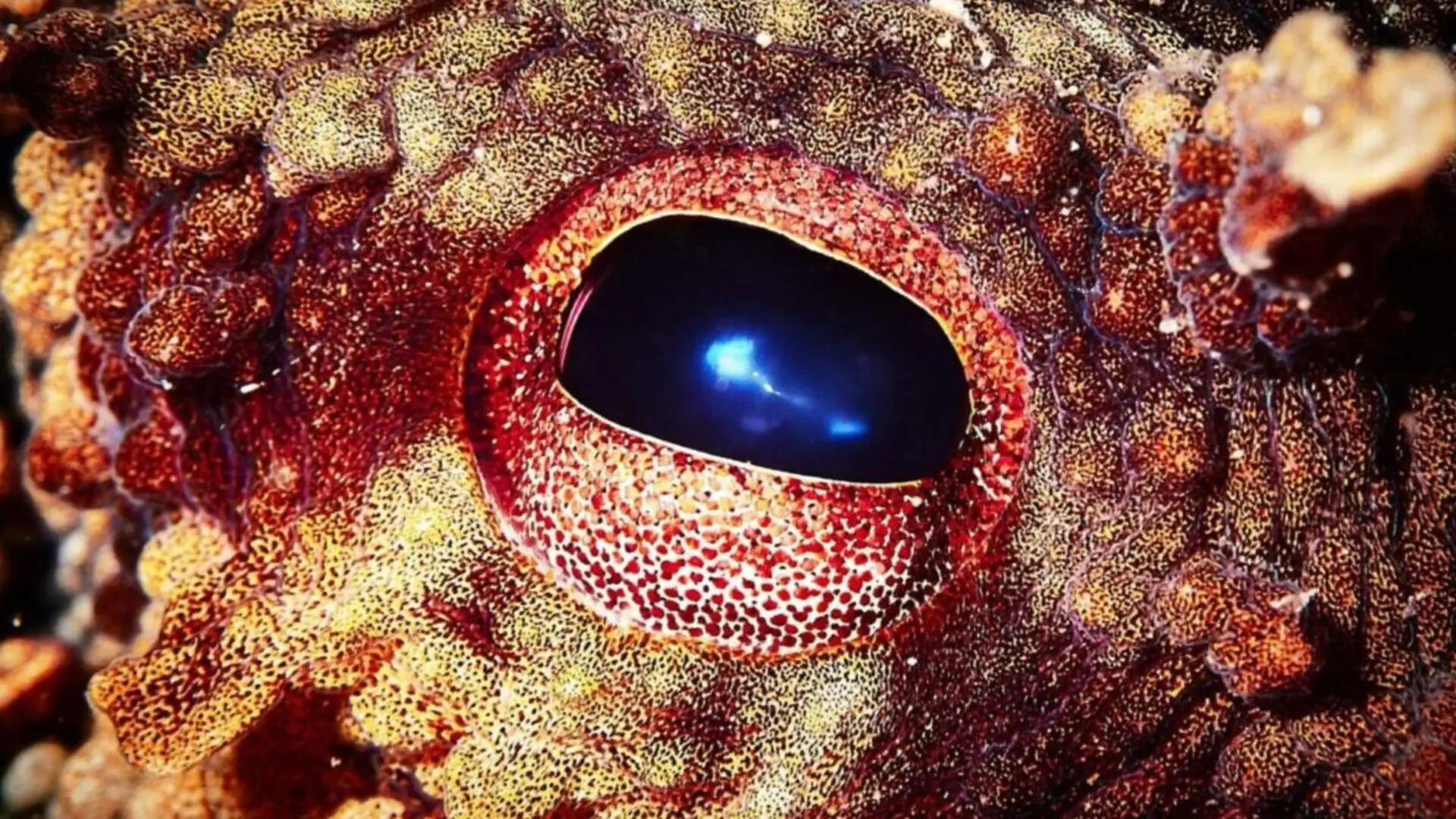
Tim Coulson, a zoology professor at the University of Oxford, has spent decades examining how ecosystems respond when top predators vanish. While researching that topic, he began to wonder which creature might step into humanity’s ecological role if we and our closest primate relatives were to disappear.
In a November 2024 interview with The European, Coulson revealed that his surprising candidate is not a fellow mammal or bird, but the octopus. The idea emerged while he was drafting his 2024 book, The Universal History of Us (Penguin), which maps the cosmos from the Big Bang to the present day.
Why Our Closest Relatives Won’t Take Over
Chimpanzees and bonobos share many human traits—opposable thumbs, tool use, occasional bipedalism—but Coulson argues they would likely share our fate. Both groups face the same habitat loss, hunting pressure and climate challenges that threaten human survival.
Even those primates that might endure would be hampered by small, fragmented populations, reliance on specific forest ecosystems, and slow reproductive cycles. Their tight‑knit social structures, essential for hunting and grooming, could become a liability if environmental conditions shift dramatically.
Birds and Insects: Talented but Not Ready
Crows, ravens and parrots demonstrate problem‑solving abilities and maintain long‑term community bonds that resemble simple cultures. Some insects build intricate colonies, yet their complex constructions stem from instinct rather than cognition. Neither group possesses the fine motor control needed to erect structures comparable to human civilization, prompting Coulson to look beneath the waves.
Octopus Intelligence Stems From a Distributed Brain
Octopuses boast a decentralized nervous system: roughly two‑thirds of their neurons reside in their arms, granting each limb a degree of autonomous decision‑making. A PNAS study links this architecture to remarkable adaptability in unpredictable environments.
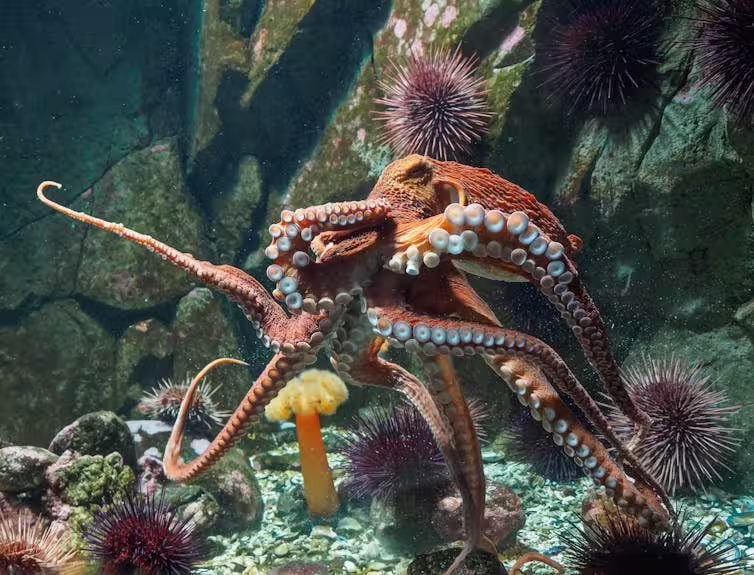
A 2022 paper in Nature Scientific Reports documented octopuses manipulating tools, solving multi‑step puzzles and navigating novel settings, behaviors that imply flexible, experience‑driven learning.
Coulson highlights instances of octopuses distinguishing real objects from virtual ones, unscrewing sealed jars, and escaping their enclosures at night to explore neighboring tanks—demonstrations of dexterity rarely seen in invertebrates.
Skeptics Point to Biological Constraints
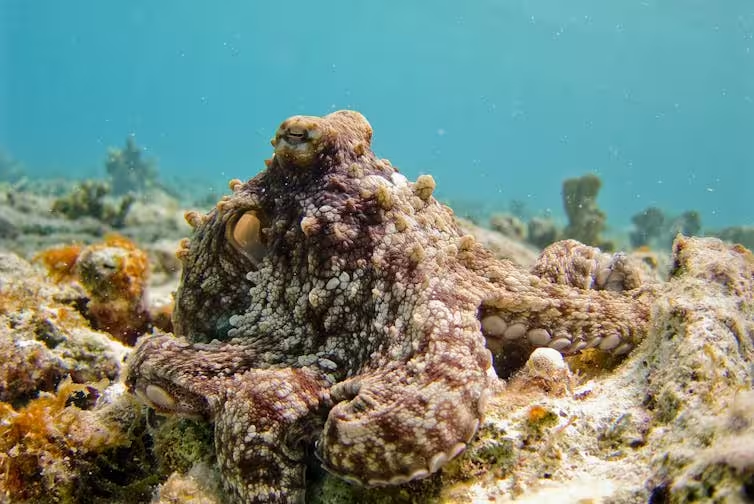
Macquarie University biologist Culum Brown cautions that octopuses are “still working from a snail blueprint.” Their typical lifespan of six months to a year leaves little room for advantageous mutations to spread across generations, slowing the pace of evolutionary change that Coulson envisions.
University of Sydney philosophy of science professor Peter Godfrey‑Smith adds that octopus offspring receive almost no parental care. Cultural transmission usually depends on knowledge passed down through generations, a mechanism largely absent in cephalopods, making rapid development of complex societies unlikely.
From Sea to Land: A Massive Hurdle
Coulson acknowledges the most formidable obstacle: octopuses lack a rigid skeleton, limiting swift terrestrial movement. Nonetheless, he speculates that, given enough time, they might evolve respiratory adaptations for breathing air and eventually hunt land‑based prey such as deer or sheep—provided they survive the event that eradicates humans.
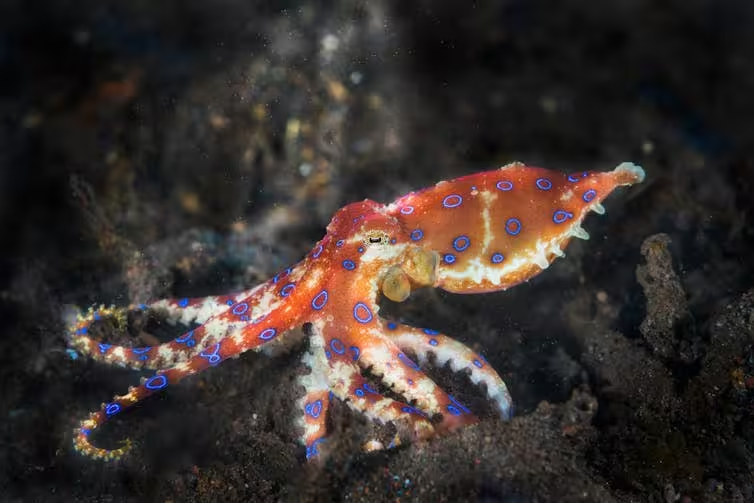
Some octopus species already exceed 20 feet in length and weigh over 110 pounds, positioning them as formidable predators beneath the waves. Coulson stresses that his projections are speculative; evolution hinges on random mutations, unpredictable extinctions and population bottlenecks.
“It’s important to remember that these are just possibilities,” he said, “and that it is impossible to predict with any degree of certainty how evolution will unfold over extended periods.” Whether cephalopods ever venture onto land remains an open question shaped by chance as much as by biology.
This article has been fact checked for accuracy, with information verified against reputable sources. Learn more about us and our editorial process.
Last reviewed on .
Article history
- Latest version
Reference(s)
- Coulson, Professor. “Professor Tim Coulson on Evolution and Human Extinction—and His Surprising Pick for Earth’s Next Rulers.”, November 13, 2024 Chase Publishing <https://the-european.eu/story-40026/professor-tim-coulson-on-evolution-and-human-extinction-and-his-surprising-pick-for-earths-next-rulers.html>.
- Ceballos, Gerardo., et al. “Mutilation of the tree of life via mass extinction of animal genera.” Proceedings of the National Academy of Sciences, vol. 120, no. 39, September 18, 2023 National Academy of Sciences, doi: 10.1073/pnas.2306987120. <https://www.pnas.org/doi/full/10.1073/pnas.2306987120>.
- Kaiho, Kunio. “Extinction magnitude of animals in the near future - Scientific Reports.”, vol. 12, no. 1, November 23, 2022, pp. 19593 Nature, doi: 10.1038/s41598-022-23369-5. <https://www.nature.com/articles/s41598-022-23369-5>.
Cite this page:
- Posted by Divya Iyer