Astronaut’s Moonlit Earth Photo Reveals Double Aurora, City Lights and Venus
A routine Artemis II Earth photo hides surprising details that, once spotted, completely reshape how we view the planet.
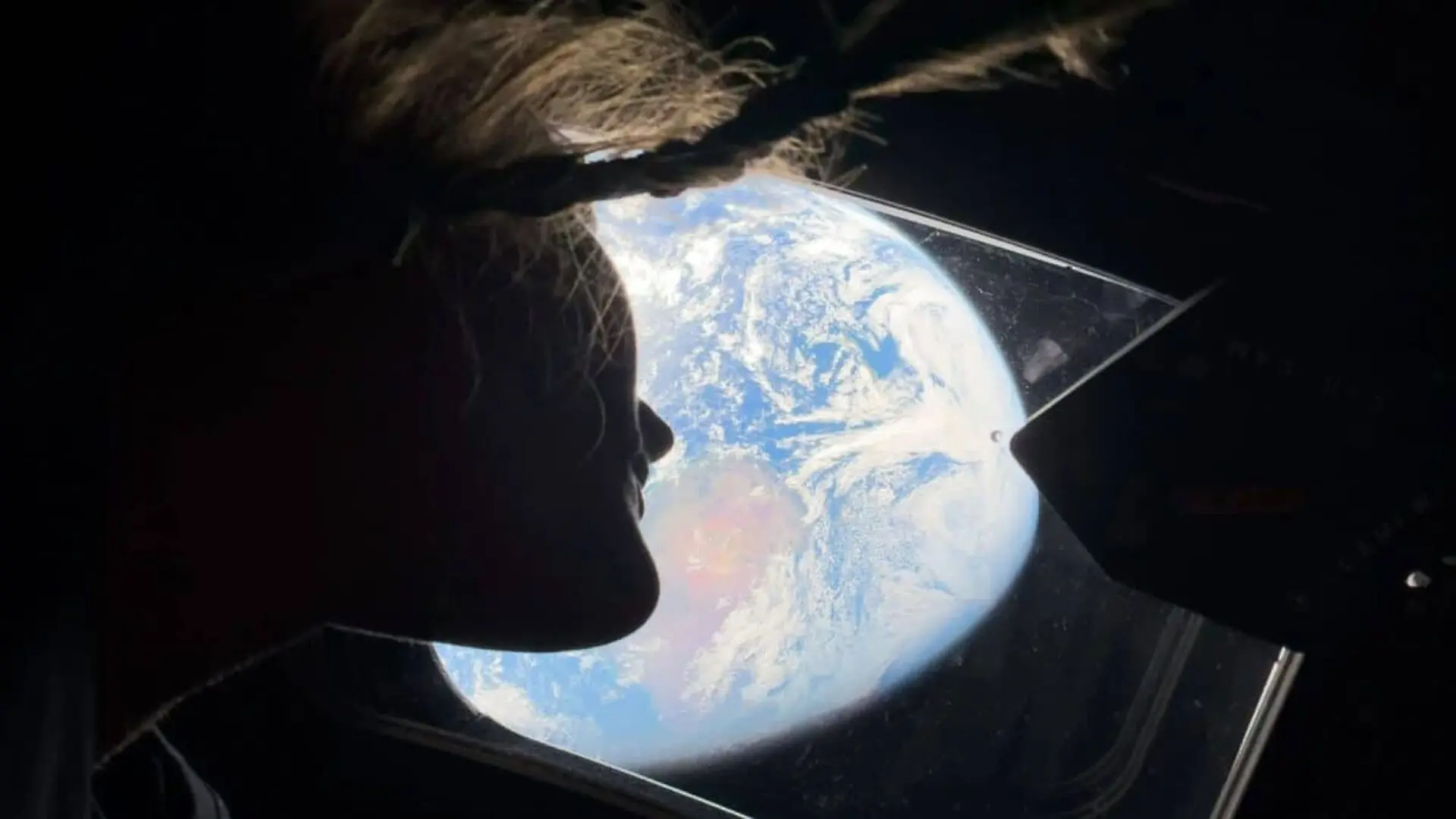
During Artemis II’s departure from Earth, NASA astronaut Reid Wiseman snapped a striking picture of our planet that looks like a modern take on the classic “Blue Marble.” The photograph, taken on April 2, shows Earth bathed in an unusual glow as the Orion spacecraft began its trek toward the Moon.
The unexpected illumination comes from the full Pink Moon, which peaked on April 1, a day before launch from NASA’s Kennedy Space Center. According to Live Science, moonlight reflected off Earth’s night side created a bright enough backdrop for the camera to capture details that would otherwise be invisible to the naked eye.
Moonlight Reveals the Dark Hemisphere
After the spacecraft cleared Earth’s gravity well, Wiseman aimed his Nikon D5 toward the planet and recorded an image lit not by direct sunlight but by lunar illumination. The full Pink Moon supplied sufficient photons to make the night side discernible from the crew’s orbital perspective, as reported by Live Science and highlighted in a dailygalaxy feature.
The camera’s high‑sensitivity sensor captured subtle features that would have been lost to the human eye. The resulting picture offers a surprisingly detailed portrait of Earth under moonlit conditions.

The raw files are stored in the Gateway to Astronaut Photography of Earth archive, where the contrast between what the crew observed directly and what the sensor recorded becomes evident. Enhanced sensitivity brings out faint city lights that trace coastlines across several continents.
From the mid‑Atlantic viewpoint, illuminated urban clusters are visible over parts of Spain, Portugal, northern Africa, sub‑Saharan Africa and Brazil, standing out against the darker oceanic expanses.
Simultaneous Northern and Southern Lights
One of the most eye‑catching aspects of the picture is the presence of auroral displays at both poles. Green arcs appear near the upper‑left and lower‑right corners, indicating charged particles from the solar wind spiraling along Earth’s magnetic field and colliding with atmospheric gases.
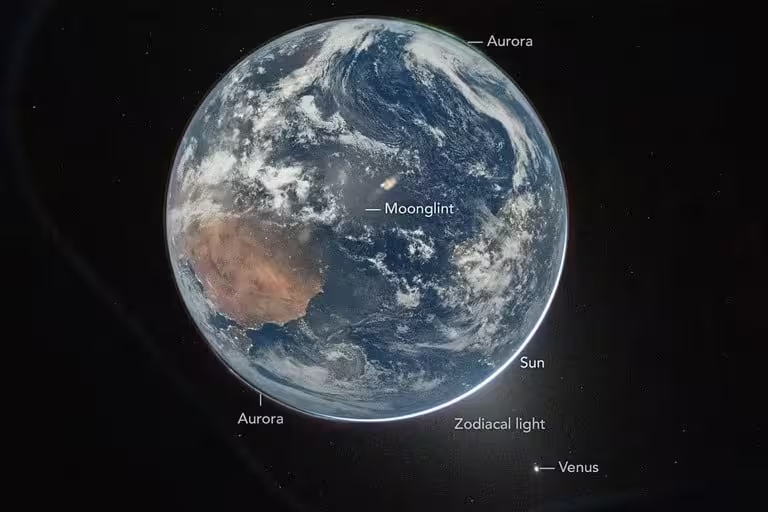
Capturing auroras at both the North and South Poles in a single global frame is uncommon. The Artemis II trajectory placed the spacecraft in a position that allowed Wiseman to frame the whole globe, preserving the dual displays in one shot.
Sunlit Edge, Zodiacal Glow and a Hint of Venus
A narrow band of sunlight skirts the planet’s lower‑right limb, a reminder that the image was taken just one day after the full moon, as noted by Live Science and earlier coverage of the full moon event. A faster‑shutter exposure of the same scene shows a thin blue crescent of illuminated atmosphere, beyond which a faint halo—known as zodiacal light—appears.
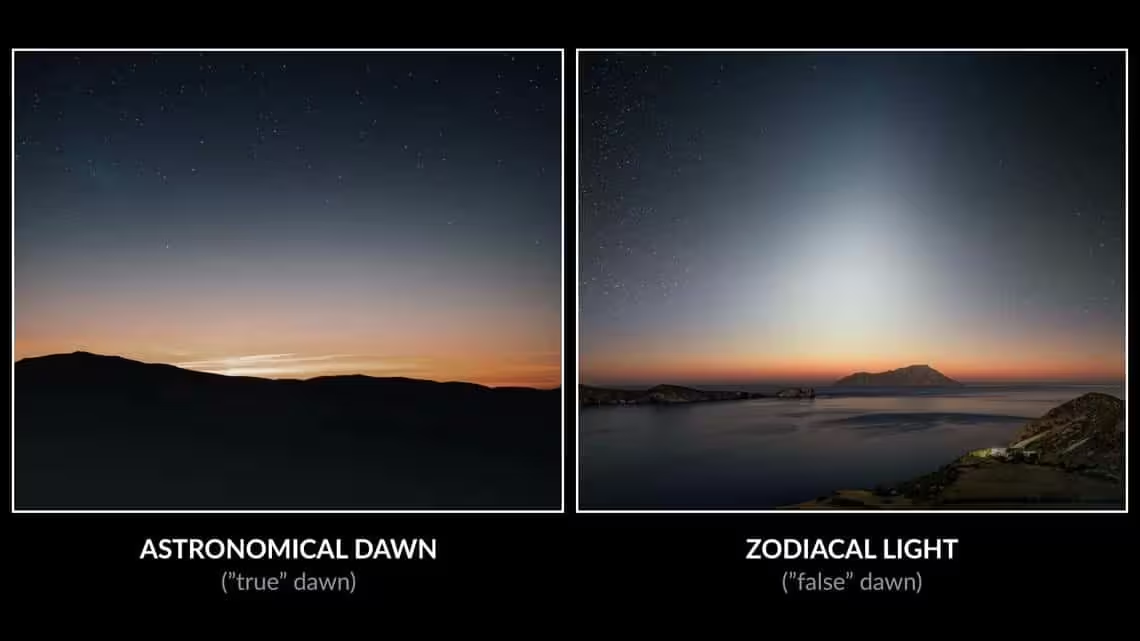
Astronomers sometimes refer to this diffuse brightness as “false dawn” or “false dusk” when observed under exceptionally dark skies. In Wiseman’s image, the subtle glow extends beyond the atmospheric rim, offering a gentle illumination of space.
In the far background, the planet Venus peeks into view near the lower‑right corner, sharing the frame with Earth, the polar auroras and the zodiacal light, creating a rare composite of inner‑solar‑system features.
This article has been fact checked for accuracy, with information verified against reputable sources. Learn more about us and our editorial process.
Last reviewed on .
Article history
- Latest version
Reference(s)
- Carter, Jamie. “Artemis II crew captures rare double auroras on the dark side of Earth as they zoom toward the moon — Space photo of the week.”, June 14, 2026 Live Science <https://www.livescience.com/space/space-exploration/artemis-ii-crew-captures-rare-double-auroras-on-the-dark-side-of-earth-as-they-zoom-toward-the-moon-space-photo-of-the-week>.
- “Gateway to Astronaut Photography of Earth.” <https://eol.jsc.nasa.gov/>.
Cite this page:
- Posted by Divya Iyer