31 New Midwater Species Discovered off Brazil + First 3D Scan of a Living Microbe
Scientists deploy cutting‑edge tech to explore a hidden underwater realm, revealing elusive species rarely seen by humans
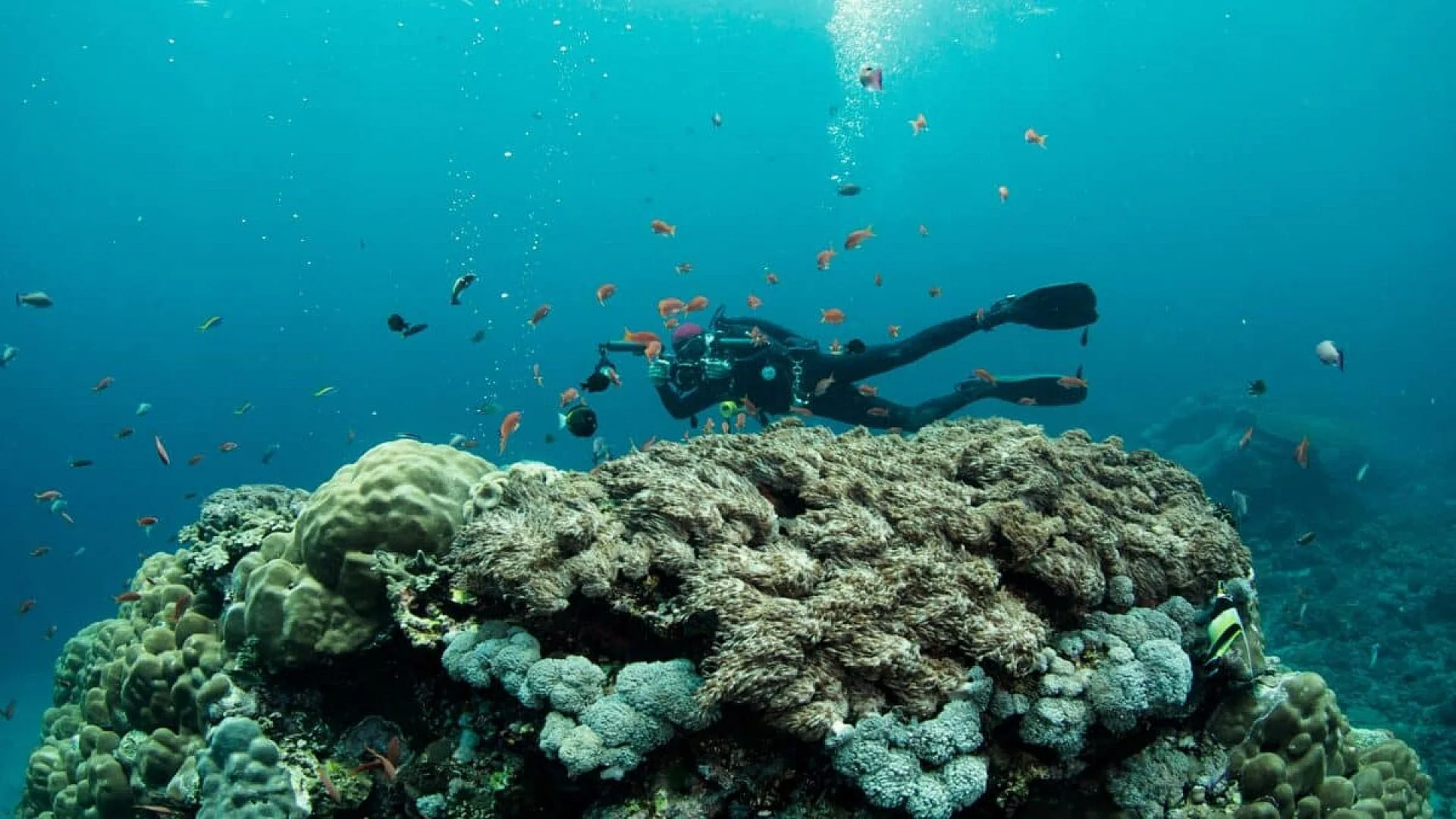
A research cruise through the South Atlantic’s midwater realm off Brazil has yielded 31 species that were previously unknown to science. The team also achieved a pioneering oceanic feat by capturing three‑dimensional images of the living cellular architecture of a single‑celled protist.
The findings emerged from a mission aboard the Schmidt Ocean Institute’s research vessel Falkor (too). By pairing high‑resolution imaging tools with DNA sequencing, the scientists catalogued a suite of organisms that seldom appear in mainstream marine studies.
Bioluminescent Creatures and Giant Single‑Cell Lifeforms
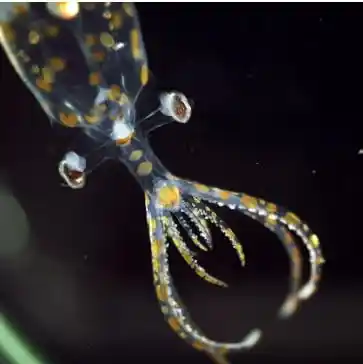
Among the newly described taxa were slender Tomopteris worms and almost invisible comb jellies that glide using delicate, feather‑like appendages. The expedition also documented oversized rhizarians—single‑celled entities large enough to be seen without magnification.
According to a press release from the Schmidt Ocean Institute, the midwater zone supports a remarkable array of survival tactics. One notable example is the larvacean, a tadpole‑shaped animal that constructs a massive mucus “house” to filter suspended particles from the surrounding water.
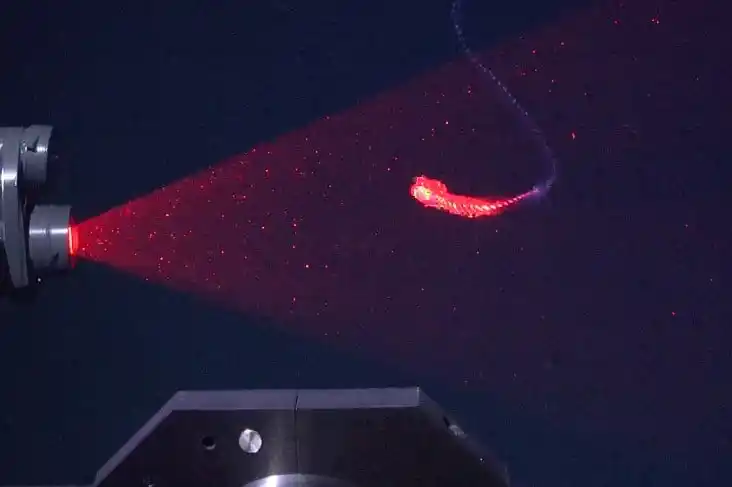
The researchers also encountered siphonophores, colonies of specialized zooids that operate as a single organism despite being composed of many individual units.
“The largest habitat on Earth, the midwater, is filled with incredible animals we are only just starting to understand,” said Karen Osborn, chief scientist of the expedition and a research zoologist at the Smithsonian National Museum of Natural History.
Gentle Imaging Techniques for Delicate Oceanic Fauna
Many midwater organisms possess soft, gelatinous bodies that are easily damaged by conventional collection methods. To circumvent this, the team deployed several non‑invasive imaging systems on the remotely operated vehicle SuBastian.
Two MBARI‑developed instruments—DeepPIV and EyeRIS—generated laser‑based scans that rendered detailed three‑dimensional representations of creatures in situ. A shadowgraph camera from the Japan Agency for Marine‑Earth Science and Technology added high‑contrast silhouettes, revealing anatomical nuances that laser imaging alone can miss.
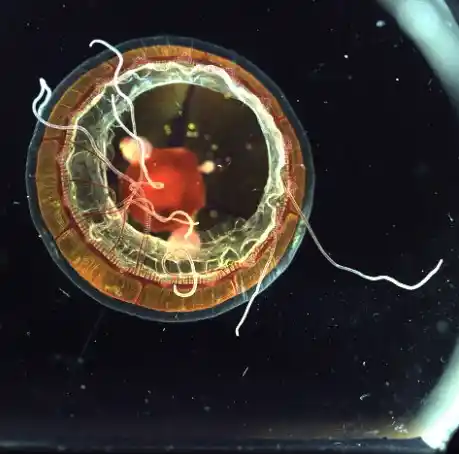
These tools enabled researchers to study numerous organisms without extracting them from their natural environment, preserving both morphology and behavior for later analysis.
First Live 3D View of a Sea Microbe’s Cellular Skeleton
Beyond cataloguing new taxa, the cruise demonstrated a suite of technologies that could reshape marine research. Using Stanford’s Squid microscope, scientists captured, for the first time at sea, a three‑dimensional view of the living cellular framework and glass‑like skeleton of a protist.
The team also employed a virtual‑reality platform from the University of Western Australia to observe animal movements, and a hydrodynamic “treadmill” that recreated an endless water column inside a circular chamber, allowing microbes to be examined with minimal disturbance.
“It’s an incredible honor to not only view and experience this rare and inspiring midwater life, but also to be able to work towards describing and sharing that life broadly through the use of novel, non‑invasive technologies,” said Kakani Katija, a bioengineer at MBARI.
This article has been fact checked for accuracy, with information verified against reputable sources. Learn more about us and our editorial process.
Last reviewed on .
Article history
- Latest version
Reference(s)
- “PRESS RELEASE.” <https://sites.google.com/schmidtocean.org/31-new-species-discovered/>.
- <https://naturalhistory.si.edu/staff/karen-osborn>.
- “4500 m Remotely Operated Vehicle (ROV SuBastian) - Schmidt Ocean Institute.”, March 28, 2016 Schmidt Ocean Institute <https://schmidtocean.org/technology/robotic-platforms/4500-m-remotely-operated-vehicle-rov/>.
- “Kakani Katija • MBARI.”, May 2, 2022 MBARI <https://www.mbari.org/person/kakani-katija/>.
Cite this page:
- Posted by Divya Iyer