Biologist Picks Up What Looks Like a Jellyfish on a Japanese Beach and Finds a Species Never Seen Before
A mysterious sea creature on Japan’s coast, initially thought to be a jellyfish, turned out to be an unexpected species, surprising scientists.
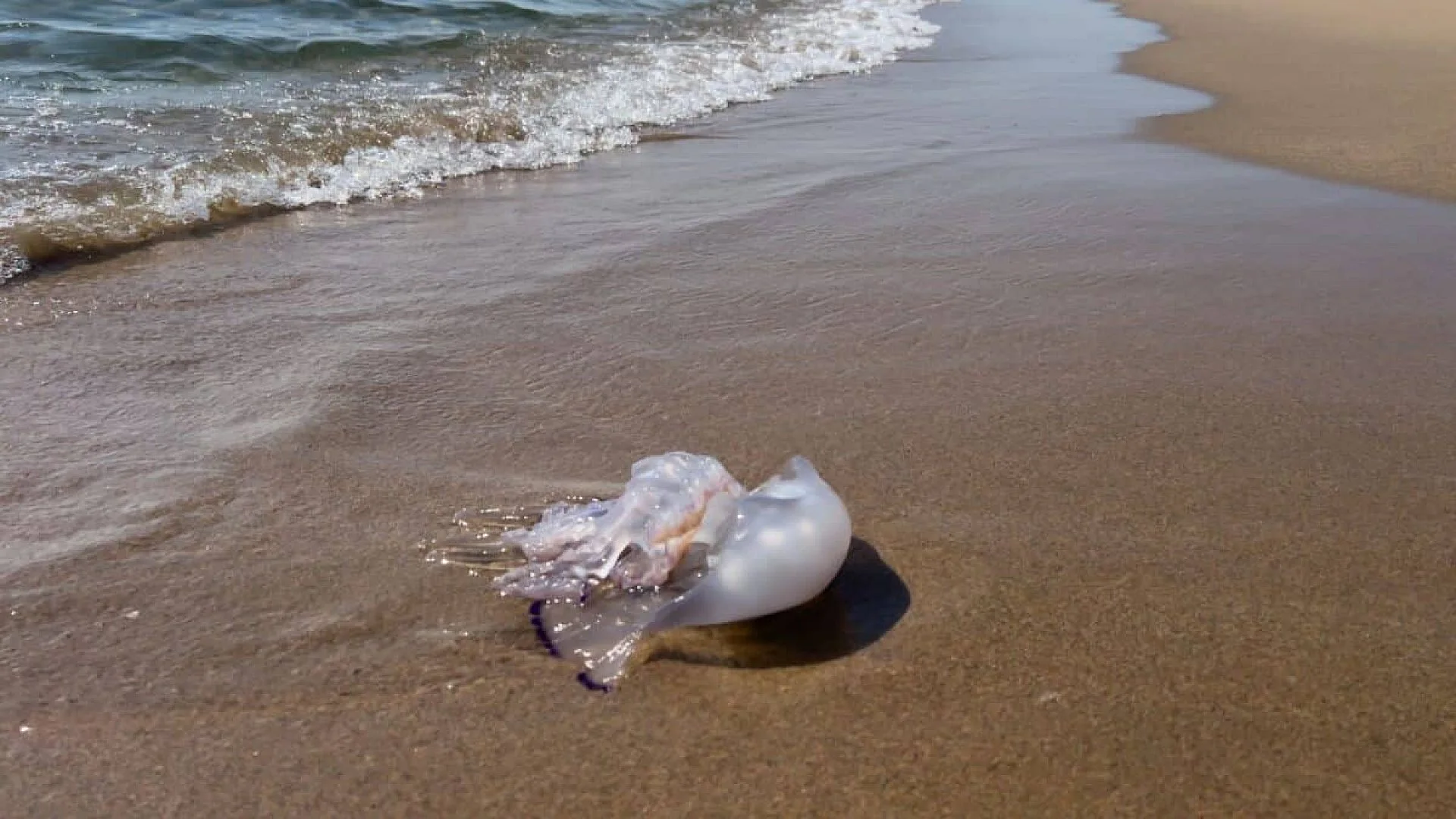
During a routine walk on Gamo Beach in Miyagi Prefecture, a biologist from Tohoku University came across a translucent, blue organism that at first seemed like a jellyfish. Detailed laboratory work later revealed it to be a previously undocumented species of the siphonophore genus Physalia, a group of stinging marine animals. The discovery, named Physalia mikazuki, suggests that the distribution of these predators may be shifting toward more temperate waters.
Yoshiki Ochiai, a researcher at Tohoku University, first noticed the creature while walking along the shoreline. Measuring roughly 20 centimeters in length, the gelatinous animal’s blue hue and unusual shape caught his attention. Initially he assumed it might be a dead jellyfish, but a study published in Frontiers confirmed it belonged to the genus Physalia, commonly known as sea bladders.
A Surprising Blue Siphonophore on a Temperate Coast
The find began as a simple beach observation. On the sands of Gamo Beach, Yoshiki Ochiai spotted a jelly‑like mass that looked familiar yet out of place. Further research identified it as a member of Physalia, a pelagic cnidarian that drifts in the ocean and captures prey with long tentacles.
“I was working on a completely different research project around Sendai Bay in the Tohoku region, when I came across this unique jellyfish I had never seen around here before,” he explained. “So I scooped it up, put it in a ziplock bag, hopped on my scooter, and brought it back to the lab!”
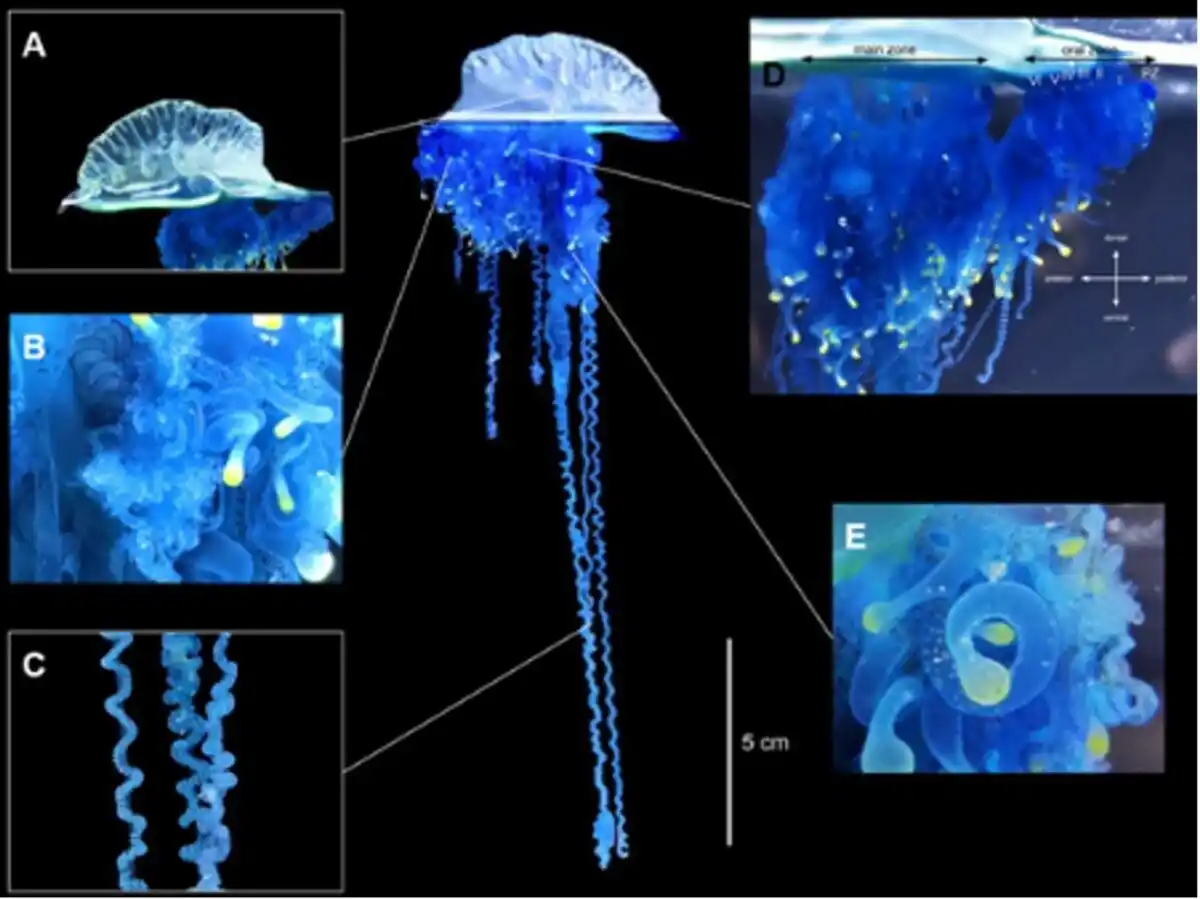
Prior to this discovery, the genus comprised four recognized species, with Physalia physalis being the most familiar. The specimens collected at Gamo Beach did not match any existing descriptions, prompting researchers to designate them as a new species.
Why the Name Physalia mikazuki Matters
The epithet “mikazuki” references a crescent‑shaped helmet, honoring Date Masamune, the iconic feudal lord of the Tōhoku region who wore a distinctive moon‑shaped headpiece. By linking the organism to a celebrated local figure, the name underscores the regional significance of the find.
The naming choice ties the species to the cultural heritage of northeastern Japan rather than serving as a purely technical label, creating a memorable association between the marine creature and a historic samurai.
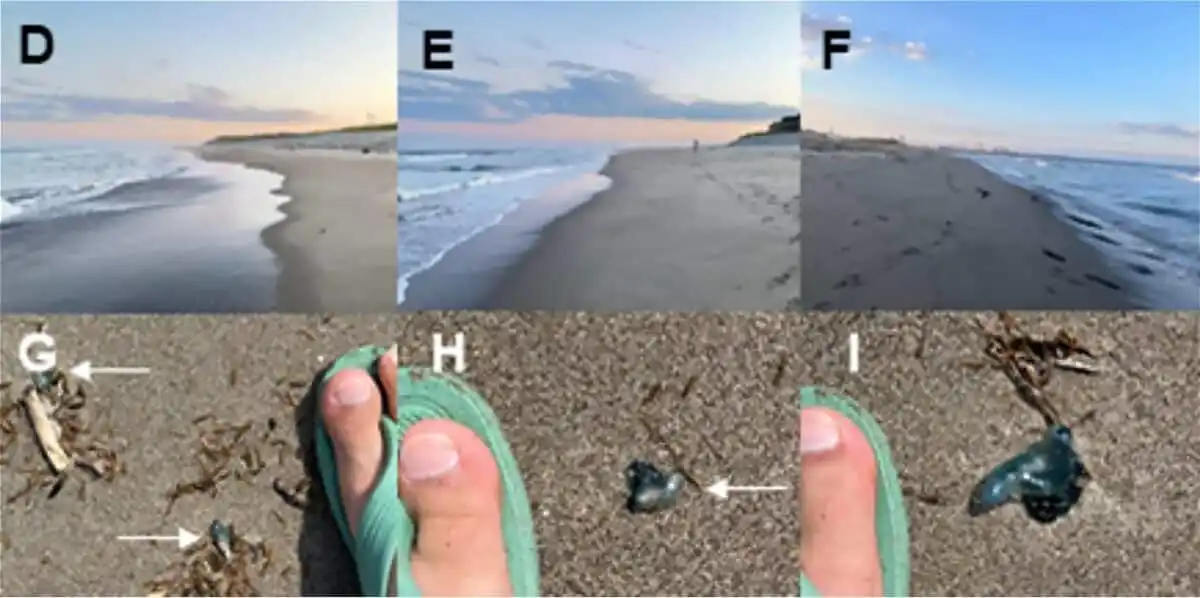
According to a statement from Tohoku University, only Physalia utriculus had previously been recorded in Japanese waters, typically near Okinawa far to the south. The appearance of a different Physalia species on a northern, temperate beach was therefore unexpected.
Implications of a Northern Range Expansion
The discovery marks the most northerly record of a Physalia to date. Researchers emphasize that integrating taxonomy, molecular analyses, and oceanographic modeling can illuminate hidden biodiversity and track shifts in species distributions as oceans warm.
For Ochiai, the finding hints at a broader biogeographic trend. Rising sea‑surface temperatures linked to global climate change may be expanding the viable habitat for these siphonophores.
The situation recalls the recent surge of Nomura jellyfish in Japanese waters, which has impacted fisheries and marine ecosystems. Like many cnidarians, Physalia are carnivorous, and their stings can cause painful reactions in swimmers.
“These jellyfish are dangerous and perhaps a bit scary to some, but also beautiful creatures that are deserving of continued research and classification efforts,” noted Ayane Totsu, co‑author of the study.
Their unexpected presence farther north may prompt closer coastal monitoring and more frequent public advisories along Japan’s shoreline.
This article has been fact checked for accuracy, with information verified against reputable sources. Learn more about us and our editorial process.
Last reviewed on .
Article history
- Latest version
Cite this page:
- Posted by Divya Iyer