A Remote Antarctic Station Lost Its Containers to a Blizzard. Days Later, They Were Spotted Drifting Away on a Giant Iceberg at Sea
A missing cargo from an Antarctic station resurfaces after a blizzard, but its new location makes recovery far more challenging
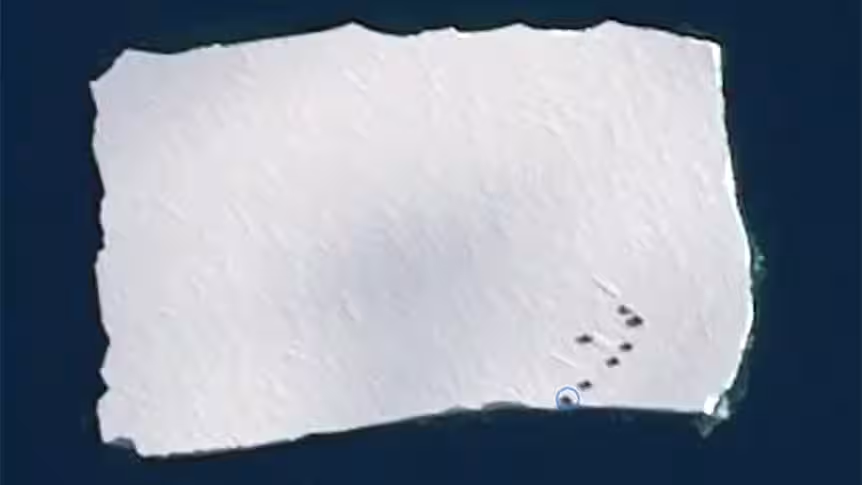
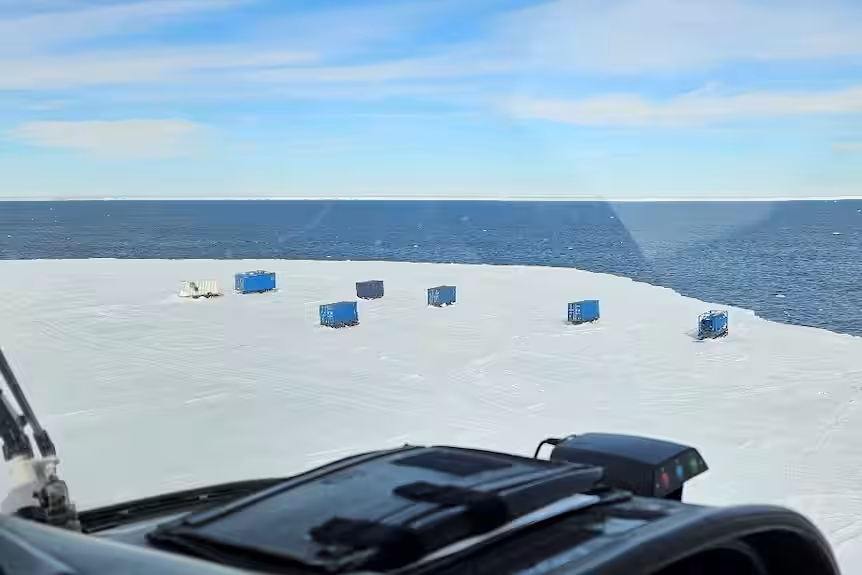
A satellite view initially made the scene look like a handful of tiny ants scattered across a torn sheet of white paper. A closer look revealed a more alarming picture: several large shipping containers, including one packed with 9,500 litres of diesel, floating on a massive ice slab off Antarctica’s coast.
The chain of events started in mid‑January 2026 at Germany’s Neumayer Station III, a research outpost built on an ice shelf about 18 kilometres inland from the Weddell Sea. Personnel moved seven containers a few hundred metres toward the shoreline in preparation for a scheduled waste‑collection ship. At the time, no cracks or fissures were visible in the ice, according to an official report later presented at the Antarctic Treaty Consultative Meeting in Hiroshima, Japan.
A week‑long blizzard then altered the situation dramatically. German Antarctic officials and the Alfred Wegener Institute (AWI) documented the sequence in a subsequent report.
Storm‑Induced Calving Sends Cargo Out to Sea
Between 13 January and 20 January, winds gusted up to 130 km/h across the region. When the weather finally eased on 21 January, a logistics team inspected the coastal staging area and discovered that a huge piece of the Antarctic ice shelf had broken away into the ocean.
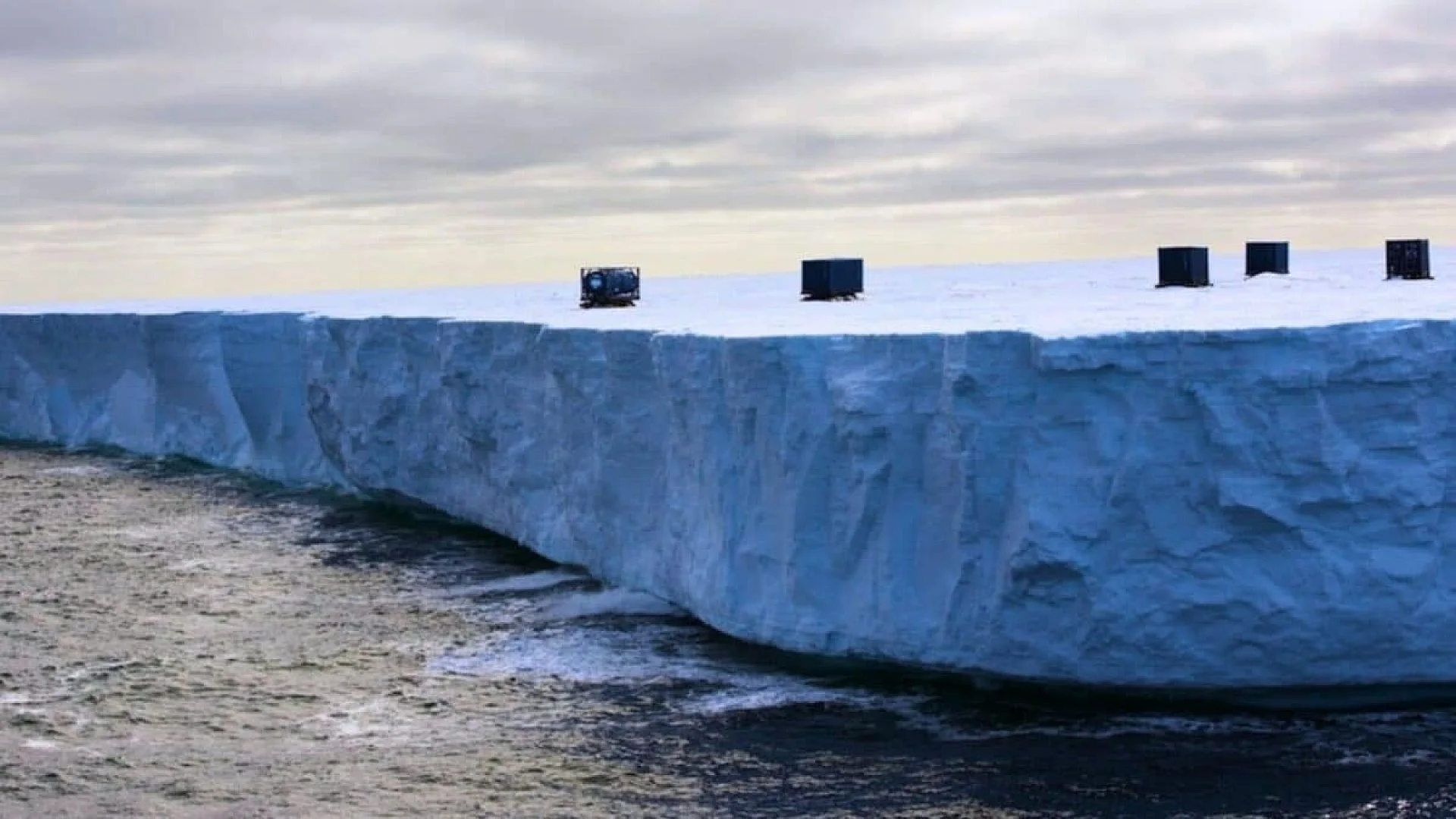
“The logistics team discovered that an iceberg measuring around 500 metres by 300 metres had broken off and drifted into the Weddell Sea,” the AWI report noted, as cited by an ABC News story on the incident. “Unfortunately, all of the … containers were on this iceberg.”
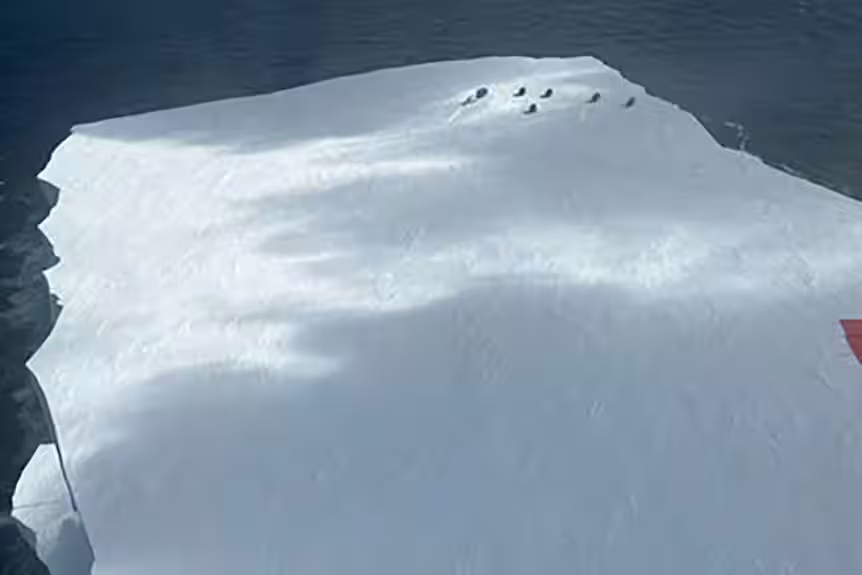
The seven containers held a mix of operational supplies and waste slated for removal. One contained 9,500 litres of Arctic diesel, four held non‑hazardous rubbish and household items, another housed a generator with additional fuel, and the last served as a temporary shelter for staff.
German authorities initially considered deploying an aircraft to locate the missing cargo. Before that could happen, the icebreaker RV Polarstern’s crew sighted the iceberg and its unusual payload the following day. The vessel halted its scientific program and proceeded toward the drifting platform, which had already moved about 140 kilometres southeast of the Neumayer ice port.
Glaciologists Map the Iceberg Prior to Retrieval Attempts
Before any recovery effort began, glaciologists aboard the Polarstern evaluated the iceberg’s dimensions. They measured an overall thickness of 81 metres, with roughly 15 metres of freeboard above the sea surface.
The assessment concluded that certain sections were stable enough to support a small landing team. Helicopters subsequently ferried material off the ice, recovering nearly one tonne of equipment: three drums holding about 580 litres of Arctic diesel, plus gas cylinders and batteries, according to the event record posted by the RSOE EDIS emergency monitoring system.
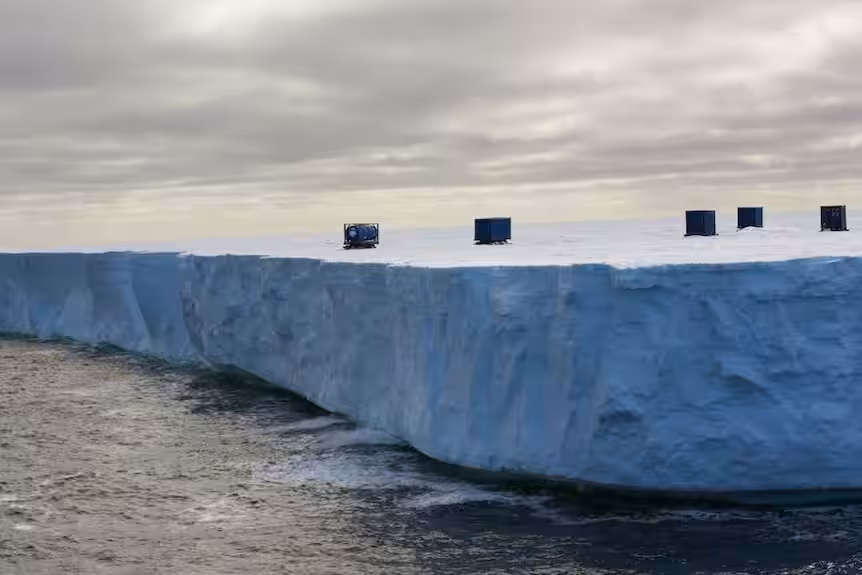
The window for safe recovery closed quickly. “As the risk of the iceberg breaking apart increased, it was impossible to secure more of the cargo without risking human life,” the report said. Retrieval operations ceased on 25 January, leaving the remaining containers on the iceberg.
Iceberg Vanishes and Diesel Likely Enters the Ocean
Satellite images captured the iceberg for the last time on 22 February. After that date it disappeared from monitoring networks. The report concluded: “It can be assumed that the iceberg has disintegrated shortly afterwards and that the containers have sunk to the seabed.”
Environmental assessments judged the four waste‑filled containers to have “little direct impact on the ecosystem.” The diesel container, however, raised serious concerns. The report indicated that the fuel likely escaped either because the container was damaged upon impact with the sea or because it imploded during descent to the ocean floor.
Arctic diesel is lighter and more volatile than heavy marine fuel, meaning some of it may evaporate once exposed. Antarctic temperatures, however, impede rapid natural degradation; the cold slows bacterial breakdown in both water and sea ice.
“It can therefore be assumed that the fuel will remain in the system for a longer period of time,” the report noted, adding that precise ecological impacts depend heavily on local conditions and cannot be quantified with certainty.
Germany Admits Mistake and Revises Cargo‑Handling Rules
At the Antarctic Treaty meeting, the German government and the AWI expressed regret without shifting blame. “The German government and the AWI deeply regret the incident and are glad that no one was injured,” the statement read.
New operational guidelines now require containers awaiting ship pickup to be positioned at least 5,000 metres from the ice shelf edge, replacing the previous practice of staging cargo only a few hundred metres out.
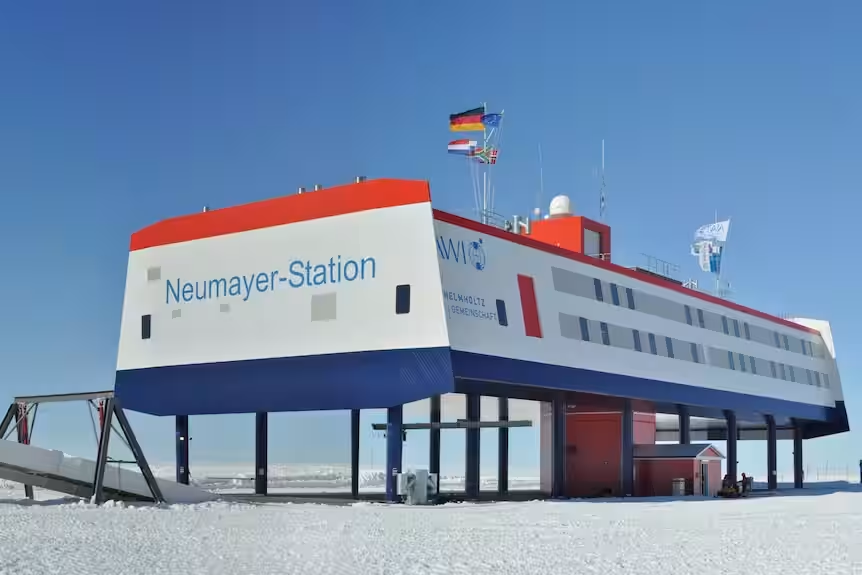
The AWI also pledged more extensive glaciological surveys along the entire route from Neumayer Station III to the ice port. These studies will map ice thickness and structural integrity to identify zones prone to sudden calving, even when surface conditions appear stable.
The findings were submitted to the annual Antarctic Treaty Consultative Meeting, which wrapped up Thursday in Hiroshima. The episode now serves as a documented case study of the risks associated with operating a research station on a transient ice platform, where a single severe storm can reshape the coastline and carry cargo into the Southern Ocean within days.
This article has been fact checked for accuracy, with information verified against reputable sources. Learn more about us and our editorial process.
Last reviewed on .
Article history
- Latest version
Cite this page:
- Posted by Divya Iyer