NASA Spots Massive Blue-Green Bloom Swirling Off the U.S. East Coast, Visible From Space
Satellites have detected an extraordinary bloom in the Atlantic, just off the eastern seaboard of the United States. The vivid, spiraling hues suggest an unusually large and unexpected phenomenon unfolding beneath the ocean’s surface.
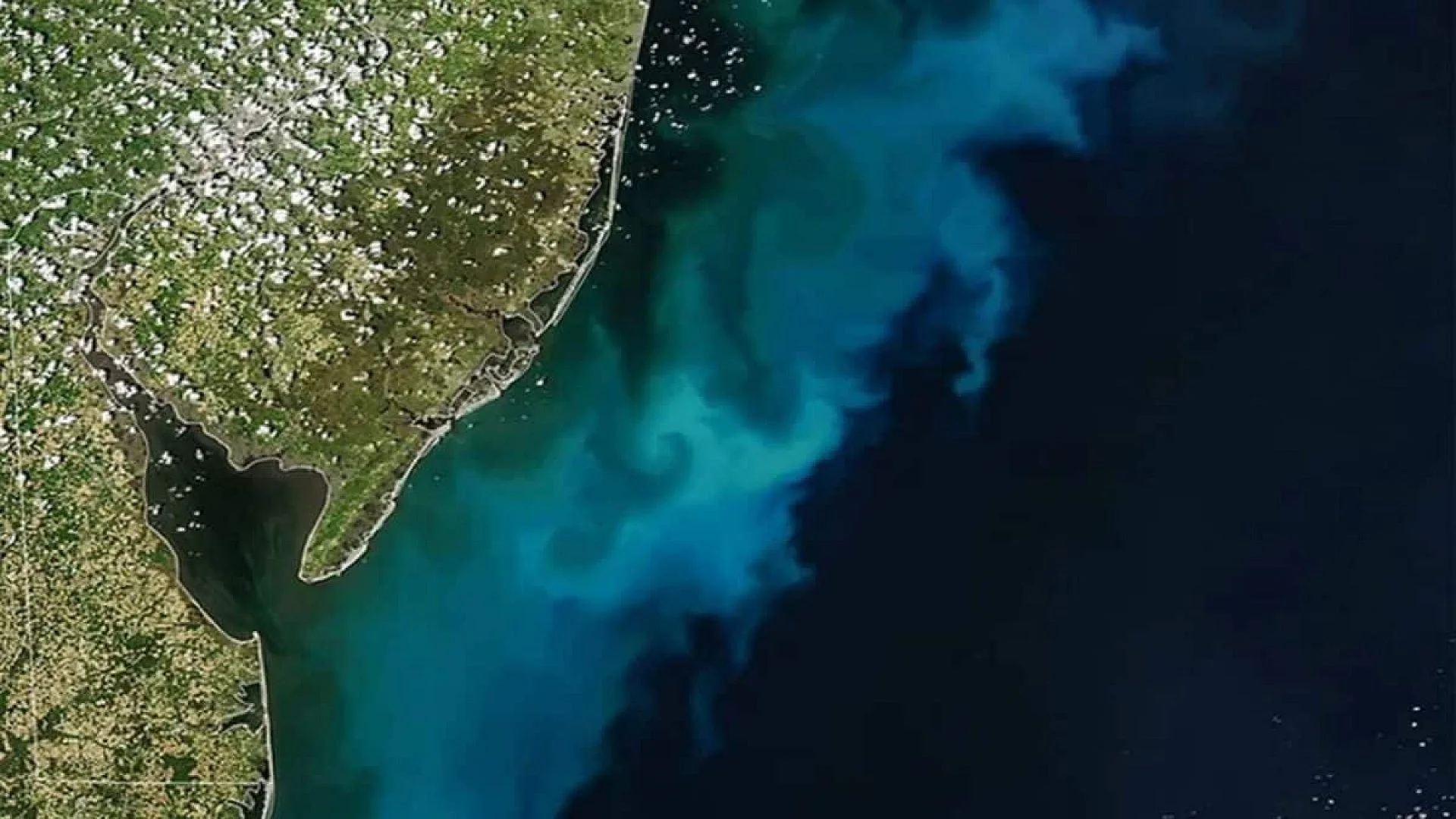
NASA satellites have captured a stunning blue-green spectacle unfolding along the shallow coastlines of New Jersey, Delaware, Maryland, and Virginia. This phenomenon, first observed in mid-April, has grown into vast, swirling patterns visible from space, captivating the attention of scientists and the general public alike.
The bloom appears as a mesmerizing mix of blue, green, and brown hues, stretching for hundreds of kilometers along the eastern seaboard. According to NASA, the phenomenon is driven by a combination of river outflows, spring storms, and a dense population of microscopic marine organisms known as phytoplankton.
Monitoring such blooms is crucial to understanding ocean health, as these organisms play a vital role in oxygen production and serve as a foundational food source for marine ecosystems. Satellite instruments like MODIS on the Aqua satellite and the new PACE mission allow scientists to track these events with unprecedented detail, analyzing ocean color to determine organism types and densities.
The Science Behind the Bloom
The swirling patterns seen from space are influenced by both natural water movement and the biology of the organisms themselves. Kyle Scotese from the International Society for Diatom Research notes that:
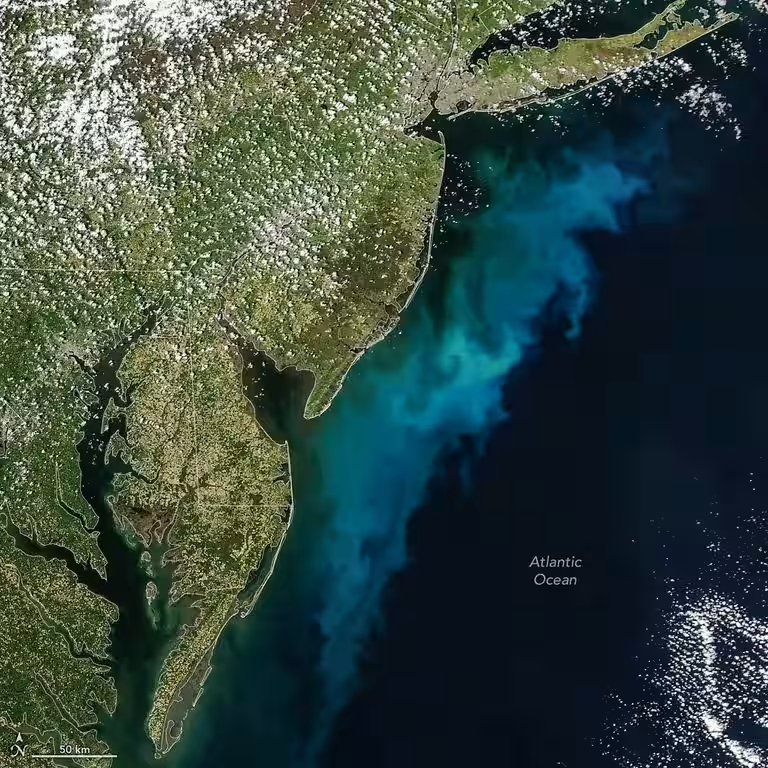
“Many types of algae, including cyanobacteria, dinoflagellates, and diatoms, can generate massive populations with densities greater than 15,000,000 cells per liter, stretching for hundreds or even thousands of square kilometers in water bodies,” adding that: “these blooms can proliferate and dieback in a matter of days or return seasonally for decades.”
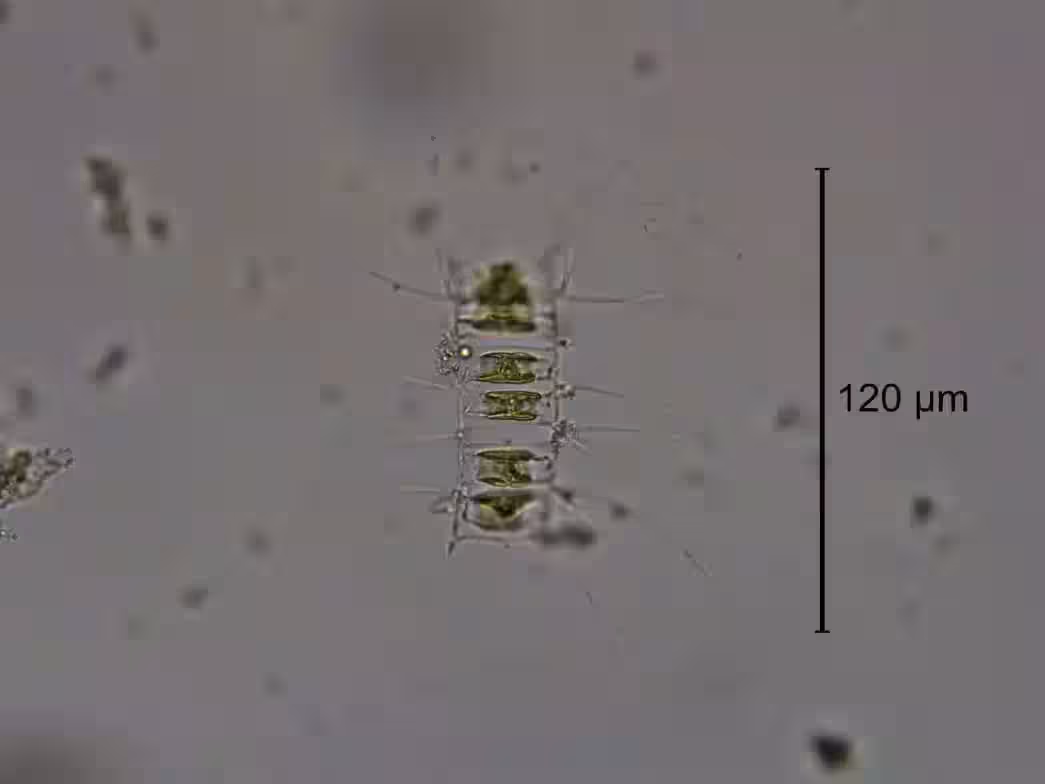
River outflows and spring storms also contribute to the phenomenon by stirring sediments and nutrients into shallow waters, providing fertile conditions for these microscopic lifeforms. NASA Earth Observatory reports that these environmental factors combine to produce the ghostly blue-green and brown coloration visible in satellite imagery.
Identifying Organisms from Space
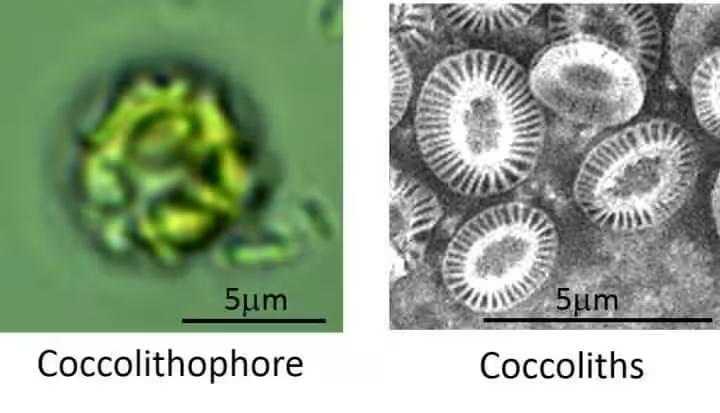
The Plankton, Aerosol, Cloud, Ocean Ecosystem (PACE) satellite has improved the ability to identify bloom composition remotely. By analyzing light wavelengths, researchers can determine which phytoplankton species dominate a bloom. The U.S Space Agency highlights that diatomstypically dominate early spring blooms, though some signs of coccolithophores, which create a chalky turquoise appearance, are also present.
Sunlight interacting with substances in seawater, such as chlorophyll, gives the ocean its color and reveals the patterns. Anna Windle, a research scientist at NASA’s Goddard Space Flight Center, explains that these measurements allow scientists to monitor global phytoplankton distribution and track the ecological role of these organisms with precision.
The Impact of Blooms on Marine Ecosystems
Phytoplankton are responsible for producing an estimated 20 to 40 percent of Earth’s oxygen and form the base of the marine food web. The same source adds that coccolithophore-dominated blooms, which appear milky or turquoise, provide additional insight into ocean chemistry due to their calcium carbonate plates called coccoliths.
While these blooms are natural and usually temporary, their size and composition are closely monitored to assess ocean health and detect potentially toxic events. For now, the eastern U.S. swirl shows no signs of toxicity and as noted by Oscar Schofield, an oceanographer at Rutgers University:
“Unless big river outflows or storms replenish the nutrients, we’ll likely see this bloom start to decline in the coming weeks.”
This article has been fact checked for accuracy, with information verified against reputable sources. Learn more about us and our editorial process.
Last reviewed on .
Article history
- Latest version
Reference(s)
- “Aquatic Biologist & Algal Taxonomist Kyle Scotese | EnviroScience.”, December 18, 1989 EnviroScience <https://www.enviroscienceinc.com/employee/kyle-scotese/>.
- Garrison, Michala. “Color Off the Mid-Atlantic Coast - NASA Science.”, May 11, 2026 NASA <https://science.nasa.gov/earth/earth-observatory/color-off-the-mid-atlantic-coast/>.
- Casey, Daren. “PACE - NASA Science.”, October 24, 2023 NASA <https://science.nasa.gov/mission/pace/>.
- “Anna Windle - Sciences and Exploration Directorate.” NASA Goddard Sciences and Exploration Directorate <https://science.gsfc.nasa.gov/sci/bio/anna.e.windledipaola>.
- “Oscar Schofield – Rutgers University Department of Marine and Coastal Sciences.” <https://marine.rutgers.edu/team_mf/oscar-schofield/>.
Cite this page:
- Posted by Divya Iyer