Live Goblin Sharks Filmed in Deep Pacific – First Wild Footage Reveals Ancient Predator
Rare footage finally reveals the elusive deep‑sea shark, one of the ocean’s strangest creatures, after years of mystery.
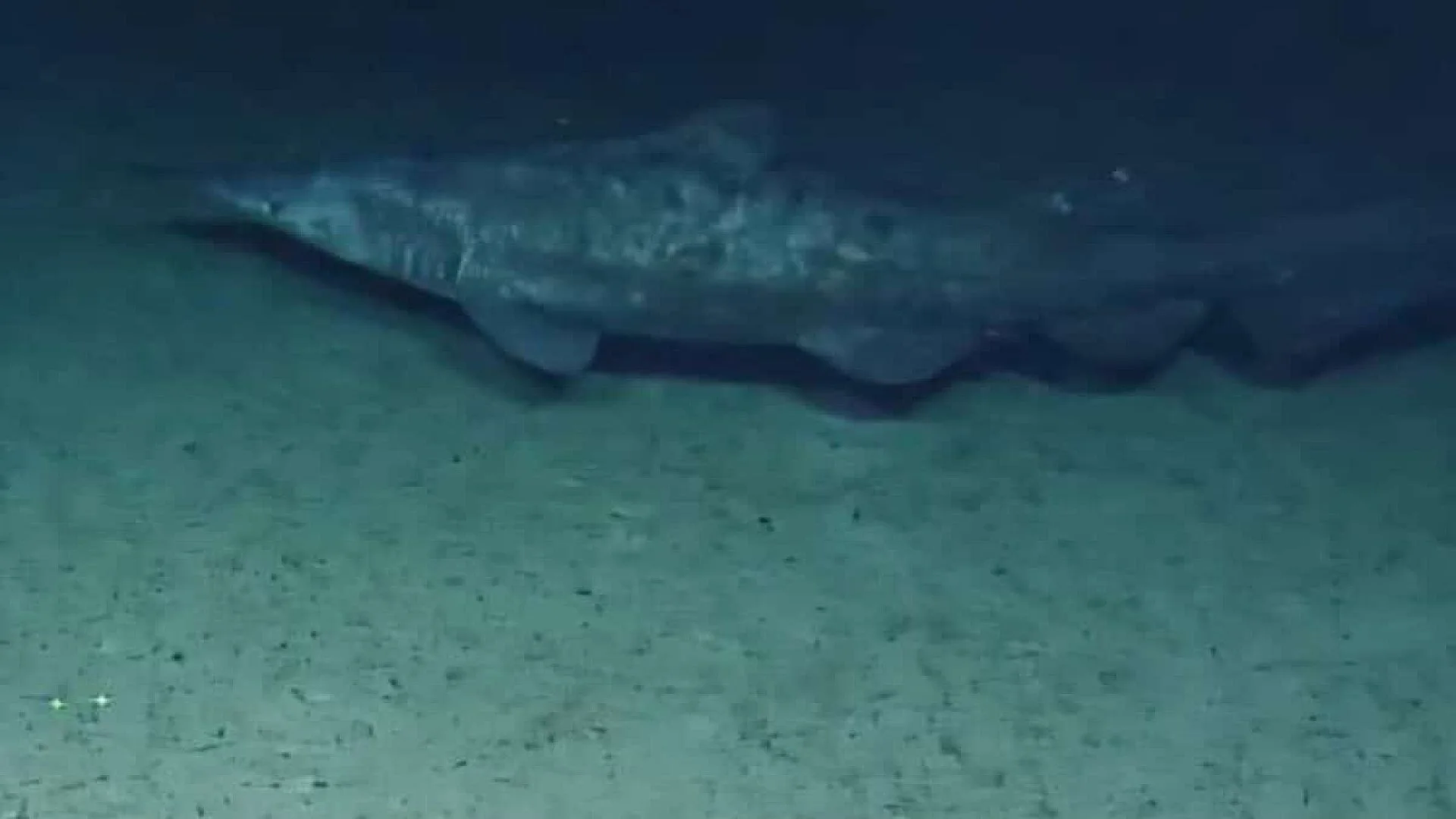
Scientists have captured the first live footage of goblin sharks swimming in their natural deep‑sea environment, with recordings from waters near Jarvis Island and the Tonga Trench. The observations not only provide a rare glimpse of one of the ocean’s most enigmatic predators but also broaden its documented range across the Pacific Ocean.
The goblin shark (Mitsukurina owstoni) is renowned for its elongated, sword‑like snout and its status as a “living fossil.” Despite its iconic appearance, little is known about its behavior or ecology at the depths it inhabits.
Until now, live specimens had only been seen after being hauled aboard fishing vessels. A new study in the Journal of Fish Biology reports healthy individuals observed swimming freely in situ.
Pacific Deep‑Sea Footage Expands Known Habitat
The initial recording was captured near a seamount northwest of Jarvis Island, while a second clip came from the slope of the Tonga Trench. Both sites lie in the central Pacific, an area where goblin sharks had never been documented before.
“Seeing the most iconic of all the deep‑sea sharks alive and looking healthy in its natural habitat is a unique honor,” he said.
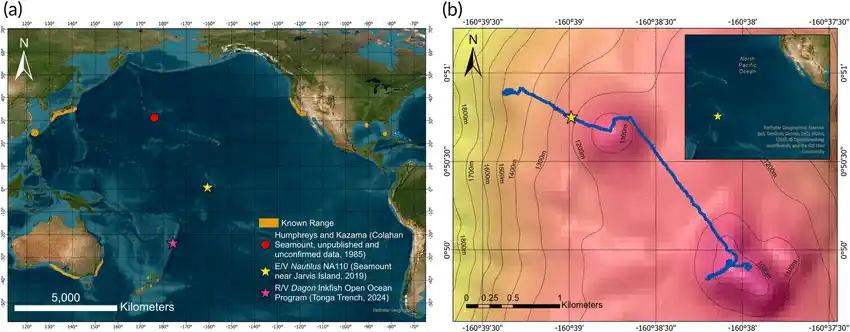
The Tonga Trench encounter proved especially noteworthy: the shark was recorded nearly 700 meters deeper than any previous goblin‑shark sighting, setting a new depth record for the order Lamniformes, which includes white, basking and mako sharks.
Because the species has remained largely hidden from view, even a handful of observations can dramatically reshape scientific understanding of its preferred habitats.
Archive Footage Yields Unexpected Goblin Shark Clip
One of the sharks was identified not during a fresh expedition but from video that had been stored for years. In 2025, researchers at the Deep‑Sea Animal Research Center (DARC) alerted Judah to a possible goblin‑shark silhouette in footage captured during a 2019 cruise aboard the E/V Nautilus.
That mission had surveyed deep‑sea ecosystems surrounding Kingman Reef, Palmyra Atoll and Jarvis Island.
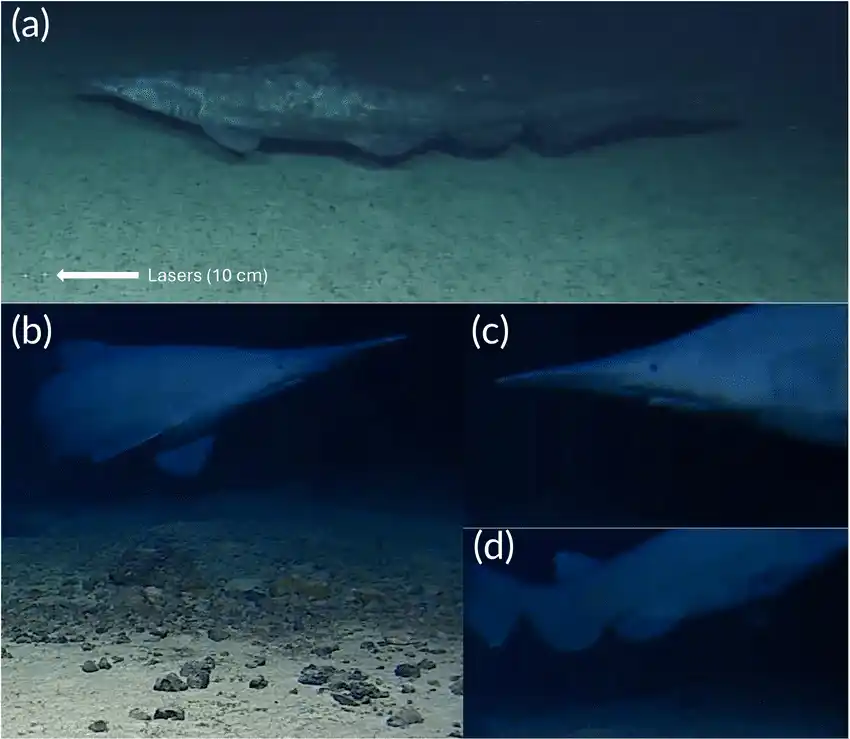
The clip, recorded by the remotely operated vehicle Hercules, was publicly archived. After reviewing the material, Judah confirmed that the animal was indeed a goblin shark.
“I was shocked to hear this because this species was not known to be in the Central Pacific,” he said.
New Record Extends Central Pacific Range
The second observation originated from a 2024 expedition to the Tonga Trench aboard the R/V Dagon, part of the Inkfish Open Ocean Expedition. Researchers from the Minderoo‑UWA Deep‑Sea Research Center deployed a baited camera on a bottom lander to capture the shark’s movements.
Co‑author Alan Jamieson reflected on the moment: “The Goblin Shark is one of these deep‑sea charismatic animals that I never thought we’d see alive, and then to do so was amazing, but to then learn that colleagues in Hawai‘i also saw one was just incredible.”
Prior to these findings, goblin sharks were documented mainly off Japan, Australia and the western United States, with occasional records from the Atlantic and Indian Oceans. The new sightings push the species’ distribution firmly into the central Pacific, as detailed in the latest research.
Judah emphasized that a species cannot be accurately represented in regional biodiversity assessments if its presence remains unknown.
“New discoveries like this demonstrate that there is still so much to explore in our deep‑ocean home,” Judah said.
This article has been fact checked for accuracy, with information verified against reputable sources. Learn more about us and our editorial process.
Last reviewed on .
Article history
- Latest version
Reference(s)
- “Alan Jamieson - Schmidt Ocean Institute.”, November 16, 2015 Schmidt Ocean Institute <https://schmidtocean.org/person/alan-jamieson/>.
- Judah, Aaron B.., et al. “First in situ observations of the goblin shark Mitsukurina owstoni.” Journal of Fish Biology, May 19, 2026 Wiley, doi: 10.1111/jfb.70505. <https://onlinelibrary.wiley.com/doi/10.1111/jfb.70505>.
Cite this page:
- Posted by Divya Iyer