World’s Largest Whale Graveyard Found in Indian Ocean, Unveils Hidden Ecosystem
Scientists find a huge cluster of whale fossils and carcasses across a vast area west of Australia, shedding light on ancient marine ecosystems.
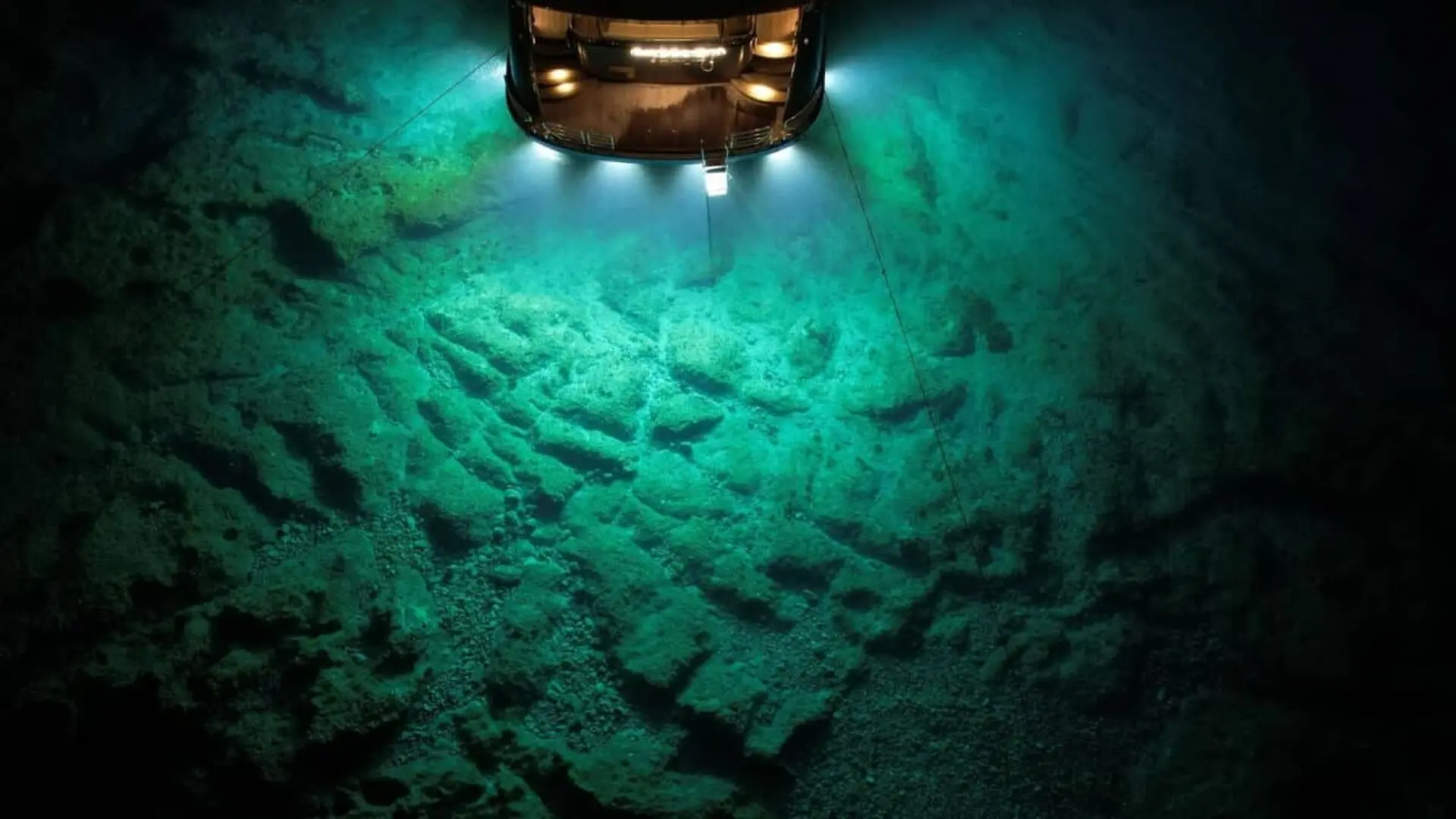
A team of Chinese oceanographers has identified an unprecedented whale fossil field on the seafloor of the Indian Ocean, revealing a sprawling graveyard that hosts hundreds of skeletons that date back millions of years and supports a surprisingly vibrant deep‑sea community.
The find emerged from a series of 2023 missions that employed the crewed submersible Fendouzhe. Results published in Nature describe a concentration of whale remains spread across a massive corridor west of Australia, where the ocean floor teems with life that feeds on the giant mammals.
Among the most striking aspects of the site are the ages of the fossils—some are estimated at approximately 5.3 million years old—and the diversity of organisms that colonise the bones. The researchers also reported a previously unknown extinct whale species among the 485 skeletons catalogued.
Vast Whale Fossil Corridor Extending Over 1,200 Kilometers
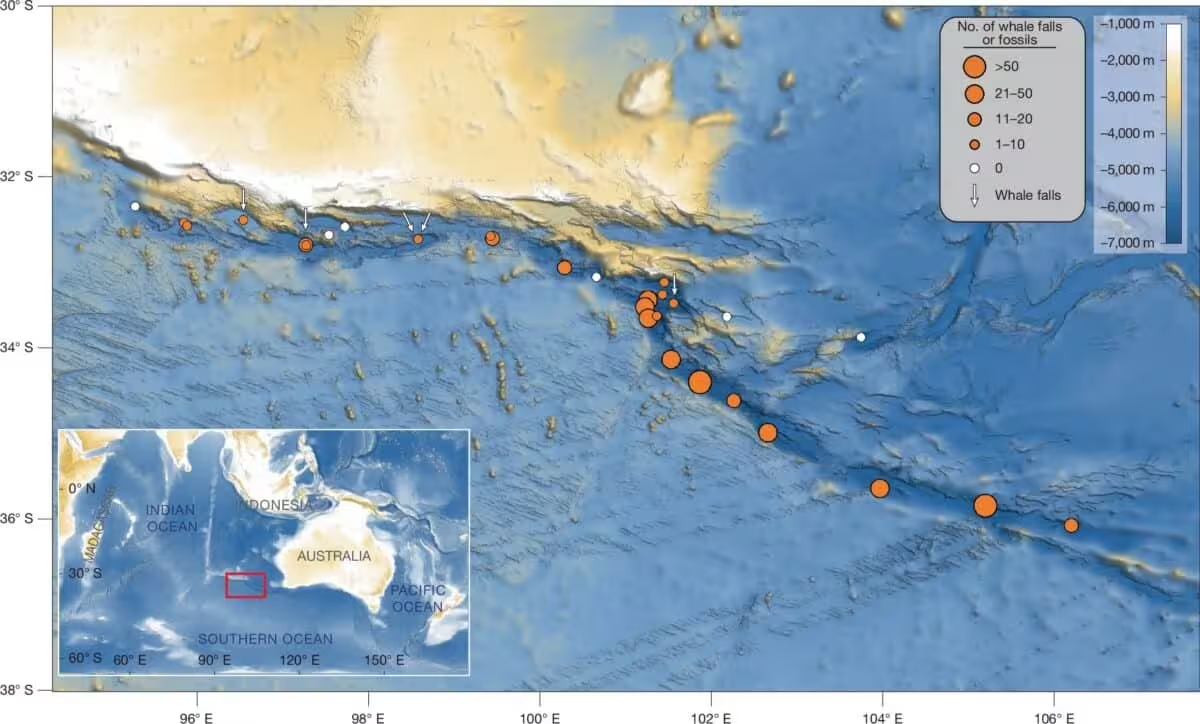
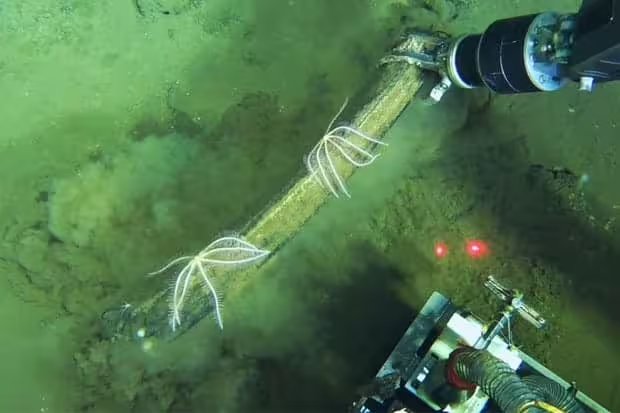
The burial ground lies in the remote Diamantina Zone of the Indian Ocean, an area that has long been a mystery to scientists. During 32 dives, the Fendouzhe submersible descended to depths of up to 7,000 meters, using robotic arms to collect samples from the seabed.
According to the Nature paper, the expedition documented 485 whale fossils and associated whale falls along a stretch roughly 1,200 km long, with most of the bones belonging to various beaked‑whale species.
“But discovering a necropolis of this scale was completely unexpected,” Peng said. “The size of distribution, the depth and the age range were far beyond anything we had imagined.”
Deep‑Sea Life Thrives on Whale Carcasses
Far from being a barren wasteland, the graveyard nurtures a rich assemblage of marine organisms. Whale falls are known to provide food for deep‑sea fauna, but this is the first time such an extensive ecosystem has been documented.
AFP reports that divers observed swarms of jellyfish, clusters of brittle stars, burrowing bone‑boring worms and thriving bivalves on the remains. Some of the specimens appear to be new to science. Co‑author Peng Zhou called the experience “unforgettable.”
“The vibrant ecosystems we saw offered a completely different perspective on this otherwise dark and cold ocean floor,” he said.
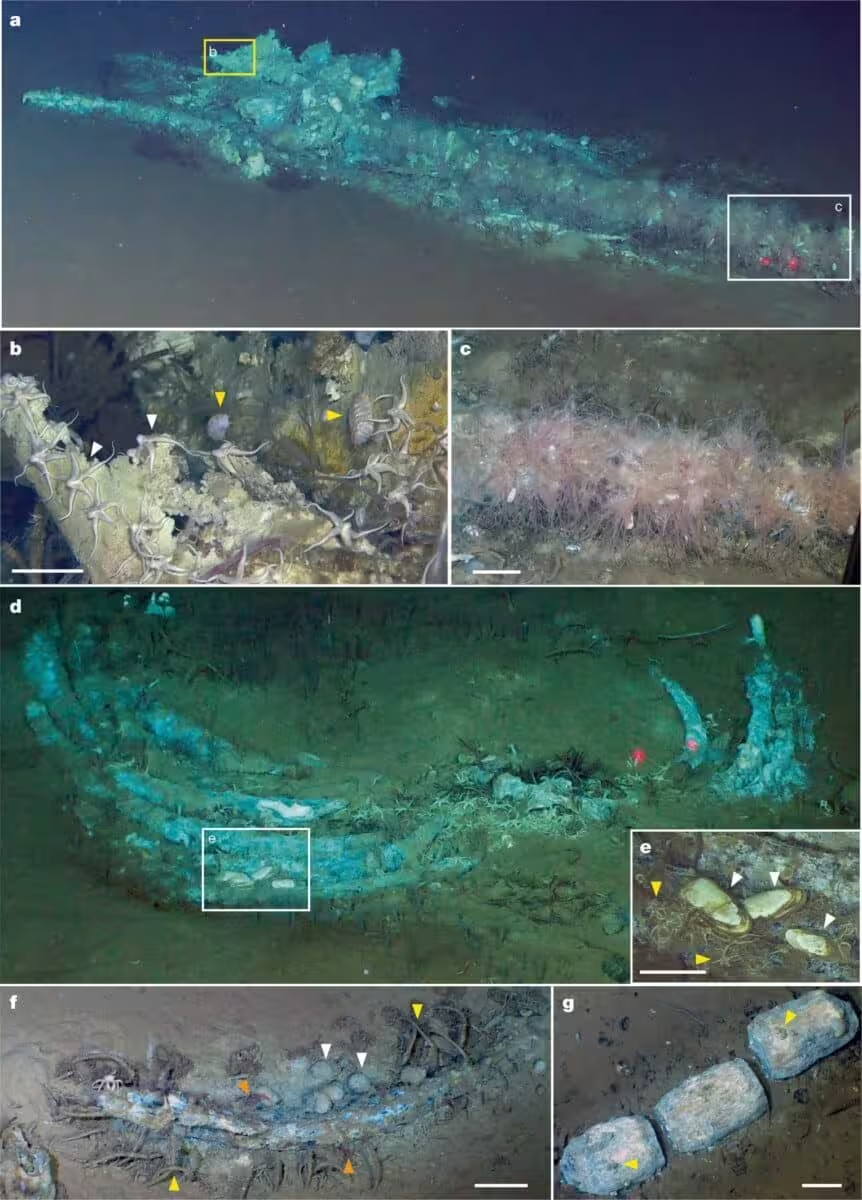
The researchers also noted that several of the organisms associated with the whale remains are typically found near hydrothermal vents and cold seeps, reinforcing the idea that whale falls serve as evolutionary hotspots for sulfide‑dependent species in the abyss.
Vast Undiscovered Whale Deposits Likely Remain
Scientists suspect the Diamantina Zone acts as a natural trap for whale carcasses. The area is a key feeding ground for living whales, and a V‑shaped trench appears to channel dead individuals toward the deep‑sea floor.
Based on the density of bones recovered, the authors estimate that the broader zone could contain more than 10 million whale carcasses. Xiaotong Peng calculated that the soft tissue and lipids tied to such a number would amount to roughly 6.7 million tonnes of carbon sequestered on the ocean floor.
The magnitude of the find has resonated with experts worldwide. Craig Smith, the University of Hawaii oceanographer who first described a whale fall in 1987, told AFP that the sheer number of fossilized whale falls documented in the study was “truly amazing.”
This article has been fact checked for accuracy, with information verified against reputable sources. Learn more about us and our editorial process.
Last reviewed on .
Article history
- Latest version
Reference(s)
- “HOV Fendouzhe----Institute of Deep-sea Science and Engineering,CAS.” <https://english.idsse.cas.cn/pf/uv/202412/t20241219_895465.html>.
- Peng, Xiaotong. “A 5.3-million-year-old deep-sea whale necropolis in the Diamantina Zone - Nature.”, June 10, 2026, pp. 1-6. Nature, doi: 10.1038/s41586-026-10546-z. <https://www.nature.com/articles/s41586-026-10546-z>.
- Ramakrishnan, Adithi. “Jellyfish and bone-eating worms thrive in a whale graveyard.”, June 10, 2026 AP News <https://apnews.com/article/whale-graveyard-diamantina-zone-2338ae91adeb89d19cee3cc36a68b76a>.
- “ORCID.” <https://orcid.org/0000-0001-8661-1942>.
- “Craig R. Smith.” <https://scholar.google.com/citations?user=Yj8mpPAAAAAJ&hl=en>.
Cite this page:
- Posted by Divya Iyer