Citizen Divers Uncover Giant Coral Colony Spanning 111 Metres on the Great Barrier Reef
A centuries‑old structure larger than any known colony may reshape history, revealing a surprising identity that could rewrite the record books.
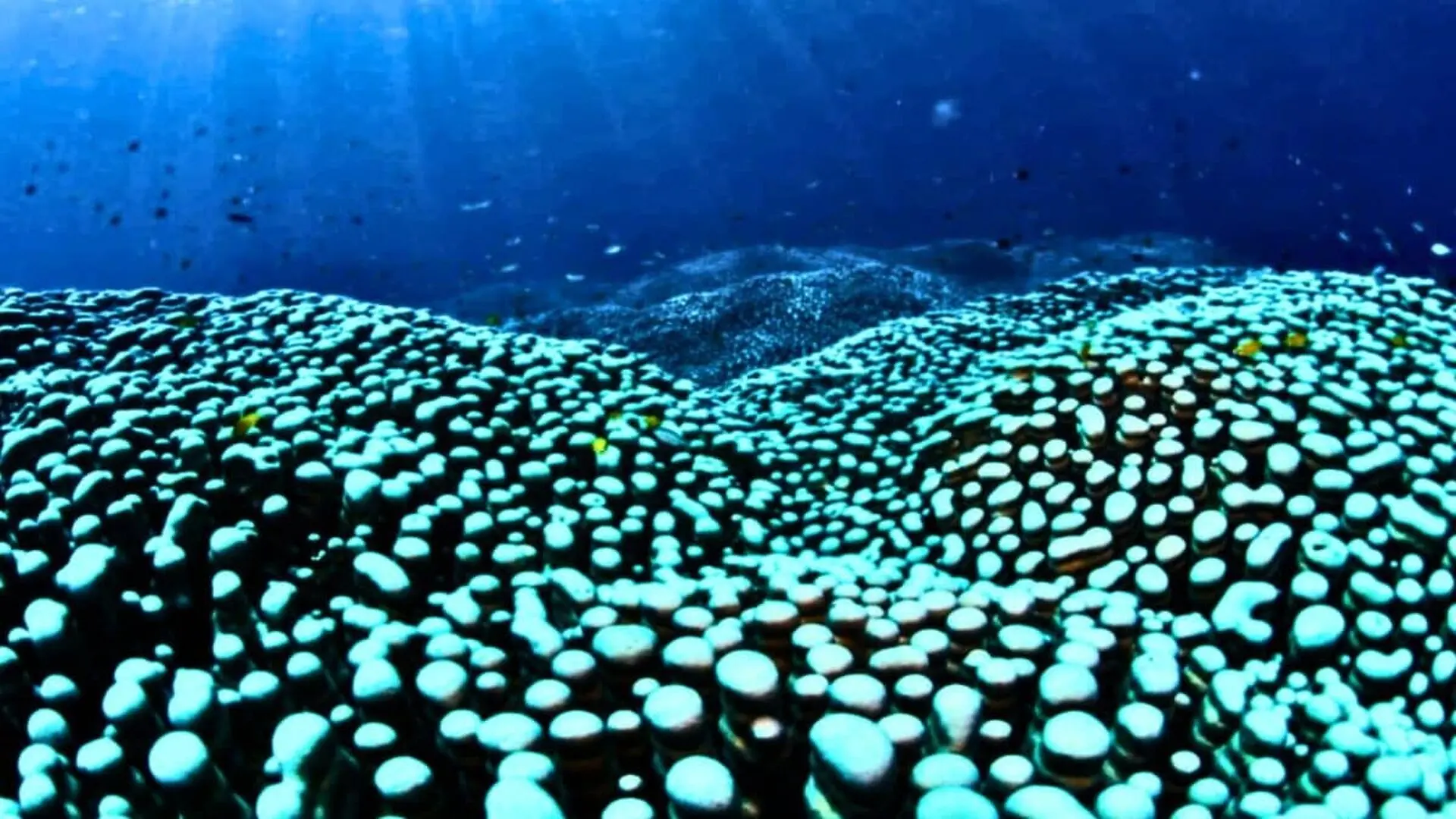
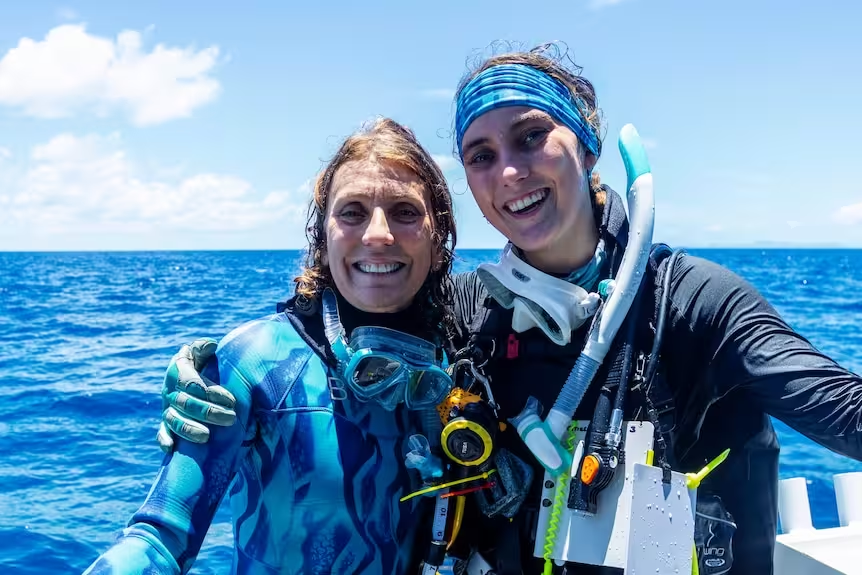
While diving off the coast of Cairns with her daughter, seasoned recreational diver Jan Pope instantly recognized that the underwater formation she encountered was unlike any reef structure she had surveyed in her 35‑year career. The feature extended outward without a clear boundary, resembling a vast submerged meadow rather than a typical coral outcrop, and she told ABC that it “just kept going.”
The duo were exploring tidally influenced waters a short distance from the Far North Queensland city when they stumbled upon what appears to be the biggest single coral colony ever recorded on the Great Barrier Reef. The initial sighting occurred in late 2025, and a comprehensive scientific expedition followed in January 2026.
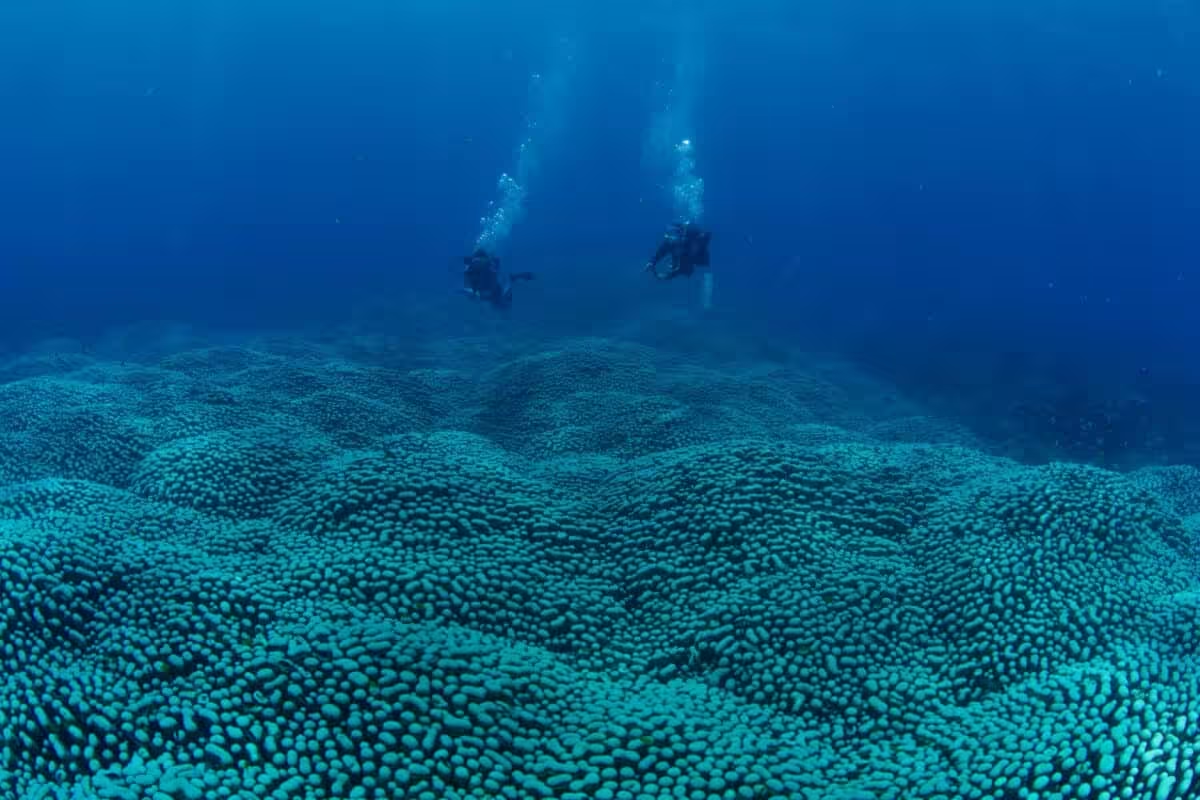
Surveyors measured the organism at roughly 111 metres in length and about 60 metres wide, encompassing an area close to 3,973 square metres. By comparison, the largest known Pavona clavus colonies measured 34 metres in the Solomon Islands (2024) and 71 metres on Nusa Penida, making this new find substantially larger than any previously documented specimen.
Volunteer Divers Power a Ground‑Breaking Census
Jan Pope and Sophie Kalkowski Pope were taking part in the Great Reef Census, an initiative run by the non‑profit Citizens of the Reef. The program enlists volunteer divers, photographers, and boat owners to map reef sections that lie beyond the reach of conventional research teams. Since its launch in 2020, the effort has documented roughly 25 percent of the reef system using crowd‑sourced imagery.
Kalkowski Pope, who coordinates marine operations for the organization, explained that powerful tidal currents likely kept the site concealed, as the conditions make diving technically demanding. Those same currents may have shielded the coral during marine heatwaves by maintaining cooler water temperatures than those experienced in shallower neighboring zones.
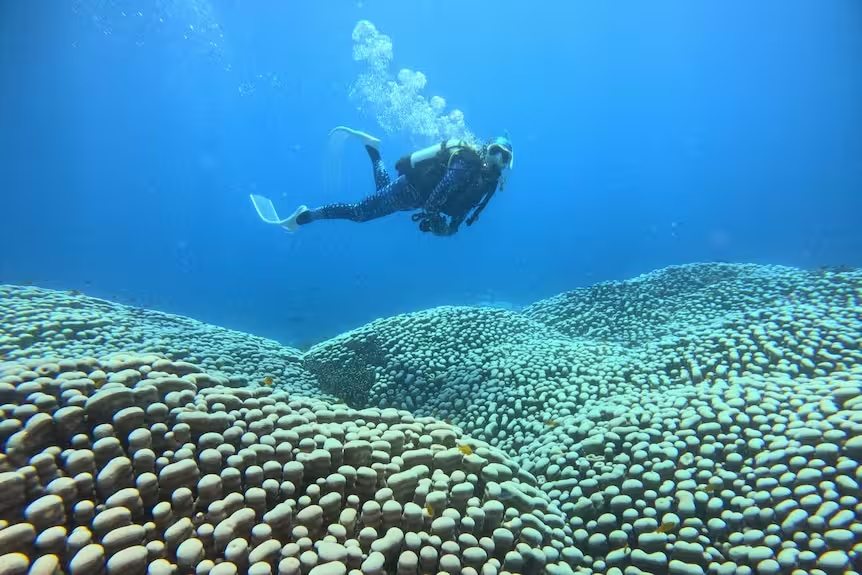
Allison Paley of James Cook University described the discovery as a textbook illustration of citizen science’s impact, noting in the Guardian that similarly massive corals are likely still hidden across the world’s oceans.
High‑Resolution Mapping Reveals a Structure the Size of Half a Soccer Field
When the full survey team returned in January 2026, they deployed drones, measuring tapes and underwater cameras to capture the colony in detail. By applying photogrammetry—stitching together hundreds of overlapping photos—they generated a three‑dimensional digital replica of the coral mass, which confirmed that its true dimensions exceeded the divers’ visual estimates.
Serena Mou, a research engineer at the Queensland University of Technology Centre for Robotics, told BBC Newsround that the digital model will enable future researchers to perform precise, point‑by‑point comparisons and monitor structural changes over time.
The organism belongs to the species Pavona clavus, a hard‑skeleton coral capable of producing massive columnar formations over centuries. Dr. Tom Bridge, coral curator at the Queensland Museum, said the species is uncommon but can generate extraordinary colonies when environmental conditions permit.
“Where it occurs, it can reach truly gigantic proportions,” Bridge explained. Dr. Mike Emslie of the Australian Institute of Marine Science estimated the colony to be at least a few hundred years old, meaning it has withstood cyclones, crown‑of‑thorns starfish outbreaks and multiple mass‑bleaching episodes.
DNA Analysis Will Clarify the Colony’s Biological Identity
While the physical dimensions are now well documented, researchers still need to determine whether the mass represents a single genetic individual or a fusion of several colonies that have grown together. If the entire structure originated from one larval polyp, it would be classified as a solitary genetic entity; if multiple polyps settled nearby and later merged, it would be considered a composite formation.
Dr. Bridge confirmed that resolving this question requires extensive genetic sampling across the colony’s full span. Kalkowski Pope estimated that obtaining a reliable dataset would involve collecting more than 300 tissue samples distributed along the entire 111‑metre length—a logistical challenge that has yet to be undertaken.
The exact location of the site remains confidential. All survey data have been handed over to the Great Barrier Reef Marine Park Authority, which will decide on monitoring protocols and protective measures. Keeping the coordinates undisclosed helps prevent accidental damage from anchoring or unregulated diving, especially given the slow recovery rate of such an ancient structure.
This article has been fact checked for accuracy, with information verified against reputable sources. Learn more about us and our editorial process.
Last reviewed on .
Article history
- Latest version
Reference(s)
- Byrne, Conor. “Coral colony discovered by mother and daughter citizen scientists could be world's largest.”, February 26, 2026 ABC News <https://www.abc.net.au/news/2026-02-26/citizen-scientists-discover-great-barrier-reef-coral-colony/106386786>.
- Lu, Donna. “Citizen scientists discover a Great Barrier Reef coral giant ‘like a rolling meadow’.”, February 24, 2026 The Guardian <https://www.theguardian.com/environment/2026/feb/24/citizen-scientists-discover-great-barrier-reef-coral-giant-census>.
- “Great Barrier Reef: Mother and daughter discover largest known coral colony.”, February 26, 2026 BBC Newsround <https://www.bbc.co.uk/newsround/articles/cd6z3dy18l0o>.
Cite this page:
- Posted by Elizabeth Taylor