Scientists Uncover Gene Mutations That Let Some Seniors Thrive on Four Hours of Sleep
Scientists discover why a rare group can survive on just four hours of sleep, linking it to surprising deep brain changes.

At 77, Joanne Osmond routinely caps her nightly rest at roughly four hours yet remains energetic, teaching entrepreneurship and maintaining an active lifestyle. Her sleep pattern mirrors that of her father and several siblings, placing her among a tiny fraction—under one percent—of people classified by scientists as natural short sleepers.
These individuals differ from those who suffer insomnia or voluntarily curtail sleep; they awaken feeling refreshed after only four to six hours. The trait typically emerges early in life, often runs in families, and has been linked to uncommon genetic variants that modulate the brain’s sleep‑wake circuitry.
Genetic Roots of Naturally Short Sleep
Geneticists Ying‑Hui Fu and Louis Ptáček first noticed families whose members rose early without adjusting bedtime. In one notable lineage, relatives consistently reported feeling revitalized after about six hours of sleep.
Their investigations traced the habit to a mutation in the DEC2 gene, which influences the production of orexin—a neuropeptide that sustains alertness. While insufficient orexin underlies narcolepsy, the short‑sleep variant appears to boost orexin activity, shortening the need for sleep.
Animal models engineered with the same DEC2 alteration displayed reduced sleep duration, confirming the gene’s functional impact. Subsequent work by Fu’s team identified additional mutations across multiple genes, suggesting that the phenomenon does not hinge on a single molecular switch.
One such variant resides in NPSR1, a gene that helps regulate the circadian rhythm. Mice harboring this change slept less yet retained normal memory performance. Separate alterations in GRM1 also trimmed sleep time in laboratory rodents without apparent adverse effects.
ADRB1 Mutation Boosts Wakefulness
A separate three‑generation family of short sleepers prompted researchers to sequence their genomes, uncovering a rare change in ADRB1, which encodes the beta‑1 adrenergic receptor. This receptor participates in numerous physiological pathways, including those governing sleep.
The variant was especially pronounced in neurons of the dorsal pons, a brain‑stem region implicated in sleep regulation. These cells fired during periods of wakefulness and rapid eye movement (REM) sleep, but remained silent throughout non‑REM stages.
Mice carrying the ADRB1 mutation slept roughly one hour less each day, shedding about 53 minutes of non‑REM sleep and seven minutes of REM sleep. Moreover, the altered neurons proved more readily excitable.
Efficiency in Brain’s Rest Cycles
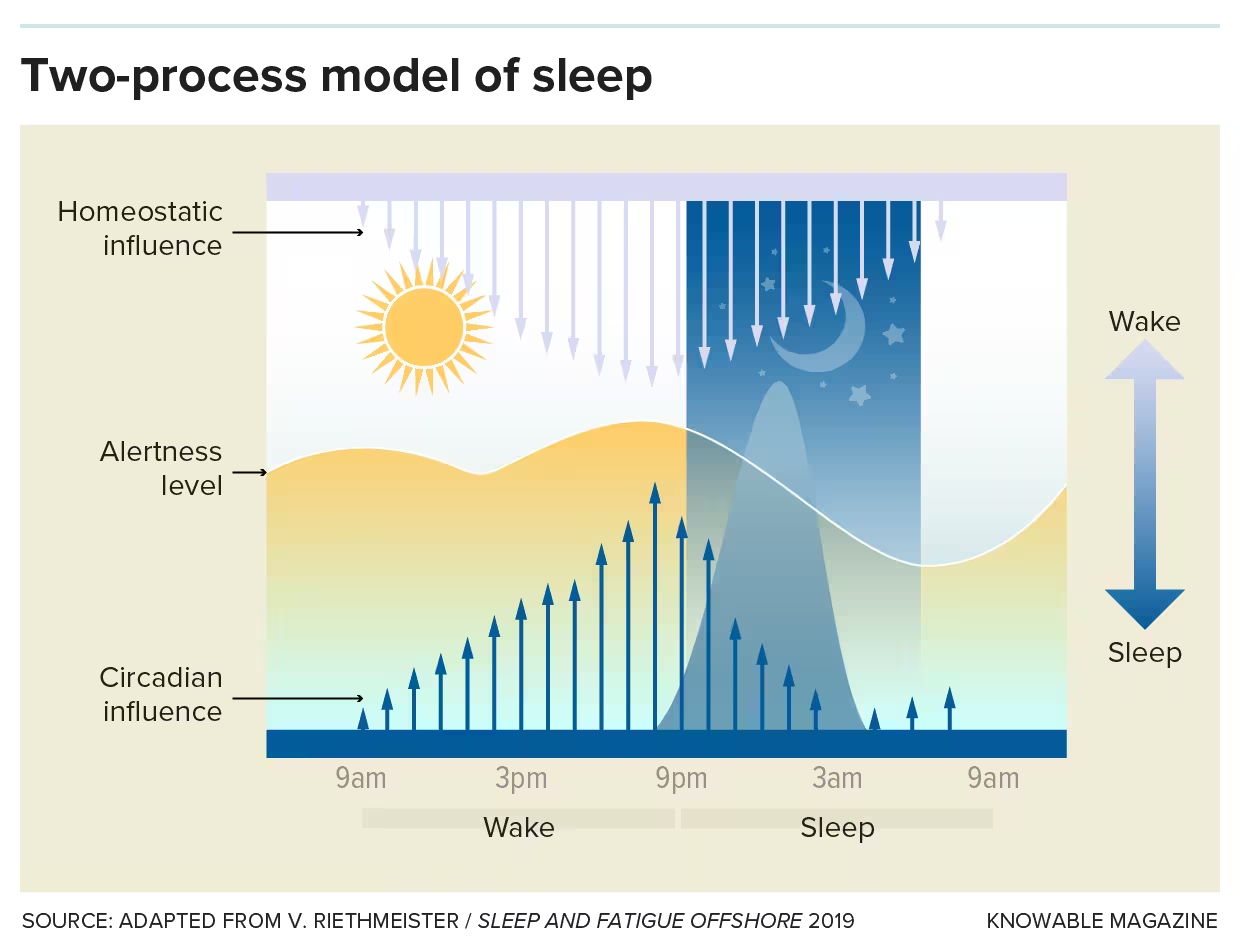
The sleep‑wake system is governed by the circadian clock—aligning bodily functions to a near‑24‑hour rhythm—and by sleep pressure, which accumulates during wakefulness. Short sleepers appear to navigate these mechanisms more efficiently than the broader population.
Fu described the core attribute as sleep efficiency: the brain accomplishes the restorative tasks of sleep in a compressed timeframe, though the precise pathways may vary among individuals bearing different genetic variants.
Potential contributors to this heightened efficiency include a larger proportion of slow‑wave sleep, accelerated progression through sleep stages, or increased circulation of cerebrospinal fluid—a clear liquid that flushes metabolic waste from the brain.
Implications for Neurodegenerative Research
Animal studies have also explored how short‑sleep genes interact with proteins linked to Alzheimer’s disease. By crossing mice that carry Alzheimer‑related mutations with those bearing short‑sleep variants, researchers observed a reduction in the accumulation of amyloid plaques and tau tangles compared with control Alzheimer‑model mice.
These findings stem from genetically engineered rodents and do not yet extend to human short sleepers, but they hint at a possible protective effect of more efficient sleep on neurodegenerative processes.
Distinguishing Natural Short Sleep from Sleep Loss
Individuals like Osmond do not battle against fatigue; they naturally cease sleeping after a few hours and rarely rely on alarms, naps, caffeine, or weekend catch‑up. In 2011, Osmond discovered she possessed a variant associated with short sleep; subsequent testing confirmed that her sisters shared the same genetic marker in 2019.
She told The New Yorker, “Society assumes eight hours is the norm, but that isn’t my reality.” Similar lifelong patterns have been reported by other short sleepers, such as 83‑year‑old Lynne White, who carries a mutation linked in mice to reduced non‑REM sleep yet enhanced deep‑sleep brain waves, and 69‑year‑old Brad Johnson, whose family includes five short sleepers and three typical sleepers.
Johnson, who once averaged five hours of sleep, now routinely gets around four and a half hours. All three describe a natural difficulty staying asleep for the longer durations deemed typical, underscoring that their abbreviated nights reflect an innate physiological need rather than a conscious effort to extend wakefulness.
For most adults, chronic sleep restriction impairs cognition and health, and stimulants can mask tiredness without fulfilling the body’s restorative requirements. Natural short sleepers represent a genetically mediated exception, wherein rare variants reshape sleep duration and the neural circuits that govern alertness.
This article has been fact checked for accuracy, with information verified against reputable sources. Learn more about us and our editorial process.
Last reviewed on .
Article history
- Latest version
Reference(s)
- Love, Shayla. “Why Some People Thrive on Four Hours of Sleep.”, February 18, 2026 The New Yorker <https://www.newyorker.com/culture/annals-of-inquiry/why-some-people-thrive-on-four-hours-of-sleep>.
Cite this page:
- Posted by David Anderson