EU Approves Microscopic Eye Implant to Restore Vision in Age‑Related Macular Degeneration
Europe approves a rice‑grain‑sized bionic eye implant paired with camera glasses that relay visual data to the retina, restoring lost sight.
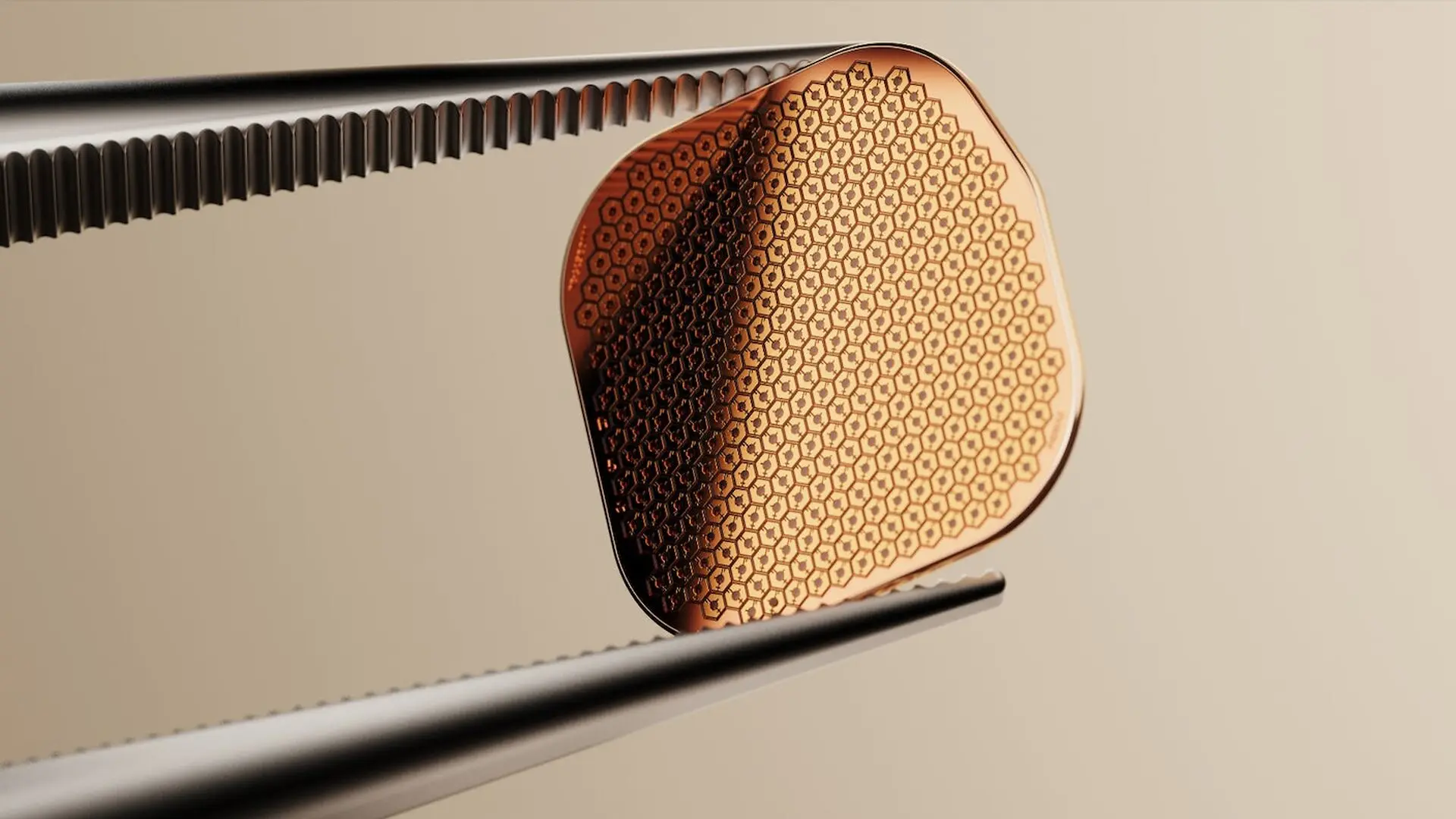
A tiny implant, smaller than a grain of rice, works with camera‑equipped glasses to send visual data directly to the retina.
European Clearance Opens Door for First‑In‑Class Bionic Eye
Age‑related macular degeneration (AMD) remains a leading cause of irreversible vision loss, affecting millions worldwide. A newly certified retinal prosthesis now promises to restore functional sight for individuals with the most severe stage of the disease.
Geographic atrophy, the final phase of dry AMD, compromises the central retina (the macula) and deprives patients of the fine detail needed for tasks such as reading and facial recognition. Over five million people globally live with this condition, and current U.S. therapies consist only of two injectable drugs that can slow progression without repairing existing damage.
California‑based neurotechnology firm Science Corporation has secured a CE mark for its PRIMA system, allowing commercial distribution across thirty European nations. The device pairs a sub‑macular implant—roughly the size of a rice grain—with a pair of glasses that capture images and convert them into near‑infrared signals directed toward the retina. Because the eye cannot perceive this wavelength, the system operates alongside any residual natural vision.
Inside the implant, a photovoltaic chip functions similarly to a solar panel, turning the infrared light into electrical impulses that activate bipolar cells—neurons that remain intact after photoreceptor loss in AMD. By stimulating these downstream cells, the prosthesis bypasses the damaged rods and cones.
In a multi‑center trial involving 38 participants across five countries, published in the New England Journal of Medicine, subjects gained an average of 25.5 letters on a standard visual acuity chart, equivalent to more than five lines of improvement.
While the initial visual output is monochrome and limited to a narrow field, CEO Max Hodak described the experience to the Financial Times as akin to peering through a straw positioned at the center of one’s vision. He noted that ongoing research aims to introduce color perception and sharper resolution.
The implantation procedure itself is relatively straightforward, but patients require several months of rehabilitation to achieve optimal performance. Hodak told STAT that the company plans to place 20‑40 devices this year, scaling up to 200 worldwide by the end of next year if U.S. clearance is granted in early 2027.
The approval marks a milestone for the broader neurotech sector, which has attracted billions in investment yet delivered few market‑ready products. “This demonstrates a clear revenue pathway for brain‑computer interface firms,” said Jacob Robinson, founder of Motif Neuroscience, in an interview with STAT. “The market is no longer a distant speculation.”
Hodak indicated that proceeds from PRIMA will fund Science’s next‑generation “biohybrid” interfaces, which aim to link living, genetically engineered neurons to the brain without relying on metal electrodes. “That revenue stream underwrites our longer‑term ambitions,” he explained.
Competitors are already moving forward. Neuralink, co‑founded by Hodak and Elon Musk, is preparing to test its own vision‑restoring implant, Blindsight, in human subjects later this year.
Although the technology is far from delivering the seamless, high‑definition visual experience depicted in science fiction, the European clearance signals a shift from laboratory prototypes toward real‑world applications in neurotechnology.
This article has been fact checked for accuracy, with information verified against reputable sources. Learn more about us and our editorial process.
Last reviewed on .
Article history
- Latest version
Reference(s)
- Holz, Frank G.., et al. “Subretinal Photovoltaic Implant to Restore Vision in Geographic Atrophy Due to AMD.” New England Journal of Medicine, vol. 394, no. 3, January 15, 2026, pp. 232-242. Massachusetts Medical Society, doi: 10.1056/NEJMoa2501396. <https://www.nejm.org/doi/10.1056/NEJMoa2501396>.
- <https://www.ft.com/content/a789fa81-6c39-48a1-9df3-33d67ce7a5ac?syn-25a6b1a6=1>.
- Broderick, O.. “‘Cochlear implant for blindness’ debuts in Europe, could launch in U.S. in 2027.”, July 22, 2026 STAT <https://www.statnews.com/2026/07/22/prima-retinal-implant-for-macular-degeneration-us-timeline/>.
Cite this page:
- Posted by David Anderson