Personalized Brain Stimulation Shows Early Promise in Softening Traumatic Memories
Personalized brain stimulation after trauma recall cuts PTSD intrusive memories, study shows significant symptom reduction.
Decades of research treated memories as permanent recordings, but recent work on memory reconsolidation shows that recalled experiences can become temporarily pliable before being saved again. This insight is opening new avenues for treating post‑traumatic stress disorder (PTSD), where distressing recollections often dominate a survivor’s thoughts.
A Short‑Lived Phase of Memory Plasticity
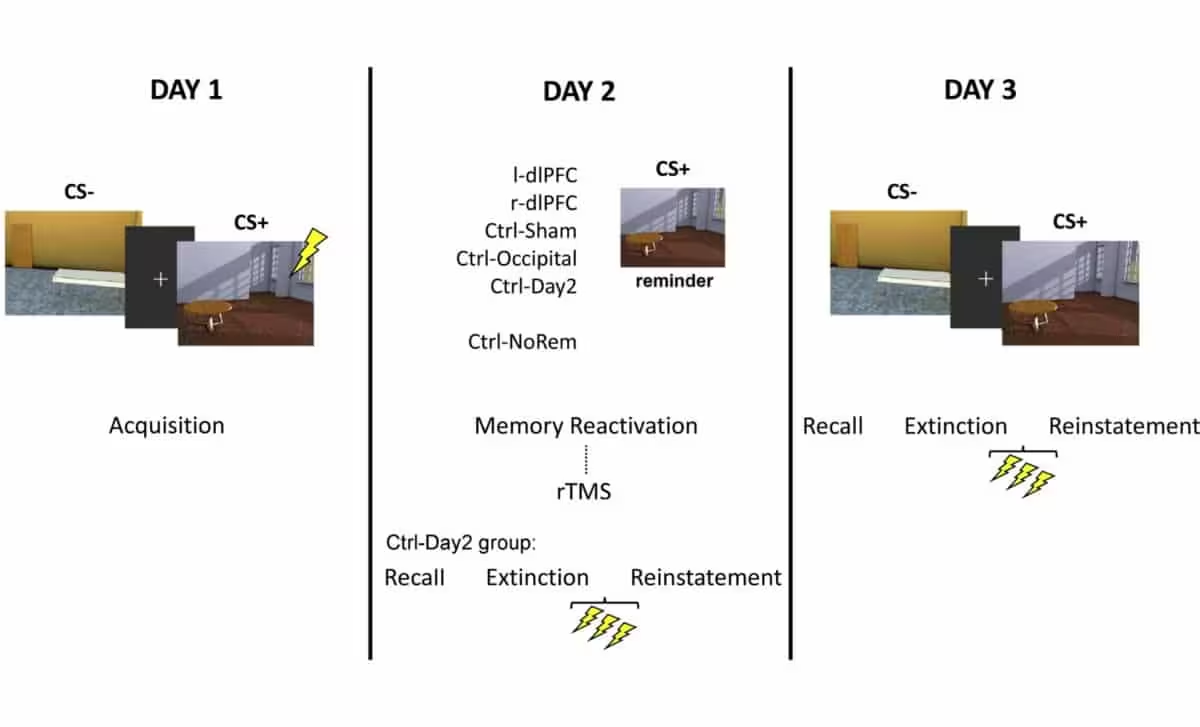
When a memory is retrieved, the brain does not simply replay an immutable trace. Instead, the recollection enters a brief period of instability during which the stored information can be altered. Early experiments by neuroscientist Karim Nader at New York University demonstrated that fear memories in rats became vulnerable after recall, allowing researchers to interfere with the trace before it restabilized. Human studies suggest this reconsolidation window can extend for several hours, with estimates of up to six hours of heightened malleability.
Tailored TMS Protocol Shows Early Promise for PTSD
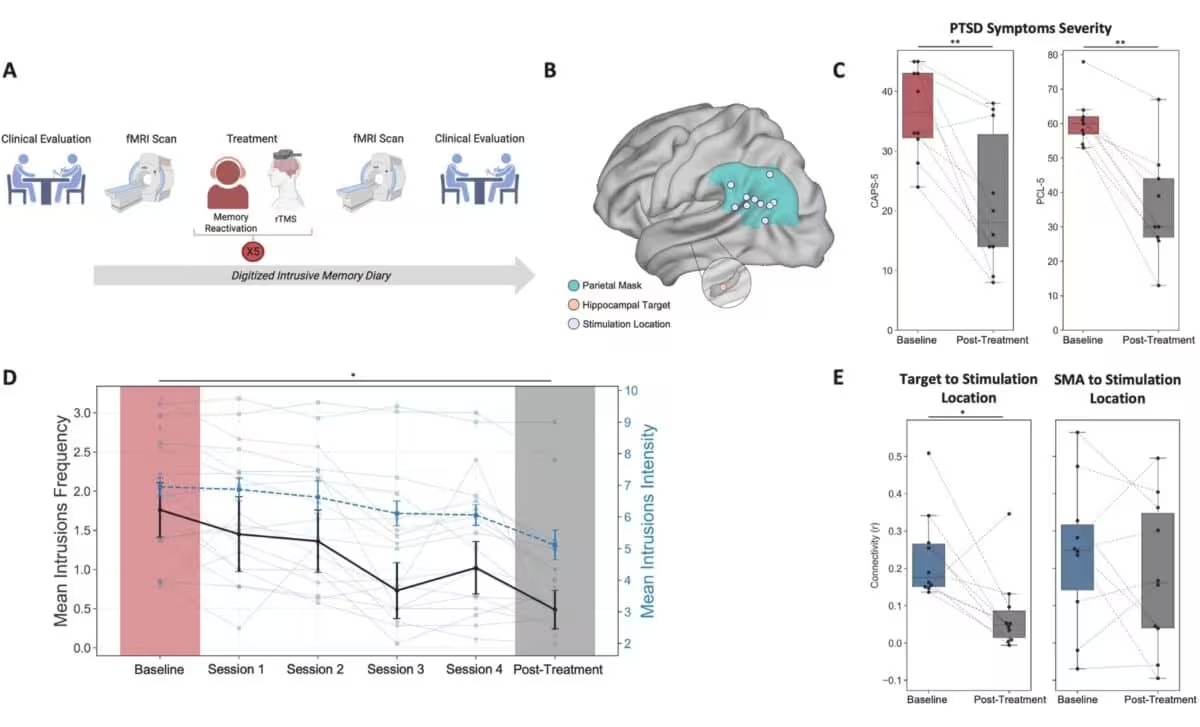
A pilot investigation published in Brain Stimulation at the close of 2025 evaluated a novel approach in ten adults diagnosed with PTSD. Participants underwent five weekly sessions in which a distressing memory was first re‑experienced to trigger reconsolidation. Immediately afterward, clinicians delivered transcranial magnetic stimulation (TMS) to a cortical region identified for each individual via functional MRI, targeting the network linked to the deep‑seated hippocampus.
Following the series, subjects reported a noticeable decline in intrusive thoughts and flashbacks. Neuroimaging revealed altered connectivity between the hippocampus and the stimulated cortical area, suggesting that the intervention modulated the memory‑related circuitry.
Rab Nawaz Khan, MD, cautioned that the findings, while encouraging, stem from a modest sample without a control group. He emphasized the need for larger, randomized trials to confirm efficacy and determine optimal dosing parameters.
Balancing Symptom Relief with Personal Identity
Altering the emotional weight of traumatic memories raises ethical questions about whether diminishing pain might also erase aspects of a person’s story. Experts argue that the objective is not to delete memories but to uncouple them from the automatic fear response that fuels recurring distress.
Shannon Franklin, PsyD, co‑founder of the Element Q Healing Center, notes that existing trauma therapies already aim to reshape the relationship to painful recollections without erasing them. She sees brain‑stimulation techniques as a potential adjunct, not a substitute, for established psychotherapeutic and pharmacological strategies.
TeeJay Tripp, DO, co‑founder of Serenity Mental Health Centers, adds that integrating memory reactivation with modalities such as TMS seeks to lower the intensity and intrusiveness of traumatic memories while preserving overall treatment plans that include therapy, medication, sleep hygiene, and social support.
Khan further suggests that diminishing flashbacks could empower individuals to recall traumatic events with greater clarity and agency, rather than being overwhelmed by a brain‑driven alarm system.
Ultimately, the research aims to help survivors carry their histories without the constant, debilitating distress that often defines PTSD, allowing them to move forward while acknowledging—not denying—the role of past experiences in shaping their lives.
This article has been fact checked for accuracy, with information verified against reputable sources. Learn more about us and our editorial process.
Last reviewed on .
Article history
- Latest version
Reference(s)
- “Post-traumatic stress disorder.” <https://www.who.int/news-room/fact-sheets/detail/post-traumatic-stress-disorder>.
- Borgomaneri, Sara., et al. “State-Dependent TMS over Prefrontal Cortex Disrupts Fear-Memory Reconsolidation and Prevents the Return of Fear.” Current Biology, vol. 30, no. 18, September 1, 2020, pp. 3672-3679.e4. Elsevier BV, doi: 10.1016/j.cub.2020.06.091. <https://www.sciencedirect.com/science/article/pii/S096098222030943X>.
Cite this page:
- Posted by David Anderson