Teen Inventor’s $0.50 Soap Could Revolutionize Skin Cancer Treatment
Teen innovator repurposes everyday soap into a groundbreaking project targeting one of the world’s most common cancers.
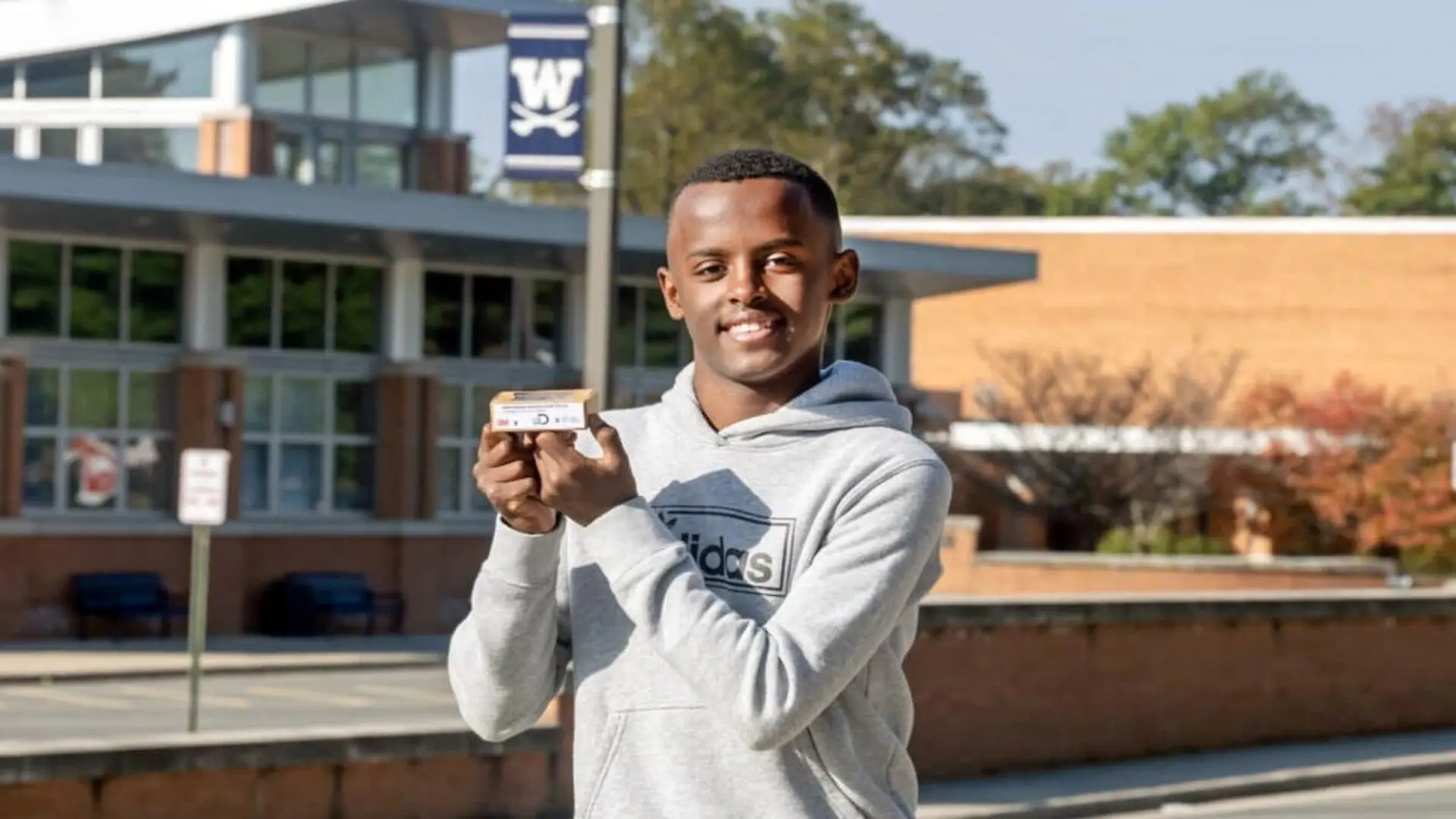
A 14‑year‑old from Virginia has turned an ordinary bar of soap into a potential low‑cost strategy for tackling melanoma. Heman Bekele, recently honored as America’s Top Young Scientist, devised a prototype that could make skin‑cancer care more reachable for underserved populations.
Bekele’s inspiration traces back to his early years in Ethiopia, where he watched people labor outdoors for hours under intense sunlight, often unaware of the health hazards. After moving to the United States at age four, those memories lingered and eventually drove him to seek a practical solution to a rising global health concern.
Skin cancer remains one of the most prevalent cancers worldwide; the National Institutes of Health estimates roughly 1.5 million new cases were diagnosed globally in 2020. Confronted with this scale, Bekele set out to design a product that is simple, affordable, and easy for anyone to incorporate into daily routines.
The result is the Skin Cancer Treating Soap (SCTS), a concept that earned him the 2023 3M Young Scientist Challenge. By marrying rigorous research with a household item found in homes around the globe, the project attracted significant attention.
From Sun‑Exposed Childhood to a Research‑Driven Initiative
When Bekele began shaping his competition entry, he recalled the harsh sunlight that bathed Ethiopian fields, prompting questions about long‑term skin‑cancer risk. His investigation led him to explore the barriers many face when trying to secure treatment for skin malignancies.
“I was looking into the issue of skin cancer and the fact that, especially in third‑world countries, people living under the poverty line just can’t afford the treatment necessary for skin cancer,” Bekele told Afrotech.
Rather than invent a complex medical device, he selected a familiar medium—soap—and aimed to embed therapeutic action within a routine product.
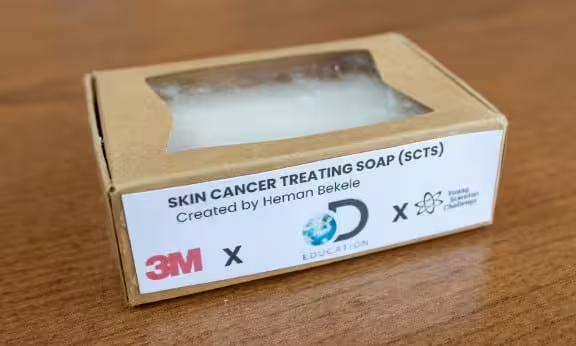
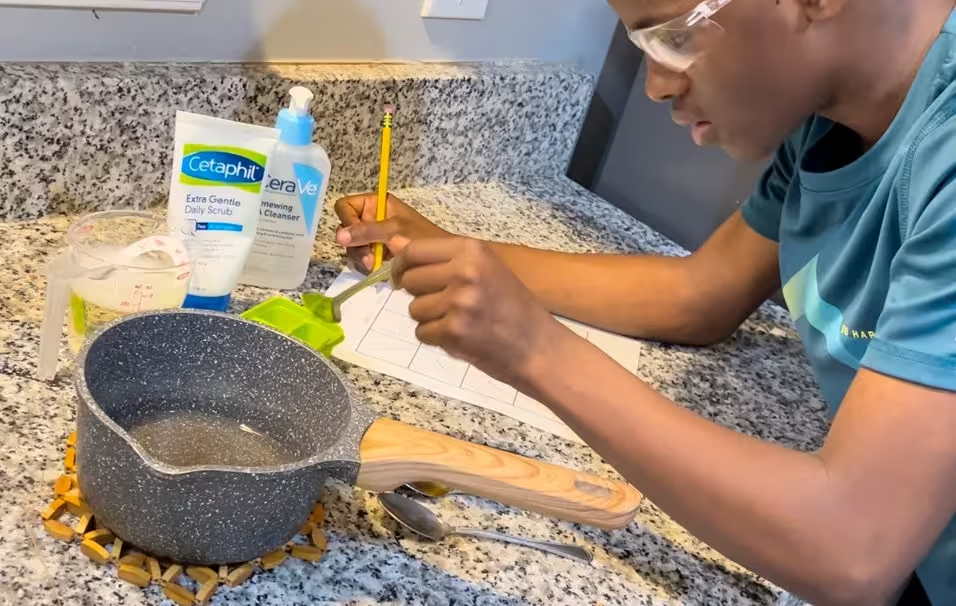
According to a press release from Fairfax County Public Schools, months of laboratory testing yielded a prototype that stimulates dendritic cells—immune cells often compromised by cancerous growths—thereby aiming to restore their defensive capacity.
Cost efficiency emerged as a key advantage. Bekele estimates each bar could be produced for roughly 50 cents, a stark contrast to the average U.S. skin‑cancer surgery price of about $40,000.
Award‑Winning Innovation Captures National Spotlight
Bekele presented SCTS at the 3M Young Scientist Challenge, a competition co‑organized by 3M and Discovery Education for students in grades five through eight.
After a four‑month contest, he was announced the winner at 3M’s headquarters in St. Paul, Minnesota, on October 9‑10, 2023. The honor brought the title of America’s Top Young Scientist and a $25,000 prize.
“I wanted to make my idea something that not only was great in terms of science but also could be accessible to as many people as possible,” Bekele explained to the Washington Post.
Also ReadFree Heart Screenings & Family Health Fest in Karachi: NICVD and KMC Mark World Heart Day 2025
For Bekele, the victory marked the start of a broader research agenda. The recognition amplified visibility for his prototype and opened doors for continued experimentation.
“More than anything, winning the 3M Scientist Challenge has given me even more motivation,” he said. “It’s empowered me to realize that science can get you somewhere and science is a viable option. It’s also taught me that people want to hear about my ideas, and I’m allowed to create. At first, this bar of soap just was a random idea by a 14‑year‑old and look where it’s gotten me.”
Building a Path Toward Wider Impact
Following the award, Bekele kept refining the soap formulation and investigating its therapeutic potential. In 2024, TIME named him Kid of the Year, highlighting his drive to make medical treatment more affordable for disadvantaged communities.
He worked with a lab at the Johns Hopkins Bloomberg School of Public Health during the summer of 2024 exploring how a soap‑based delivery system might administer medication. Translating a laboratory concept into a clinically approved product will require extensive testing, regulatory review, and collaboration with seasoned researchers.
“By 2028, I hope to turn SCTS, which is right now just a passion project into more than that. I hope to turn it into a nonprofit organization where I can provide equitable and accessible skin cancer treatment to as many people as possible,” he told Afrotech.
Correction (Aug 13, 2026): An earlier version of this article inaccurately described Heman Bekele’s work at Johns Hopkins Bloomberg School of Public Health as involving ongoing early-stage clinical trials. He worked with a lab there during the summer of 2024; the sentence has been updated for accuracy.
This article has been fact checked for accuracy, with information verified against reputable sources. Learn more about us and our editorial process.
Last reviewed on .
Article history
- Latest version
- Last updated by Dayyal Dungrela, MLT, BSc, BS
Reference(s)
- “Heman Bekele, The 14-Year-Old Behind Skin Cancer Treating Soap, Has Been Named ‘America's Top Young Scientist’ - AfroTech.”, October 23, 2023 AfroTech <https://afrotech.com/heman-bekele-named-americas-top-young-scientist>.
- “Heman Bekele Skin Cancer Soap.” <https://www.washingtonpost.com/nation/2023/10/25/heman-bekele-skin-cancer-soap/>.
Cite this page:
- Posted by David Anderson