SpaceX Readies Starship Flight 13 After Solving Critical Failure, Will Launch New Starlink V3
SpaceX readies Starship Flight 13, adding key upgrades to fix the glitches that halted the previous launch.
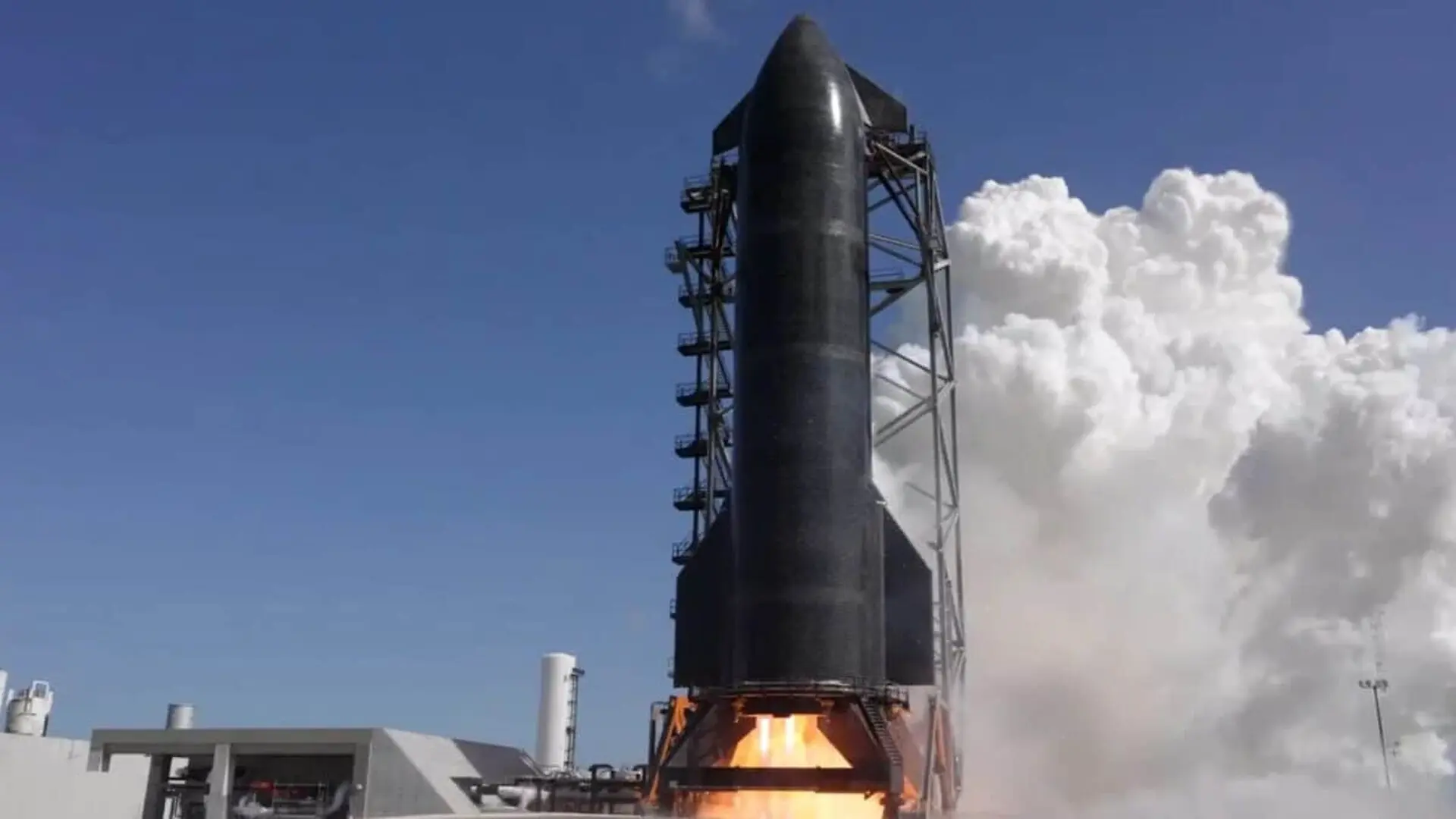
SpaceX is targeting a launch of Starship Flight 13 as early as July 16, a test that could become one of the company’s most consequential missions to date. The company says engineers have traced the chain of events that caused the prior abort and have rolled out a suite of hardware and software upgrades designed to avoid a repeat. In addition to revisiting the key objectives of Flight 12, the upcoming flight will carry the first operational Starlink V3 satellites ever lofted on a Starship, marking a critical step toward the vehicle’s long‑term service life.
Mid‑July Starship Test Aims to Validate New Design and Payload
Each Starship launch pushes the envelope of what the world’s largest launch vehicle can achieve, but Flight 13 carries unusually high expectations. Instead of unveiling a brand‑new mission profile, SpaceX has chosen to repeat several objectives that were left incomplete during Flight 12. This approach reflects the company’s focus on demonstrating reliability before adding further complexity. The latest Starship iteration, dubbed Version 3 (V3), is bigger and more powerful than earlier models, yet its maiden flight revealed shortcomings that engineers wanted to fully address before advancing the vehicle.
A successful Flight 13 would confirm that the identified issues have been remedied and that the enhancements to the upgraded spacecraft are effective. The test also continues the rapid‑iteration methodology that has defined the Starship program, where data from each launch directly informs the design of the next vehicle. If the flight proceeds as planned, it could clear the path for more ambitious goals later this year, including attempts to recover both stages at the launch site and eventually place Starship into orbit.
Starship’s thirteenth flight test is preparing to launch as early as Thursday, July 16 → https://t.co/Rp7VwBzpWxpic.twitter.com/jdpFlQUEpF
— SpaceX (@SpaceX) July 11, 2026
SpaceX Pinpoints Multiple Failures Behind Flight 12 Setback
After a thorough internal review, SpaceX disclosed that Flight 12’s difficulties stemmed from a combination of technical problems rather than a single fault. The company explained that a modification to the ignition sequence of the upper‑stage Ship engines during hot‑staging caused the Super Heavy booster to assume an unexpected 90‑degree attitude right after separation. That misalignment hampered the boost‑back maneuver, and five of the booster’s thirty‑three Raptor engines failed to reignite, shortening the burn needed to steer the stage toward its intended splash‑down zone in the Gulf of Mexico.
In response, engineers have revised the Ship’s startup sequence, added hardware upgrades to the booster, and refined engine‑monitoring software and abort logic based on real‑time multi‑engine performance. The upper stage also lost one of its vacuum‑optimized Raptor engines shortly after separation. Although Starship still achieved its planned sub‑orbital trajectory, the engine loss prevented the planned in‑space relight demonstration. The company says it has traced the interconnected causes of that failure and incorporated additional reliability measures for Flight 13.
First Operational Starlink V3 Payload to Ride Starship
Beyond rocket validation, Flight 13 will deploy 20 functional Starlink V3 satellites, representing the next generation of SpaceX’s broadband constellation. These satellites are designed to boost network capacity and deliver faster service than earlier versions, advancing the company’s goal of expanding global internet coverage. Six of the payload will include cameras intended to image Starship’s heat shield and exterior while the vehicle is in space, building on technology first demonstrated during Flight 12.
Because the mission follows a sub‑orbital trajectory rather than a stable orbit, each satellite is expected to re‑enter Earth’s atmosphere and burn up roughly twenty minutes after release. The test is aimed at confirming the deployment mechanism and spacecraft performance rather than adding to the operational Starlink fleet. Nonetheless, the data gathered will be valuable for future orbital missions that could eventually carry dozens of functional satellites per launch.
Pathway to Reusability and Deep‑Space Exploration
Flight 13 is another milestone on the road to a fully reusable transport system that SpaceX envisions supporting lunar and Martian missions. Key targets include a clean stage separation, execution of the Super Heavy boost‑back burn, a controlled splash‑down in the Gulf of Mexico, deployment of the Starlink payload, an in‑space relight of a Raptor engine, and a controlled splash‑down of the upper stage in the Indian Ocean.
Prior to granting final launch approval, the Federal Aviation Administration (FAA) completed its review of the Flight 12 anomalies and accepted SpaceX’s corrective actions, clearing the way for the mission. Should the upgraded hardware perform as intended, SpaceX could later attempt the first recovery of a Version 3 Super Heavy booster using the massive Mechazilla launch tower, bringing the company closer to rapid rocket reuse. Looking further ahead, Starship remains a cornerstone of NASA’s Artemis program, with a lunar‑lander variant slated to support future crewed missions. In this context, Flight 13 serves as more than a routine test—it is a critical validation of technologies that could shape the next era of human spaceflight.
This article has been fact checked for accuracy, with information verified against reputable sources. Learn more about us and our editorial process.
Last reviewed on .
Article history
- Latest version
Reference(s)
- “http://spacex.com/launches/starship-flight-13.” <https://t.co/Rp7VwBzpWx>.
- “https://twitter.com/SpaceX/status/2076075162420629714/video/1.” <https://t.co/jdpFlQUEpF>.
Cite this page:
- Posted by Divya Iyer