Abandoned 22‑Km Texas Tunnel Holds Secrets of a Billion‑Dollar Supercollider That Never Ran
A 22.5 km Texas tunnel uncovers the remnants of an ambitious physics experiment whose failure still shapes modern research.
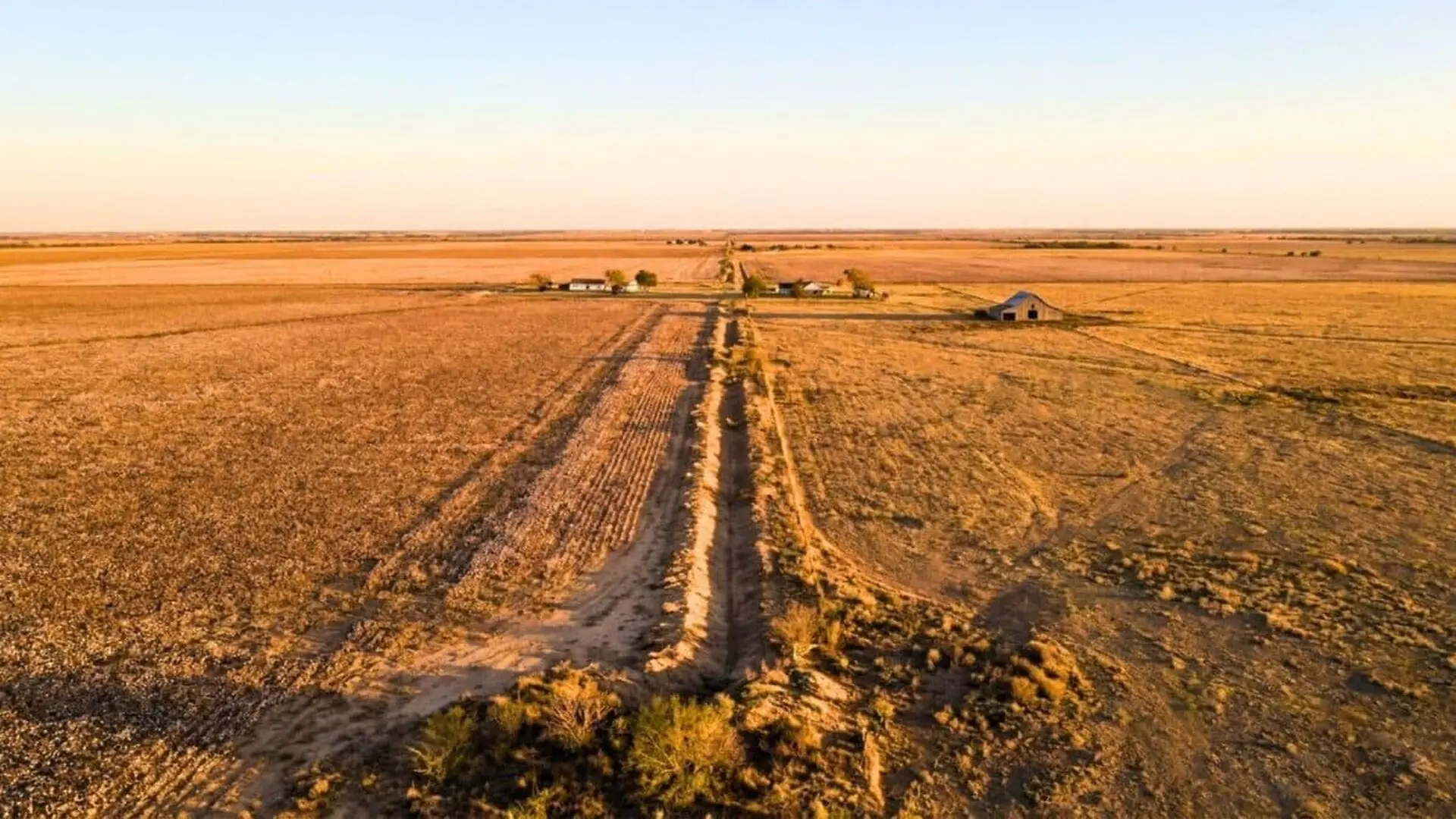
A network of tunnels stretching more than 22 kilometers lies buried beneath the fields surrounding Waxahachie, Texas. These passages belong to the Superconducting Super Collider (SSC), an American particle accelerator project that was halted by Congress in October 1993, leaving its underground corridors, access shafts and surface structures unused.
A Giant Ring Planned for the Heart of Texas
The SSC was conceived as an 87.1‑kilometer circular machine sited in Ellis County, roughly 48 kilometers south of Dallas. Its design called for two proton beams traveling in opposite directions around the ring, colliding at a combined energy of 40 tera‑electron volts (40 TeV). By the time federal support ended, roughly one‑fifth of the construction was complete, including drilled tunnels, seventeen vertical shafts and about 18,600 square meters of surface facilities, according to a detailed Scientific American history of the project. More than $2 billion had already been spent.
What the Machine Was Meant to Reveal
A particle collider of this scale would have relied on powerful superconducting magnets—estimated at around 10,000—to steer each 20‑TeV proton beam. By accelerating particles to energies far beyond any existing or planned accelerator at the time, the SSC aimed to probe the deepest layers of matter. Its scientific agenda included a direct hunt for the Higgs boson and searches for supersymmetric particles and potential dark‑matter constituents. Physicist John Gunion told Scientific American that the collider would have generated enough Higgs events to confirm the particle, even though its beam luminosity would have been lower than that of CERN’s later machine.
From Concept to Groundbreaking
Ideas for a U.S. accelerator operating at tens of tera‑electron volts emerged in the late 1970s and early 1980s. Formal design work began at the Department of Energy (DOE) in 1983, and President Ronald Reagan gave formal approval in 1987. Reagan’s science adviser urged the team to be “bold and greedy,” while the president himself encouraged physicists to “throw deep,” reflecting the colossal scale envisioned. In November 1988 the DOE selected Ellis County as the site, and excavation started the following year, as documented by the American Institute of Physics history of the collider. By 1993, workers had carved out roughly two dozen kilometers of tunnel, but the magnet systems, beam pipes and detectors were never installed.
Escalating Costs and Management Struggles
Initial cost estimates for the SSC stood at $4.4 billion, but by 1992 the projection had risen to $8.25 billion, and by the fall of 1993 it exceeded $11 billion. Subsequent DOE reviews identified additional expenses that were omitted from early budgets, including about $500 million for detectors, $400 million for pre‑completion operations, $60 million for land acquisition and $118 million for federal project management. A redesign of the magnet aperture—prompted by calculations showing more particles could escape the beams—added roughly $2 billion to the price tag. Historian Michael Riordan noted that the DOE doubted the high‑energy physics community could provide the stringent management required, leading to the insertion of managers with military and defense backgrounds and generating friction between engineers and scientists.
Funding Gaps and Political Headwinds
Planners had counted on a mix of state and international contributions totaling about $2.6 billion. Texas pledged $900 million and had delivered roughly $400 million before the project’s cancellation. International pledges were limited; India committed $50 million, while other nations either focused on CERN or faced political and trade complications, particularly with Japan. A statement describing the collider as “an American project with American leadership” underscored tensions about foreign involvement. Nobel laureate Burton Richter later criticized the timing of international negotiations, arguing that seeking external funding after finalizing design parameters was a strategic error. The project also competed for federal dollars during a recession, with Congress simultaneously financing other high‑cost programs such as the International Space Station.
In October 1993, Congress terminated funding for the SSC. At that moment, approximately 2,000 workers and 200 scientists were stationed at the site or in nearby Dallas. A 1994 survey cited by Scientific American indicated that about half of the collider’s scientists eventually left the field of physics.
Legacy After the Higgs Discovery
Years after the SSC’s demise, CERN’s Large Hadron Collider (LHC) began operations in Europe and, in July 2012, announced the discovery of a particle consistent with the Higgs boson. This breakthrough fulfilled one of the primary scientific goals originally set for the Texas accelerator, even though the LHC operated at lower collision energy but with a much higher collision rate.
The cancellation did not halt American contributions to particle physics. U.S. researchers continued to work at domestic laboratories and collaborate on international experiments, including those at CERN. The American Institute of Physics characterizes the shutdown as part of a broader shift in high‑energy physics leadership toward Europe. The remaining Texas infrastructure never functioned as an accelerator; by 2013, access shafts had been sealed and the exposed tunnel sections collected rainwater, standing as an unfinished monument to a machine that never accelerated a single proton.
This article has been fact checked for accuracy, with information verified against reputable sources. Learn more about us and our editorial process.
Last reviewed on .
Article history
- Latest version
Reference(s)
- Appell, David. “The Supercollider That Never Was.”, October 15, 2013 Scientific American <https://www.scientificamerican.com/article/the-supercollider-that-never-was/>.
- “The Superconducting Super Collider: Oral Histories.”, April 3, 2025 AIP <https://www.aip.org/history/the-superconducting-super-collider>.
Cite this page:
- Posted by Farah Siddiqui