James Webb Spots And Measures Dormant Black Hole From The Dawn Of The Universe
UF scientists bend lunar glass with lasers, unlocking space construction and instant manufacturing
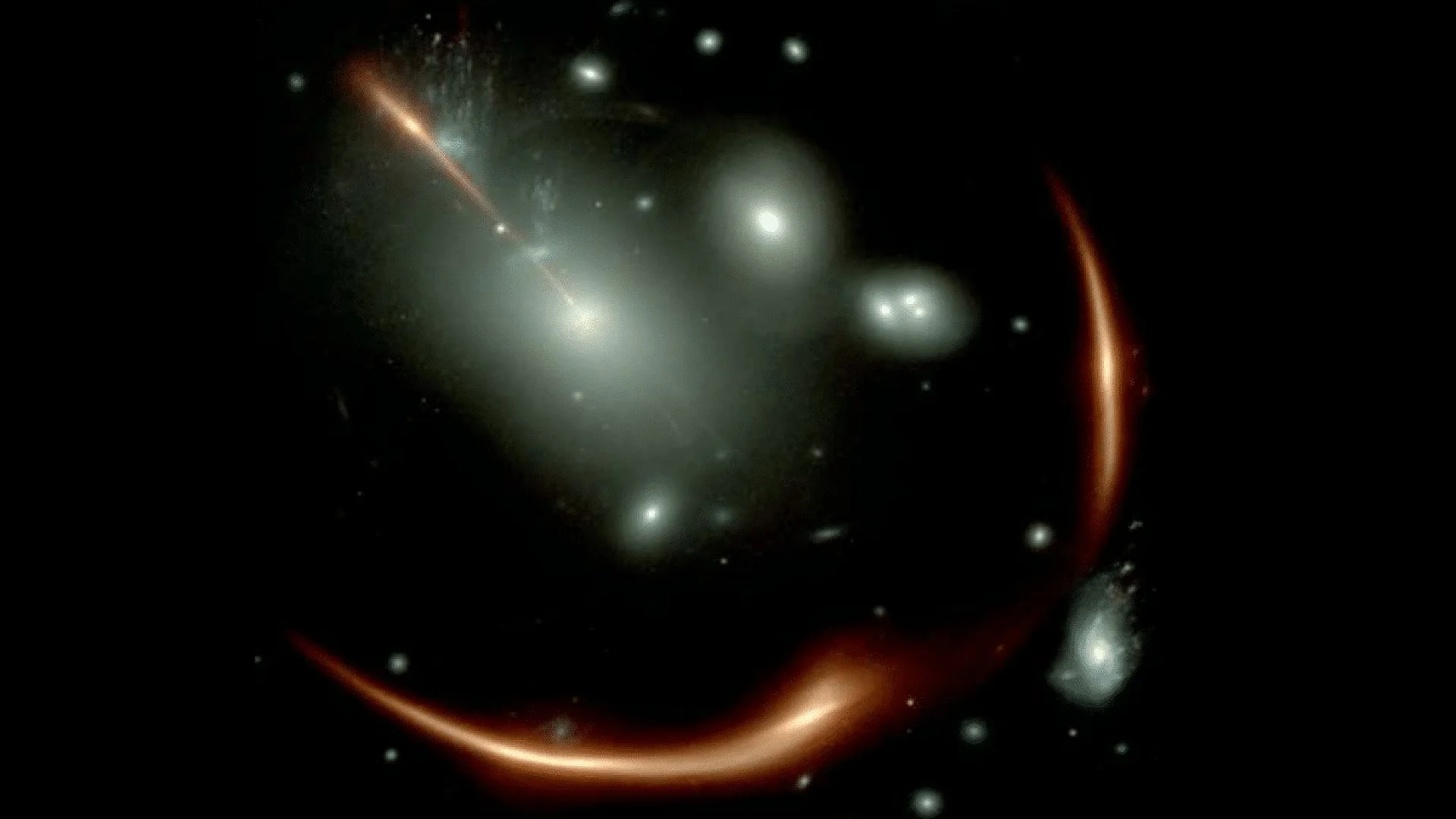
A collaborative team of astronomers has now determined the weight of a quiescent supermassive black hole located more than 10 billion light‑years from Earth, delivering a rare view of the universe when it was only about a quarter of its present age. The study, appearing in Science, finds that the black hole at the core of galaxy MRG-M0138 has a mass close to six billion solar masses, shedding light on the co‑evolution of galaxies and their central black holes in the early cosmos.
A Hidden Giant Brought to Light
Unlike active nuclei that announce themselves with bright X‑ray and radio emission, dormant black holes remain invisible, revealing their presence only through the gravitational pull they exert on surrounding stars. In MRG-M0138, researchers employed the stellar dynamics approach, monitoring the velocities of stars circling the galaxy’s nucleus to infer the central mass.
The technique had previously been limited to galaxies within roughly 700 million light‑years. By pairing JWST observations with the natural magnification provided by gravitational lensing, the team pushed the method to a galaxy over 10 billion light‑years away, extending its reach deep into the early universe.
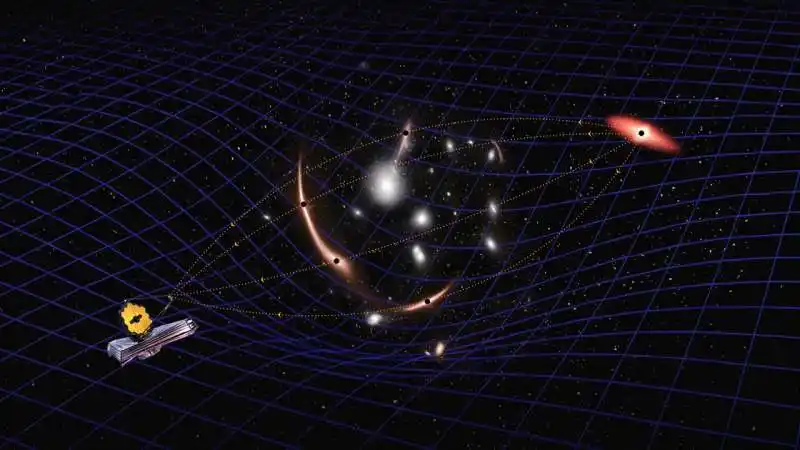
JWST and Cosmic Lens Unlock Distant Stellar Dynamics
The James Webb Space Telescope supplied high‑resolution imaging of a strongly magnified view of the galaxy. A foreground mass acts as a natural lens, stretching the light from MRG-M0138 by about thirty times. Lead author Dr. Andrew Newman of Carnegie Science explained:
“By combining JWST data with gravitational lensing, we could peer inside the black hole’s sphere of influence, where its gravity boosts the speeds of stars. This is one of the best techniques we have to weigh a black hole, so we were excited to extend it to a much earlier period in cosmic history.”
Without this fortuitous alignment, measuring stellar motions at such a distance would have been out of reach.
Mapping Stellar Velocities Yields a Six‑Billion‑Solar‑Mass Black Hole
By charting the speed distribution of stars across the central region, the team observed that stars closest to the nucleus travel markedly faster than those farther out, reflecting the pull of a massive unseen object. This velocity gradient allowed a precise determination of the black hole’s mass. Professor Richard Ellis of UCL Physics & Astronomy noted:
“By demonstrating the feasibility of such a technique for galaxies in the early universe, we can now undertake a more complete census of how black holes develop over time and infer their role in shaping galaxy evolution.”
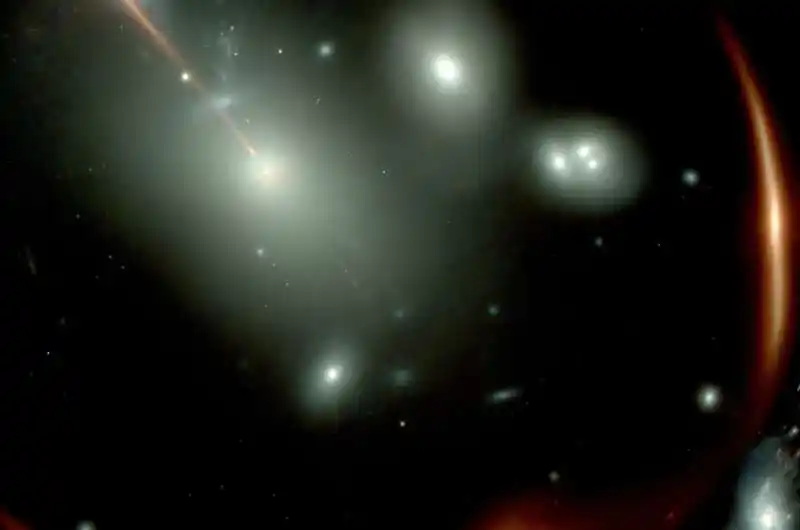
Credit: NASA/JWST
Consequences for Early Galaxy Growth
MRG-M0138 and its central black hole are both quiescent, lacking ongoing star formation or accretion signatures. Researchers propose that during an earlier, luminous quasar phase, the black hole expelled the gas needed for new stars, effectively shutting down further stellar birth. Detecting such a massive dormant black hole at a great distance offers a unique glimpse into how galaxies evolved within the first few billion years of cosmic history. Anticipated JWST campaigns and observations from other facilities are expected to uncover additional dormant black holes, refining our picture of their regulatory role in galaxy lifecycles.
This article has been fact checked for accuracy, with information verified against reputable sources. Learn more about us and our editorial process.
Last reviewed on .
Article history
- Latest version
Cite this page:
- Posted by Farah Siddiqui