After Analyzing 300 Kg of Antarctic Ice, Scientists Found Strange Radioactive Particles Inside
…
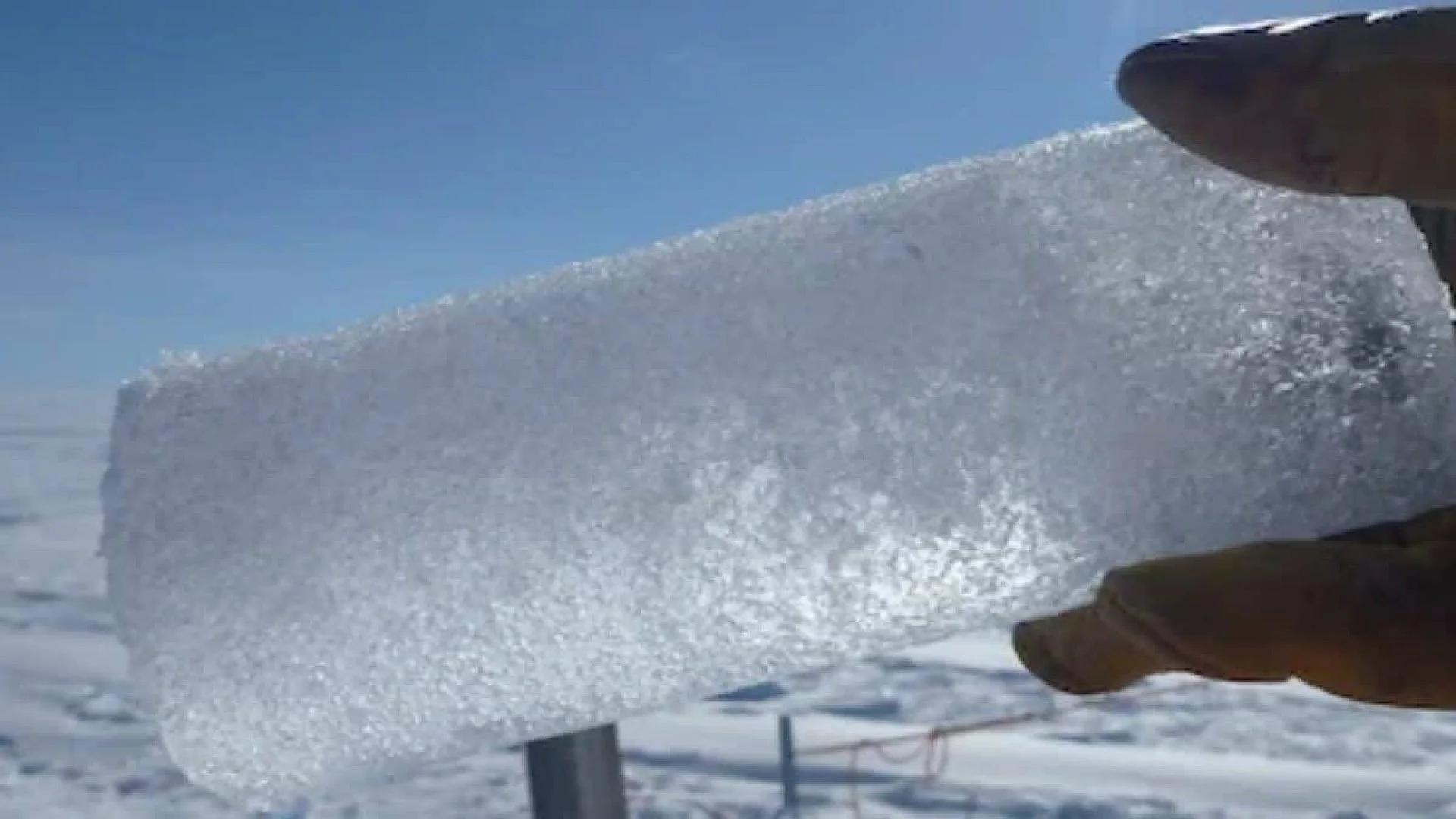
Scientists have discovered remnants of radioactive stardust preserved in Antarctic ice, directly linking Earth to debris produced by ancient stellar explosions. The groundbreaking discovery involves iron-60, a rare isotope transported through space inside interstellar dust particles.
The findings suggest that material from a nearby supernova became trapped within the Local Interstellar Cloud, the region of gas and dust currently surrounding the solar system. Researchers believe the discovery could provide valuable insights into the origin of this nearby cosmic environment.
A team led by Dominik Koll from the Institute of Ion Beam Physics and Materials Research at HZDR examined Antarctic ice samples dating back between 40,000 and 80,000 years. As reported in the study published in Physical Review Letters, the researchers searched for traces of radioactive material produced by supernovas and eventually detected atoms of iron-60 embedded in the ice.
The isotope had previously been identified in ancient ocean sediments, though the Antarctic samples provide a much more recent record of interstellar material reaching Earth.
Uncovering Ancient Secrets in Hundreds of Kilograms of Ice
To carry out the study, researchers collected and processed more than 300 kilograms of Antarctic ice. The samples were melted, chemically treated, and examined using accelerator mass spectrometry, a technique capable of identifying and counting extremely rare isotopes atom by atom.
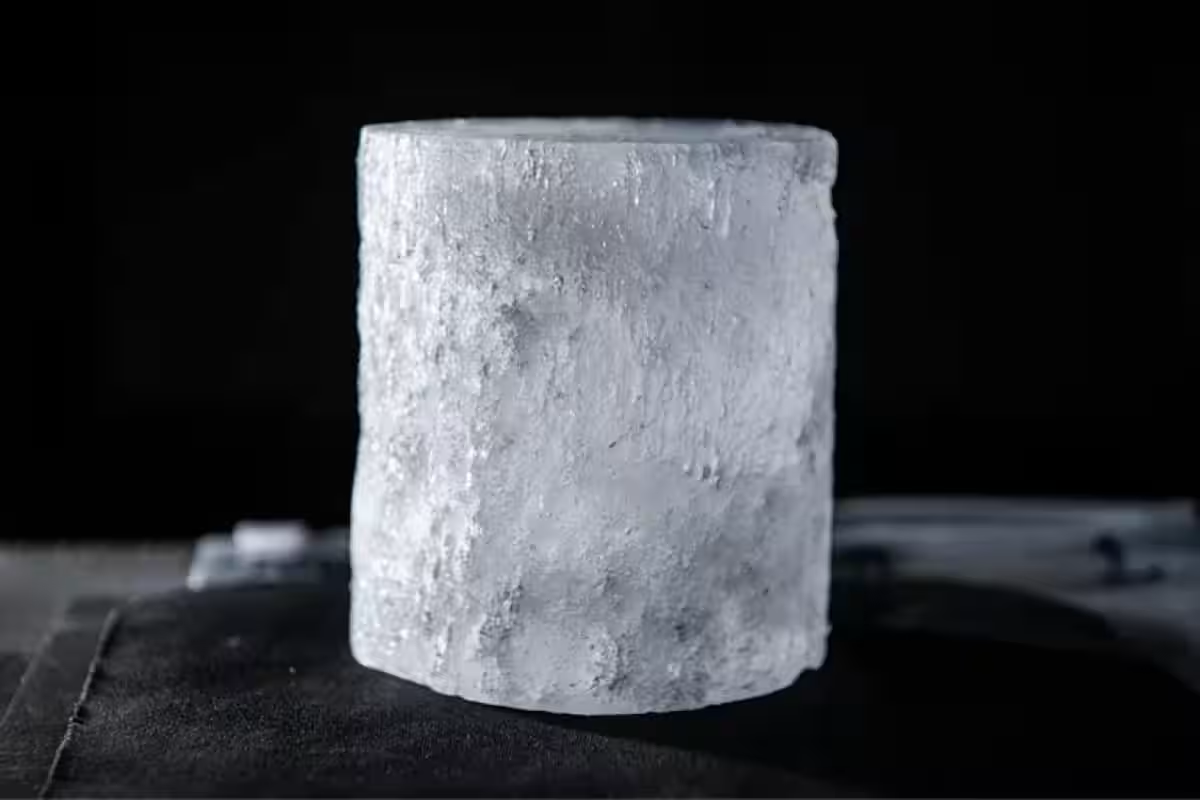
The latest research explains that the method allowed the team to isolate traces of iron-60 with very high precision. The isotope is especially valuable to astrophysicists because it is not naturally produced in large quantities on Earth.
The team believes the radioactive material condensed into microscopic dust grains after a stellar explosion before drifting through interstellar space. Some of those particles eventually reached Earth after passing through the solar system.
The cloud nicknamed the “Local Fluff” is made of gas, dust, and plasma spread between nearby stars. Scientists estimate that the solar system has been moving through this region for tens of thousands of years.
Unraveling the Mystery of the Local Interstellar Cloud
The discovery expands on research published in 2019, when members of the same team first identified iron-60 in Antarctic snow. At the time, the source of the isotope remained unknown.
“We didn’t know where it came from,” Koll stated. “So we continued working on it tracing the influx back … and we got the answer that it is related to the local interstellar cloud.”
Researchers compared recent snow samples with much older ice layers and observed a noticeable difference in the concentration of iron-60. Older samples contained lower amounts of the isotope, indicating that less interstellar dust reached Earth during that period.
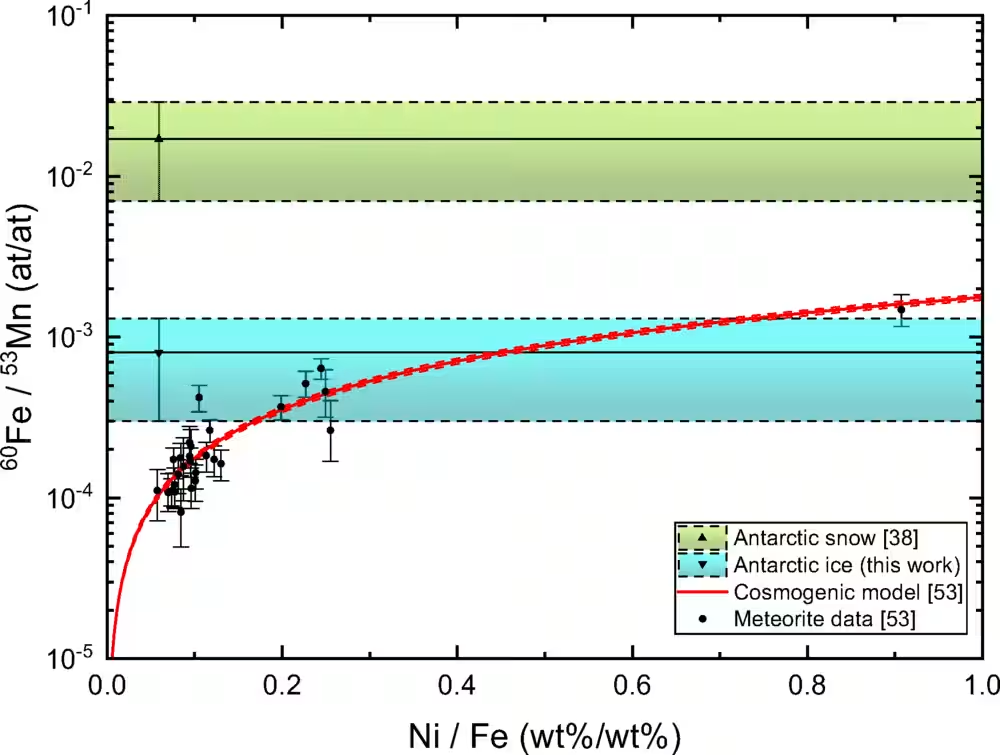
The study notes that this variation occurred over a relatively short astrophysical timescale. Scientists also found that the pattern did not match older iron-60 deposits discovered in ocean sediments dating back millions of years. That difference led the team to consider a more local origin connected directly to the interstellar environment surrounding the solar system.
A New Era in Cosmic Research
Researchers say the study offers one of the first direct opportunities to investigate the origin of the interstellar clouds surrounding the solar system. Information shared with Space.com strengthens the connection between the Local Interstellar Cloud and past supernova activity.
“This means that the clouds surrounding the solar system are linked to a stellar explosion,” he said in a statement. “And for the first time, this gives us the opportunity to investigate the origin of these clouds.”
Scientists estimate that the solar system entered the Local Fluff between 40,000 and 124,000 years ago. The team now plans to examine older ice samples deposited before that period.
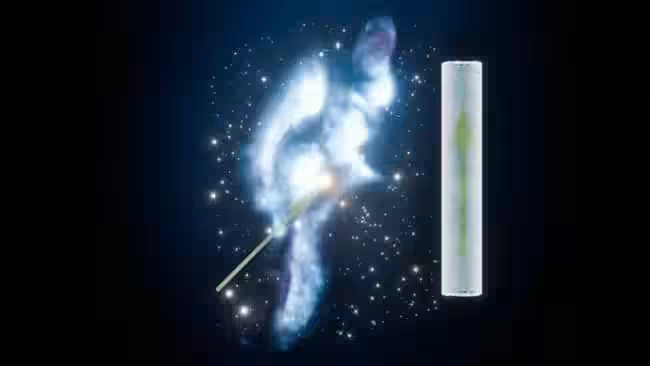
Those future analyses could help researchers trace the arrival of interstellar dust around Earth more precisely and better understand the recent history of our galactic neighborhood.
This article has been fact checked for accuracy, with information verified against reputable sources. Learn more about us and our editorial process.
Last reviewed on .
Article history
- Latest version
Reference(s)
- Koll, Dominik., et al. “Local Interstellar Cloud Structure Imprinted in Antarctic Ice by Supernova
- Koll, Dominik., et al. “Interstellar
- <https://www.eurekalert.org/news-releases/1128030>.
Cite this page:
- Posted by Farah Siddiqui