Webb Found a Planet Wrapped in Massive Haze, Leaving Scientists Unable to See Its Atmosphere
This unusual planet, resembling cotton candy in composition, posed a challenge to scientists. Fresh data from the Webb telescope deepened the mystery further.
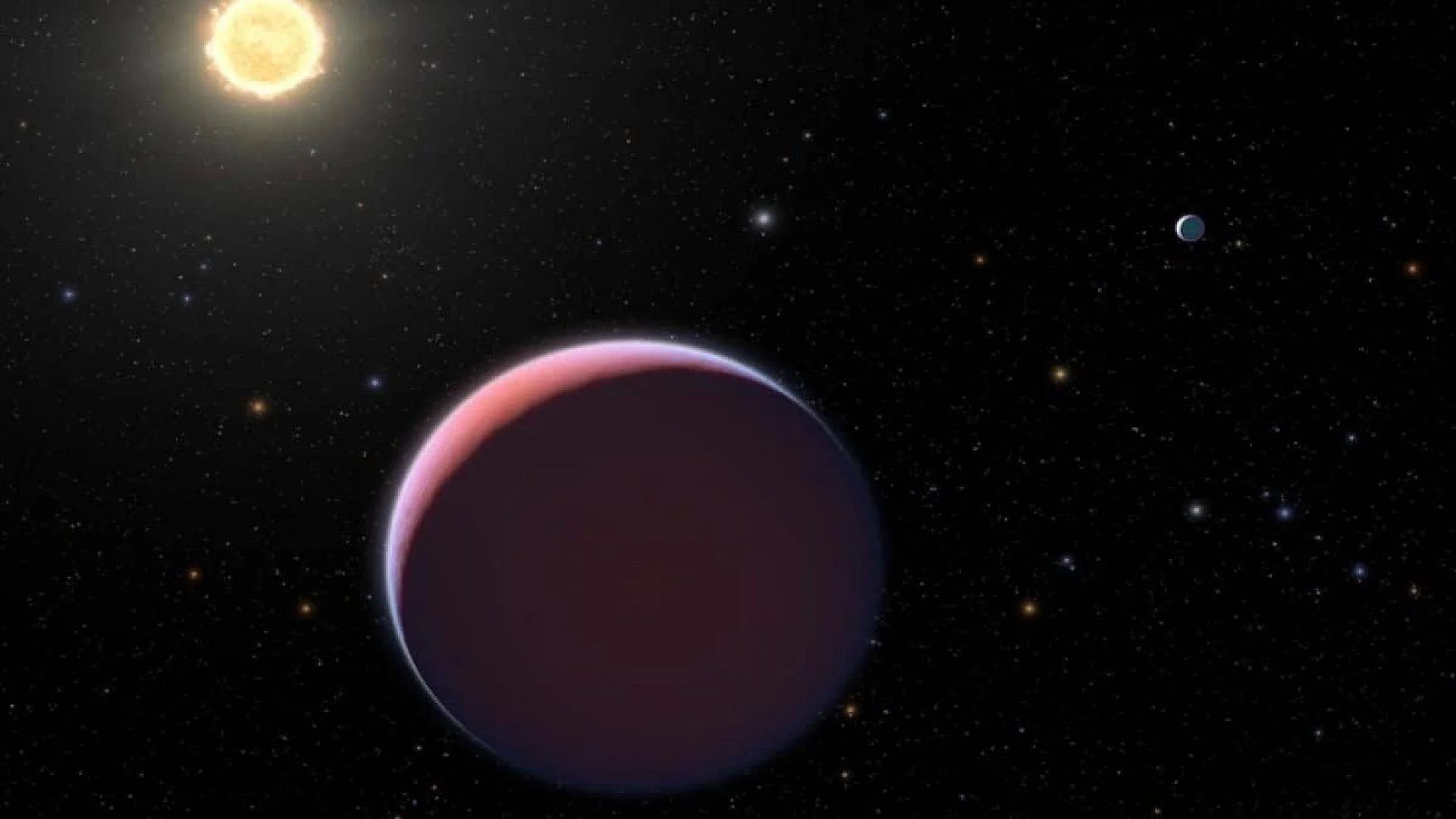
A mysterious exoplanet known as Kepler-51d has left astronomers stumped once again. Recent observations made by the James Webb Space Telescope (JWST) have revealed that the planet is shrouded in an incredibly thick haze layer, making it impossible for scientists to determine the composition of its atmosphere. This groundbreaking discovery was published in The Astronomical Journal and has further deepened the enigma surrounding a rare class of celestial bodies known as super-puffs. Researchers note that the planet’s structure, density, and orbit defy current models of planetary formation.
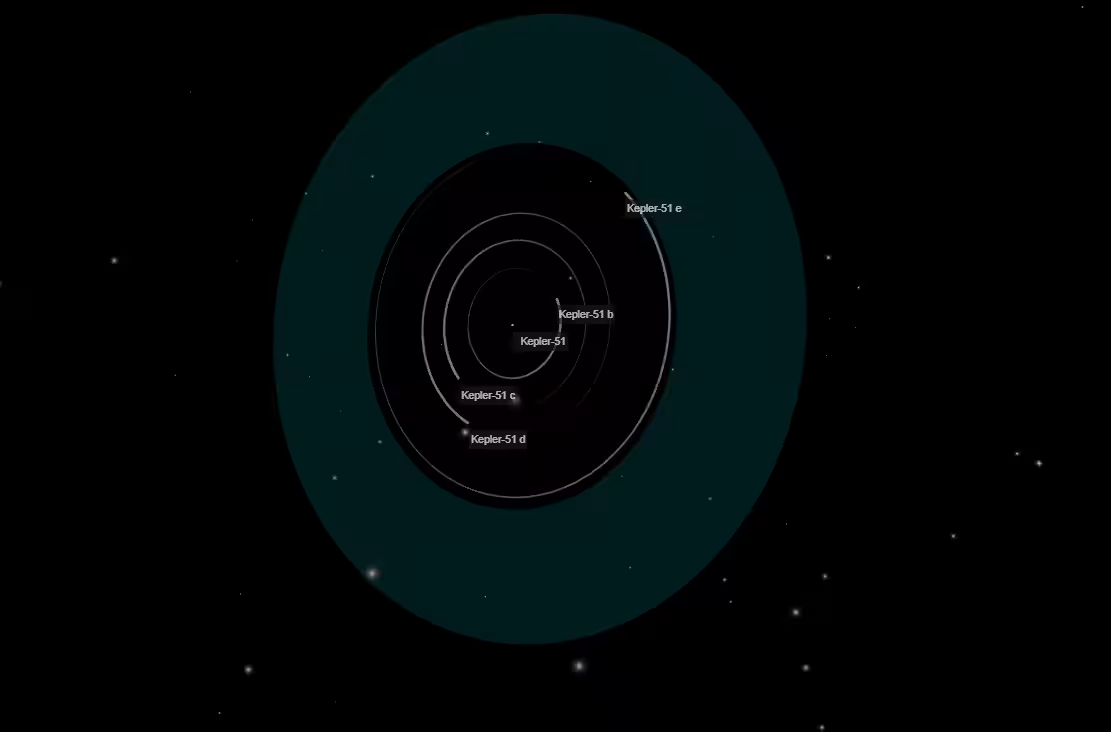
Located approximately 2,615 light-years away in the constellation Cygnus, the Kepler-51 system comprises four known planets, with three of them classified as super-puffs. These massive planets boast sizes comparable to Saturn but possess extremely low densities.
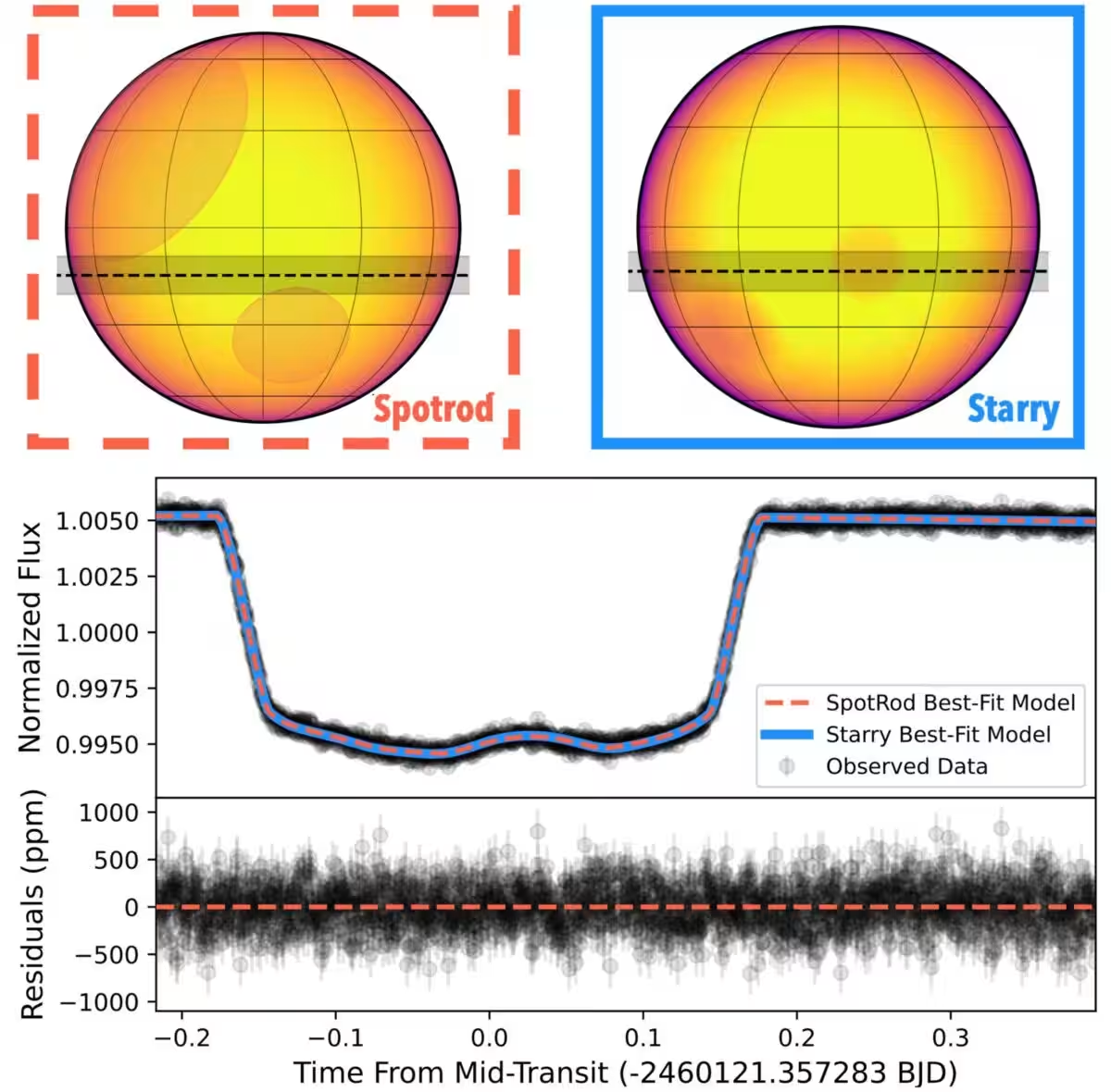
To study the planet, scientists employed transit observations, during which part of the star’s light passes through the atmosphere before reaching telescopes, allowing astronomers to search for chemical signatures. However, the expected atmospheric signals failed to appear in the data collected by JWST.
A Giant Planet With Unusually Low Density
Researchers describe Kepler-51d as a celestial body with a density similar to that of cotton candy. According to researchers at Penn State, it is the coolest and least dense of the system’s planets. Jessica Libby-Roberts, the study’s lead author, explained that the three inner planets orbiting the exoplanet appear to have very small cores surrounded by enormous atmospheres.
Traditional formation models suggest gas giants develop dense cores that generate enough gravity to attract and retain thick gaseous envelopes. In the case of Kepler-51d, scientists say the planet does not conform to this process.
Its orbit presents another puzzle. The planet orbits its host star at a distance comparable to the position of Venus in our solar system. As Libby-Roberts noted:
“Kepler-51 is a relatively active star, and its stellar winds should easily blow away the gases from this planet, though the extent of this mass-loss over Kepler-51d’s lifetime remains unknown.”
Researchers speculate that the planet may have originally formed farther away from its star before gradually moving closer over time, although many questions about its history remain unanswered.
“It’s possible that the planet formed further away and moved inward, but we are still left with a ton of questions about how this planet — and the other planets in this system — formed. What is it about this system that created these three really oddball planets, a combination of extremes that we haven’t seen anywhere else?”
JWST Discovered a Massive Planetary Haze
Earlier observations conducted using the Hubble Space Telescope covered wavelengths between 1.1 and 1.7 microns. The use of JWST’s Near-Infrared Spectrograph allowed astronomers to extend those observations to 5 microns in the infrared range. As explained in the latest research, the broader range should have revealed distinct atmospheric fingerprints. However, the telescope detected no clear molecular signatures.
“We think that the planet has such a thick haze layer that is absorbing the wavelengths of light we looked at, so we can’t actually see the features underneath,” said Suvrath Mahadevan, professor of astronomy and astrophysics at Penn State.
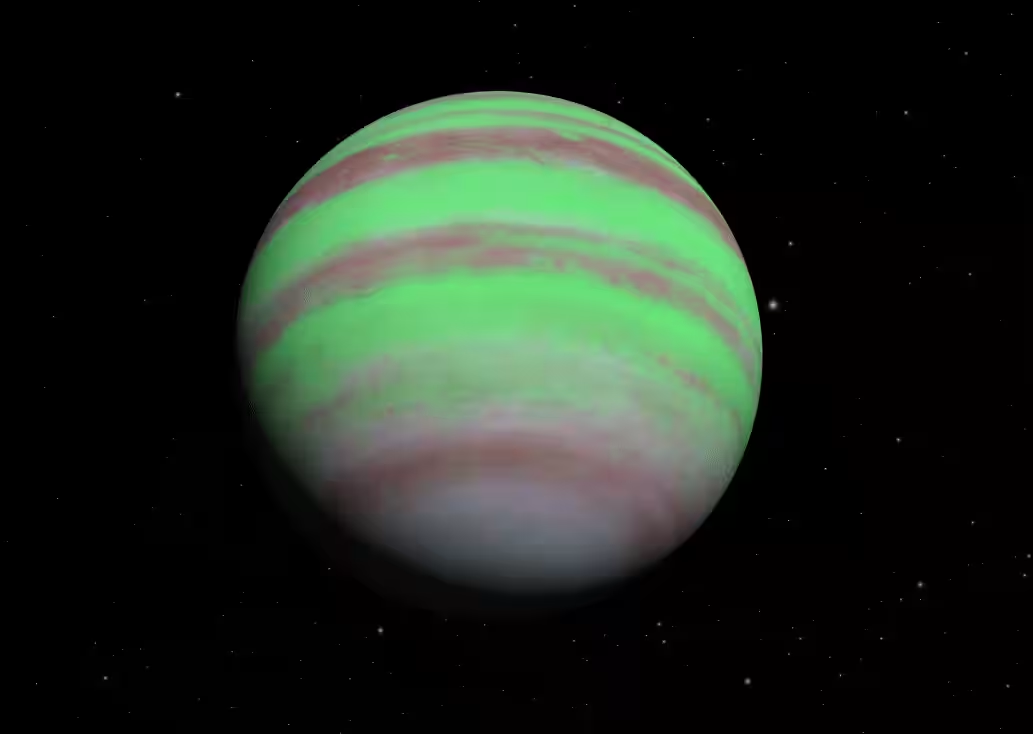
Scientists compared the haze to the atmosphere surrounding Titan, the largest moon of Saturn, which contains hydrocarbon compounds including methane. The haze enveloping Kepler-51d may extend nearly the radius of Earth itself, making it one of the largest haze structures ever observed around it.
Could Rings Explain the Discovery?
The team explored whether rings surrounding the alien world could explain the unusual observations. If tilted at a particular angle, rings could block additional starlight and make the planet appear larger and less dense during transits.
The paper explained that the observed data did not fully match that scenario. Researchers identified a linear trend in which more light was blocked at longer wavelengths, a pattern they considered more consistent with atmospheric haze.
Libby-Roberts noted that rings would need to be short-lived, composed of very specific materials, and positioned at exactly the right angle to reproduce the observations. Scientists have not ruled out the possibility entirely, though the haze explanation currently fits the data more closely.
The research team is now analyzing observations of another planet in the same system, Kepler-51b, to determine whether similar atmospheric conditions exist on other super-puff planets.
This article has been fact checked for accuracy, with information verified against reputable sources. Learn more about us and our editorial process.
Last reviewed on .
Article history
- Latest version
Reference(s)
- “Jessica E Libby-Roberts.” <https://www.ut.edu/directory/libby-roberts-jessica-e>.
- Belleville, Michelle. “Hubble Space Telescope - NASA Science.”, May 10, 2023 NASA <https://science.nasa.gov/mission/hubble/>.
- Sabia, Stephen. “NIRSpec - NASA Science.”, August 12, 2024 NASA <https://science.nasa.gov/mission/webb/nirspec/>.
- Libby-Roberts, Jessica E.., et al. “The James Webb Space Telescope NIRSpec-PRISM Transmission Spectrum of the Super-puff, Kepler-51d.” The Astronomical Journal, vol. 171, no. 4, March 16, 2026, pp. 221 American Astronomical Society, doi: 10.3847/1538-3881/ae33c0. <https://iopscience.iop.org/article/10.3847/1538-3881/ae33c0>.
- “Suvrath Mahadevan | Eberly College of Science.” <https://science.psu.edu/astro/people/sqm107>.
Cite this page:
- Posted by Farah Siddiqui