Why Satellite Dishes Have a Curved Bowl Shape
Understanding why satellite dishes use a curved bowl shape reveals how parabolic geometry captures faint satellite signals, focuses them precisely, and delivers clear communication performance.
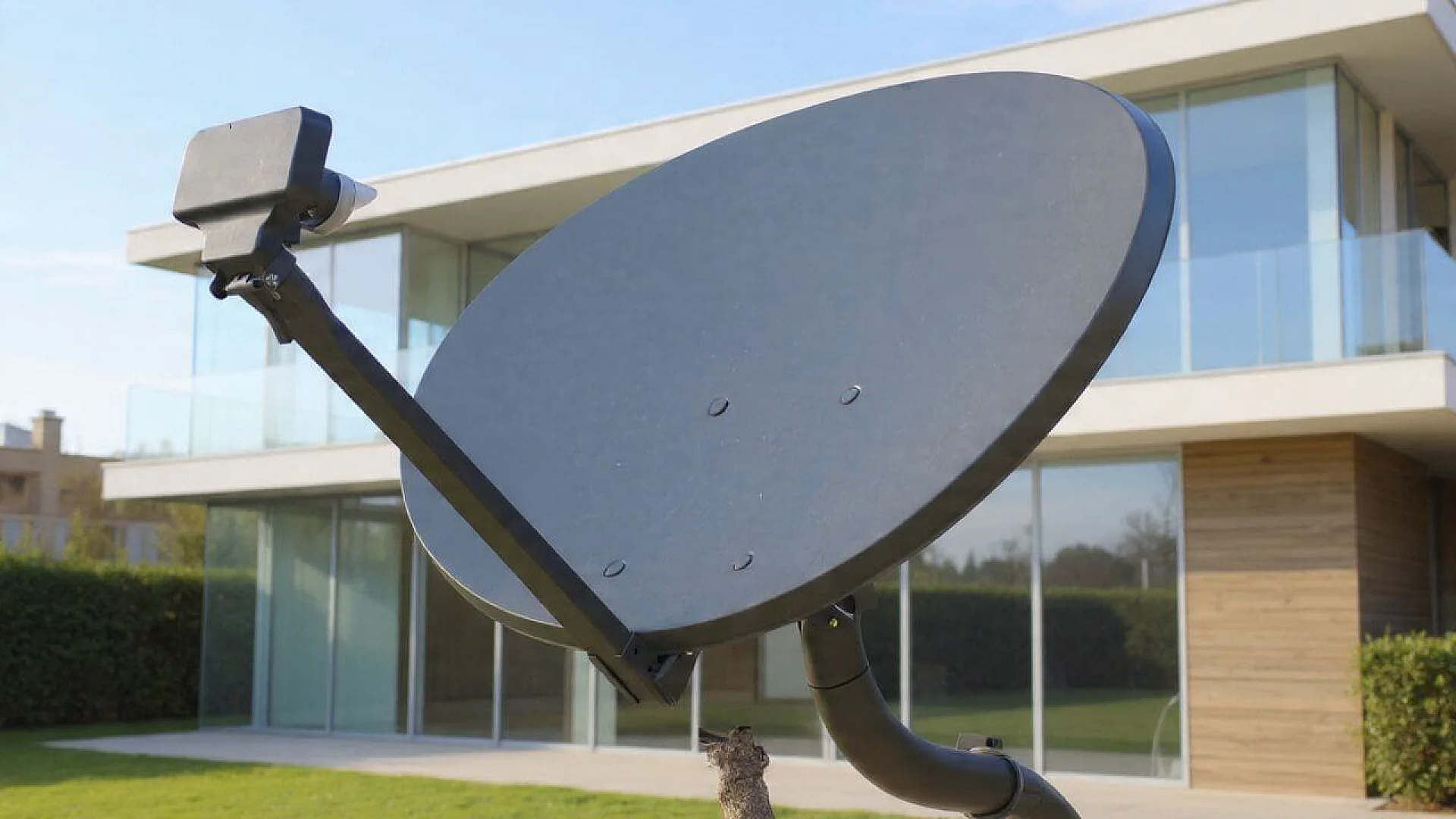
When we look at a satellite dish mounted on a rooftop or fixed onto a balcony, the first thought that often arises is why it has a curved, bowl-like shape instead of a flat surface. This question becomes even more intriguing when we consider that many antennas, such as those used on radio towers, are simple rods or wires. The satellite dish looks more like a scientific instrument than an everyday communication device, which naturally raises deeper questions. Why this shape? How does it work? And why is it necessary?
The explanation involves physics, geometry, and the behavior of electromagnetic waves. When each idea is unfolded carefully, the logic behind the design becomes clearer and more fascinating. Weak signals traveling across vast distances, precise reflection patterns, and the ability of a receiver to interpret concentrated energy all contribute to the need for a bowl-like dish. The structure is not arbitrary at all. It is the final result of engineering combined with the fundamental laws of nature.
The Hidden Journey of Satellite Signals
To understand the design of a satellite dish, we must begin with the signals themselves. Satellites orbiting thousands of kilometers above Earth transmit microwaves toward the planet. These signals travel through the vacuum of space and then through the atmosphere before finally reaching our homes. During this long journey, the waves disperse and their intensity decreases dramatically.
By the time these waves reach the surface of Earth, they are incredibly weak. Much weaker than the signals from a nearby Wi-Fi router or a local radio station. Therefore, receiving them requires a mechanism that can gather enormous amounts of faint energy and direct it toward a single receiving point. The surface collecting that energy must be large, and its geometry must be precise enough to avoid wasting even a fraction of the already weak signal.
This requirement immediately rules out a flat plate. A flat surface can collect waves but cannot focus them accurately. It captures the energy but does not guide it. A curved surface, on the other hand, does something remarkable.
The Geometry That Changes Everything
The curved shape of a satellite dish is not based on guesswork. It is built around a precise mathematical shape known as a parabola. This shape has a unique property that makes it perfect for capturing signals from distant satellites. Any wave that strikes a parabolic surface while moving parallel to its central axis is reflected toward a single point, which is known as the focus.
Since satellites are so far away that their emitted waves reach Earth as almost perfectly parallel lines, the parabolic shape of the dish becomes the ideal collector. Every wave that touches the dish surface reflects toward the same spot. This means that energy spread over a wide area suddenly becomes concentrated at a very small point. The design is similar to how a curved mirror can focus sunlight into a bright dot, except the satellite dish deals with microwaves instead of visible light.
This focusing action is the heart of the entire system. Without it, the receiver would struggle to detect usable information within faint electromagnetic noise.
The Feed Horn: The Receiver’s First Gateway
At the focal point of the dish sits a small, often overlooked device known as the feed horn. It appears simple but performs a crucial function. Once the dish gathers and concentrates the waves, the feed horn receives the focused signal and directs it to the low noise block downconverter (LNB), which then processes the signal.
If the feed horn is even slightly misplaced, the strength of the signal drops. This is because the waves no longer converge precisely at the intended location. The relationship between the dish and the feed horn must be perfectly aligned for the system to function efficiently. This relationship represents the harmony between physics and engineering.
Readers often wonder why this point is so sensitive. The answer lies in the fact that the dish is concentrating extremely faint energy. A small misalignment means some part of that energy fails to reach the feed horn. Since the original signal is already weak, even small losses significantly reduce performance.
Why the Dish Must Be Large
Another question arises naturally. Why do satellite dishes come in large sizes? The size of the dish determines how much energy it can gather. Since every part of the parabolic surface contributes to the final focused signal, a larger dish collects more wave energy. This is particularly important in areas where signal strength is lower, either due to environmental barriers or atmospheric conditions.
High frequency satellite bands like Ku and Ka are more vulnerable to disturbances such as rain fade, atmospheric moisture, or heavy cloud cover. A larger dish compensates for these obstacles by capturing more incoming waves. This concept helps explain why homes in regions with poor weather conditions often use wider dishes, while areas with stable climates might manage with smaller ones.
The logic is simple. The more surface area available to intercept the parallel waves, the stronger the final concentrated signal.
Why Flat or Different Shapes Do Not Work
Given the sophistication of modern engineering, it may seem surprising that other shapes cannot replace the familiar curved dish. However, the parabola remains unmatched in its ability to focus parallel waves to a single point. A flat plate antenna, despite being easier to manufacture, fails to provide this focusing property. It gathers energy but allows it to scatter. This scattering leads to weakened signals and degraded picture quality.
A spherical surface, while curved, does not reflect waves toward a single focus if the incoming waves are parallel. Instead, they reflect toward multiple points, creating what is known as spherical aberration. Such distortions are unacceptable when dealing with weak satellite signals.
The parabolic shape avoids these issues entirely. It channels every intercepted wave toward the focal point with minimal loss. This precision explains why satellite dishes maintain their characteristic bowl-like appearance across all regions and technologies.
Directional Sensitivity and Interference Reduction
Another important advantage of the parabolic dish is its directional sensitivity. The curved surface helps the receiver ignore unwanted signals coming from the sides, back, or ground. The system becomes highly selective, focusing only on the satellite positioned in its line of sight. This selectivity reduces interference and noise, both of which can degrade signal quality.
The dish acts almost like a shield, protecting the receiver from stray signals. Imagine standing in a crowded marketplace filled with voices. If someone cups their hands around your ear to focus one voice, you hear it more clearly. The satellite dish performs a similar focusing and shielding action.
This directional behavior also explains why dishes must be pointed accurately. A small rotation misaligns the whole system and prevents the waves from arriving parallel to the dish surface. Since the focusing mechanism depends on this parallel arrival, misalignment reduces the ability of the dish to guide waves to the focal point.
Material and Surface Precision
Even the material used for the dish contributes to its effectiveness. The surface must be strong enough to maintain its shape in sunlight, rain, wind, and temperature changes. Microwaves reflect off the surface, so the material does not need to be thick. However, the shape must remain stable and free of dents.
Small irregularities scatter the waves instead of reflecting them precisely toward the focus. That is why dish surfaces are smooth, rigid, and carefully manufactured. Each part of the curve plays a role in focusing the signal.
Why the Shape Resembles a Bowl
When we observe the dish from the side, the bowl-like appearance is simply the physical representation of the parabolic curve. The deeper the dish, the more strongly it focuses signals. The shallower it is, the wider its acceptance angle. Engineers design the depth based on the required gain, frequency band, and expected atmospheric conditions.
The dish balances these factors so the receiver gets the optimum performance under a wide range of real-world conditions.
Conclusion
The curved, bowl-like shape of a satellite dish is the result of scientific principles, engineering precision, and the need to capture weak signals traveling long distances from space. The parabolic geometry gathers parallel waves and focuses them into a single point with high efficiency. The feed horn then channels this concentrated energy into the receiver. The dish size determines how much energy can be collected, and its curvature provides both focus and protection from interference.
Every part of the design is purposeful. The shape, size, material, and alignment all contribute to the ability of the dish to function reliably. Understanding this system reveals how many scientific concepts work quietly behind the scenes of everyday communication technology.
This content has been reviewed by subject-matter experts to ensure scientific accuracy. Learn more about us and our editorial process.
Last reviewed on .
Article history
- Latest version
- Last updated by Dayyal Dungrela, MLT, BSc, BS
Cite this page:
- Posted by Aisha Ahmed