NASA’s Webb Telescope Engineers Added This 5-Centimeter Device in 2008, It’s Finally Paying Off
Scientists extract hidden details from Webb Telescope using unconventional post-launch method
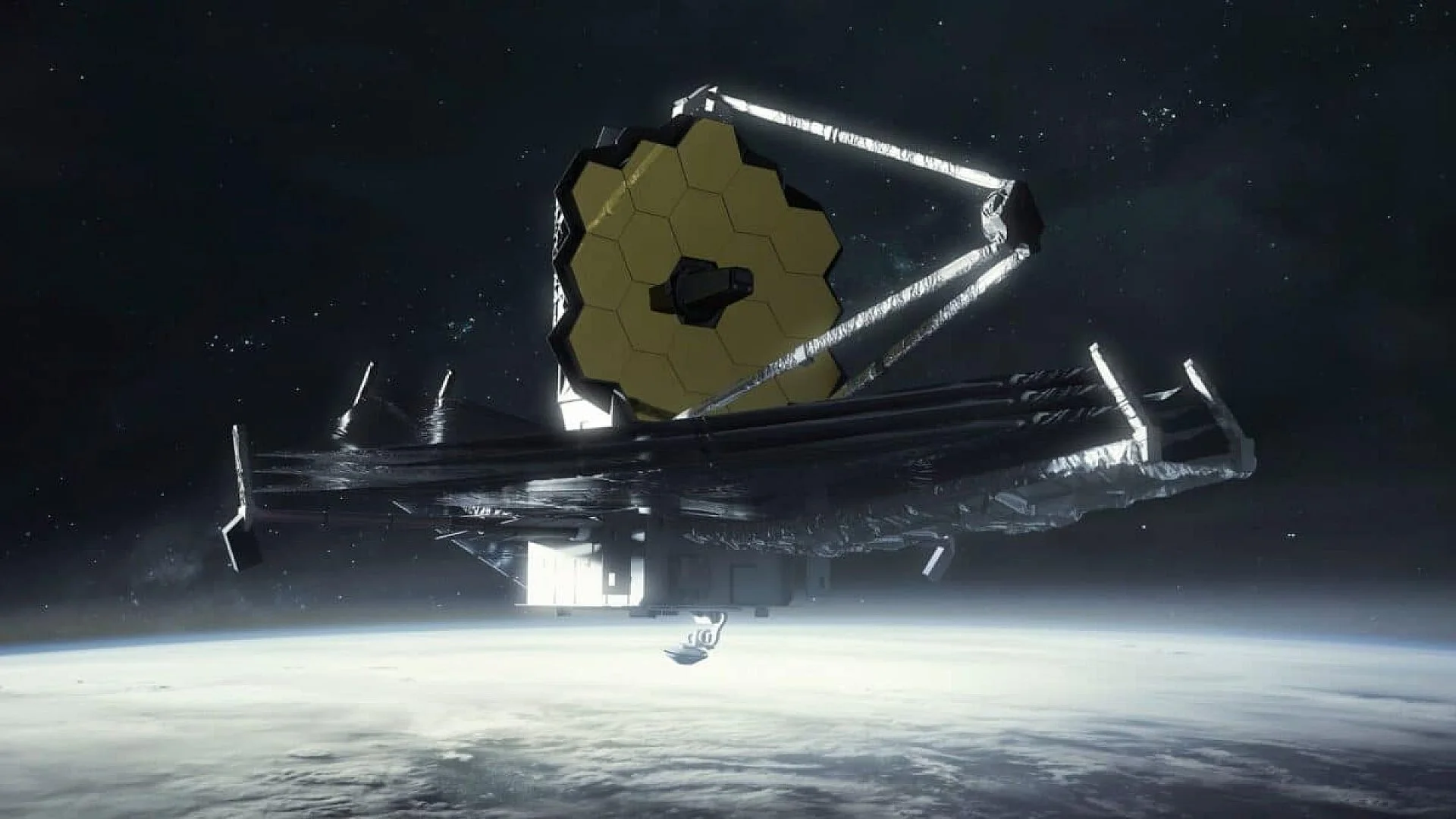
After years of troubleshooting, a niche observing mode on NASA’s James Webb Space Telescope is finally delivering the sharp images it was designed to produce. By modeling the instrument’s quirks, astronomers have shown that the technique can resolve compact sources with unprecedented detail.
Since its scientific debut in 2022, JWST has opened a new window on the distant universe thanks to its 6.5‑meter primary mirror and ability to pick up extremely faint light. Yet the telescope’s capacity to separate objects that lie very close together on the sky has remained a limiting factor for certain investigations.
Blocking Light to Sharpen Vision
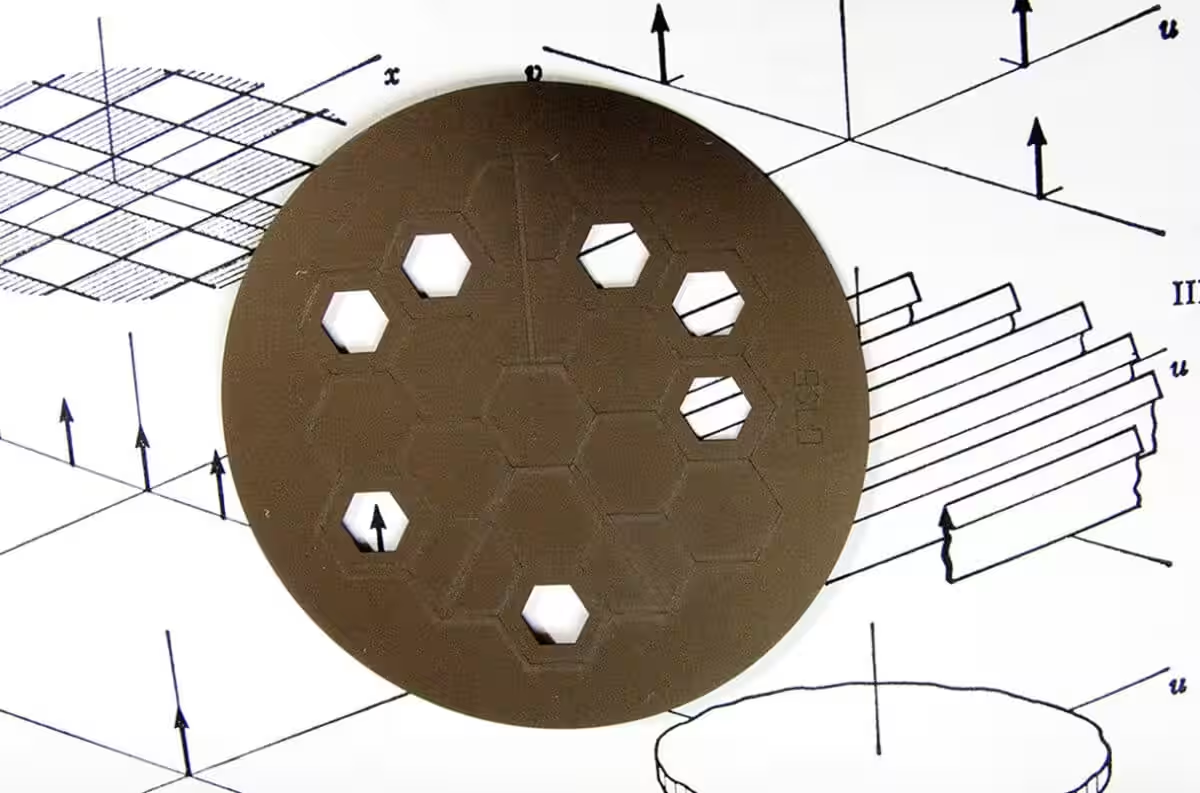
The solution draws on interferometry, a method that combines light from multiple points to tease out fine structure. In radio astronomy, large antenna arrays use this principle to act as a single, giant dish. JWST adapts the idea with a device called the Aperture Masking Interferometer (AMI), housed inside the Near‑Infrared Imager and Slitless Spectrograph (NIRISS). A thin metal plate with seven pinholes creates interference fringes that can be decoded into high‑resolution pictures.
The concept was added to JWST’s design in 2008 after Anand Sivaramakrishnan of the Space Telescope Science Institute championed its inclusion, according to a report in Science. The mask itself spans roughly five centimeters across, allowing only a fraction of the telescope’s light to reach the detector but delivering a cleaner interference signal.
Early Tests Revealed a Detector Dilemma
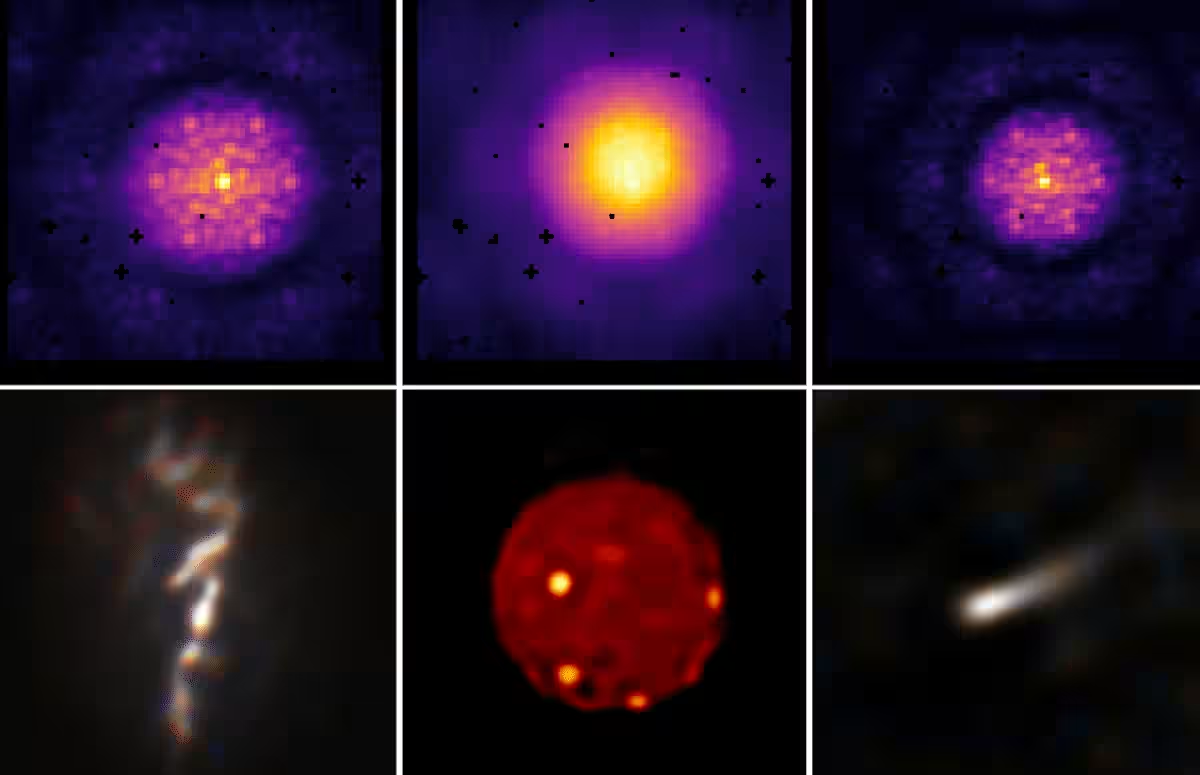
Initial AMI observations fell short of expectations because the NIRISS infrared detectors began to leak charge between neighboring pixels. This subtle crosstalk distorted the fringe patterns, blurring the resulting images and curbing the hoped‑for resolution boost.
Model‑Based Reconstruction Revives the Mode
The breakthrough arrived when the team abandoned attempts to clean the data after the fact and instead built a comprehensive forward model of the entire observation chain. Published in the Publications of the Astronomical Society of Australia, the study details how the simulation incorporates the telescope’s optics, detector physics, readout electronics, and the previously problematic charge leakage. By iteratively comparing simulated images with real data, researchers converge on a reconstruction that matches the observations.
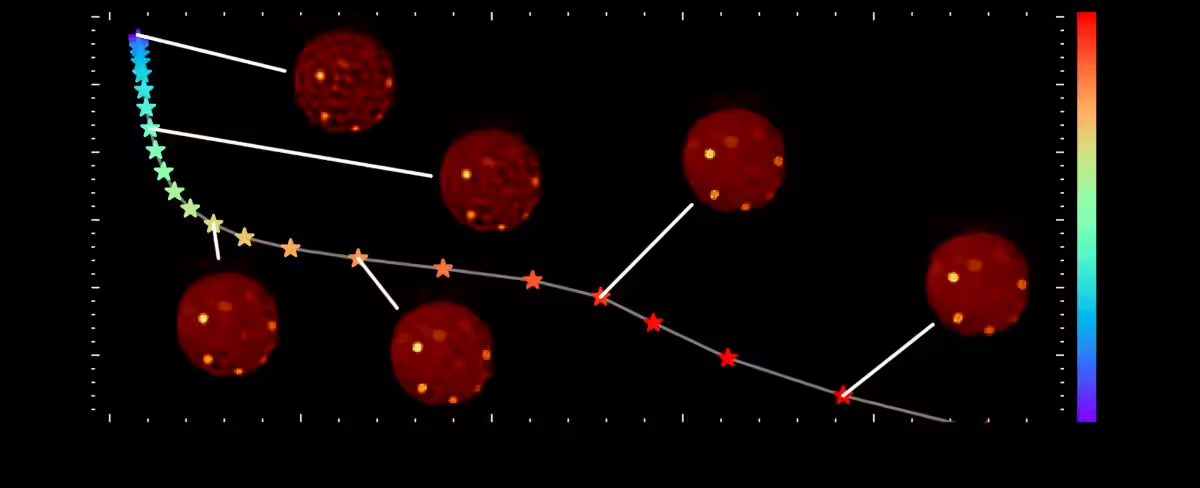
Applying the model, the team reconstructed a series of striking targets. They mapped volcanic hotspots on Io, captured the dust‑shaped silhouette of a binary star system, and resolved a jet of glowing material emerging from a distant galaxy’s central black hole. These demonstrations confirm that the long‑troubled AMI mode can finally fulfill its promise of delivering JWST‑level resolution on compact, bright sources.
This article has been fact checked for accuracy, with information verified against reputable sources. Learn more about us and our editorial process.
Last reviewed on .
Article history
- Latest version
Reference(s)
- “NIRISS Aperture Masking Interferometry - JWST User Documentation.”, July 3, 2025 <https://jwst-docs.stsci.edu/jwst-near-infrared-imager-and-slitless-spectrograph/niriss-observing-modes/niriss-aperture-masking-interferometry>.
- “JWST Near Infrared Imager and Slitless Spectrograph - JWST User Documentation.”, June 17, 2017 <https://jwst-docs.stsci.edu/jwst-near-infrared-imager-and-slitless-spectrograph>.
- <https://www.science.org/content/article/astronomers-unlock-sharper-view-jwst-using-keyhole-trick>.
- Charles, Max. “Image reconstruction with the JWST interferometer | Publications of the Astronomical Society of Australia | Cambridge Core.”, vol. 43, pp. e048 Cambridge Core, doi: 10.1017/pasa.2026.10179. <https://www.cambridge.org/core/journals/publications-of-the-astronomical-society-of-australia/article/image-reconstruction-with-the-jwst-interferometer/A7CC519AFA379D0F1505AF903ED4F316>.
Cite this page:
- Posted by Farah Siddiqui