A Mysterious Object Passed in Front of a Distant Star for One Hour, and It May Be a Primordial Black Hole
Scientists detect hidden cosmic object via unexpected galaxy flash
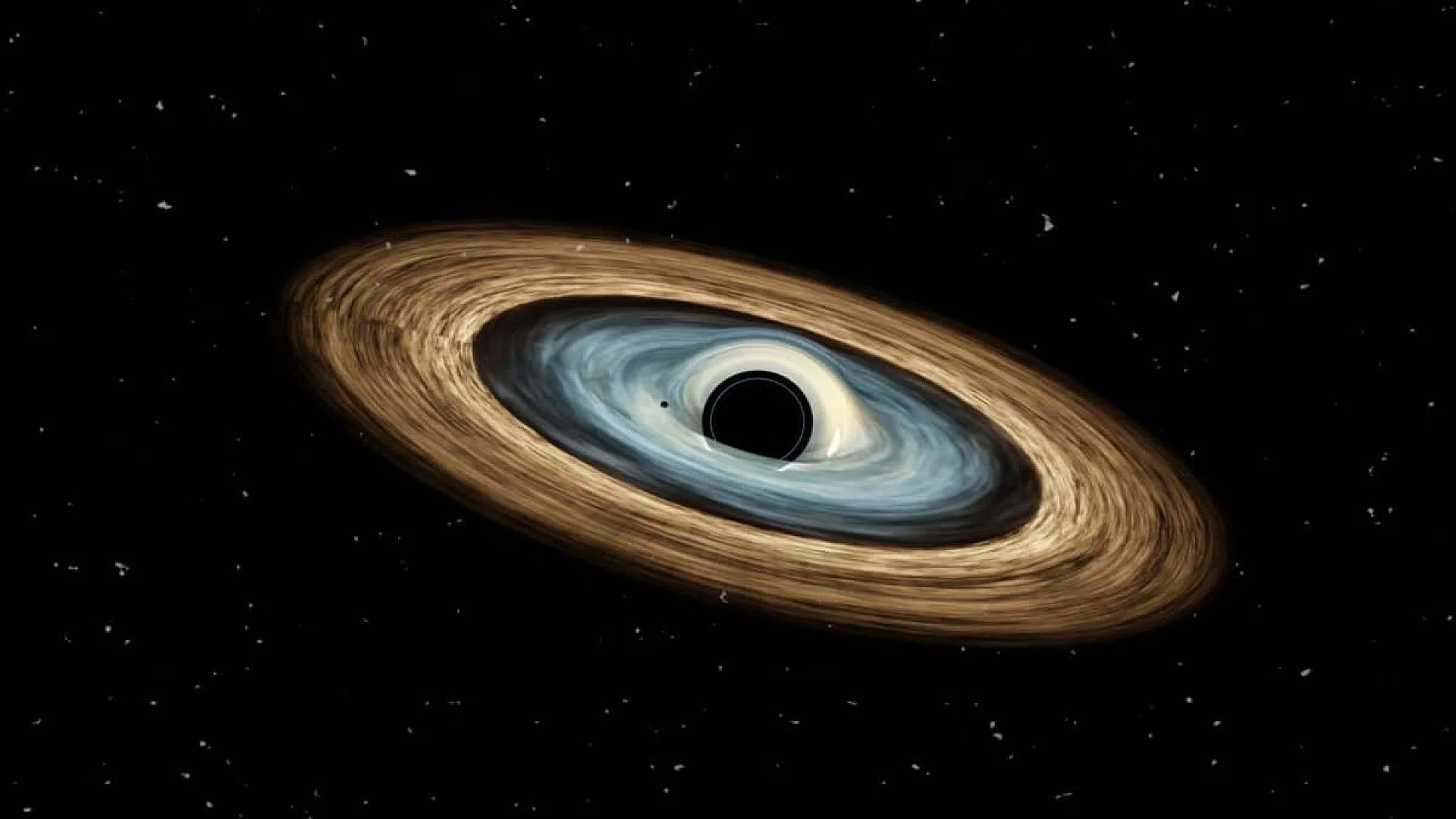
A fleeting increase in brightness from a star far beyond our galaxy has allowed astronomers to pinpoint a puzzling object that drifted between Earth and the Large Magellanic Cloud. The brightening lasted roughly an hour, and researchers suggest the lens could be either a rogue planet or a candidate primordial black hole, one of the most elusive remnants proposed by modern cosmology.
The detection was made with the Dark Energy Camera (DECam) during a campaign aimed at spotting compact bodies that are otherwise invisible. Instead of capturing light emitted by the object itself, the team relied on gravitational microlensing, a technique that measures the temporary amplification of a background star when a massive foreground object bends the light.
The results were posted to arXiv and have not yet been peer‑reviewed. After weighing several scenarios, the authors argue that the lens is far more likely to belong to the Milky Way’s dark‑matter halo than to the stellar populations of either our galaxy or the Large Magellanic Cloud.
Transient Brightening from a Distant Star
While surveying stars in the Large Magellanic Cloud, a satellite galaxy of the Milky Way, researchers recorded a brief spike in luminosity as an unseen mass crossed the line of sight.
Gravitational microlensing occurs because mass warps space‑time, allowing an intervening object to act as a lens that momentarily magnifies the light from a more distant source, according to NASA. Though the effect is often associated with stars and galaxies, planets and other compact bodies can also generate detectable microlensing signatures.
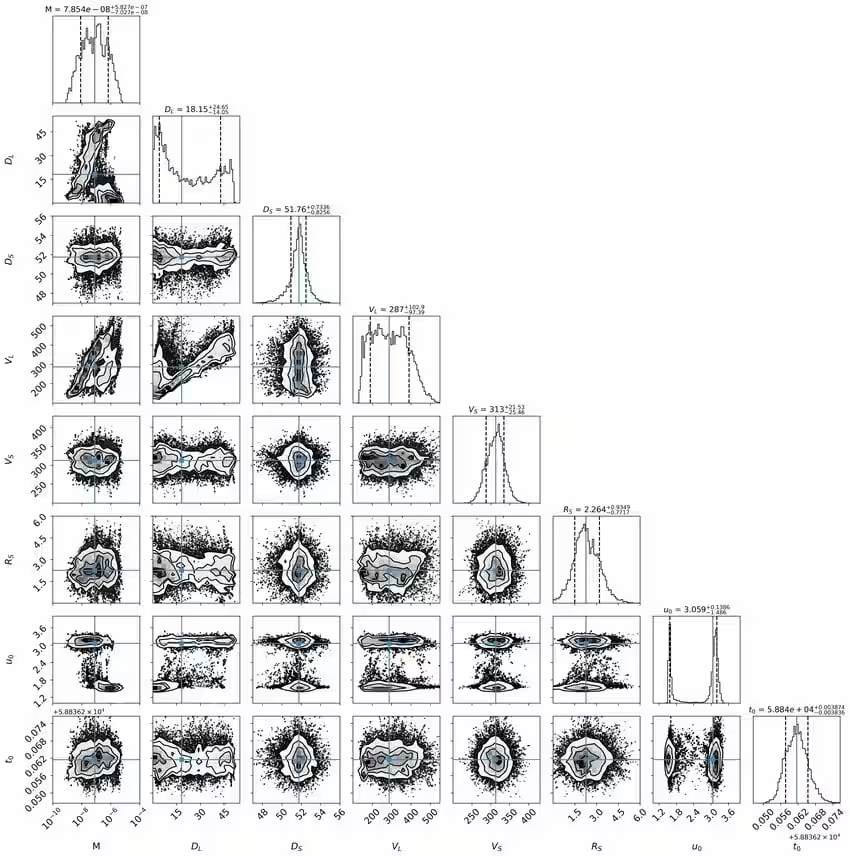
The event lasted about one hour. In their paper, the authors describe it as “a one hour‑long microlensing event” and assign the provisional name Phoebe to the lens. Because microlensing does not require the lens to emit its own light, the method is especially valuable for uncovering otherwise hidden objects.
Where the Lens Resides Determines Its Nature
A key difficulty is establishing Phoebe’s distance, a factor that dramatically influences its inferred mass. If the object lies within the Large Magellanic Cloud, its mass would be near 0.1 solar masses, suggesting a free‑floating planet or a planet orbiting a distant host star.
Such a discovery would mark the first extragalactic microlensing exoplanet detected beyond the Milky Way. The authors, however, favor an alternative explanation that they consider far more probable.
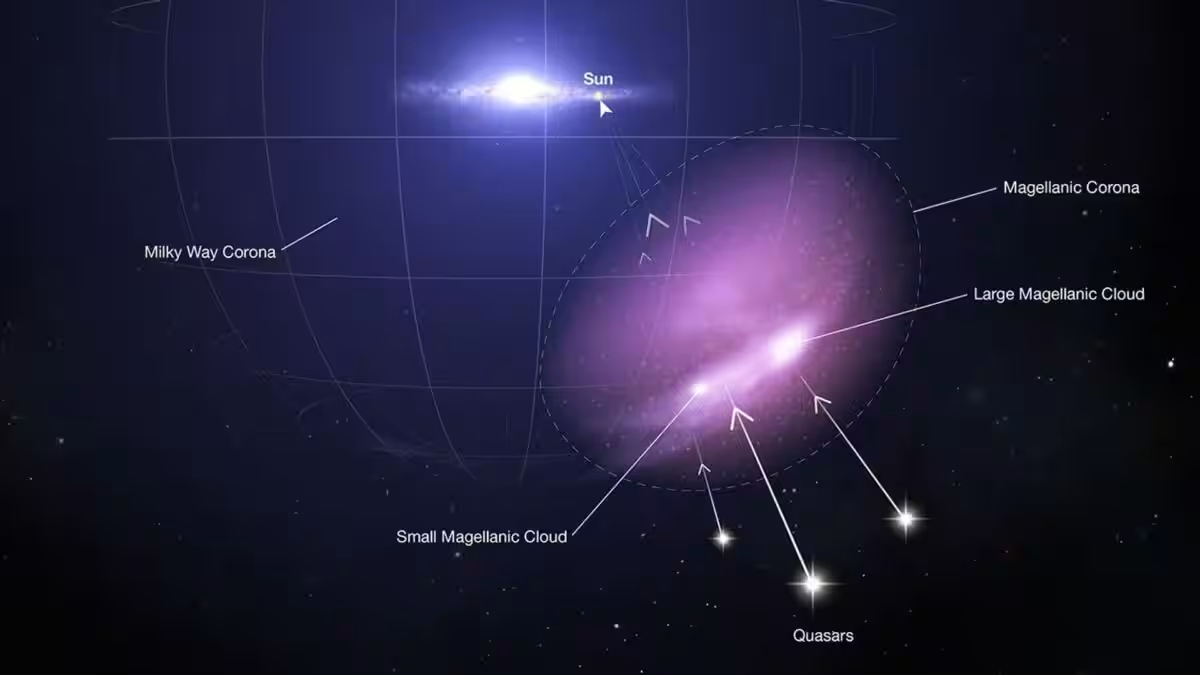
If Phoebe instead inhabits the Milky Way’s halo, its mass drops to roughly three lunar masses—far below the threshold for ordinary stellar black holes and more consistent with a compact, low‑mass object.
Implications for Primordial Black Hole Searches
The team compared several galactic density models to assess the likelihood of Phoebe’s origin. Their optical‑depth analysis, as outlined in the paper, indicates the lens is five orders of magnitude more likely to belong to the Milky Way’s dark‑matter halo than to the stellar component of either galaxy.
On that basis, the researchers propose Phoebe as “the best candidate for a PBH,” referring to a primordial black hole—a hypothetical relic that could have formed in the universe’s earliest moments, rather than from the collapse of a massive star.
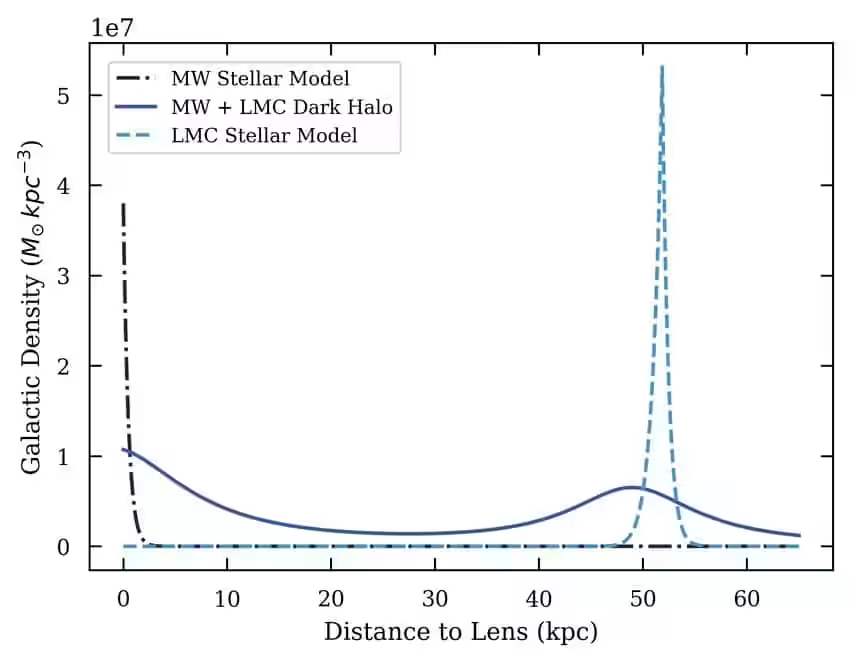
The authors conclude that Phoebe hints at a population of compact, lunar‑mass objects embedded within the Milky Way’s dark‑matter halo, potentially offering a new avenue to explore the physics of cosmic inflation.
“Phoebe suggests a population of compact, lunar‑mass objects associated with the dark matter distribution of the Milky Way,” the study team wrote, adding that it “potentially opens a new window to the physics of inflation.”
While the detection is intriguing, the authors stress that no primordial black hole has been definitively confirmed. A single short‑duration microlensing event is insufficient to draw firm conclusions; additional observations of similar events will be required to determine whether Phoebe is an unusual planet, a compact dark object, or something even more unexpected.
This article has been fact checked for accuracy, with information verified against reputable sources. Learn more about us and our editorial process.
Last reviewed on .
Article history
- Latest version
Reference(s)
- “Large Magellanic Cloud - NASA.” NASA <https://www.nasa.gov/image-article/large-magellanic-cloud/>.
- jmbrill, “Microlensing - NASA Science.”, October 25, 2023 NASA <https://science.nasa.gov/mission/roman-space-telescope/microlensing/>.
- Key, Renee. “AMPM II. A Lunar-Mass Primordial Black Hole Microlensing Candidate in the Milky Way Halo.” arXiv.org <https://arxiv.org/abs/2605.19375>.
Cite this page:
- Posted by Farah Siddiqui