That Small Hole at the Bottom of Airplane Windows: What It’s For and Why It Matters
То отвір у вікнах літаків здається дефектом, але він є частиною системи безпеки, яка працює непомітно під час польоту.
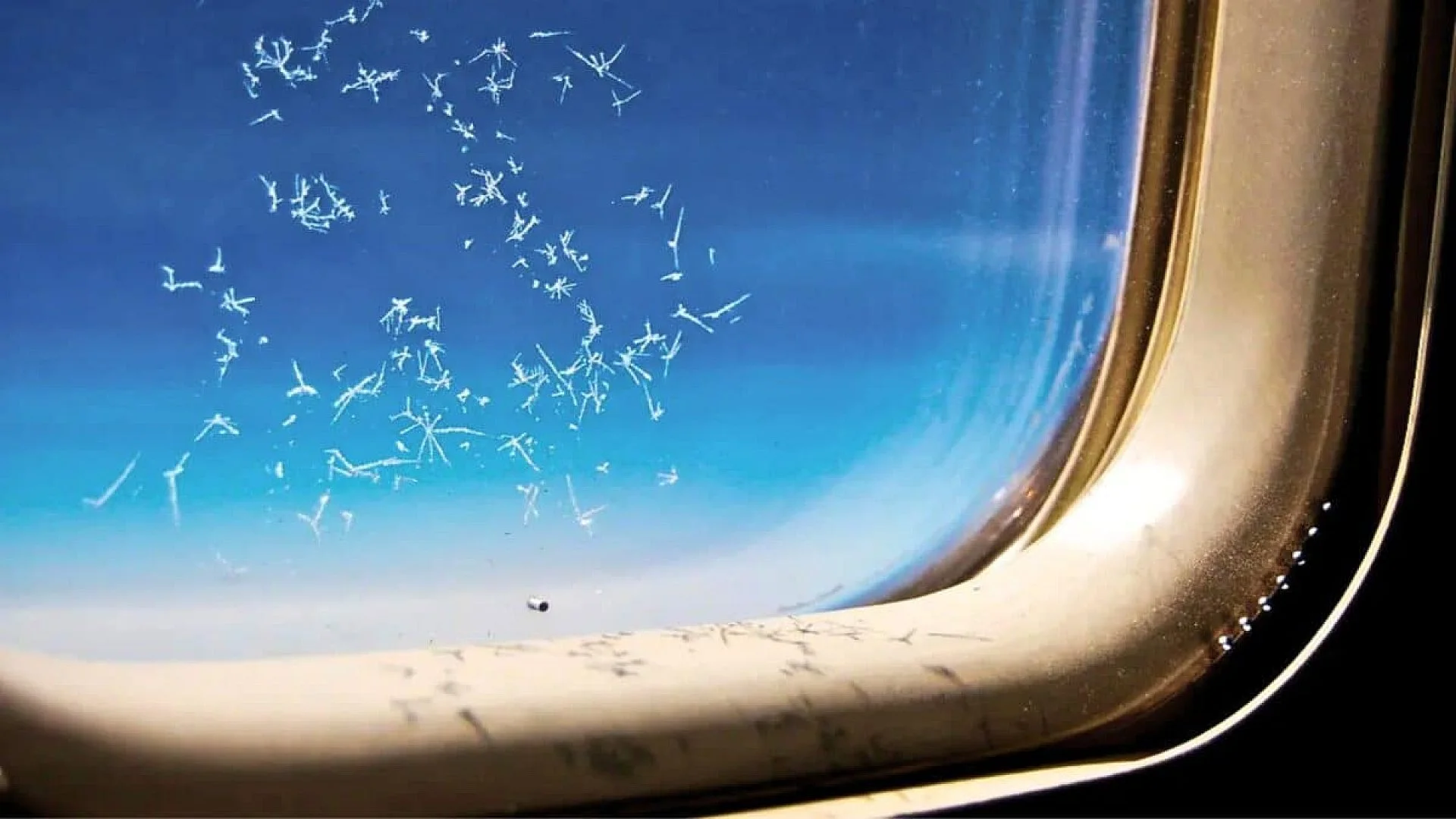
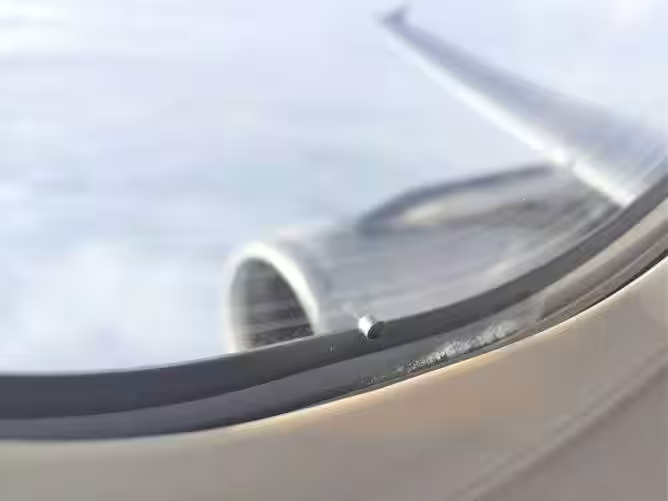
If you’ve ever settled into a seat by the window and noticed a minute opening near the bottom of the pane – sometimes encircled by a faint ring of ice – you might wonder whether it’s a manufacturing defect. In reality, that speck is a deliberately drilled breather, also known as a bleed hole, and it performs two indispensable roles every time the aircraft climbs.
The aperture is not an oversight; it is part of a carefully engineered solution. Aviation writer and pilot Mark Vanhoenacker detailed the mechanics after consulting engineers from GKN Aerospace and Boeing Commercial Airplanes in a Slate feature. Their explanation reveals how a hole no larger than a pencil tip can manage massive pressure differentials while remaining invisible to passengers.
Aircraft Windows Rely on a Triple‑Pane Construction
A quick glance shows that the transparent barrier is not a single sheet. The innermost layer, often called the “scratch pane,” is designed to absorb everyday wear – fingerprints, forehead marks, or an accidental coffee splash – shielding the more critical layers behind it. This inner pane bears no structural load.
The two outer acrylic sheets are each capable of withstanding the full cabin‑to‑ambient pressure gap on their own. Under normal cruising conditions, only one of those sheets carries the load, thanks to the breather hole that directs the pressure to the appropriate surface.
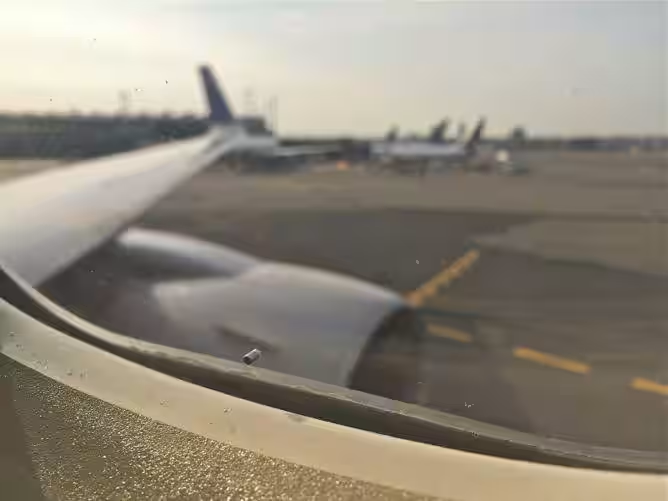
As the aircraft ascends, external air pressure drops dramatically while the cabin remains pressurized for passenger comfort. The breather hole penetrates the middle acrylic sheet, linking the cabin interior with the narrow cavity between the middle and outer layers. This connection equalizes pressure on both sides of the middle sheet, allowing the external force to bypass it and act directly on the outermost pane.
Marlowe Moncur, director of technology at GKN Aerospace – a major supplier of passenger‑cabin windows – explained to Vanhoenacker that the vent equalizes pressure so that the cabin’s load is applied solely to the outer sheet, leaving the middle sheet essentially unburdened and ready as a backup.
Should the outer pane develop a crack, the middle sheet would instantly assume the structural role. A modest air leak through the breather would be managed by the aircraft’s pressurization system, according to aerospace specialist Bret Jensen of Boeing, who told Vanhoenacker that the system is built to accommodate such a scenario.
The Tiny Aperture Also Prevents Moisture Accumulation
A secondary, more visible function of the vent is to allow moisture to escape from the cavity between the middle and outer layers. Without this pathway, humidity could condense, fog the glass, or even freeze into a solid layer that obscures the view. The vent acts as a pressure‑relief valve for trapped water vapor.
Jensen confirmed that by venting moisture, the opening curtails the formation of fog or frost. In effect, the same feature that safeguards structural integrity also preserves the clarity of the passenger’s outlook.
At cruising altitude, outside temperatures can plunge to minus 70 °F, chilling the outer surface of the window. When warm, humid cabin air encounters that cold spot near the breather, a thin ring of condensation can freeze, producing a delicate frost pattern around the hole.
Moncur suggested that the circular frost results from a combination of pane temperature, cabin humidity, and the airflow through the vent. He described the phenomenon as an interesting physics problem, but emphasized that the pattern is not a warning sign – it is simply visual evidence of the system at work.
So the next time you look out from a window seat, remember that the modest opening is a purposeful element of aerospace design. It equalizes pressure, offers a secondary structural barrier, and keeps the glass clear, while any frost that appears around it is just a harmless by‑product of a well‑engineered safety feature.
This article has been fact checked for accuracy, with information verified against reputable sources. Learn more about us and our editorial process.
Last reviewed on .
Article history
- Latest version
Reference(s)
- “All — Mark Vanhoenacker.” Mark Vanhoenacker <https://markvanhoenacker.com/otherwriting/all>.
- Vanhoenacker, Mark. “Why Do Airplane Windows Have Tiny Holes?.”, May 29, 2015 Slate <https://slate.com/human-interest/2015/05/whats-that-thing-why-are-there-holes-in-airplane-windows.html>.
Cite this page:
- Posted by Farah Siddiqui