Scientists Find a Hidden Threshold in Water That Explains Why It’s Weird
Scientists have uncovered direct evidence of a long-theorized “critical point” in supercooled water, revealing how liquid water can split into two distinct forms before freezing.
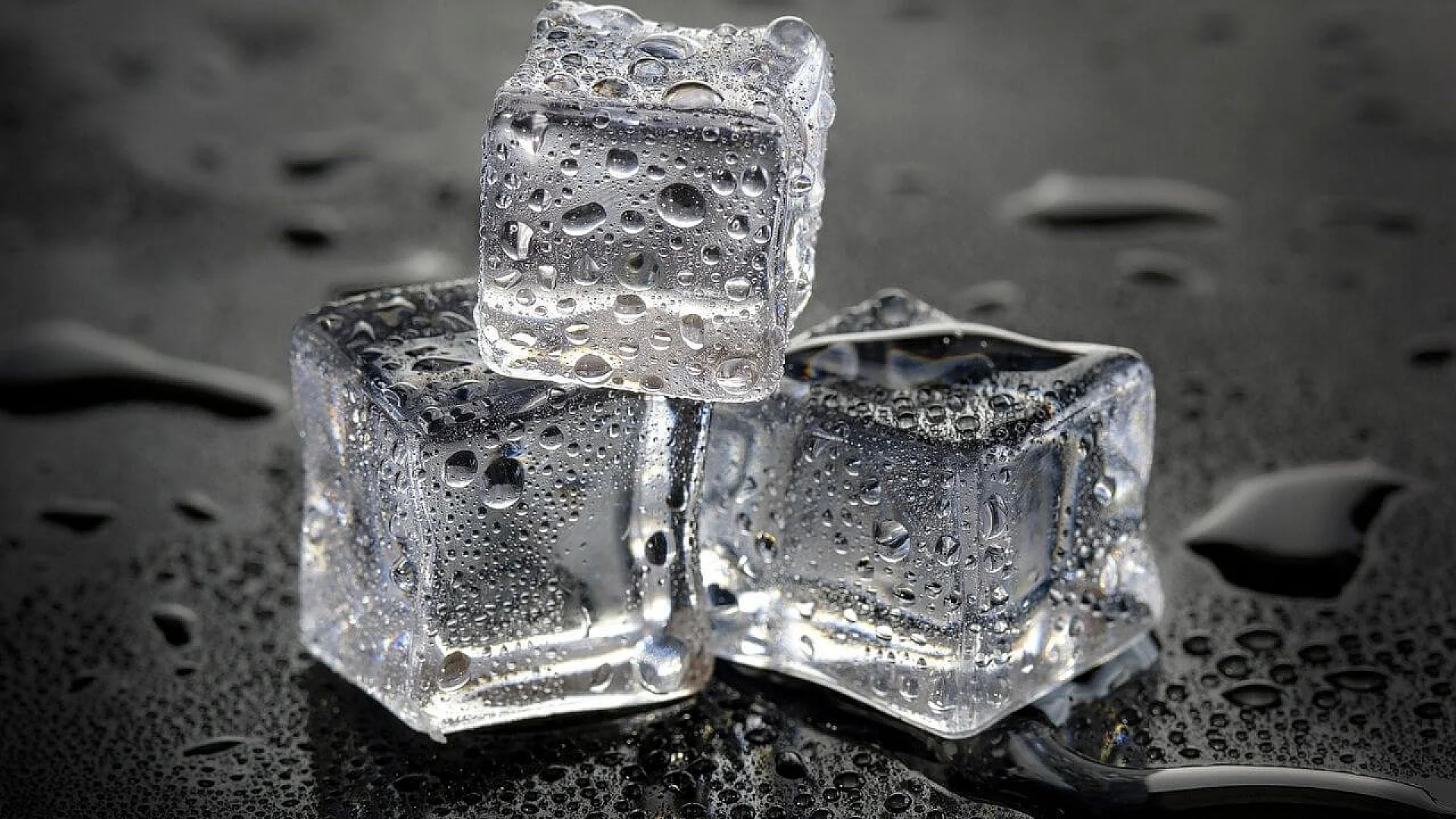
There is a moment, just before water freezes, when its behavior becomes almost unrecognizable.
At everyday temperatures, water seems predictable. It flows, evaporates, freezes. Yet as it cools toward its freezing point, it begins to defy expectations in subtle but profound ways. Scientists have long suspected that something unusual happens in this narrow window, a hidden transformation that might explain why water behaves so differently from other liquids.
Now, researchers have uncovered direct evidence of a long-theorized phenomenon, a critical point buried deep within supercooled water. This elusive threshold could finally explain some of the most puzzling properties of the substance that shapes oceans, climates, and life itself.
The Mystery of Supercooled Water
Under normal conditions, water freezes at 0 degrees Celsius. But with careful control of pressure and impurities, it can remain liquid well below that point. This state, known as supercooled water, exists in a fragile balance, poised on the edge of freezing.
For decades, physicists have proposed that supercooled water is not just one uniform liquid. Instead, it may split into two distinct forms. One is a high-density liquid, where molecules are packed more tightly. The other is a low-density liquid, with a more open structure.
This idea, often referred to as a “liquid-liquid transition,” has been difficult to confirm. The problem lies in timing. Water tends to crystallize into ice so quickly in this temperature range that capturing its intermediate states has proven nearly impossible.
Scientists have described this region as a kind of experimental blind spot, a “no man’s land” where measurements break down and evidence remains elusive.
A Glimpse Into the Unseen
The new study changes that.
Using an innovative combination of rapid heating and ultrafast X-ray imaging, researchers were able to observe water in this fleeting state before it solidified. By pushing specially prepared ice through controlled conditions, they effectively forced water to pass through the suspected transition zone.
What they saw was striking.
The two distinct liquid forms appeared to merge as conditions changed, giving way to a single, highly unstable state. This transformation did not occur gradually. Instead, it converged at a specific threshold, a critical point where the distinction between the two liquid phases disappears.
For the first time, scientists were able to directly observe evidence of this transition as it unfolded in real time.
The Critical Point That Changes Everything
In physics, a critical point marks a boundary where distinct phases become indistinguishable. Beyond this point, matter enters a new regime where its properties fluctuate dramatically.
In the case of supercooled water, this critical point appears to sit at extremely low temperatures and high pressures. While its exact location has not yet been pinned down, the study narrows it to around minus 63 degrees Celsius and roughly 1,000 times atmospheric pressure.
What makes this discovery remarkable is not just the existence of the critical point, but its implications.
As water approaches this threshold, its internal dynamics slow down dramatically. Molecular rearrangements take longer, and the system becomes increasingly unstable. Eventually, it can no longer avoid transitioning into a different structural state.
This behavior has drawn comparisons to extreme physical systems, where approaching a critical boundary fundamentally alters how matter behaves.
Why Water Breaks the Rules
Water has always been an outlier in the world of chemistry and physics.
Most substances become denser as they cool, but water does the opposite once it approaches freezing. Ice floats because its solid form is less dense than its liquid form, a property that is essential for aquatic ecosystems. Without it, lakes and oceans would freeze from the bottom up, drastically altering life on Earth.
This is only one of many anomalies. Water also exhibits unusual heat capacity, surface tension, and thermal expansion behavior. Scientists have long suspected that these properties are connected, but a unifying explanation has remained out of reach.
The newly observed critical point offers a compelling framework.
If water can exist as two competing liquid structures, then its strange properties may arise from the shifting balance between them. As temperature and pressure change, the proportion of high-density and low-density regions within the liquid may fluctuate, producing the anomalies observed at larger scales.
The Experimental Breakthrough
Capturing this behavior required pushing the limits of experimental physics.
Researchers used infrared laser pulses to rapidly heat samples, preventing them from freezing too quickly. At the same time, they employed ultrafast X-ray techniques to capture snapshots of the molecular structure at incredibly short timescales.
This approach allowed them to track how water’s structure evolved as it passed through the critical region.
Instead of relying on indirect measurements or theoretical models, the team could observe the transformation directly. They watched as the distinction between the two liquid phases faded, replaced by a single, fluctuating state that exists only under extreme conditions.
This represents one of the clearest pieces of evidence yet for the liquid-liquid transition theory.
A Step Toward Resolving Decades of Debate
The idea that water might have a hidden critical point has been debated for years.
Some models predicted its existence, while others suggested alternative explanations for water’s unusual behavior. Without direct evidence, the question remained unresolved.
This new work shifts the balance.
By narrowing down the conditions under which the critical point occurs and demonstrating its effects experimentally, researchers have provided a foundation for future studies. While the exact location of the critical point still needs to be determined more precisely, its existence now appears far more certain.
This allows scientists to refine their models and focus on understanding how this phenomenon influences water’s behavior across different environments.
Why This Matters Beyond Physics
At first glance, the discovery may seem abstract, relevant only to specialists studying molecular interactions.
But water is not just another substance. It is the medium in which life emerged and continues to exist. Its properties influence everything from climate systems to biological processes.
Understanding how water behaves under extreme conditions has wide-reaching implications.
In climate science, it could improve models of how water interacts with temperature and pressure changes in the atmosphere and oceans. In biology, it may shed light on how water supports complex molecular structures within cells. In planetary science, it could help explain the behavior of water on other worlds, where conditions differ dramatically from those on Earth.
Even geological processes, such as the formation of ice in glaciers or the behavior of water deep within the Earth’s crust, could be influenced by these findings.
The Bigger Question About Life
One of the most intriguing aspects of this discovery lies in its connection to life itself.
Water is the only known substance that exists in a supercritical regime under conditions compatible with life. It is also indispensable to every known biological system.
This raises a deeper question. Are water’s unusual properties simply a coincidence, or are they part of a set of conditions that make life possible?
If the critical point plays a role in shaping water’s behavior, it may also influence how biological systems function at a fundamental level. Researchers are only beginning to explore this possibility.
What Comes Next
Despite the progress, many questions remain unanswered.
The precise location of the critical point still needs to be determined with greater accuracy. Scientists also want to understand how this transition affects water’s properties across different scales, from molecular interactions to large-scale systems.
Future experiments will likely push deeper into the “no man’s land” of supercooled water, using even faster and more precise techniques to capture its behavior.
Each step brings researchers closer to a complete picture of how water works, a goal that has proven surprisingly complex for such a familiar substance.
Why This Matters
Water is everywhere, yet its behavior is still not fully understood. Discovering a hidden critical point helps explain why it defies the rules that govern most other liquids. This insight could reshape how scientists study everything from climate systems to the chemistry of life.
A Familiar Substance, Newly Revealed
It is easy to overlook water because of its familiarity. It fills glasses, forms clouds, and freezes into ice cubes without drawing much attention.
Yet beneath that simplicity lies a complex and dynamic system, one that continues to surprise scientists even after centuries of study.
The discovery of a hidden critical point in supercooled water is a reminder that even the most common substances can hold profound secrets. As researchers continue to explore these hidden states, they are not just learning about water, but about the fundamental principles that govern matter itself.
The research was published in Science on March 26, 2026.
This content has been reviewed by subject-matter experts to ensure scientific accuracy. Learn more about us and our editorial process.
Last reviewed on .
Article history
- Latest version
Reference(s)
- You, Seonju., et al. “Experimental evidence of a liquid-liquid critical point in supercooled water.” Science, vol. 391, no. 6792, 26 March 2026, pp. 1387-1391., doi: 10.1126/science.aec0018. <https://doi.org/10.1126/science.aec0018>.
Cite this page:
- Posted by John Williams