NASA and US Space Force Team Up for Game-Changing Mission to Uncover the Hidden Truth Behind Earth’s ‘Ring Current’
NASA’s STORIE mission aims to deliver fresh perspectives on Earth’s ring current, a vital component of space weather that influences satellites, electrical grids, and other critical systems.
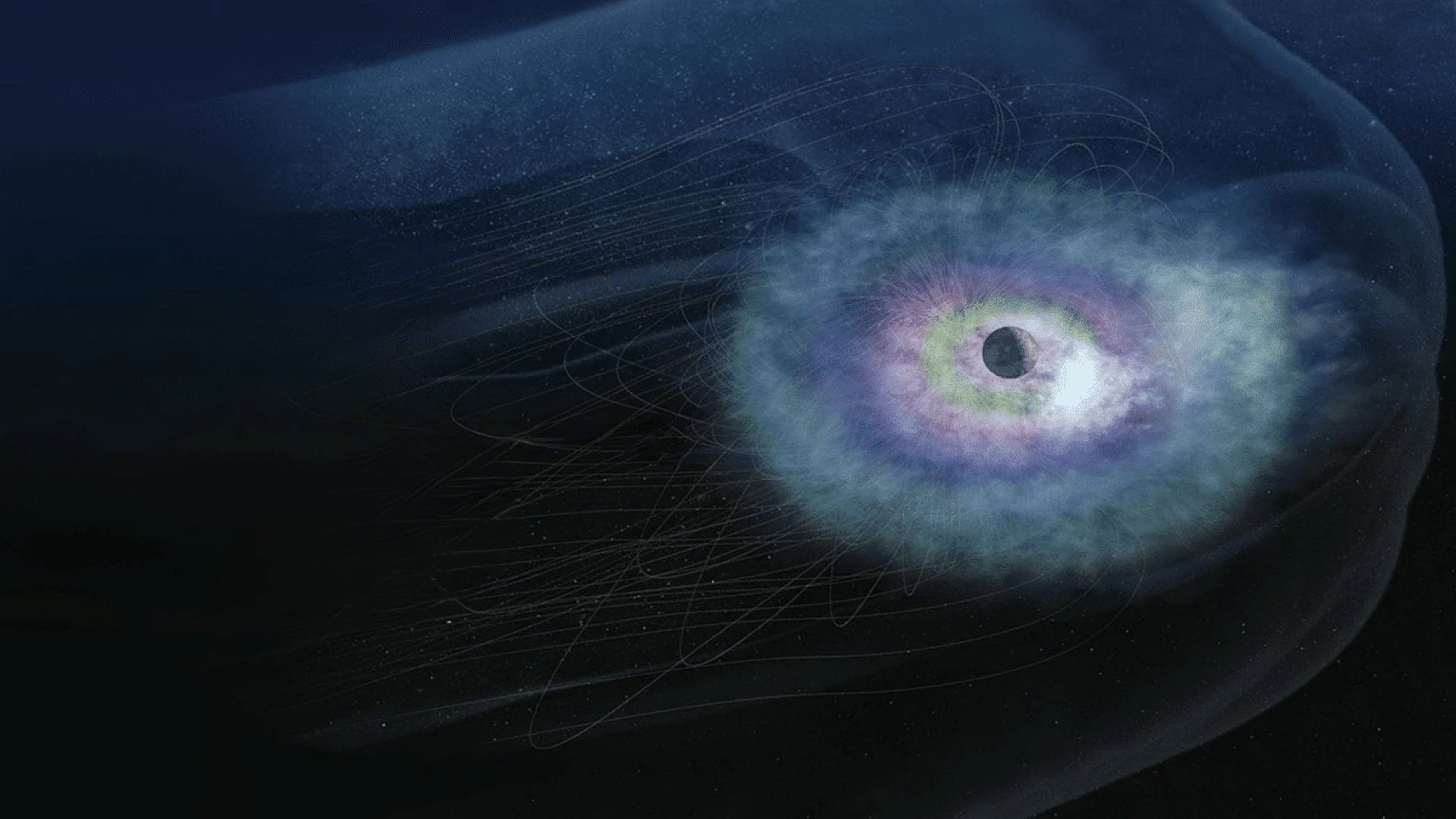
NASA’s STORIE mission is poised to revolutionize our understanding of space weather and its impact on technology by offering an unparalleled, inside-out view of Earth’s enigmatic ring current. This groundbreaking mission promises to unlock the secrets behind a region of space that holds the key to predicting solar storms and safeguarding critical infrastructure on Earth.
Unraveling the Mysteries of Earth’s Ring Current
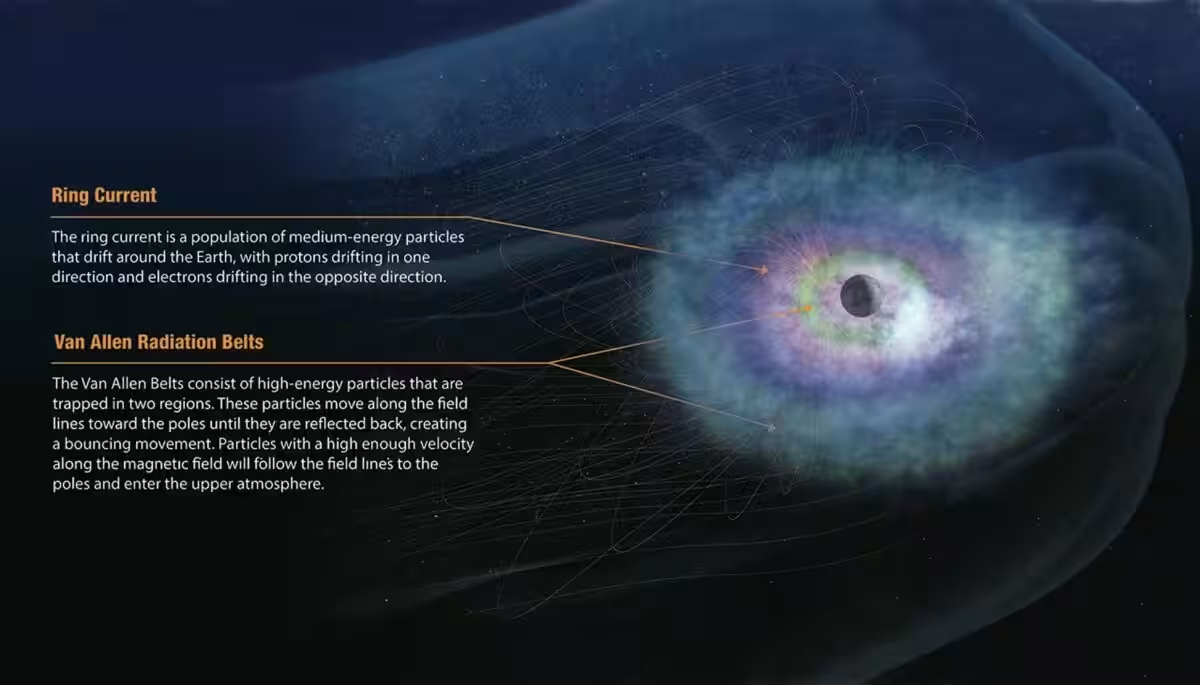
Earth’s magnetic field acts as a giant shield, capturing electrically charged particles from space. These particles form what is known as the ring current, a doughnut-shaped band surrounding our planet. Though invisible to the naked eye, this dynamic region plays a pivotal role in the Earth’s interaction with space weather, which can have far-reaching effects on satellites, communication systems, and power grids.
Credit: NASA/Mary Pat Hrybyk-Keith/Kristen Perrin
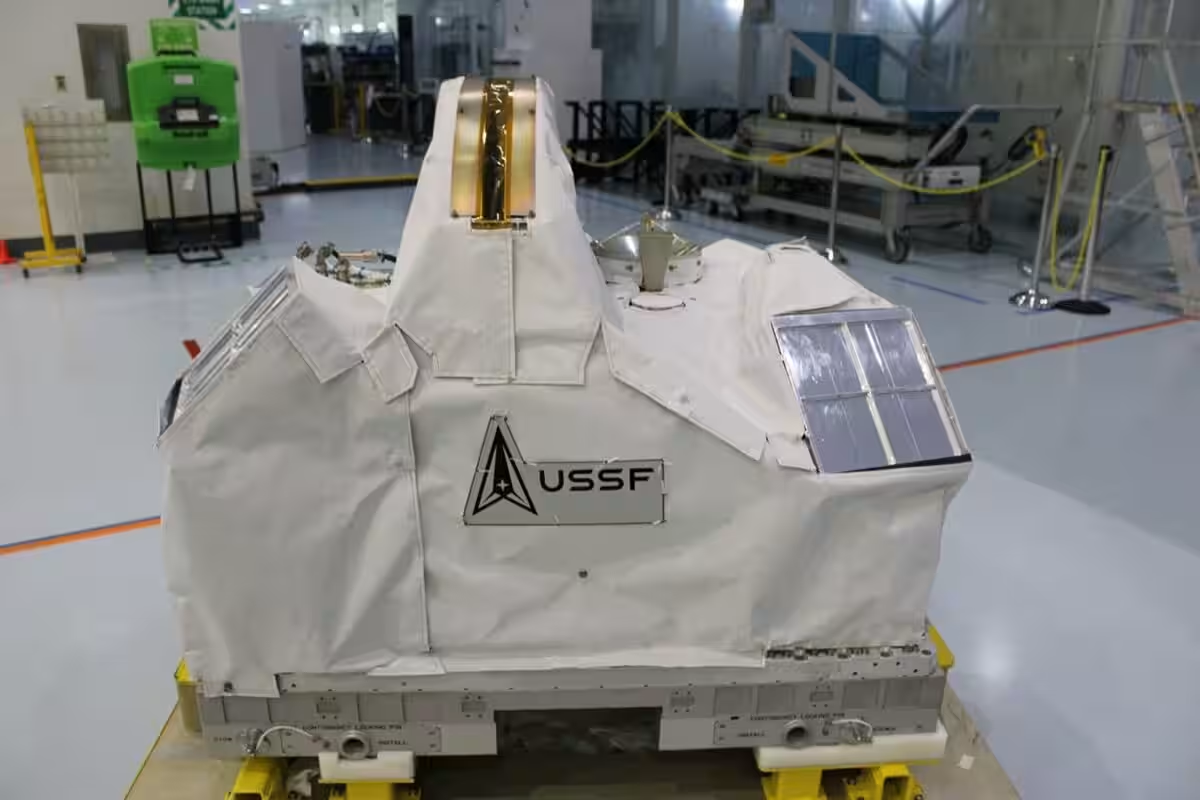
The STORIE (Storm Time O+ Ring Current Imaging Evolution) mission is designed to shed light on this elusive phenomenon. Scheduled for launch aboard the SpaceX 34th commercial resupply mission to the International Space Station, STORIE aims to measure energetic neutral atoms (ENAs), which provide a glimpse into the behavior of the particles trapped in Earth’s magnetic field. Through this, scientists hope to understand the origins and fluctuations of the ring current, offering insights into how Earth responds to space weather.
Unlocking the Secrets of Trapped Particles
One of the most intriguing aspects of the ring current is its unpredictable nature. It changes in response to solar activity, fluctuating in size and intensity. These changes can lead to magnetic disturbances that affect not only satellites but also critical infrastructure like pipelines and power lines on Earth. The charged particles in the ring current, positively and negatively charged, move in opposite directions, creating electrical currents that can influence these systems.
Alex Glocer, STORIE’s principal investigator at NASA’s Goddard Space Flight Center, notes,
“These particles have significant space weather impacts. We want to understand how that trapped population is built up, and where it comes from.”
Understanding these particles is essential for forecasting solar storms, which can wreak havoc on technological systems here on Earth.
The challenge has been that these particles are invisible and can’t be directly imaged with traditional cameras. This is where the STORIE mission’s unique capabilities come into play. By detecting the glow of energetic neutral atoms, which are formed when charged particles lose their charge and become neutral, STORIE will provide crucial data on the structure and composition of the ring current.
Credit: U.S. Space Force
A Revolutionary Perspective on Space Weather
What makes STORIE even more exciting is its inside-out perspective from the International Space Station. This vantage point allows the instrument to scan the ring current from an angle that previous missions could not achieve.
“From STORIE’s inside-out perspective, you have Earth behind you, and you can see this trapped population near the equator that was hard for other missions to observe,” Glocer explains.
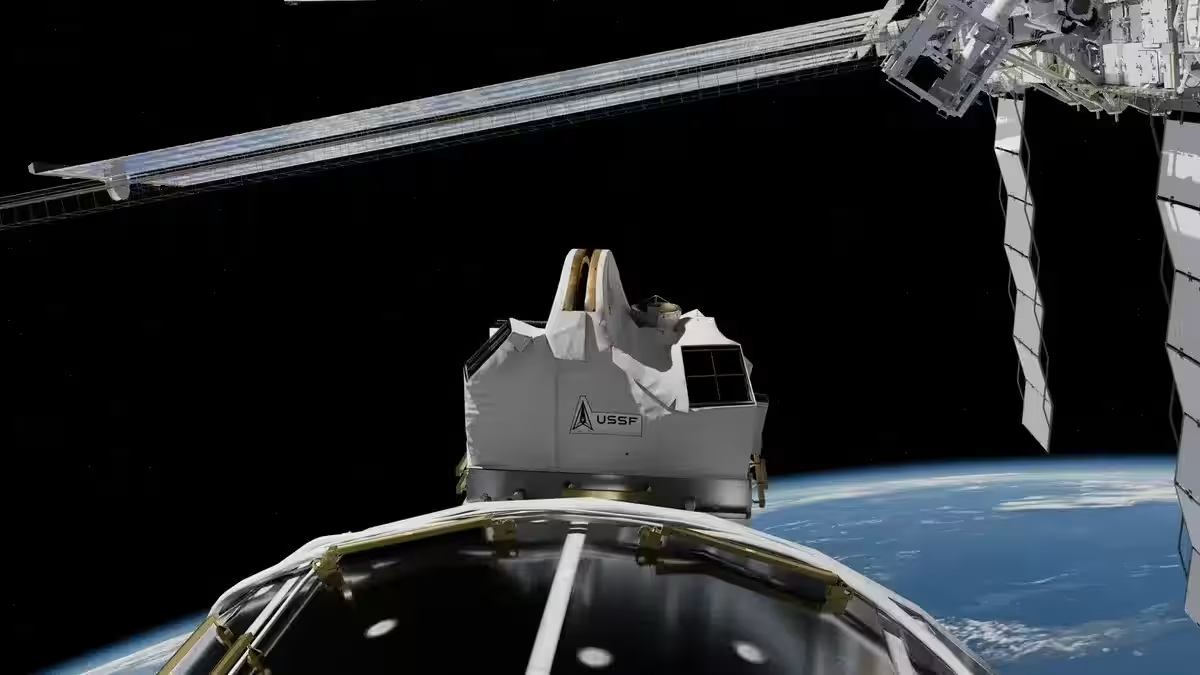
Image credit: NASA/US Space Force
STORIE’s ability to track the behavior of these particles is key to understanding their origins. Are they primarily fed by particles from the Sun, or are they sourced from Earth’s atmosphere? Oxygen atoms (O+) are a key clue. “When you see oxygen, that comes from the atmosphere. You get very little of that from the solar wind,” says Glocer. By measuring the abundance of oxygen in the ring current, STORIE will determine whether Earth’s atmosphere or the solar wind plays a larger role in supplying the particles.
NASA/Gonzalo Cucho-Padin
Monitoring Solar Storms and Their Impact
Solar storms, triggered by outbursts from the Sun, can disrupt Earth’s magnetic environment and affect space-based technologies. The ring current is particularly volatile during these storms, and STORIE’s observations will provide a detailed look at how the current evolves during these events.
During its six-month mission, STORIE will monitor the ring current’s behavior both during solar storms and in periods of solar calm. This comprehensive dataset will help scientists better understand how these space weather events unfold and allow for improved predictions of their impact on Earth’s systems.
By studying the ring current’s fluctuations, STORIE also aims to offer critical insights into how energy from the ring current can transfer to Earth’s upper atmosphere, affecting satellites. This transfer of energy leads to increased drag on spacecraft, causing them to deorbit more quickly than expected, a major concern for the growing number of satellites orbiting our planet.
Protecting Earth from Space Weather
The data collected by STORIE is not just for scientific curiosity. Understanding the dynamics of the ring current will help improve space weather predictions, which are crucial for protecting modern technology. From communication satellites to power grids and even the infrastructure of global internet networks, space weather has a real-world impact on everything we rely on.
By shedding light on the complexities of the ring current, STORIE will provide valuable information to mitigate the risks associated with solar storms and enhance the resilience of space-based technologies. As scientists uncover more about this hidden force in Earth’s environment, they are laying the groundwork for a safer and more prepared world in the face of ever-changing space weather.
This article has been fact checked for accuracy, with information verified against reputable sources. Learn more about us and our editorial process.
Last reviewed on .
Article history
- Latest version
Reference(s)
- Thomas, Vanessa. “NASA's STORIE Mission to Tell Tale of Earth's Ring Current - NASA Science.”, May 1, 2026 NASA <https://science.nasa.gov/science-research/heliophysics/nasas-storie-mission-to-tell-tale-of-earths-ring-current/>.
Cite this page:
- Posted by Farah Siddiqui