A College Student Mixed Water, Oil, and Nickel and Accidentally Created a Liquid That Refused to Obey Thermodynamics
Student’s lab shake accidentally recreates ancient liquid structure, challenging fundamental scientific principle
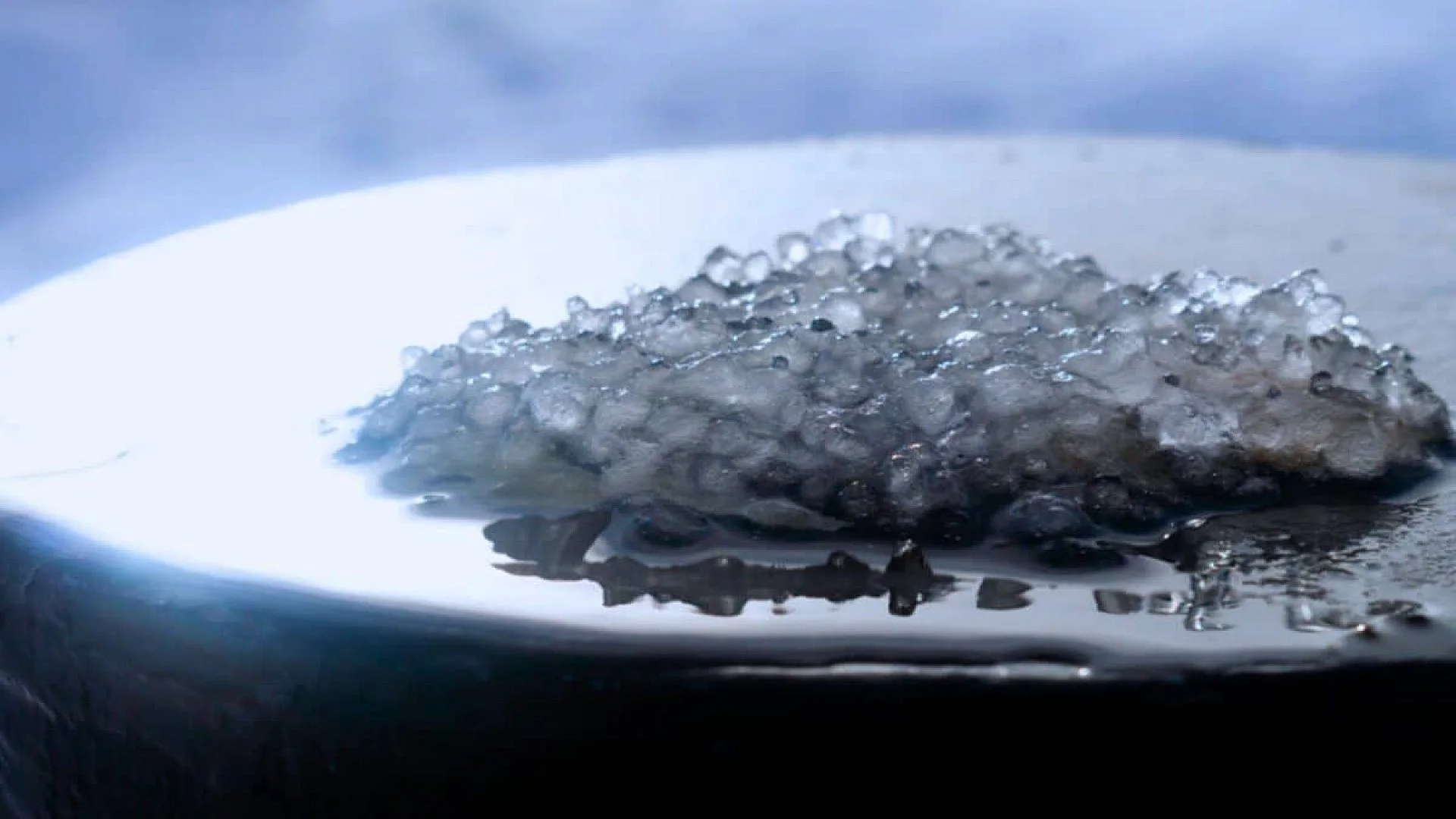
While walking through the chemistry wing at the University of Massachusetts Amherst, graduate researcher Anthony Raykh carried a modest vial that held a mixture of water, oil and magnetized nickel particles. Repeated shaking did not lead to the expected separation; instead, the fluid consistently reshaped itself into a graceful, urn‑like form reminiscent of ancient Greek pottery.
The observation points to a previously undocumented “shape‑recovering” liquid, a phase that appears to sidestep traditional expectations derived from the laws governing energy and entropy.
A Kitchen‑Style Test Yields an Unexpected Form
Raykh, whose focus lies in polymer science and engineering, set out to explore how magnetic particles behave when mixed with liquids. Rather than using the conventional solid stabilizers for oil‑water emulsions, he introduced nickel nanoparticles that carry a magnetic moment.
In a typical vinaigrette, vigorous agitation temporarily blends the components, but they soon separate into tiny spherical droplets to minimize interfacial area—a behavior that aligns neatly with thermodynamic predictions. Raykh’s vial, however, produced a markedly different outcome.
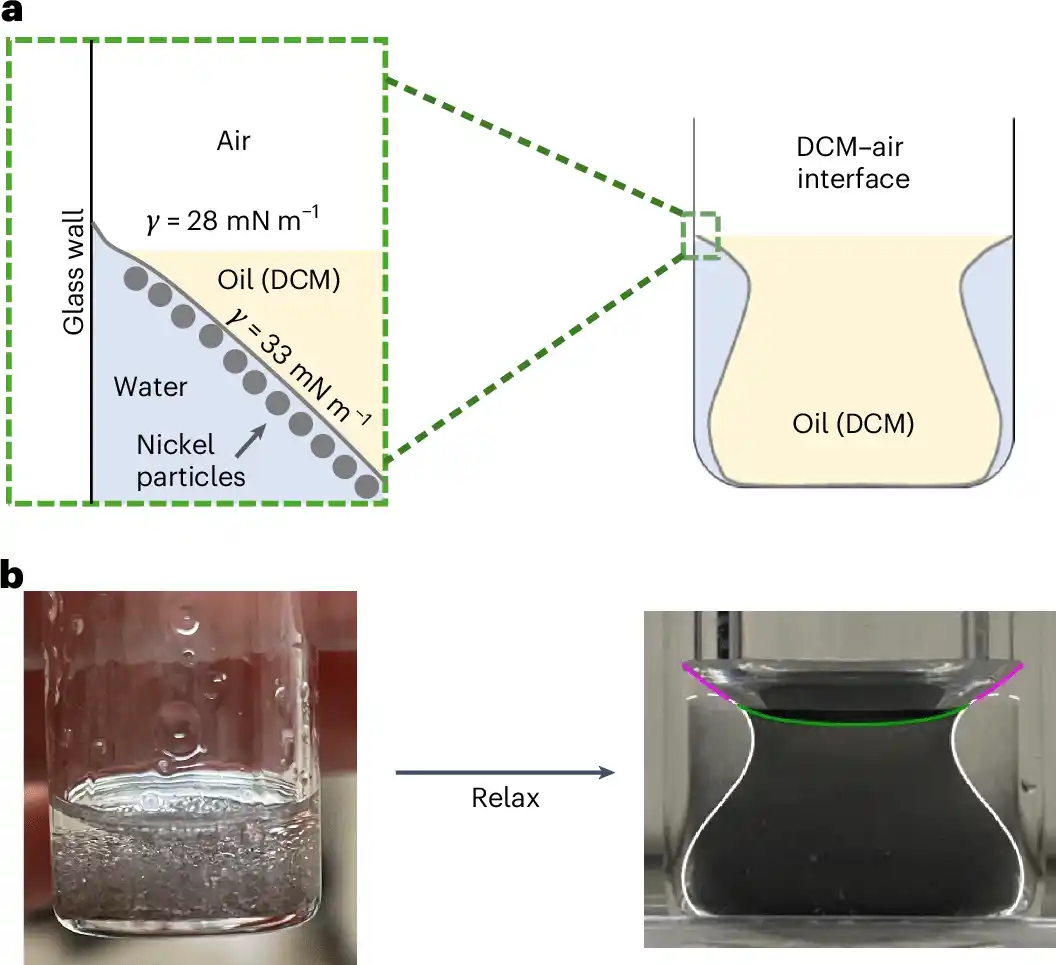
“To my surprise, the mixture settled into a pristine urn shape,” Raykh told university officials. The configuration reappeared after each round of vigorous shaking, indicating a robust, repeatable response.
The urn geometry is striking because it possesses a larger surface area than the energetically favored sphere. Conventional thermodynamics would predict a transition toward the shape with the smallest possible interfacial area.
Magnetic Forces Override Conventional Interfacial Behavior
To unravel the paradox, researchers from UMass Amherst joined forces with collaborators at Tufts and Syracuse. Together they performed a series of laboratory tests and high‑resolution simulations.
“When you examine the individual nanoparticles that line the water‑oil boundary, you obtain detailed insight into how distinct morphologies assemble,” explained David Hoagland, professor and senior author of the study.
In ordinary oil‑water blends, added particles typically lower the interfacial tension, encouraging mixing. In Raykh’s system, the nickel particles were so strongly magnetized that they actually raised the tension at the interface. This heightened tension forced the boundary into a stable, curved configuration that mirrors an urn.
The underlying mechanism traces back to in‑plane dipolar magnetic interactions among the particles. These forces suppress the formation of conventional emulsions and stabilize the unconventional shape.
A Curious New Phase, Yet to Find a Use
The authors stress that the discovery currently lacks a direct application. “While there’s no application for his novel discovery yet,” the university noted, “Raykh is excited to see how this never before seen state can influence the field of soft matter physics.”

Co‑author Thomas Russell summed up the spirit of the work: “When you encounter something that appears impossible, you have to investigate.” At present the shape‑recovering liquid remains a laboratory curiosity, but its existence challenges the perceived rigidity of thermodynamic rules and opens fresh avenues for fundamental research. The project was supported by the U.S. National Science Foundation and the U.S. Department of Energy.
This article has been fact checked for accuracy, with information verified against reputable sources. Learn more about us and our editorial process.
Last reviewed on .
Article history
- Latest version
Cite this page:
- Posted by Farah Siddiqui