Webb Detects Ancient Nuclear Disk, Revealing Galaxies Formed Mature Structures in Record Time
Webb telescope spots a galaxy forming a central structure billions of years earlier than models predict, reshaping view of early galaxy evolution.
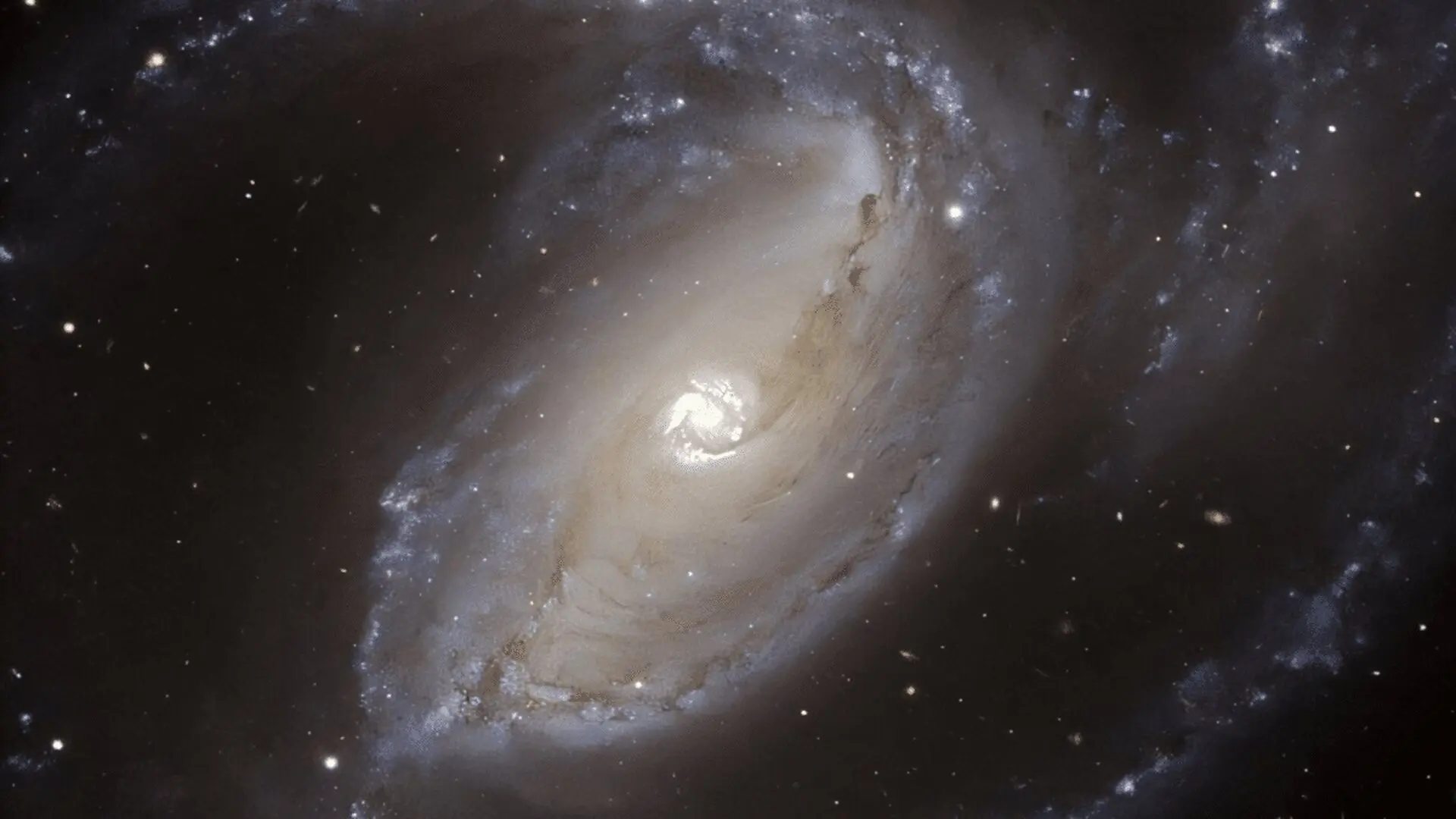
A team of astronomers has identified the farthest known nuclear disk within a galaxy, showing that intricate galactic architectures were already taking shape merely 4.5 billion years after the Big Bang. The result, detailed in Monthly Notices of the Royal Astronomical Society, offers fresh insight into the organization of galaxies during the universe’s formative epoch.
James Webb Telescope Uncovers a Distant Central Disk
Researchers from Durham University leveraged the extraordinary sensitivity and resolution of the James Webb Space Telescope to probe a galaxy as it appeared when the cosmos was still young. Their analysis revealed a compact, rapidly rotating nuclear disk at the galaxy’s core—a feature routinely observed in nearby mature systems but never before at such an early cosmic age.
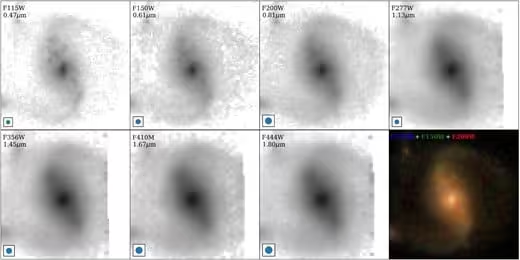
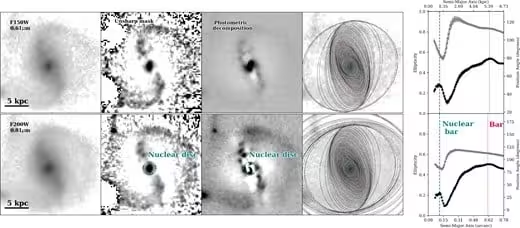
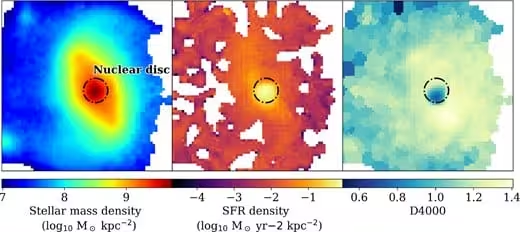
The high‑resolution JWST data allowed the team to disentangle the galaxy’s constituent parts, isolating a region brimming with young stars that confirms the nuclear disk is an actively growing structure rather than a relic of earlier epochs.
The findings, published in Monthly Notices of the Royal Astronomical Society, suggest that some early galaxies assembled organized internal systems far more rapidly than conventional models have predicted.
Stellar Bar May Have Fueled Early Central Disk Formation
The observed nuclear disk appears to be linked to a pronounced stellar bar extending across the host galaxy. In modern spiral galaxies, such bars act as conduits, channeling gas and stars inward and fostering the development of dense central regions.
While previous studies hinted at the presence of bars in the early universe, direct evidence of their role in shaping young galaxies has been scarce. The new data provide a concrete example of a bar driving material toward the core, creating the conditions necessary for a compact, star‑forming disk.
Lead author Zoe Le Conte of Durham University emphasized the broader impact of the discovery, noting, “The extraordinary images and novel results from the James Webb Space Telescope continue to reveal that mature galaxies exist much earlier than we previously thought.”
The distant nuclear disk mirrors many attributes of its modern counterparts—compact morphology, a youthful stellar population, and a coherent growth pattern—indicating that some galaxies reached advanced developmental stages far sooner than anticipated.
Implications for Early Galaxy Evolution Timelines
The presence of a well‑ordered nuclear disk merely 4.5 billion years after the Big Bang challenges long‑standing assumptions about the pace of galactic maturation. Rather than growing solely through random accretion of gas and stars, the observed system appears to have been sculpted by internal dynamics, notably the inflow of material along the stellar bar.
These results imply that the same physical mechanisms governing nearby spiral galaxies were already at work in the universe’s youth. Consequently, the timeline for the emergence of complex galactic structures may need to be revised upward.
As JWST continues to open a window onto previously inaccessible epochs, each newly characterized distant galaxy refines our understanding of how quickly recognizable structures emerged in the early universe. The team plans follow‑up observations to map the motions of stars and gas within the system, aiming to pinpoint the exact processes that built the nuclear disk and to quantify the efficiency of bar‑driven inflows.
This article has been fact checked for accuracy, with information verified against reputable sources. Learn more about us and our editorial process.
Last reviewed on .
Article history
- Latest version
Cite this page:
- Posted by Aisha Ahmed