ALMA Detects Deep Carbon Monoxide on Uranus, Hinting at Ice‑Rich Interior
A fresh atmospheric signal on Uranus hints it may hold far more ice than earlier estimates, reshaping our view of the ice giant’s composition.
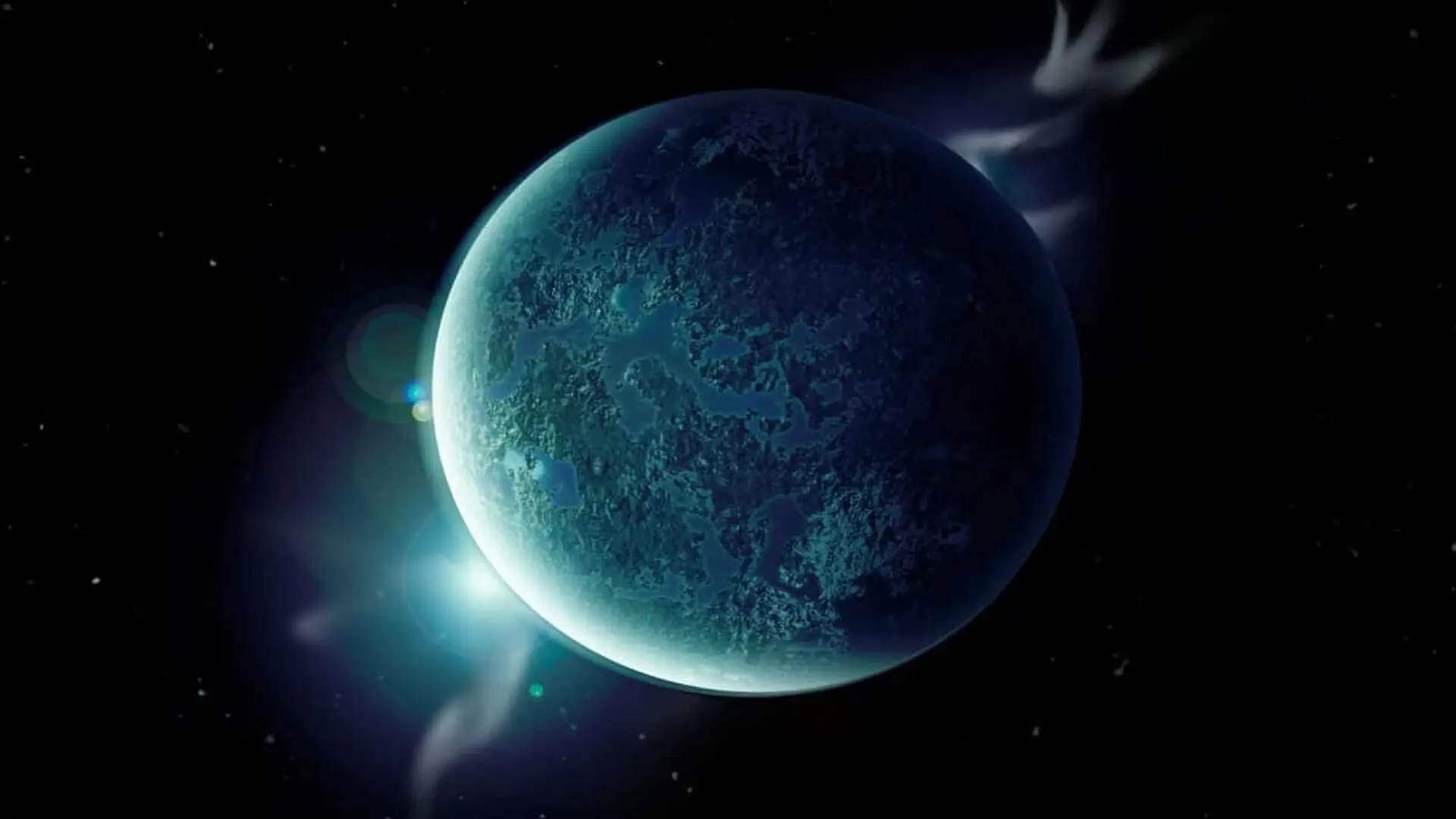
A fresh detection of carbon monoxide deep within Uranus’ atmosphere is reshaping scientists’ view of the planet’s concealed interior, hinting at a larger reservoir of water ice than many earlier estimates.
Both Uranus and Neptune belong to the class of ice giants, yet their inner make‑up remains poorly understood. Dense cloud layers obscure direct observation, forcing researchers to infer composition from indirect signals.
A longstanding debate has centered on whether Uranus diverges fundamentally from Neptune. Historically, the apparent scarcity of carbon monoxide in Uranus’ spectrum led some investigators to propose a rock‑dominated interior, in contrast to the ice‑rich picture of its twin. The newest measurements suggest a different story.
Deep Carbon Monoxide Detected in Uranus’ Lower Atmosphere
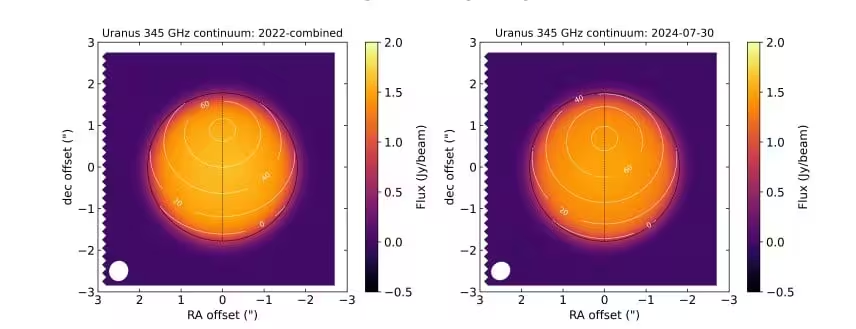
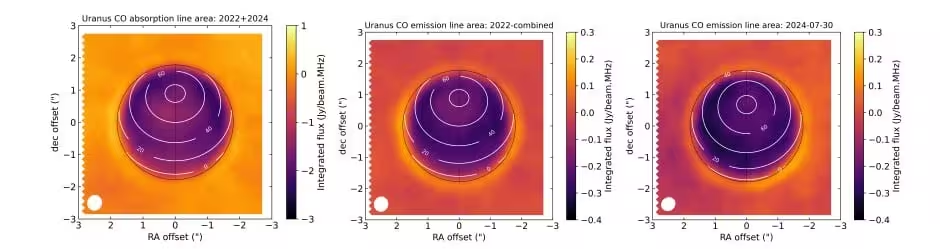
The breakthrough comes from a team headed by Thibault Cavalié at the University of Bordeaux, which employed the Atacama Large Millimeter/submillimeter Array (ALMA) in Chile to observe the planet on three occasions between 2022 and 2024.
Analysis of the data revealed substantial carbon monoxide concentrations in the deeper layers of Uranus’ atmosphere—the first definitive identification of this gas at such altitudes.
In giant planets, carbon monoxide often serves as a proxy for deep‑seated water‑bearing material, offering a window into the hidden, ice‑laden regions beneath the cloud decks.
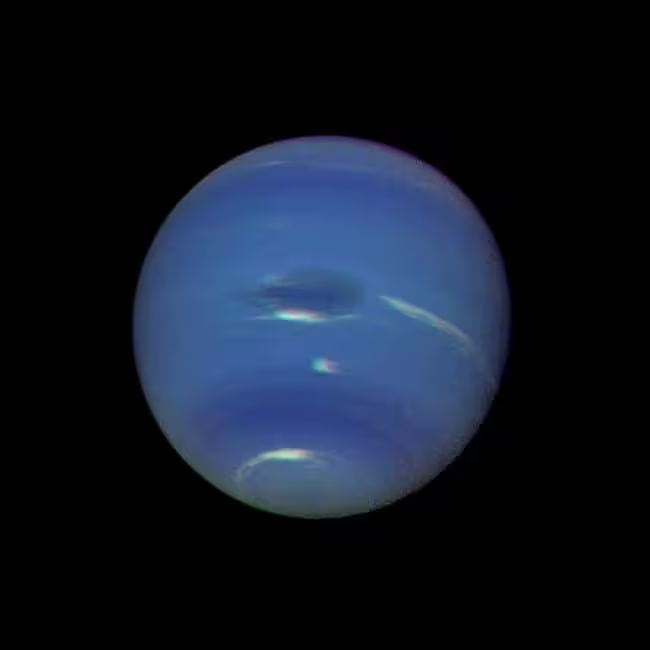
By contrast, Neptune has long shown abundant carbon monoxide, a finding that underpins the view of an ice‑rich interior. The absence of a comparable signature on Uranus had long fueled uncertainty about its makeup.
Ice‑Heavy Interior Models Best Reproduce the Data
Following the CO detection, the investigators ran a suite of numerical simulations that varied the proportion of rock to ice within the planet’s core.
Only scenarios dominated by ice succeeded in replicating the measured carbon monoxide levels; models with lower ice fractions fell short.
“We find that Uranus is more on the ice-giant side than on the rock-giant side,” Cavalié said.
If Uranus indeed harbors a water‑rich mantle, its formation history may align more closely with Neptune’s, challenging scenarios that treat the two planets as fundamentally distinct.
Cavalié stresses that the findings help narrow the long‑standing compositional debate, while also acknowledging that conclusions remain model‑dependent.
“We have to be careful when we say things like that, because things also depend on modelling, but that’s the feeling we have,” he said.
Discussion Continues Over Uranus’ Inner Makeup
The team also identified carbon monoxide in the planet’s upper atmosphere, a layer likely governed by a different supply mechanism than the deep‑seated gas.
Cavalié proposes that a comet impact a few centuries ago could have deposited CO into the higher altitudes. If true, the upper‑atmosphere signal would not directly reflect the bulk interior composition.
“Interpreting atmospheric abundances requires assumptions about chemistry, mixing and internal structure, all of which remain uncertain for Uranus.”
Ramirez notes that a range of rock‑to‑ice ratios can still accommodate the available observations, leaving ample room for alternative interpretations of Uranus’ internal structure.
This article has been fact checked for accuracy, with information verified against reputable sources. Learn more about us and our editorial process.
Last reviewed on .
Article history
- Latest version
Reference(s)
- “Accueil - Thibault Cavalié.”, February 24, 2018 Thibault Cavalié <https://sites.lesia.obspm.fr/thibault-cavalie/accueil/>.
- “In search of our cosmic origins | ALMA Observatory.” <https://www.almaobservatory.org/>.
Cite this page:
- Posted by Aisha Ahmed