Lost Soviet Moon Rover Mirror Found After 40 Years Reviving Lunar Laser Ranging
Scientists aimed a laser at the Soviet Lunokhod 1 rover after
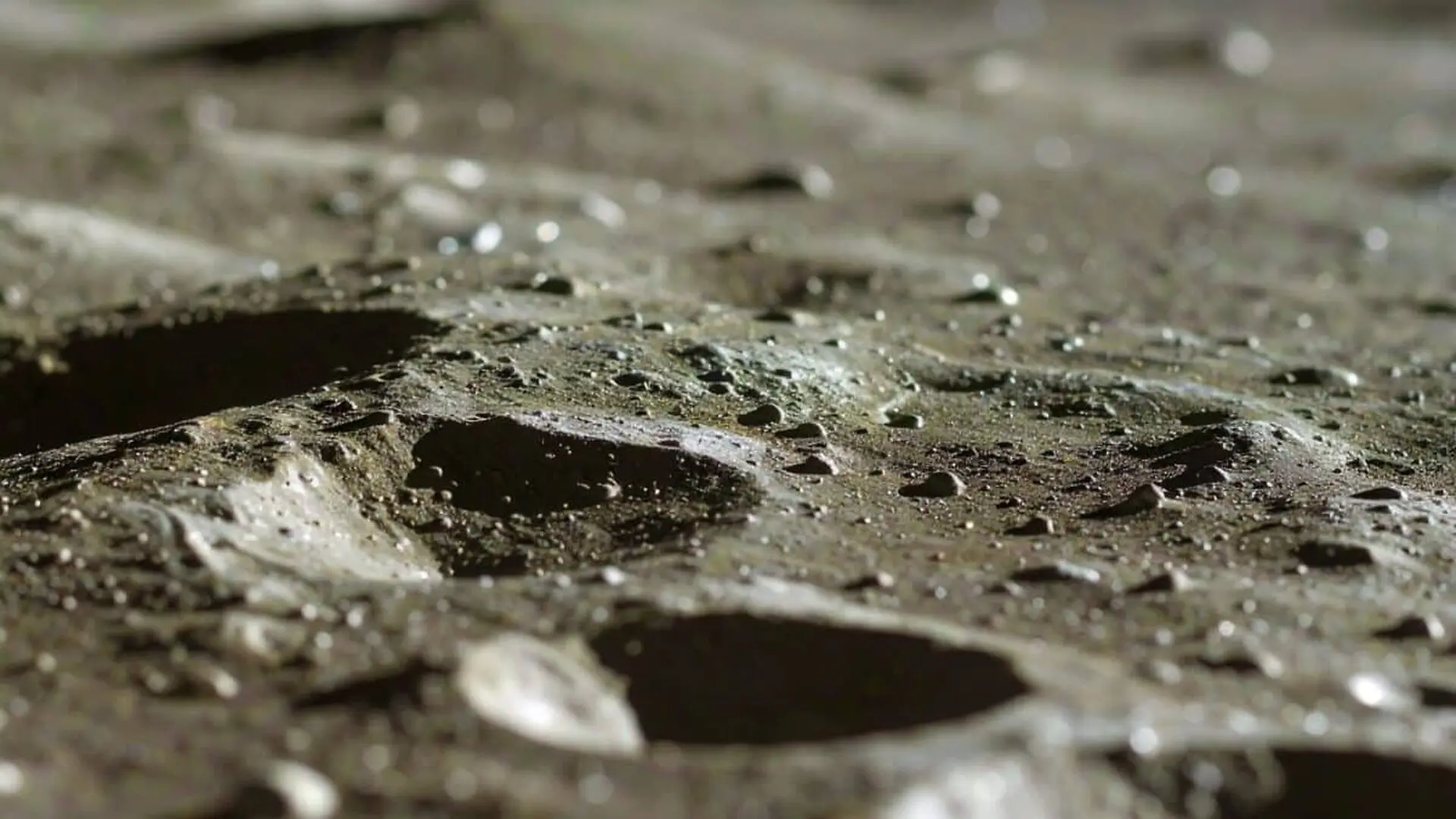
A modest mirror that the Soviet Union placed on the Moon during the 1970s was presumed missing for decades. In 2010, researchers finally located the rover that carried the device, reviving a long‑forgotten lunar reflector.
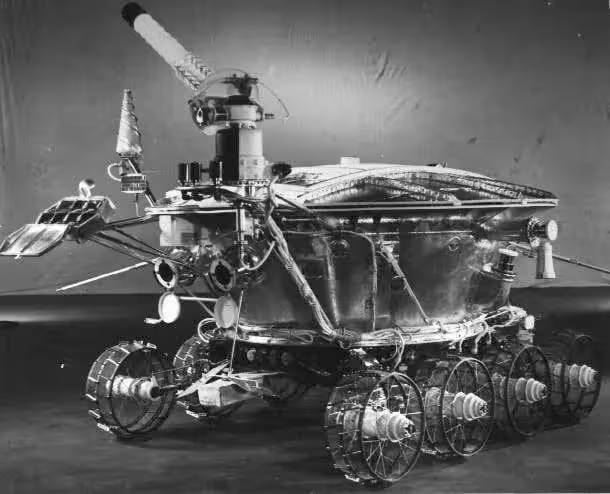
The reflector, a French‑manufactured array of fourteen glass prisms, was mounted on the front of the Lunokhod 1 rover that the Luna 17 mission dropped onto the Sea of Rains in November 1970. Its purpose was straightforward: bounce laser beams sent from Earth back toward the originating telescope. Although the rover fell silent in 1971, the reflector remained intact, awaiting precise coordinates.
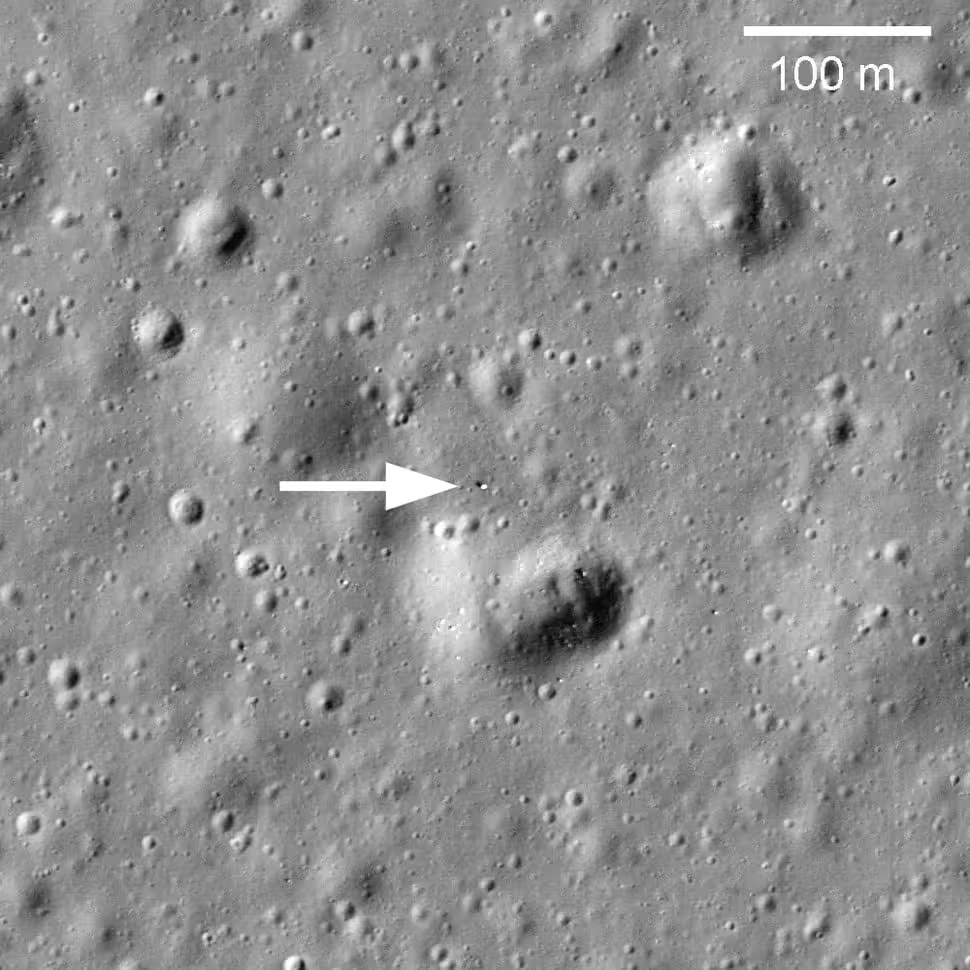
For almost four decades the mirror’s position was unknown. High‑resolution photos from NASA’s Lunar Reconnaissance Orbiter finally revealed the rover’s final resting place, enabling scientists to target the reflector once again.
NASA Images Pinpoint Forgotten Lunar Rover
Finding the rover itself was only half the challenge; pinpointing its reflector required accuracy better than a few meters across a distance of more than 384 000 kilometers. The Lunar Reconnaissance Orbiter, launched in 2009, captured detailed imagery of the rover and its tracks, allowing a team led by Mark Robinson at Arizona State University to calculate its location within roughly 100 meters.
Armed with the new coordinates, the APOLLO laser‑ranging team at the Apache Point Observatory in New Mexico attempted a fresh observation. The effort was coordinated by Tom Murphy of the University of California, San Diego, who aimed a 3.5‑meter telescope at the newly identified site.
“It turns out we were searching around a position miles from the rover,” Murphy said, as quoted by Science Daily. “We could only search one football‑field‑sized region at a time. The recent images from LRO, together with laser altimetry, gave us coordinates within 100 meters, and then we were in business and only had to wait for good observing conditions.”
Laser Pulse Confirms Mirror’s Health
On 22 April 2010 the team fired the first laser pulse toward the reflector. The return signal arrived, proving that the modest device remained functional after more than three decades of exposure to the harsh lunar environment.
Reflector Outperforms Expectations
The initial measurements surprised researchers: the Lunokhod 1 reflector returned roughly 2 000 photons per session, more than four times the strongest returns recorded from the Lunokhod 2 reflector, which peaked at about 750 photons. Scientists attribute the disparity to differences in dust accumulation and thermal cycling, noting that Lunokhod 1’s higher‑latitude location may have sheltered its mirror.
Legacy of Lunar Laser Ranging
Beyond its historical intrigue, the reflector contributes to a precise lunar‑laser‑ranging program that monitors Earth‑Moon distance with millimeter accuracy. These data reveal that the Moon recedes from Earth at roughly 3.8 centimeters per year, enable stringent tests of Einstein’s general relativity, and inform models of the Moon’s interior and Earth’s rotation.
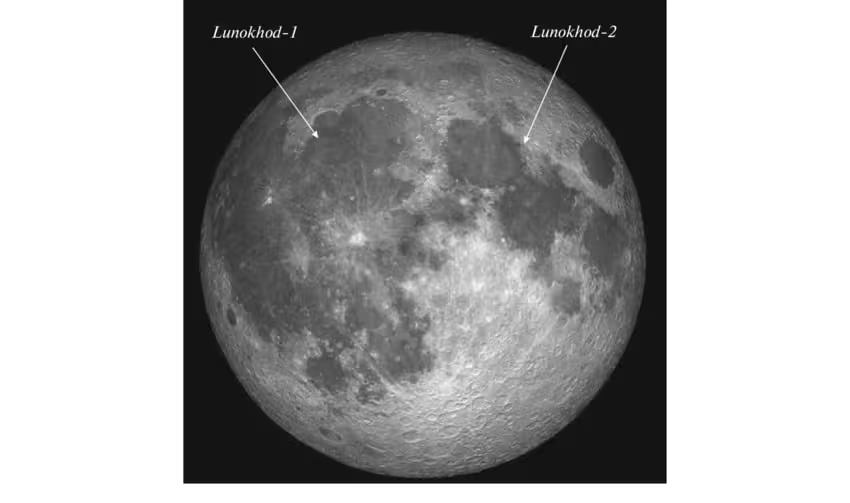
Today, five reflectors on the Moon—including those placed by Apollo 11, 14, 15 and the two Soviet rovers—serve as the primary reference points for this ongoing scientific effort.
“Not only now do we know that Lunokhod 1 is there, we also know that it is parked perfectly so that its reflector faces Earth,” explained Murphy. “In fact, the signal is so surprisingly strong that the rover could not be in anything but a level parking spot with its last commanded roll on the lunar surface deliberately oriented toward Earth.”
This article has been fact checked for accuracy, with information verified against reputable sources. Learn more about us and our editorial process.
Last reviewed on .
Article history
- Latest version
Reference(s)
- “Physicists locate long lost Soviet reflector on moon.” ScienceDaily <https://www.sciencedaily.com/releases/2010/04/100426203545.htm>.
Cite this page:
- Posted by Farah Siddiqui