DESI Uncovers Chemical Signatures of Alien Rocky Planets Devoured by White Dwarfs
DESI data uncovers chemical fingerprints of shattered exoplanets embedded in polluted white dwarf stars.
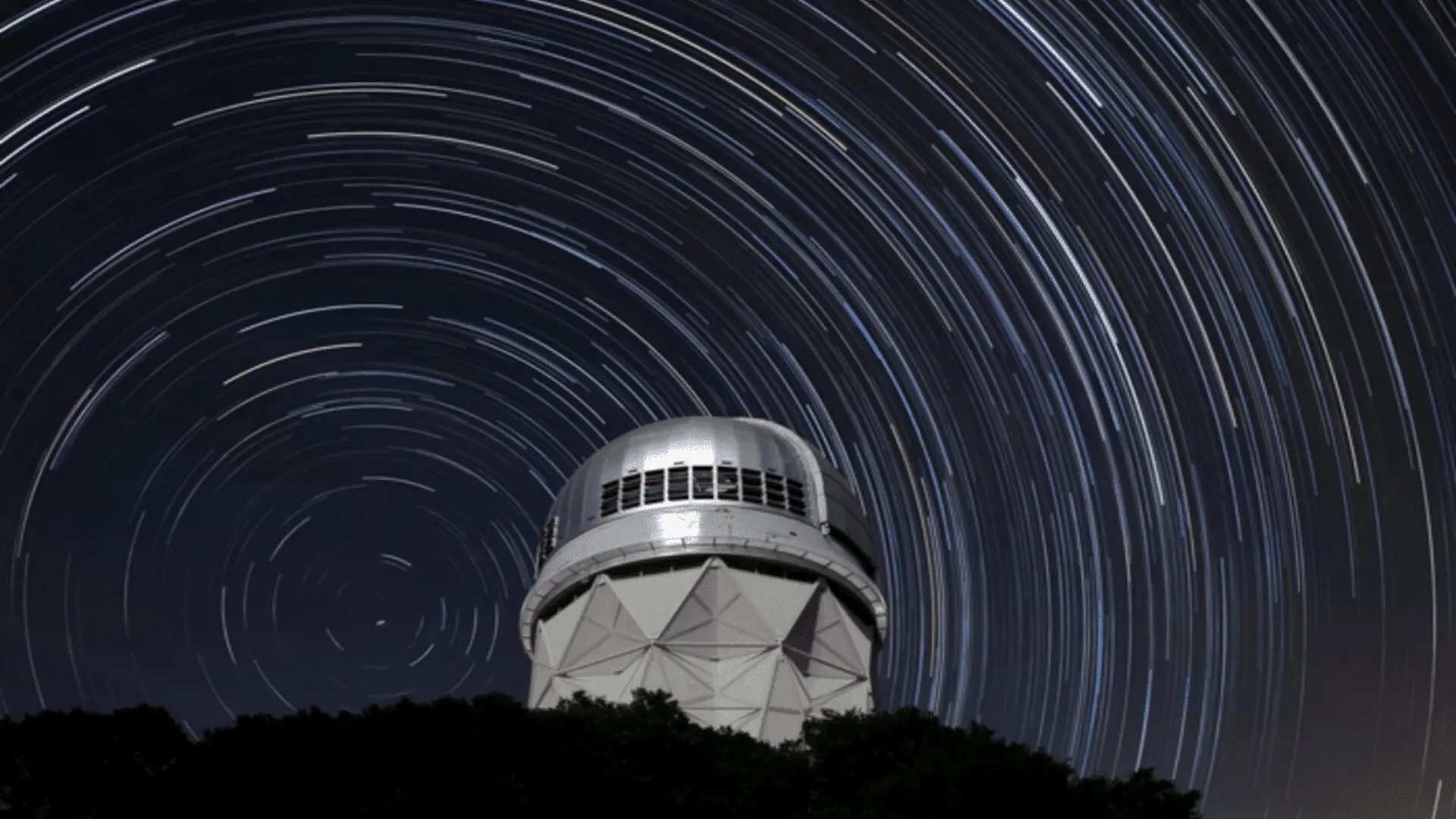
A new analysis of data from the Dark Energy Spectroscopic Instrument (DESI) provides some of the most compelling evidence to date that dying stars are accreting fragments of shattered rocky worlds, according to research released in the Monthly Notices of the Royal Astronomical Society. The study captures the chemical residues of planets that no longer exist, turning white dwarfs into forensic laboratories for alien geology.
Stellar Remnants Preserve Planetary Debris
When Sun‑like stars exhaust their nuclear fuel, they shed their outer layers and leave behind compact cores called white dwarfs. These dense objects are composed mainly of hydrogen and helium, but their surrounding planetary systems can persist. Gravitational perturbations may eventually drive asteroids, moons or even whole planets into close proximity with the white dwarf, where tidal forces shred them into dust and gas.
The resulting material settles onto the star’s surface, leaving a trace of heavy elements—referred to as “metals” in astrophysical terminology—in the otherwise pure atmosphere. Between one‑fifth and one‑half of surveyed white dwarfs display such pollution, yet only a minority exhibit the level of enrichment required for detailed compositional studies.
DESI’s Side Project Uncovers a Rare Sample
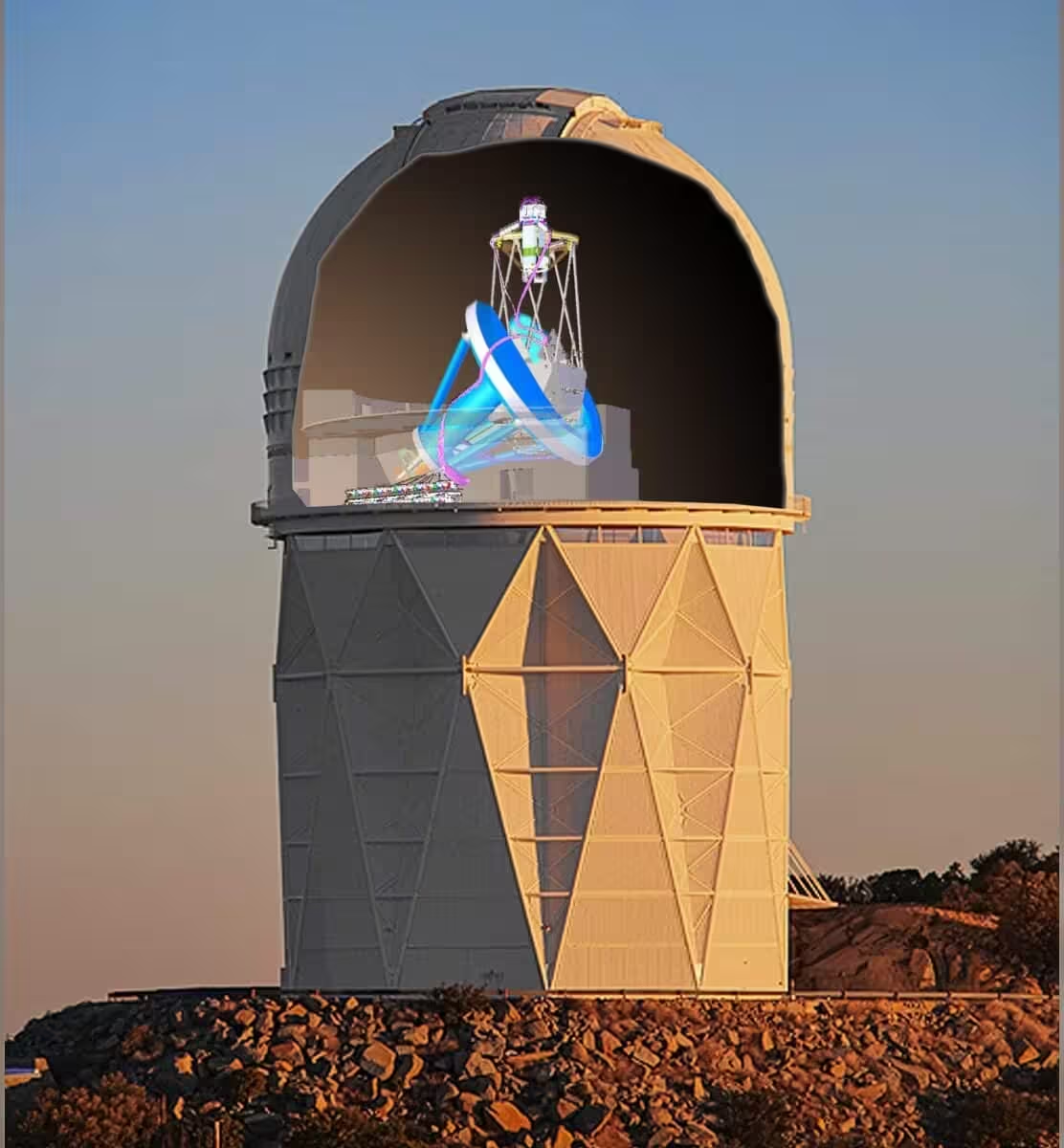
DESI, installed at Kitt Peak National Observatory in Arizona, was designed to map the large‑scale structure of the universe. When observing conditions were unsuitable for its primary galaxy and quasar targets, the team turned the instrument toward nearer objects, including a dozen white dwarfs with unusually high metal content.
“We are lucky enough to get a lot of white dwarfs observed as a side project,” explains lead author Paula Izquierdo of the University of Warwick. “Among those, we found these ones which are super metal‑enriched.”
The spectra obtained are among the most detailed ever recorded for heavily polluted white dwarfs, allowing researchers to pinpoint the presence of specific elements through their characteristic absorption lines.
The findings were published in the Monthly Notices of the Royal Astronomical Society, illustrating how a cosmology‑focused instrument can also illuminate the remnants of distant planetary systems.
Chemistry of Alien Rocks Mirrors Our Own
Analysis of the twelve white dwarf systems revealed that many of the accreted bodies contain the same major rock‑forming elements that dominate Earth, Mars and the inner solar system: oxygen, magnesium, silicon, calcium and iron. Izquierdo notes that “most of the accreted bodies by white dwarfs show the major rock‑forming elements that we see in our solar system, resembling the composition seen in primitive meteorites.”
In each atmosphere between three and ten heavy elements were identified, with six systems offering spectra detailed enough for a deeper chemical inventory. Four of those exhibited dry, rocky signatures typical of planetary interiors and ancient meteorites, while two displayed elevated oxygen levels that may hint at the remnants of water‑rich planetesimals.
White Dwarfs as Laboratories for Exoplanetary Science
The destruction of planets around white dwarfs gives astronomers a rare avenue to probe exoplanet composition directly. Although thousands of exoplanets have been catalogued, their bulk chemistry remains largely uncertain. Each polluted white dwarf effectively records the elemental makeup of a foreign planetary system, offering clues about formation, migration and eventual demise.
The DESI observations demonstrate that stellar remnants can serve as archives of planetary material, allowing researchers to assess whether Earth‑like chemistry is common across the galaxy or whether our solar system is an outlier.
Looking Ahead: Expanding the Sample
Future DESI data releases are expected to increase the number of white dwarfs with high‑resolution spectra, broadening the statistical foundation for comparative planetology. By enlarging the catalogue of polluted stellar remnants, scientists aim to refine estimates of how frequently rocky worlds share a chemical fingerprint with our own planetary neighborhood.
This article has been fact checked for accuracy, with information verified against reputable sources. Learn more about us and our editorial process.
Last reviewed on .
Article history
- Latest version
Cite this page:
- Posted by Farah Siddiqui