Superionic Hydrogen Hidden in Earth’s Core Could Power the Planet’s Magnetic Field
New research uncovers surprising dynamics inside Earth’s core, shedding light on the planet’s deepest mysteries.
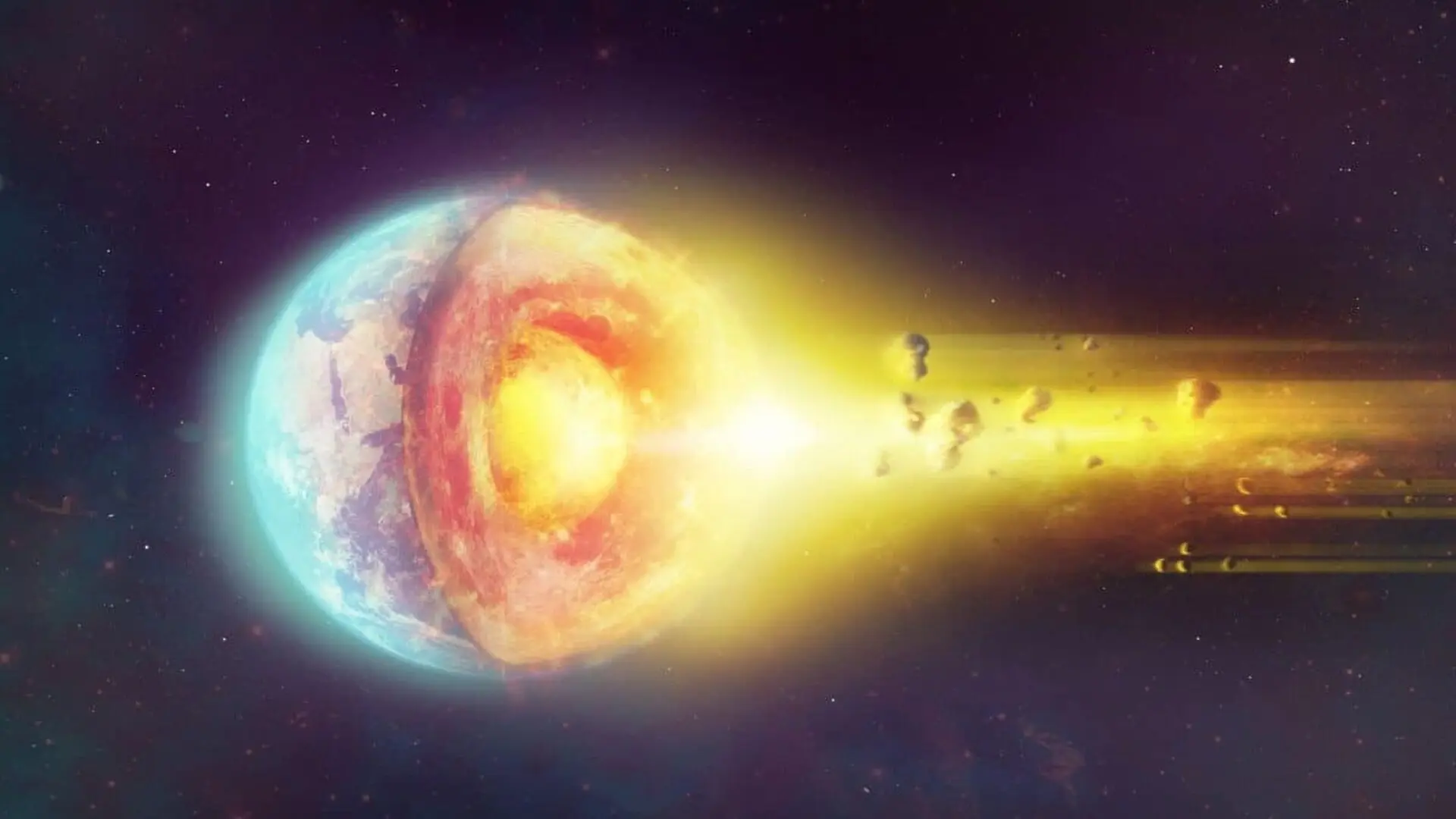
Computer models now indicate that the planet’s solid inner core may host a rare form of hydrogen that behaves like a liquid while retaining a crystalline framework, allowing it to conduct electricity under the crushing pressures and searing temperatures found thousands of kilometers beneath the surface.
At depths where pressure exceeds three million atmospheres and temperatures soar above 6,000 kelvin, familiar elements can adopt unexpected configurations, prompting geoscientists to probe how light elements such as hydrogen interact with iron, the dominant constituent of Earth’s core.
The investigation, published in Proceedings of the National Academy of Sciences, relied on high‑performance computer simulations to explore the behavior of iron‑hydrogen alloys under core‑like conditions.
Superionic Hydrogen Within an Iron Matrix
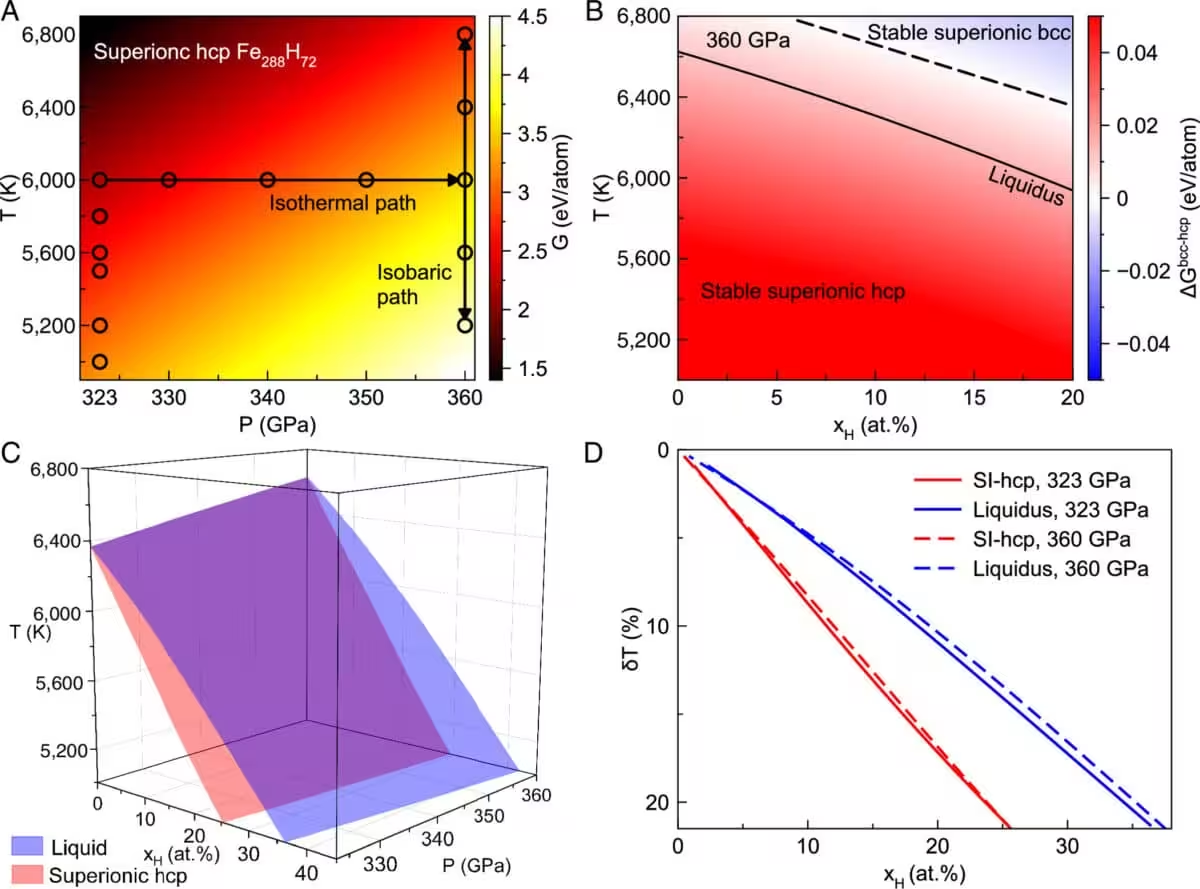
Researchers examined two crystalline arrangements—hexagonal close‑packed (HCP) and body‑centered cubic (BCC)—to determine how hydrogen atoms might migrate through the iron lattice without forming a separate phase.
Simulation results showed that the BCC configuration possesses higher free energy and reacts more readily, making it less favorable for the extreme environment of the inner core. By contrast, the HCP structure aligns more closely with the thermodynamic constraints expected at depth.
The BCC phase could achieve temporary stability only when temperatures exceed roughly 6,400 kelvin and hydrogen concentrations rise above 20 percent under pressures near 3.6 million atmospheres. However, those same conditions also push the material toward melting, rendering a sustained BCC superionic state unlikely.
“Our calculations show that hydrogen can stabilize a superionic BCC phase at sufficiently high temperature and hydrogen content,” the authors wrote. “However, this stability field is superseded by melting, so only the superionic HCP phase coexists with the liquid in the Fe–H system.”
A Gradient That Drives Hydrogen Toward the Core Boundary
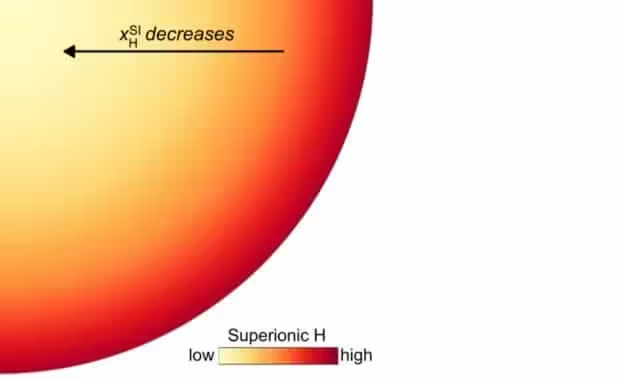
The same simulations revealed a pronounced hydrogen concentration gradient, with higher amounts near the outer edge of the inner core and diminishing levels toward the center. This gradient can propel superionic hydrogen toward the interface with the liquid outer core, where the material would likely relinquish its superionic character and merge into the surrounding melt.
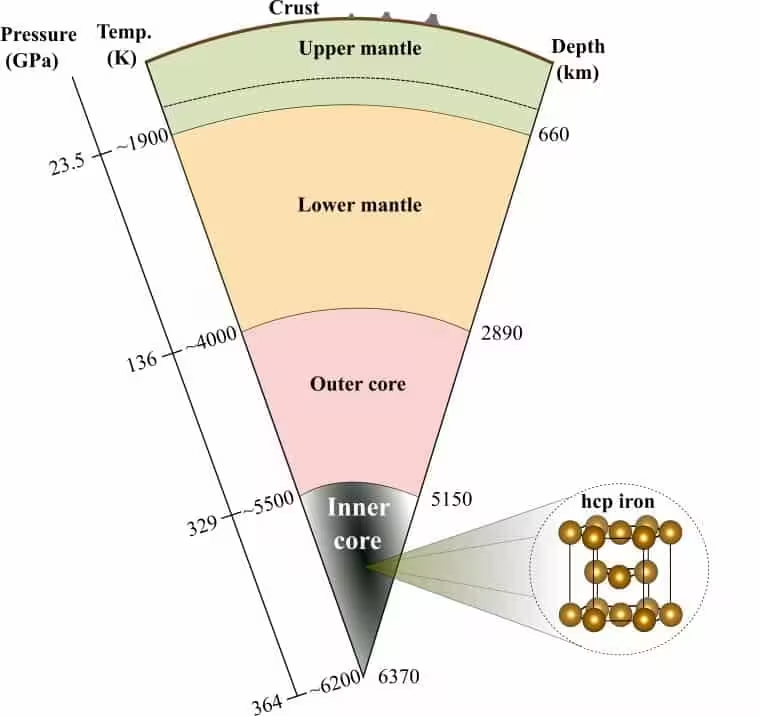
The inner core continues to solidify at an estimated rate of about one millimeter per year, a process that simultaneously transports light elements, including hydrogen, through the deep interior. This ongoing exchange may influence the core’s evolving composition.
Implications for Earth’s Magnetic Engine
The redistribution of hydrogen and other light elements could generate chemical buoyancy, a driving force that feeds the geodynamo responsible for sustaining Earth’s magnetic field. The study links temperature variations more closely than pressure to the stability of different hydrogen phases within the core.
The authors note that analogous mechanisms could affect other light constituents such as oxygen and carbon, potentially shaping the core’s overall makeup and dynamical behavior.
“Our results, therefore, demonstrate that the nonuniform distribution of superionic hydrogen in the [inner core] is a direct consequence of equilibrium thermodynamics. This mechanism may also apply to the distribution of other light elements, influencing [the] core’s composition, dynamics, and evolution.”
This article has been fact checked for accuracy, with information verified against reputable sources. Learn more about us and our editorial process.
Last reviewed on .
Article history
- Latest version
Cite this page:
- Posted by Farah Siddiqui